The United States Navy, a global maritime power renowned for its adaptability, has recently undertaken a significant evolution of its escort doctrine. This adjustment is not a sudden pivot but a measured response to a shifting geopolitical landscape and the emergence of new and complex threats. Understanding the rationale behind these doctrinal shifts requires looking beyond individual exercises and appreciating the broader currents influencing naval strategy.
The traditional understanding of naval escort, once primarily focused on protecting merchant convoys from a known and largely conventional enemy, has broadened considerably. The international maritime environment is no longer a relatively predictable chessboard. Instead, it resembles a dynamic, multi-dimensional battlefield where threats can emerge from the surface, subsurface, air, and even the cyber domain. Russia’s renewed naval assertiveness, China’s rapid expansion of its maritime capabilities, and the persistent threat of state-sponsored or non-state maritime terrorism have all contributed to this recalibration.
The Legacy of World Wars and the Cold War
For decades, the primary model for escort operations was forged in the crucible of large-scale conflict. The Battle of the Atlantic during World War II, with its relentless U-boat wolf packs, established a blueprint for coordinated naval defense of shipping. The Cold War saw a continuation of this focus, albeit with an increased emphasis on the Soviet submarine threat and the potential for tactical nuclear engagements. This historical context ingrained certain operational procedures and threat perceptions within the Navy.
The Rise of Asymmetric and Hybrid Warfare at Sea
However, the post-Cold War era has witnessed the increasing prominence of asymmetric and hybrid warfare tactics at sea. This encompasses a spectrum of activities, from “gray zone” operations below the threshold of armed conflict to the use of anti-access/area denial (A2/AD) capabilities, cyberattacks targeting command and control, and the weaponization of commercial vessels. These evolving tactics demand a more nuanced and flexible approach to escort.
Increased Global Interdependence and Vulnerability
The global economy is intrinsically linked to the unfettered flow of goods and resources by sea. This interdependence, while a driver of prosperity, also creates vulnerabilities. A significant portion of international trade still traverses chokepoints, making them attractive targets for disruption. The Navy’s role as a guarantor of freedom of navigation and the security of sea lanes has thus become even more critical, and its escort doctrine must reflect this heightened responsibility.
Recent discussions surrounding the changes in the US Navy’s escort doctrine have highlighted the evolving nature of maritime security and operational strategies. For a deeper understanding of these developments, you can explore the article titled “Navigating New Waters: The Future of Naval Escort Operations” on In The War Room. This piece delves into the implications of the updated doctrine and its potential impact on naval engagements. For more insights, visit In The War Room.
Redefining the Escort Mission: Beyond the Convoy
The traditional image of escort often conjures the sight of a dedicated naval screen envelopin g merchant vessels. While this remains a crucial element, the modern interpretation of escort is far more expansive and encompasses a wider array of missions and protection requirements. The escort, in essence, is no longer solely about a physical shield around a specific group of ships.
Protection of Critical National Infrastructure (CNI) Assets
Beyond merchant ships, the Navy is increasingly tasked with escorting and protecting other critical national infrastructure assets that operate at sea. This includes, but is not limited to, offshore oil and gas platforms, subsea cables that carry vast amounts of data and financial information, and research vessels engaged in vital scientific endeavors. The disruption of these assets can have profound economic and societal consequences.
Support for Amphibious Operations and Expeditionary Warfare
Amphibious operations, a cornerstone of U.S. naval power projection, inherently involve escort responsibilities. The landing force, vulnerable during its transit and ashore, requires robust naval gunfire support, air cover, and protection from potential enemy actions. Similarly, expeditionary warfare, which involves deploying forces to contested environments, necessitates secure transit routes and the escort of logistics vessels.
Freedom of Navigation Operations (FONOPS) and Diplomatic Presence
While not traditionally considered “escort” in the convoy sense, Freedom of Navigation Operations (FONOPS) often involve naval assets operating in contested waters, requiring protection and the demonstration of maritime presence. The Navy’s role in asserting international rights and deterring challenges to the established maritime order indirectly aligns with the broader goal of ensuring the safe passage of all vessels. Escort doctrine thus provides a framework for the operational planning and execution of these missions.
Humanitarian Assistance and Disaster Relief (HA/DR) Missions
In the aftermath of natural disasters or during humanitarian crises, naval vessels frequently deploy to provide aid. These missions, while focused on relief, can still present security challenges, especially in regions with unstable governance or ongoing conflict. Escort principles can be applied to ensure the safe arrival and departure of humanitarian aid convoys and to protect the forces engaged in these critical operations.
The Evolution of Escort Tactics and Formations
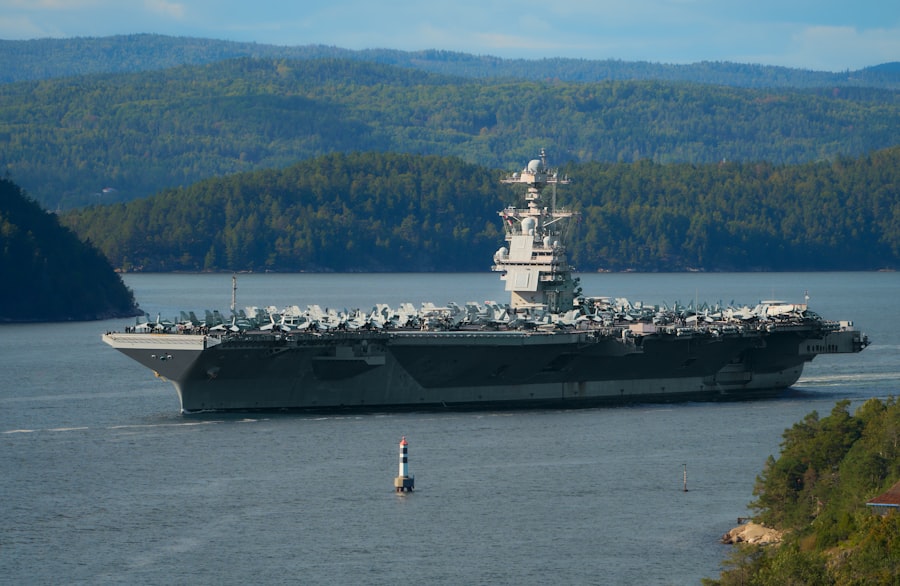
The methods by which naval forces provide escort have undergone significant refinement. The static, predictable formations of the past are being replaced by more dynamic and adaptable approaches, designed to counter a wider range of threats.
Integrated Air and Missile Defense (IAMD) as a Core Component
The integration of advanced air and missile defense systems is no longer an optional add-on but a fundamental requirement for effective escort. Modern naval escort strategies emphasize layered defenses, utilizing a combination of ship-based radar, electronic warfare capabilities, and diverse weapon systems to detect, track, and engage aerial and missile threats from multiple vectors. This creates a protective umbrella around the escorted assets.
Subsurface Threat Mitigation: A Renewed Emphasis
The resurgence of submarine activity globally has necessitated a renewed emphasis on subsurface threat mitigation as part of escort doctrine. This involves enhanced anti-submarine warfare (ASW) capabilities, including advanced sonar systems, maritime patrol aircraft, and unmanned underwater vehicles (UUVs). The goal is to detect and neutralize submarines before they can pose a credible threat to escorted vessels.
The Role of Surface Warfare and Electronic Warfare
Surface warfare, including the use of anti-ship missiles and mine warfare, remains a significant concern. Escort formations are designed to counter these threats through rapid response, coordinated fire, and the disruptive capabilities of electronic warfare. Electronic warfare, in particular, plays a crucial role in jamming enemy sensors, spoofing radar signals, and protecting friendly communications.
Increased Reliance on Unmanned Systems
The integration of unmanned systems, both aerial (UAVs) and underwater (UUVs), is a game-changer in escort operations. These systems can extend the sensor reach of escort groups, provide persistent surveillance, and perform dangerous reconnaissance missions without risking manned platforms. Their ability to operate in contested environments and gather intelligence before a threat materializes is invaluable.
Adapting to the “Gray Zone” and Hybrid Threats
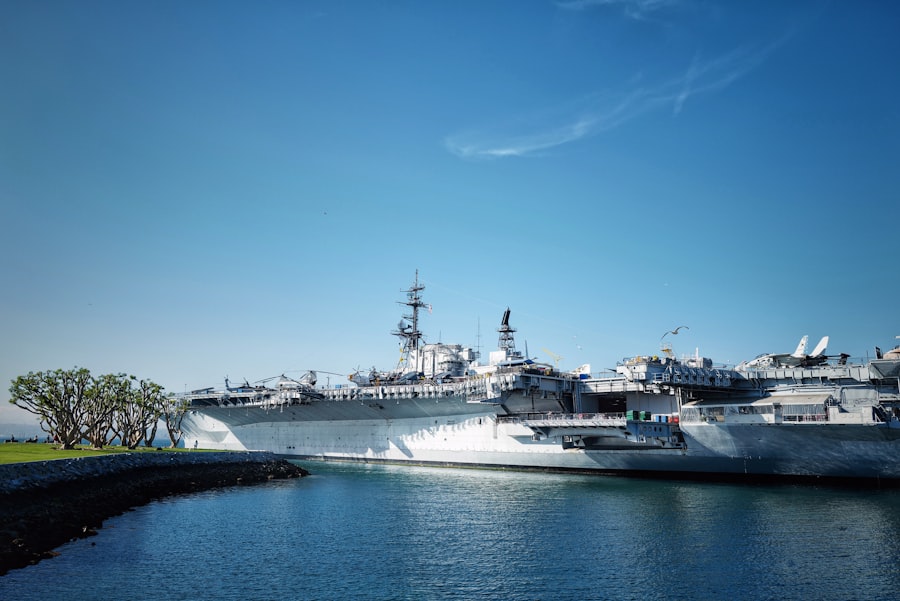
The concept of “gray zone” conflict, where hostile actions are conducted below the threshold of direct armed conflict, presents a unique challenge for traditional military doctrines. Escort doctrine is evolving to address these subtle yet destabilizing tactics.
Pre-emptive Intelligence Gathering and Situational Awareness
A cornerstone of countering gray zone tactics is enhanced intelligence gathering and maintaining a high level of situational awareness. Escort forces are increasingly trained to identify and interpret anomalies in maritime traffic, unusual fleet concentrations, and patterns of behavior that may indicate precursor activities to hostile intent. This proactive approach is like a skilled detective observing subtle clues in a bustling city.
Deterrence Through Presence and Messaging
Naval presence itself can be a powerful deterrent to gray zone activities. The visible deployment of escort forces in areas of potential tension sends a clear message that the United States is committed to protecting maritime security and will not tolerate destabilizing actions. This is a form of calculated theater, where the mere presence of capable forces alters the calculations of potential adversaries.
Integrated Operations with Allies and Partners
Addressing hybrid threats often requires a coordinated international response. Escort doctrine is increasingly emphasizing interoperability and joint operations with allies and partner nations. This allows for burden-sharing, intelligence exchange, and a more comprehensive approach to maritime security that can effectively counter multifaceted threats.
The Importance of Cyber Resilience in Escort Operations
The cyber domain is an increasingly important battlefield. Escort operations are vulnerable to cyberattacks targeting navigation systems, communication networks, and even weapon control systems. Therefore, modern escort doctrine places a significant emphasis on cyber resilience, ensuring that naval assets are protected from cyber intrusions and can maintain operational effectiveness even under cyber pressure.
Recent discussions surrounding changes to the US Navy’s escort doctrine have highlighted the need for a more adaptable approach in response to evolving maritime threats. This shift is crucial as the Navy aims to enhance its operational effectiveness while ensuring the safety of its vessels and personnel. For further insights into this topic, you can read a related article that delves into the implications of these changes and their potential impact on naval strategy. To explore more, visit this article.
The Future of Naval Escort: Agility, Integration, and Innovation
| Year | Doctrine Change | Reason for Change | Impact on Escort Operations | Key Metrics |
|---|---|---|---|---|
| 1941 | Introduction of Convoy Escort Doctrine | Response to increased U-boat threats in Atlantic | Formation of escort groups around merchant convoys | Escort group size: 3-5 ships; Convoy speed: 8-12 knots |
| 1950 | Integration of Anti-Submarine Warfare (ASW) Tactics | Cold War submarine threat escalation | Enhanced sonar use and coordinated ASW patrols | Sonar range increased by 30%; ASW patrols extended by 50% |
| 1980 | Shift to Multi-Threat Escort Doctrine | Emergence of missile and air threats | Incorporation of air defense and missile countermeasures | Escort ships equipped with SAM systems; Reaction time reduced by 40% |
| 2000 | Network-Centric Warfare Integration | Advances in communication and sensor technology | Real-time data sharing among escort vessels and aircraft | Target tracking accuracy improved by 60%; Response coordination time cut by 50% |
| 2020 | Emphasis on Unmanned Systems and AI | Technological advancements and asymmetric threats | Deployment of unmanned surface and underwater vehicles for escort duties | Unmanned asset deployment increased by 70%; Threat detection rate improved by 35% |
The ongoing evolution of U.S. Navy escort doctrine signifies a commitment to remaining a dominant and adaptable maritime force. The future of naval escort will be characterized by an even greater emphasis on agility, seamless integration of diverse capabilities, and continuous innovation.
The Networked and Distributed Force Concept
The move towards a more networked and distributed force concept means that escort elements will not necessarily operate as a single, cohesive unit. Instead, they will be part of a larger, interconnected network of sensors, platforms, and weapons systems, capable of rapidly reconfiguring and responding to emerging threats. This is akin to an orchestra where individual musicians can play their parts independently but are orchestrated to produce a harmonious whole.
Leveraging Artificial Intelligence and Machine Learning
Artificial intelligence (AI) and machine learning (ML) are poised to play an increasingly significant role in future escort operations. These technologies can enhance threat detection, optimize force deployment, and improve decision-making processes by sifting through vast amounts of data at speeds impossible for humans.
The Rise of Autonomous and Semi-Autonomous Systems
The development and integration of autonomous and semi-autonomous naval vessels and unmanned systems will further enhance escort capabilities. These platforms can perform a variety of tasks, from reconnaissance and surveillance to mine countermeasures and even direct engagement, augmenting the capabilities of manned warships.
Continuous Training and Adaptable Doctrine
Perhaps the most critical element of the future of naval escort is the commitment to continuous training and the agility to adapt doctrine as new threats and technologies emerge. The U.S. Navy’s success in this arena will depend on its ability to remain a learning organization, constantly refining its approaches to meet the ever-changing challenges of the global maritime environment. The Navy’s embrace of evolving escort doctrine is not a sign of weakness, but a testament to its enduring strength and its proactive approach to safeguarding maritime interests in an increasingly complex world.
FAQs
What is the US Navy escort doctrine?
The US Navy escort doctrine refers to the strategic guidelines and operational procedures used by the Navy to protect high-value ships, such as aircraft carriers and supply vessels, by deploying escort ships like destroyers and cruisers to defend against threats.
Why has the US Navy changed its escort doctrine?
The US Navy has updated its escort doctrine to address evolving maritime threats, including advancements in missile technology, submarine capabilities, and asymmetric warfare tactics, ensuring better protection for naval assets in modern combat environments.
What are the key changes in the new US Navy escort doctrine?
Key changes include enhanced integration of multi-domain sensors, increased use of unmanned systems for surveillance and defense, updated tactics for countering missile and submarine threats, and improved coordination with allied naval forces.
How do these changes impact US Navy operations?
The changes improve the Navy’s ability to detect and neutralize threats earlier, increase the survivability of escorted vessels, and enable more flexible and adaptive responses during naval engagements, thereby strengthening overall fleet defense.
When will the new escort doctrine be fully implemented?
Implementation timelines vary by fleet and platform, but the US Navy has been progressively integrating the new escort doctrine through training exercises and deployments, with full adoption expected over the next several years as new technologies and tactics are validated.