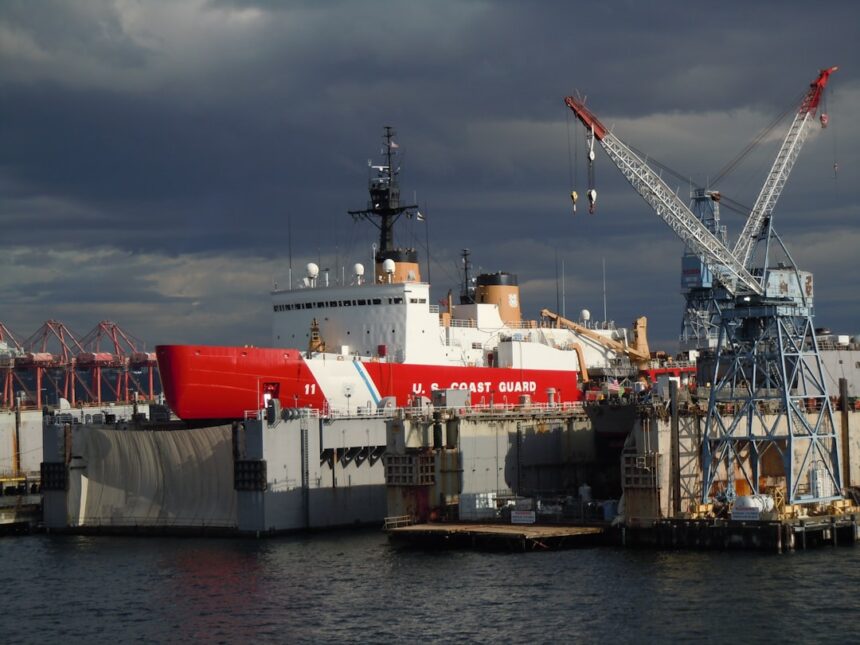
The vast, often enigmatic expanse of the world’s oceans presents a frontier of unparalleled scientific and strategic importance. For the United States Navy, the effective exploration and understanding of these seas are not merely academic pursuits but critical components of national security, technological advancement, and environmental stewardship. While the imposing grey hulls of its combatant vessels are widely recognized, a less visible but equally vital fleet operates beneath the waves and upon their surface: the Navy’s auxiliary research ships. These vessels, often described as the Navy’s “eyes and ears” beneath the sea, are the silent workhorses of oceanic discovery, undertaking a diverse array of missions that extend far beyond the realm of traditional naval operations. They are the laboratories that sail, the data collectors that probe the deepest trenches, and the pioneers that pave the way for technological innovation.
The United States Navy’s engagement with the ocean is fundamental to its existence. The dominion of the seas has long been a cornerstone of American geopolitical influence and economic prosperity. Understanding the ocean’s physical properties, its dynamic currents, its acoustic environment, and its biological inhabitants is not a passive observation but an active necessity. This knowledge directly informs operational planning, influences the design of naval platforms, and underpins the development of cutting-edge technologies that provide a strategic advantage.
Understanding the Ocean’s Physical Landscape
The ocean is not a static, featureless void. It is a complex, three-dimensional fluid environment with intricate patterns of circulation, temperature gradients, and salinity variations. Auxiliary research ships are instrumental in mapping these physical characteristics with unprecedented detail.
Hydrographic Surveying: Charting the Unseen Bottom
Hydrographic surveys, conducted meticulously by specialized research vessels, are the bedrock of safe and effective naval navigation. These surveys produce detailed charts that depict the depth of the water, the nature of the seafloor, and the location of potential hazards such as shoals, wrecks, and submerged obstacles. Without accurate charts, submarines would be blind to the contours of their operating environment, and surface vessels would be vulnerable to grounding. The data collected is akin to building a detailed topographic map of an alien world, revealing hidden valleys and perilous peaks that dictate safe passage.
Oceanographic Data Collection: Measuring the Pulse of the Sea
Beyond charting the seabed, auxiliary ships gather crucial data on the ocean’s physical properties. This includes measuring water temperature, salinity, density, and currents at various depths. This information is vital for understanding phenomena such as the Gulf Stream, which can significantly impact weather patterns and shipping routes, and for predicting the behavior of acoustical signals, a critical factor in anti-submarine warfare. These measurements form the ocean’s vital signs, revealing its rhythms and influencing its interactions with the atmosphere and naval systems.
The Acoustic Spectrum: A Silent Battlefield
Perhaps no aspect of the undersea environment is more critical to naval operations than acoustics. The ocean acts as both a medium for and a barrier to sound, making its acoustic properties a paramount concern for submarines, sonar systems, and acoustic countermeasures.
Sonar Performance Prediction and Optimization
Auxiliary research ships deploy sophisticated sensors to measure ambient noise levels, the propagation of sound through different water masses, and the scattering of acoustic signals from the seabed and water column. This data allows naval acousticians to predict how and where sonar systems will perform best and to develop strategies for mitigating the effects of noise pollution or deceptive acoustic countermeasures. The ocean’s acoustic environment is a complex symphony, and these ships help decipher its melodies and cacophonies to ensure naval systems can hear and be heard.
Underwater Acoustics Research: Mastering the Soundscape
Further research focuses on understanding the fundamental principles of underwater acoustics. This includes studying the effects of pressure, temperature, and salinity on sound speed, as well as investigating phenomena like sound refraction and reverberation. This deep dives into the physics of sound in water are essential for developing next-generation sonar technologies and for understanding the acoustic signatures of various naval platforms and potential adversaries.
Advancing Naval Technology Through Oceanic Research
The insights gained from oceanic research directly fuel technological innovation across the Navy. From improved navigation systems to advanced submarine designs, the auxiliary research fleet acts as a vital incubator for future warfighting capabilities.
Submarine Technology Development: Stealth and Depth
The silent, undetected movement of submarines is a cornerstone of naval strategy. Auxiliary research ships conduct experiments and collect data that directly influence submarine design, including hull hydrodynamics, propulsion systems, and acoustic signature reduction. Understanding how submarines interact with the ocean’s currents and thermal layers is crucial for maximizing their stealth and operational effectiveness. This research is akin to refining the aerodynamics of a stealth aircraft, but applied to the dense, unforgiving environment of the ocean.
Mine Warfare and Underwater Obstacle Detection
The detection and neutralization of underwater mines and other submerged obstacles pose a persistent threat. Research conducted aboard auxiliary vessels contributes to the development of advanced sonar systems, unmanned underwater vehicles (UUVs), and other technologies designed to locate and identify these hidden dangers. These ships are at the forefront of developing the tools that allow the Navy to clear pathways through mine-laden waters, ensuring freedom of navigation.
The role of US Navy auxiliary research ships is crucial in supporting various naval operations and scientific research initiatives. For a deeper understanding of their significance and operational capabilities, you can read a related article that explores the advancements and contributions of these vessels in modern naval strategy. For more information, visit this article.
The Diverse Fleet: A Look at Key Auxiliary Research Vessels
The United States Navy operates a varied and specialized fleet of auxiliary research ships, each designed to fulfill specific scientific and operational mandates. These vessels serve as floating laboratories, equipped with advanced instrumentation and manned by dedicated scientific and technical crews.
Oceanographic Survey Ships: The Backbone of Data Collection
Oceanographic survey ships are the workhorses for gathering a wide range of environmental data. Their primary mission is to collect information that supports naval operations, scientific understanding, and environmental monitoring.
T-AGS (Note: This is a general designation, specific ship classes exist within it)
While specific ship classes and designations evolve, the T-AGS designation generally identifies vessels chartered by the Navy for oceanographic research. These ships are often equipped with laboratories, winches for deploying scientific instruments, and winches for sampling the seafloor. They are essential for collecting data on ocean currents, temperature, salinity, and for mapping the seafloor. These ships are the quiet cartographers of the ocean’s interior, meticulously plotting its hidden features.
Hydrographic Survey Capabilities
Within the T-AGS category, specific vessels are heavily dedicated to hydrographic surveying. They utilize multibeam echosounders and side-scan sonar to create high-resolution bathymetric maps. The accuracy of these maps is paramount, ensuring that naval commanders have a precise understanding of the underwater terrain.
Oceanographic and Acoustic Data Gathering
Beyond bathymetry, these ships are equipped to deploy Conductivity-Temperature-Depth (CTD) sensors, expendable bathythermographs (XBTs), and acoustic Doppler current profilers (ADCPs). They also conduct acoustic surveys, measuring sound propagation and ambient noise levels.
Special Mission Ships: Tailored for Unique Challenges
Beyond general oceanographic tasks, the Navy also employs specialized vessels designed for highly specific missions, often involving classified research or advanced technological testing.
Submarine Support Vessels
Some auxiliary ships are specifically configured to support submarine operations. This can include vessels designed to deploy and recover specialized equipment, conduct acoustic testing for submarines, or provide logistical support to submarine patrols.
Acoustic Range Support
Certain vessels are dedicated to supporting acoustic ranges, which are underwater facilities used for calibrating and testing sonar systems. These ships may monitor the acoustic environment around the range or support the deployment and retrieval of specialized acoustic measurement equipment.
Mine Countermeasures Support
With the persistent threat of naval mines, specialized ships are tasked with supporting mine countermeasures (MCM) operations. This can involve deploying UUVs, command and control for MCM assets, or conducting post-mission analysis of mine detection data.
Research and Development Platforms: Forging the Future
A crucial role of the auxiliary research fleet is to act as a platform for testing and developing new naval technologies. These ships are often where groundbreaking ideas are first put to the test in real-world ocean conditions.
Unmanned Systems Integration and Testing
The development of unmanned underwater vehicles (UUVs) and unmanned surface vehicles (USVs) is a rapidly growing area of naval innovation. Auxiliary research ships provide the ideal environment for deploying, testing, and refining these autonomous systems. They serve as the launchpad for these robotic explorers, allowing for rigorous testing of their capabilities in diverse oceanic environments.
UUV Deployment and Recovery
Ships equipped with specialized handling systems allow for the safe and efficient deployment and recovery of various UUVs, from small observational platforms to larger, more capable mine-hunting or reconnaissance systems.
Data Analysis and System Refinement
The onboard laboratories and technical expertise allow for immediate analysis of data collected by UUVs, enabling rapid refinement of algorithms, navigation systems, and operational procedures.
Advanced Sensor and Communication System Trials
New acoustic sensors, communication systems, and other advanced technologies are often tested aboard auxiliary research vessels. This allows naval engineers to evaluate their performance in the complex and often challenging oceanic environment before they are integrated into operational fleet assets like submarines and surface warships.
The Scientific Endeavor: Contributions to Ocean Science
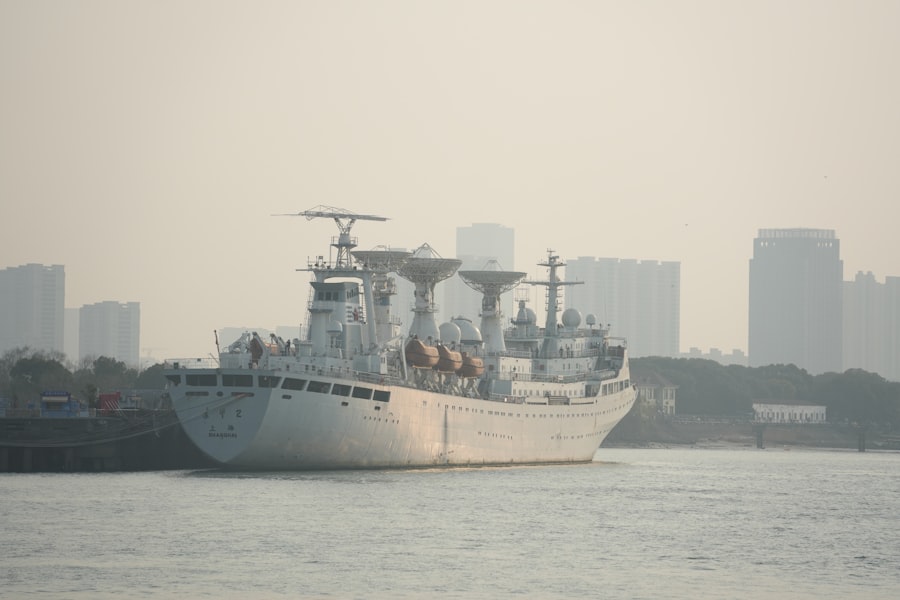
While naval effectiveness is a primary driver, the work of auxiliary research ships yields profound contributions to the broader scientific understanding of the world’s oceans. This research benefits not only the Navy but also the global scientific community and informs crucial environmental policies.
Understanding Ocean Dynamics and Climate Change
The data collected by these vessels are invaluable for understanding global oceanographic processes and their role in climate change.
Sea Level Rise Monitoring
Auxiliary ships deploy and maintain tide gauges and conduct bathymetric surveys that contribute to understanding sea level rise and its potential impacts on coastal regions and naval infrastructure. The subtle, long-term changes in sea level are carefully documented.
Ocean Circulation and Heat Transport
By measuring currents, temperature, and salinity, these ships help scientists model and predict ocean circulation patterns. This is critical for understanding global heat transport, which directly influences weather systems and marine ecosystems. They are effectively charting the planet’s immense circulatory system.
Marine Ecosystem Research and Biodiversity Studies
The oceans are teeming with life, and auxiliary research plays a role in understanding these complex ecosystems.
Marine Mammal and Fisheries Research
While not their primary mission, some research efforts may involve acoustic monitoring for marine mammals or data collection related to fisheries, which can have strategic implications for maritime domain awareness and resource management.
Seafloor Mapping for Habitat Identification
Detailed seafloor mapping can help identify unique marine habitats, which is important for both scientific study and for understanding the potential impact of naval activities on sensitive environments.
Geological and Geophysical Exploration
The geological processes shaping the ocean floor are also a subject of study for some naval research efforts.
Seafloor Morphology and Sedimentology
Understanding the structure and composition of the seafloor is important for submarine operations, mine deployment, and for understanding natural phenomena like underwater landslides.
Active and Passive Seismic Studies
In certain contexts, research may involve seismic studies to understand subsurface geological structures, which can be relevant for understanding potential resource deposits or for identifying areas of geological instability.
The Human Element: The Crews of the Research Fleet
Operating these sophisticated vessels and conducting complex scientific missions requires highly skilled and dedicated personnel. The crews of the Navy’s auxiliary research ships are a unique blend of naval professionals and civilian scientists, working in close collaboration.
Naval Personnel: Guardians of the Vessel and Operations
The uniformed Navy personnel aboard these ships are responsible for the safe navigation, operation, and maintenance of the vessel. They are trained in maritime operations, engineering, and security, ensuring the smooth functioning of the ship as a platform.
Ship’s Officers and Enlisted Crew
From the commanding officer to the deckhands and engineering specialists, these individuals ensure the ship remains operational and safe. Their expertise in seamanship and vessel management is crucial for successful mission execution.
Technical Specialists
Specialized ratings within the Navy, such as those in intelligence, cryptology, or certain engineering fields, may be assigned to these vessels to support specific research objectives or operational requirements.
Civilian Scientists and Researchers: The Brains of the Operation
The civilian contingent aboard these ships comprises scientists, engineers, and technicians from various disciplines, brought in to manage and interpret the scientific data being collected.
Oceanographers and Marine Scientists
These individuals are the primary scientific operators, deploying and maintaining scientific instruments, collecting samples, and conducting analyses of the oceanographic data.
Engineers and Technicians
Specialized engineers and technicians are responsible for the operation and maintenance of the advanced scientific equipment, sonar systems, and data acquisition hardware onboard.
Collaboration and Interdisciplinary Approaches
The success of auxiliary research missions hinges on the close collaboration between naval personnel and civilian scientists. This interdisciplinary approach allows for the seamless integration of operational needs with scientific inquiry, ensuring that research directly supports naval objectives while advancing the broader understanding of the ocean.
The role of US Navy auxiliary research ships is crucial in supporting various naval operations and scientific research initiatives. These vessels are equipped with advanced technology to conduct oceanographic studies, environmental assessments, and other critical missions. For a deeper understanding of how these ships contribute to naval capabilities and maritime research, you can read a related article on this topic at In the War Room. This resource provides valuable insights into the strategic importance of auxiliary research ships in modern naval warfare.
The Future of Naval Oceanic Research: Innovation and Adaptation
| Ship Name | Class | Displacement (tons) | Length (ft) | Year Commissioned | Primary Research Role | Homeport |
|---|---|---|---|---|---|---|
| USNS Bowditch (T-AGS-62) | Pathfinder-class | 4,400 | 329 | 1996 | Oceanographic Survey | Portsmouth, VA |
| USNS Henson (T-AGS-63) | Pathfinder-class | 4,400 | 329 | 1997 | Hydrographic Survey | Portsmouth, VA |
| USNS Bruce C. Heezen (T-AGS-64) | Pathfinder-class | 4,400 | 329 | 1997 | Oceanographic Survey | Portsmouth, VA |
| USNS Mary Sears (T-AGS-65) | Pathfinder-class | 4,400 | 329 | 1997 | Oceanographic Survey | Portsmouth, VA |
| USNS Maury (T-AGS-66) | Pathfinder-class | 4,400 | 329 | 1998 | Hydrographic Survey | Portsmouth, VA |
The challenges and opportunities presented by the global oceans are constantly evolving, and the United States Navy’s auxiliary research fleet is continuously adapting to meet these demands. Future developments will likely focus on increased autonomy, advanced sensor technologies, and an expanded understanding of emerging oceanic threats and opportunities.
Embracing Autonomy and Unmanned Systems
The trend towards greater autonomy in maritime operations will undoubtedly shape the future of the research fleet.
Enhanced UUV and USV Capabilities
Future research will focus on developing more sophisticated UUVs and USVs with greater endurance, improved sensing capabilities, and enhanced decision-making abilities. These autonomous platforms will be able to conduct longer, more complex missions with reduced human oversight.
Networked Ocean Sensing
The concept of networked ocean sensing, where multiple autonomous platforms collaborate to collect and share data, will become increasingly prevalent. This will allow for broader and more comprehensive oceanographic surveys.
Advancements in Sensing and Data Analysis
Technological innovation will continue to drive improvements in how oceanic data is collected and interpreted.
Artificial Intelligence and Machine Learning in Oceanography
The application of AI and machine learning will revolutionize data analysis, allowing for the automated identification of patterns, anomalies, and insights within vast oceanographic datasets. This will significantly accelerate the pace of discovery.
Next-Generation Acoustic and Remote Sensing Technologies
Research will focus on developing new acoustic and remote sensing technologies that can provide higher resolution data, penetrate deeper into the ocean, and operate more effectively in challenging environments.
Addressing Emerging Oceanic Challenges
As the global landscape shifts, so too do the challenges and strategic considerations related to the oceans.
Arctic Oceanography and Climate Change Impacts
The opening of Arctic sea routes and the accelerating impacts of climate change in the polar regions necessitate increased naval research and operational understanding in these critical environments.
Undersea Warfare and Maritime Domain Awareness
As geopolitical competition intensifies, the need for advanced technologies to detect and track subsurface threats, and to maintain comprehensive maritime domain awareness, will drive further innovation in naval oceanic research.
The United States Navy’s auxiliary research ships are more than just vessels; they are the mobile laboratories and intrepid explorers that bridge the gap between human knowledge and the vast, unexplored depths of the ocean. Their quiet dedication to rigorous scientific inquiry and technological advancement ensures that the Navy remains at the forefront of understanding and operating within the world’s most vital frontier, a frontier that is as fundamental to peace as it is to power.
FAQs
What is the primary role of US Navy auxiliary research ships?
US Navy auxiliary research ships are primarily used to support scientific research, oceanographic studies, and technological development. They provide platforms for data collection, experimentation, and testing in maritime environments.
How do auxiliary research ships differ from combat vessels in the US Navy?
Auxiliary research ships are designed for support and research missions rather than direct combat. They typically have specialized equipment for scientific work and lack heavy armament found on combat vessels like destroyers or aircraft carriers.
What types of research are conducted on US Navy auxiliary research ships?
Research conducted includes oceanography, hydrography, marine biology, underwater acoustics, and environmental monitoring. These ships help gather data critical for naval operations and scientific understanding of the marine environment.
Are US Navy auxiliary research ships operated by military personnel or civilians?
These ships are usually operated by a combination of Navy personnel and civilian scientists or contractors. The Navy provides the crew and operational support, while scientists conduct research missions onboard.
Can US Navy auxiliary research ships be used for missions other than research?
Yes, while their primary mission is research, these ships can also support training exercises, surveillance, and logistical tasks as needed by the Navy, making them versatile assets within the fleet.