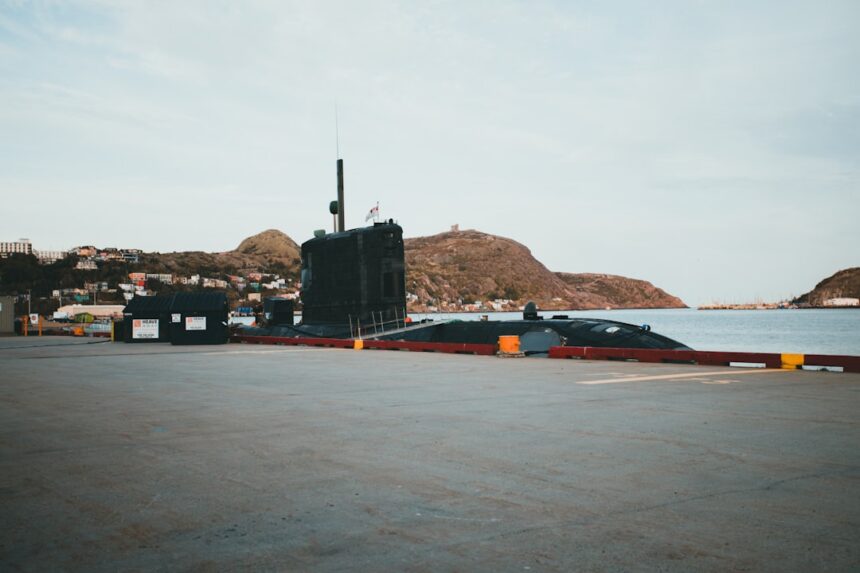
The year 1985 marked a period of heightened geopolitical tension, a Cold War landscape where the shadows of both nuclear annihilation and proxy conflicts loomed large. Within this intricate tapestry of international relations, the clandestine world of espionage and military intelligence operated with relentless intensity. It was against this backdrop that an incident of profound significance, often referred to as the “Submarine Communications Compromise,” unfolded, revealing vulnerabilities in the very sinews of naval warfare and intelligence gathering. This event, shrouded in secrecy for decades, offers a stark reminder of the perpetual cat-and-mouse game played beneath the waves and across the airwaves.
The mid-1980s saw the Soviet Union and the United States locked in a technological race, each striving for supremacy in military capabilities, particularly in the realm of underwater warfare. Nuclear-powered attack submarines, potent deterrents and intelligence-gathering platforms, were the lynchpins of both superpowers’ naval strategies. Effective communication with these assets, often operating in hostile and contested waters, was paramount. Any compromise of these communication channels would be akin to severing the nervous system of a complex organism, rendering it deaf, blind, and ultimately ineffective. You can learn more about the history of the company by watching this video about John Walker.
The Imperative of Submarine Communication
Submarines, by their very nature, are designed for stealth and covert operations. This inherent secrecy, however, presents a significant challenge: how to communicate with them reliably and securely without compromising their position. Unlike surface vessels that can broadcast freely, submarines must operate within a narrow band of communication options, each with its own advantages and disadvantages.
- VLF (Very Low Frequency) Transmissions: At the time, VLF was the primary method for communicating with submerged submarines. Its long wavelengths allowed signals to penetrate seawater to some depth, making it suitable for broadcasting tactical messages or orders. However, VLF transmission rates were extremely slow, akin to sending a telegram one letter at a time, and were largely one-way – from shore to submarine.
- ELF (Extremely Low Frequency) Transmissions: Even lower in frequency than VLF, ELF could reach submarines at greater depths, but the data transmission rate was even slower, practically limited to short “bell-ringer” commands instructing submarines to surface or raise an antenna for VLF reception. The infrastructure required for ELF was also immense, involving vast antenna arrays.
- Satellite Communications: While satellite technology was advancing, direct, continuous, and covert communication with submerged submarines via satellite remained a significant technological hurdle. Surfacing or raising a mast to communicate introduced a momentary risk of detection.
The Quest for Silent Communication
Both sides were engaged in an intense research and development effort to achieve breakthroughs in silent communication. The ideal was a system that allowed two-way, high-bandwidth communication without revealing the submarine’s location or requiring it to approach the surface. This “holy grail” of submarine communication was a prize worth considerable effort and risk. The ability to receive intelligence from a submarine operating deep within enemy waters and then transmit complex orders back without detection would be a game-changer.
In 1985, a significant compromise in submarine communications highlighted vulnerabilities in military technology, raising concerns about national security and intelligence operations. For a deeper understanding of the implications and historical context surrounding this incident, you can read a related article that explores the broader impact of such compromises on military strategies and communications systems. For more information, visit this article.
The Breach: A Web of Treachery Unravels
The Submarine Communications Compromise was not a singular event but rather the culmination of deliberate acts of espionage spanning several years. It involved individuals who, for various motives, chose to betray their nations, handing over highly sensitive information that directly impacted the security of naval communication systems. This betrayal, like a corrosive agent, slowly ate away at the foundations of trust and operational security.
The Walker Family Spy Ring
At the heart of this compromise was the revelation of the activities of the Walker family spy ring. John A. Walker Jr., a Warrant Officer in the U.S. Navy with extensive access to cryptographic documents and communication plans, initiated his espionage in the late 1960s. Over nearly two decades, he systematically sold secrets to the Soviet Union, recruiting family members and associates into his illicit enterprise.
- John A. Walker Jr.: The Architect of Betrayal: Walker, driven primarily by financial motives, leveraged his intimate knowledge of cryptographic equipment, key lists, and communication protocols. He understood the intricate dance of signals and ciphers that governed naval communications.
- Jerry Whitworth: The Technical Enabler: Whitworth, a Chief Petty Officer and communications specialist, provided the technical depth that enhanced the damage caused by Walker. He had access to even more detailed information concerning submarine communications, including the intricacies of the KL-47, an advanced encryption device used aboard submarines. His betrayal was particularly devastating as he understood the minute technical details of how the systems worked and how they could be exploited.
- Arthur J. Walker and Michael L. Walker: John Walker’s brother and son, respectively, were also recruited into the spy ring, facilitating the transfer of documents and further entrenching the network of betrayal. Their involvement extended the reach and duration of the espionage operation.
The Nature of the Compromised Information
The information provided by the Walker ring was not merely a collection of isolated facts; it was a blueprint for understanding and potentially unraveling the very fabric of American naval communications. This included:
- Cryptographic Key Lists: These were the “keys” to unlocking encrypted messages. Possession of these keys allowed the Soviets to decrypt historical and, for a period, real-time communications.
- Procedures and Protocols: Details on how communications were initiated, authenticated, and managed. This offered insights into operating procedures, vulnerabilities, and potential avenues for interception.
- Equipment Specifications: Information about the types of encryption devices used, their capabilities, and their limitations. This allowed the Soviets to develop countermeasures or exploit known weaknesses.
- Submarine Deployment Orders and Locations (Retrospective): While not providing real-time tracking, the ability to decrypt past communications could reveal patterns of deployment, operational areas, and strategic intentions over time. This retrospective analysis offered a strategic advantage, allowing the Soviet Union to piece together a clearer picture of US naval doctrine and capabilities.
The Unmasking: Discovery and Fallout

The unmasking of the Walker spy ring in 1985 sent shockwaves through the U.S. intelligence community. The scale and duration of the espionage, coupled with the critical nature of the compromised information, represented one of the most significant breaches of national security in American history. The discovery was not a result of sophisticated counter-intelligence but rather a desperate act by John Walker’s estranged wife, Barbara, who, burdened by years of complicity and marital discord, finally reported his activities to the FBI.
The Immediate Aftermath for the U.S. Navy
Upon learning the full extent of the compromise, the U.S. Navy faced an immediate crisis. The realization that their most sensitive communications, including those with their strategic nuclear deterrent, had been compromised was a chilling revelation. It was akin to discovering that the carefully constructed walls of a seemingly impregnable fortress were, in fact, transparent.
- Re-keying Efforts: A massive, unprecedented effort to change cryptographic keys across the fleet ensued. This was a monumental logistical challenge, requiring the distribution of new key material to every ship and submarine, often while they were at sea. The process was fraught with operational difficulties and exposed personnel to increased risk as they navigated compromised channels during the transition.
- Review of Operational Security (OPSEC): The incident triggered a comprehensive review of all operational security procedures. Every aspect of communication, from message drafting to transmission protocols, was scrutinized for vulnerabilities. This led to significant overhauls in training and enforcement.
- Damage Assessment: A painstaking and lengthy damage assessment process began, attempting to quantify the extent of the information compromised and its potential impact on national security. This involved analyzing decrypted Soviet messages, intelligence derived from other sources, and reviewing historical U.S. naval operations. The sheer volume of material compromised made this a Herculean task.
The Soviet Perspective: An Intelligence Bonanza
For the Soviet Union, the information provided by the Walker ring was an intelligence coup of immense proportions. It offered an unparalleled window into the strategic thinking, operational capabilities, and tactical deployments of the U.S. Navy.
- Decryption Capabilities: The Soviets could effectively read U.S. Navy communications during the period of compromise. This allowed them to understand U.S. intentions, anticipated movements, and even the real-time status of naval assets.
- Strategic Advantage: This intelligence allowed the Soviets to refine their own naval strategies, tailor their responses, and even potentially preempt U.S. actions. It provided a significant advantage in the ongoing Cold War chess match.
- Technological Insights: Understanding the U.S. communication systems allowed Soviet engineers to develop countermeasures, jam U.S. signals, or even attempt to mimic U.S. transmissions, further complicating the operational environment for U.S. forces.
The Long-Term Repercussions: A Paradigm Shift

The Submarine Communications Compromise of 1985 had profound and lasting repercussions, fundamentally altering how the U.S. Navy approached communication security and intelligence gathering. It served as a searing lesson in the fragility of even seemingly robust systems when confronted with determined human treachery. The metaphor of a house built on sand comes to mind; despite the strong structure, a weakness at the foundation can prove catastrophic.
Advancements in Cryptography and Communications Technology
The immediate and most visible impact was an accelerated drive to develop more sophisticated and resilient cryptographic systems. The emphasis shifted towards:
- Frequent Key Changes: Moving away from static, long-term keys to dynamic systems that allowed for more frequent and automated key generation and distribution.
- Enhanced Encryption Algorithms: The development and implementation of more complex and computationally intensive encryption algorithms, making brute-force decryption significantly more difficult.
- Burst Communications and Frequency Hopping: Exploring and implementing techniques like “burst communications” (transmitting data in very short, high-speed bursts) and “frequency hopping” (rapidly changing transmission frequencies) to reduce the window of opportunity for interception and identification.
- Focus on End-to-End Security: A greater emphasis was placed on securing the entire communication chain, from the origination point to the final recipient, rather than focusing solely on the encryption device itself.
A New Era of Counter-Intelligence and Personnel Vetting
The compromise underscored the critical importance of robust counter-intelligence and rigorous personnel vetting. The realization that an individual, motivated by greed, could inflict such extensive damage led to significant reforms:
- Increased Scrutiny of Personnel with Access: More stringent background checks, polygraphs, and ongoing monitoring were implemented for individuals with access to highly sensitive information. Psychological assessments also gained prominence.
- Improved Insider Threat Programs: The development of programs specifically designed to identify and mitigate “insider threats” – individuals within an organization who pose a risk through espionage, sabotage, or unauthorized disclosure of information.
- Enhanced Security Awareness Training: Comprehensive training programs were introduced to educate all personnel on the importance of operational security, the dangers of espionage, and the methods used by foreign intelligence agencies to cultivate agents. This was not just about the technical aspects but also about fostering a culture of vigilance.
Impact on Naval Doctrine and Operations
The incident also directly influenced naval doctrine and operational planning. The assumption of secure communications, once a foundational principle, was irrevocably shattered.
- Emphasis on Communication Discipline: Crews were trained in stricter communication discipline, minimizing transmissions and using secure channels only when absolutely necessary. The concept of “EMCON” (Emissions Control) became even more critical.
- Redundant and Diverse Communication Pathways: The development of redundant communication systems and the diversification of communication pathways became a priority, ensuring that a compromise in one system would not cripple the entire network.
- The Psychological Impact: The knowledge that the adversary might be listening had a profound psychological impact on naval personnel. It fostered a culture of healthy paranoia, where every communication was considered potentially compromised, leading to more cautious and disciplined operational planning. The trust, once implicit, had to be painstakingly rebuilt.
In 1985, the compromise of submarine communications marked a significant turning point in naval intelligence, revealing vulnerabilities that had long been overlooked. This incident not only exposed the risks associated with underwater communication systems but also prompted a reevaluation of security protocols within military operations. For those interested in exploring the broader implications of such security breaches, a related article can be found at In the War Room, which delves into the historical context and the lessons learned from this pivotal event.
The Enduring Legacy: A Lesson in Vigilance
| Metric | Details |
|---|---|
| Incident Name | Submarine Communications Compromise 1985 |
| Year | 1985 |
| Type of Compromise | Interception of undersea communication cables |
| Location | Atlantic Ocean (near US and UK submarine cable routes) |
| Targeted Communications | Military and diplomatic communications |
| Method | Physical tapping of submarine fiber optic cables |
| Duration of Compromise | Several months |
| Agencies Involved | US National Security Agency (NSA), British GCHQ |
| Impact | Intelligence gathering on Soviet and other communications during Cold War |
| Outcome | Improved cable security and monitoring protocols |
The Submarine Communications Compromise of 1985 remains a pivotal event in the history of naval intelligence and national security. It stands as a stark testament to the relentless nature of espionage and the severe consequences of betrayal. The lessons learned from this incident continue to resonate within the intelligence community and military establishments worldwide. It taught us that “the weakest link is still a human being, not always a machine.”
The incident serves as a constant reminder that technological prowess alone is insufficient to guarantee security. Human factors – loyalty, integrity, and vigilance – are equally, if not more, critical. The ability of a single individual, or a small group, to compromise vast networks of sensitive information underscores the perpetual need for robust security protocols, rigorous vetting, and an unwavering commitment to counter-intelligence. The shadow of the Walker spy ring reminds us that the silent war beneath the waves is fought not only with technology but also with minds and loyalties, and the price of complacency can be immeasurably high.
WATCH THIS 🔴 NUCLEAR NAVY ESPIONAGE: How One Traitor Exposed America’s Submarine Secrets
FAQs
What was the submarine communications compromise of 1985?
The submarine communications compromise of 1985 refers to a security breach involving the tapping or interception of underwater communication cables used by submarines, which potentially exposed sensitive military communications during the Cold War era.
Which countries were primarily involved in the 1985 submarine communications compromise?
The compromise primarily involved the United States and the Soviet Union, as both nations relied heavily on submarine communication cables for secure military communications during the Cold War.
How were submarine communication cables compromised in 1985?
The compromise was achieved through covert operations that involved physically tapping into underwater cables or deploying specialized equipment to intercept the signals transmitted through these cables without detection.
What were the consequences of the 1985 submarine communications compromise?
The breach led to increased tensions between the involved nations, prompted improvements in underwater communication security, and influenced the development of more secure and encrypted communication technologies for military use.
What measures have been taken since 1985 to protect submarine communications?
Since 1985, measures such as enhanced encryption protocols, improved physical security of underwater cables, regular monitoring for tampering, and the use of advanced detection technologies have been implemented to safeguard submarine communications from similar compromises.