The silent depths of the ocean have long served as a strategic theatre, where the subtle movements of submarines can dictate the balance of power. The ability to detect these submerged vessels, often operating without acoustic signature, is a persistent challenge that drives continuous innovation in naval technology. This article examines the current state and future trajectories of advanced submarine warfare detection technology, focusing on the scientific principles, engineering complexities, and strategic implications involved.
Acoustic detection remains the cornerstone of submarine warfare. From passive listening devices to active sonar pulses, the manipulation and interpretation of sound waves in the aquatic environment have undergone profound advancements. Understanding these developments requires an appreciation for the physics of underwater acoustics and the engineering ingenuity applied to overcome its inherent limitations. You can learn more about John Walker in this informative video.
Passive Acoustic Sensors: Listening to the Deep
Passive acoustic sensors operate by detecting the sounds emitted by submarines, ranging from propeller cavitation and machinery noise to hydrodynamic flow. This approach is inherently stealthy, as it does not betray the detector’s presence.
Hydrophone Arrays and Towed Sonar Systems
Hydrophones, the underwater equivalent of microphones, are deployed in various configurations. Large, fixed arrays on seabeds, often referred to as Sound Surveillance System (SOSUS) networks, provide wide-area coverage. These arrays are invaluable for strategic surveillance, forming tripwires across crucial chokepoints. Towed sonar systems, on the other hand, offer tactical flexibility. These linear arrays of hydrophones, trailed behind surface ships or other submarines, can be moved to actively prosecute contacts or to establish surveillance in specific areas. The length and geometry of these arrays are critical; longer arrays offer better spatial resolution and greater sensitivity to faint signals.
Signal Processing and Noise Reduction
The ocean is a cacophony of natural and anthropogenic noise. Bio-acoustic sounds from marine life, geological events, and the noise from surface shipping all contribute to a complex acoustic environment. Advanced signal processing algorithms are crucial for extracting faint submarine signatures from this background clutter. Techniques such as beamforming, adaptive filtering, and spectral analysis are employed to enhance the signal-to-noise ratio. The ongoing development of artificial intelligence and machine learning is revolutionizing this field, enabling systems to autonomously identify and classify subtle acoustic patterns that might escape human detection.
Active Sonar: Pulsing for Presence
Active sonar operates by emitting acoustic pulses and listening for the echoes reflected from target contacts. While it reveals the detector’s position, it offers the distinct advantage of providing range, bearing, and often, velocity information about a detected submarine.
Hull-Mounted and Variable Depth Sonar
Surface ships typically employ hull-mounted sonar, which provides a fixed acoustic picture around the vessel. For more flexible and effective active sonar operations, Variable Depth Sonar (VDS) is often utilized. VDS systems deploy a transducer array on a cable below the surface vessel, allowing it to be lowered through different thermal layers in the ocean. This is critical because temperature gradients create sound channels and shadow zones, bending and refracting sound waves. By positioning the VDS at optimal depths, operators can overcome these acoustical complexities, extending detection ranges and improving target localization.
Low Frequency Active Sonar (LFAS)
LFAS systems utilize lower frequency sound waves, which propagate much further in the ocean than higher frequencies. This allows for significantly greater detection ranges, crucial for detecting quiet submarines operating far from traditional patrol areas. However, LFAS has faced environmental concerns regarding its potential impact on marine mammals, leading to ongoing research into mitigation strategies and the development of more environmentally friendly operational parameters. The trade-off between detection range and environmental impact remains a complex ethical and operational challenge.
Recent advancements in submarine warfare detection technology have been pivotal in enhancing naval capabilities. For a deeper understanding of the latest innovations and strategies in this field, you can explore the article titled “The Future of Submarine Detection: Innovations and Challenges” available at this link. This article delves into the cutting-edge technologies being developed to improve detection and tracking of submarines, highlighting the ongoing challenges faced by naval forces worldwide.
Non-Acoustic Detection Methods: Beyond Sound
While acoustics remain paramount, the pursuit of truly stealthy submarines has spurred the development of non-acoustic detection technologies. These methods exploit other physical phenomena associated with a submarine’s presence, offering alternative or complementary detection capabilities.
Magnetic Anomaly Detection (MAD)
Submarines, being large metallic objects, disturb the Earth’s local magnetic field. Magnetic Anomaly Detection (MAD) systems exploit this phenomenon by detecting these subtle variations.
Principles of Operation and Sensor Design
MAD sensors, typically fluxgate magnetometers or optically pumped magnetometers, are often deployed from aircraft or unmanned aerial vehicles (UAVs) in a “tail boom” configuration. The boom places the sensor away from the magnetic interference of the aircraft itself. As the aircraft flies over a submerged submarine, the sensor detects a localized distortion in the Earth’s magnetic field. The strength and pattern of this anomaly can indicate the submarine’s size and approximate depth. MAD is most effective at relatively shallow depths due to the inverse cube law relationship between magnetic field strength and distance.
Advantages and Limitations
MAD offers a unique advantage in its ability to detect even a completely silent submarine, as it relies on a physical property rather than emitted sound. However, its range is significantly limited, typically to within a few hundred meters of the submarine. This makes MAD primarily a tactical localization tool, often used to pinpoint a known contact rather than for wide-area search. Magnetic interference from geological features or other metallic debris can also generate false positives, requiring sophisticated filtering and correlation with other sensor data.
Synthetic Aperture Sonar (SAS)
SAS is a form of acoustic imaging that creates high-resolution imagery of the seafloor and submerged objects by processing multiple sonar pings from different positions. It is akin to synthetic aperture radar but adapted for the underwater environment.
High-Resolution Imaging and Object Classification
Unlike traditional active sonar that provides range and bearing, SAS reconstructs detailed, photo-like images. This allows for precise classification of objects on or near the seabed, including bottomed submarines, mines, or other underwater infrastructure. The principle involves moving a sonar transducer along a path, effectively creating a much larger “synthetic” aperture than the physical transducer itself. This significantly improves angular resolution, akin to having an extremely long antenna.
Applications in Mine Countermeasures and Submarine Localization
SAS has become invaluable in mine countermeasures (MCM) operations, enabling the identification and classification of seabed mines with unprecedented detail. In anti-submarine warfare (ASW), SAS can be used to search for submarines resting on the seafloor or to provide detailed imagery of potential hiding spots. Its ability to discriminate between natural seabed features and man-made objects is a critical capability in complex underwater environments.
Emerging and Future Detection Technologies
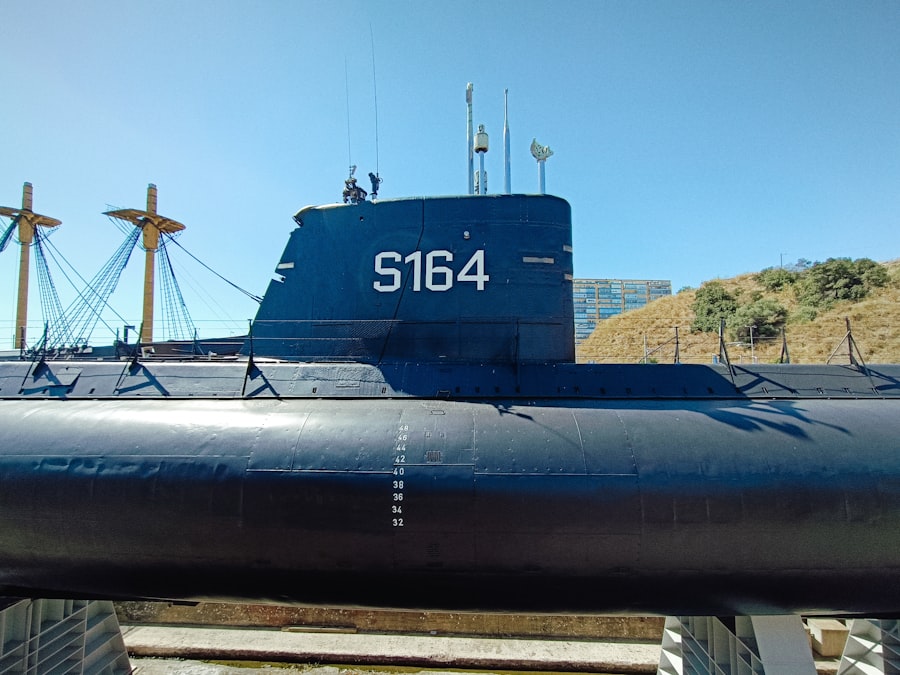
The pursuit of undersea dominance necessitates continuous innovation. Researchers are exploring novel physical principles and pushing the boundaries of existing technologies to develop a new generation of detection capabilities.
Non-Acoustic, Non-Magnetic Approaches
Beyond sound and magnetics, other physical phenomena are being investigated for their potential in submarine detection. These avenues often leverage extremely subtle interactions that are challenging to detect and interpret.
Gravimetric Anomaly Detection
Submarines, being dense masses, create localized variations in the Earth’s gravitational field. Gravimetric Anomaly Detection (GAD) aims to detect these minute gravitational perturbations. While the gravitational pull is extremely weak, highly sensitive gravimeters are under development. The challenge lies in distinguishing the submarine’s faint gravitational signature from background geological variations and the inherent noise of the measuring platform. This technology holds promise for detecting large submarines at significant depths, as gravity is not attenuated as rapidly as magnetic fields.
Wake Detection and Bioluminescence Sensors
A moving submarine leaves a wake, disrupting the water column in subtle ways. This wake can manifest as changes in temperature, salinity, turbidity, or even microscopic air bubbles. Sensors designed to detect these anomalies are in various stages of research and development. Another intriguing possibility lies in the detection of bioluminescence. Some marine organisms emit light when disturbed. A submarine passing through a region rich in bioluminescent organisms could, in theory, leave a glowing trail, detectable by sensitive optical sensors. The operational effectiveness of these methods is highly dependent on environmental conditions and the specific characteristics of the submarine’s wake.
Advanced Sensor Fusion and AI Integration
The future of submarine detection undeniably lies in intelligent integration of diverse sensor types and the pervasive application of artificial intelligence. No single sensor provides a complete solution; instead, a multi-modal approach is the most robust.
Synergistic Multi-Phenomenological Detection
Sensor fusion involves combining data from multiple, disparate sensors (acoustic, magnetic, gravimetric, etc.) to create a more comprehensive and statistically robust picture of the underwater environment. For instance, a faint acoustic contact, when correlated with a subtle magnetic anomaly, might be elevated to a higher confidence level than either detection alone. This synergistic approach aims to overcome the individual limitations of each sensor type. Imagine a tapestry woven from threads of different colors and textures, each thread representing a sensor’s data, creating a richer, more detailed image than any single thread could provide.
Machine Learning and Cognitive Sonar
Artificial intelligence and machine learning are rapidly transforming how sensor data is processed and interpreted. Cognitive sonar, for example, is being developed to adapt its parameters in real-time based on environmental conditions and observed targets, optimizing its performance. Machine learning algorithms can identify subtle patterns in noisy data, differentiate between submarine signatures and false positives with higher accuracy, and even predict submarine movements based on learned behaviors and environmental cues. This transition from human-centric analysis to AI-driven intelligence represents a paradigm shift, enabling faster, more accurate decision-making in the complex domain of submarine warfare. As these systems mature, they will become invaluable force multipliers, extending the reach and effectiveness of anti-submarine warfare capabilities.
In conclusion, the relentless pursuit of advanced submarine warfare detection technology is a strategic imperative. The ongoing evolution from rudimentary hydrophones to sophisticated multi-modal sensor fusion systems, empowered by artificial intelligence, underscores the enduring challenge posed by submerged adversaries. The ocean, a vast and often opaque medium, continues to serve as a crucible for innovation, pushing the boundaries of scientific inquiry and engineering ingenuity in the quest for underwater transparency.
WATCH THIS 🔐 The Submarine That Broke The Cold War | Naval Intelligence Espionage | SOSUS Compromise
FAQs
What is submarine warfare detection technology?
Submarine warfare detection technology refers to the various methods and tools used to identify, track, and monitor submarines during naval operations. This technology is crucial for maintaining maritime security and involves sonar systems, radar, magnetic anomaly detectors, and other advanced sensors.
How does sonar technology work in detecting submarines?
Sonar technology detects submarines by emitting sound waves underwater and analyzing the echoes that bounce back from objects. Active sonar sends out pulses and listens for reflections, while passive sonar listens for sounds produced by submarines, such as engine noise or propeller cavitation.
What are the main types of sonar used in submarine detection?
The main types of sonar used are active sonar, which emits sound pulses and listens for echoes, and passive sonar, which listens for sounds made by submarines without emitting signals. Both types are used by naval vessels, aircraft, and underwater sensors.
Can radar be used to detect submarines?
Radar is generally ineffective for detecting submerged submarines because radio waves do not travel well underwater. However, radar can detect submarines when they are surfaced or at periscope depth, especially by identifying periscopes or snorkels above the water surface.
What role do magnetic anomaly detectors (MAD) play in submarine detection?
Magnetic anomaly detectors sense disturbances in the Earth’s magnetic field caused by large metal objects like submarines. MAD systems are typically deployed on aircraft flying low over the ocean to detect submerged submarines.
Are there any emerging technologies in submarine detection?
Yes, emerging technologies include advanced underwater drones, improved acoustic sensors, artificial intelligence for signal processing, and satellite-based detection methods. These innovations aim to enhance detection range, accuracy, and reduce false alarms.
Why is submarine detection important in modern naval warfare?
Submarine detection is vital for national security, as submarines can conduct stealth attacks, gather intelligence, and disrupt maritime operations. Effective detection technology helps prevent surprise attacks and ensures control over strategic waterways.
What challenges exist in detecting submarines?
Challenges include the quietness and stealth capabilities of modern submarines, complex underwater environments that affect sound propagation, and the vastness of the oceans, which makes continuous monitoring difficult.
How do navies counteract submarine stealth technologies?
Navies use a combination of detection methods, deploy networks of sensors, employ anti-submarine warfare (ASW) tactics, and continuously upgrade detection technology to counteract submarine stealth features like anechoic coatings and noise reduction systems.
Is submarine detection technology used only by military forces?
Primarily, submarine detection technology is used by military forces for defense and strategic purposes. However, some technologies may also be used in scientific research, underwater exploration, and maritime safety operations.