The Cold War began following World War II’s conclusion, characterized by major shifts in global power and competing ideological systems. The wartime partnership between the United States and the Soviet Union, formed to defeat Nazi Germany and Imperial Japan, deteriorated as the conflict ended. Mutual suspicion and conflicting plans for Europe’s future created escalating tensions.
The United States promoted democratic governance and capitalist economics, while the Soviet Union pursued communist ideology and centralized state control. These fundamental differences established the foundation for decades of rivalry and confrontation. The Yalta Conference (February 1945) and Potsdam Conference (July-August 1945) revealed the deepening disagreement between the two powers.
Although President Franklin D. Roosevelt, Prime Minister Winston Churchill, and Soviet Premier Joseph Stalin initially attempted to maintain cooperation, their strategic objectives diverged significantly. The Soviet Union sought to expand its control throughout Eastern Europe by installing communist governments that would provide security against potential Western threats.
The United States, conversely, aimed to establish democratic institutions and market-based economies across Europe. This ideological conflict initiated the Cold War and fundamentally influenced international relations throughout the second half of the twentieth century.
Key Takeaways
- The Cold War began from post-World War II tensions between the US and USSR, leading to ideological and political rivalry.
- Europe was divided into Western democracies and Eastern communist states, symbolized by the Iron Curtain.
- Key conflicts like the Korean and Vietnam Wars were proxy battles reflecting Cold War tensions.
- The Cuban Missile Crisis brought the world close to nuclear war, highlighting the dangers of the arms race.
- The Cold War ended with the fall of the Berlin Wall and the dissolution of the Soviet Union, leaving a lasting global impact.
The Division of Europe
The division of Europe into East and West became a defining characteristic of the Cold War era. Following World War II, Europe was effectively split along ideological lines, with Western nations aligning themselves with the United States and Eastern nations falling under Soviet influence. This division was symbolized by the Iron Curtain, a term popularized by Winston Churchill in 1946 to describe the boundary separating the capitalist West from the communist East.
The Iron Curtain represented not just a physical barrier but also an ideological one, marking a stark contrast in governance, economic systems, and societal values. In Western Europe, countries like France, West Germany, and Italy embraced democratic institutions and market-oriented economies, supported by American aid through initiatives like the Marshall Plan. This financial assistance helped rebuild war-torn nations and fostered economic growth, solidifying their alignment with the United States.
Conversely, Eastern European nations such as Poland, Hungary, and Czechoslovakia fell under Soviet control, where communist regimes suppressed dissent and maintained strict state control over all aspects of life. The division of Europe not only created a geopolitical landscape characterized by tension but also led to significant cultural and social differences that would persist throughout the Cold War. The documentary reveals the shocking story of a KGB mole who infiltrated the highest levels of government.
The Korean War

The Korean War marked one of the first significant military confrontations of the Cold War, illustrating the global reach of the ideological struggle between communism and capitalism. In 1950, North Korea, backed by the Soviet Union and China, invaded South Korea in an attempt to unify the peninsula under a communist regime. The United States quickly intervened, leading a coalition of United Nations forces to defend South Korea.
This conflict was not merely a civil war; it was a proxy battle that reflected the broader tensions between superpowers. The war lasted until 1953 and resulted in a stalemate, with both sides suffering heavy casualties. The Korean Peninsula remained divided along the 38th parallel, a demarcation line that still exists today.
The Korean War solidified the United States’ commitment to containing communism and demonstrated its willingness to engage militarily in defense of allies. It also set a precedent for future conflicts during the Cold War, where local disputes often escalated into larger confrontations involving superpowers.
The Cuban Missile Crisis
The Cuban Missile Crisis of 1962 stands as one of the most perilous moments of the Cold War, bringing the world to the brink of nuclear conflict. The crisis began when American intelligence discovered that the Soviet Union was installing nuclear missiles in Cuba, just 90 miles from Florida.
Kennedy and Soviet Premier Nikita Khrushchev. The United States viewed this as an unacceptable threat to national security, while the Soviets argued it was a necessary measure for their own defense. In response to the crisis, Kennedy implemented a naval blockade around Cuba to prevent further shipments of military equipment.
For thirteen days, both superpowers engaged in intense negotiations, with fears of nuclear war looming large. Ultimately, a resolution was reached when Khrushchev agreed to dismantle the missile sites in exchange for a U.S. commitment not to invade Cuba and a secret agreement to remove American missiles from Turkey.
The Cuban Missile Crisis underscored the dangers of nuclear proliferation and highlighted the need for improved communication between superpowers to prevent future confrontations.
The Vietnam War
| Documentary Title | Year Released | Focus Area | Duration (minutes) | Notable Military Events Covered | Production Country |
|---|---|---|---|---|---|
| The Cold War: A New History | 2017 | Global Cold War Overview | 90 | Berlin Airlift, Cuban Missile Crisis, Vietnam War | USA |
| Cold War Military Strategies | 2015 | Military Tactics and Technology | 60 | Nuclear Arms Race, NATO vs Warsaw Pact | UK |
| Vietnam: The Cold War Battlefield | 2018 | Vietnam War | 120 | Operation Rolling Thunder, Tet Offensive | USA |
| Spies and Secrets: Cold War Espionage | 2016 | Intelligence and Espionage | 75 | U-2 Incident, KGB vs CIA operations | Canada |
| Berlin Wall: The Cold War Divide | 2019 | Berlin Wall and Germany | 80 | Construction and Fall of Berlin Wall | Germany |
The Vietnam War represented another significant chapter in the Cold War narrative, illustrating how ideological conflicts could manifest in brutal military engagements. Beginning in the late 1950s and escalating throughout the 1960s, this conflict pitted communist North Vietnam against U.S.-backed South Vietnam. The United States’ involvement was driven by its commitment to containing communism in Southeast Asia, fearing that a communist victory in Vietnam would lead to a domino effect throughout the region.
As American troops were deployed in increasing numbers, public opinion began to shift dramatically. Graphic images of warfare broadcast on television contrasted sharply with government assurances of progress, leading to widespread protests across America. The war became deeply polarizing, raising questions about U.S.
foreign policy and its moral implications. Ultimately, despite significant military investment and resources, the United States withdrew from Vietnam in 1973, leading to the fall of Saigon in 1975 and marking a significant defeat for American foreign policy during the Cold War.
The Arms Race
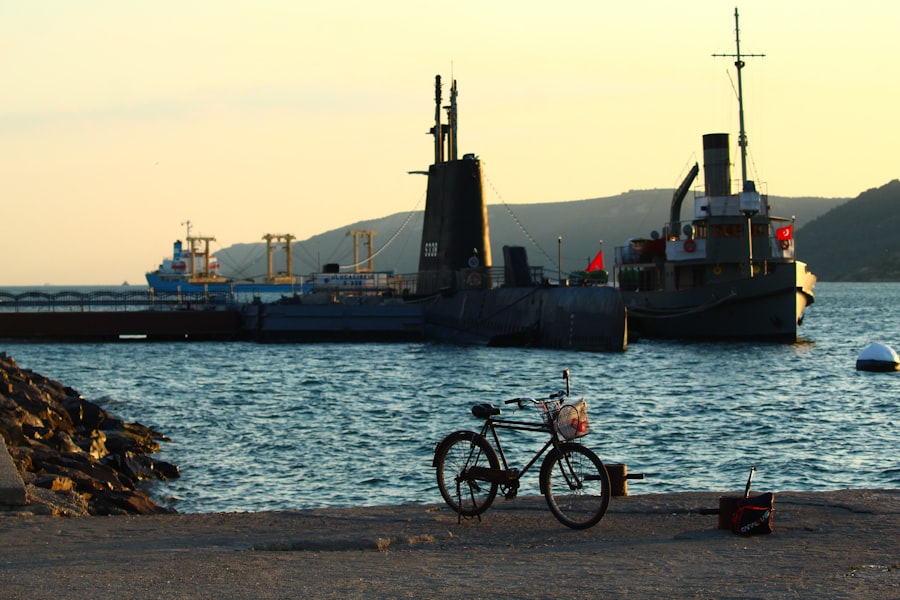
The arms race between the United States and the Soviet Union was a defining feature of the Cold War, characterized by an intense competition to develop and stockpile nuclear weapons. Following World War II, both superpowers recognized that possessing nuclear capabilities would provide them with significant leverage on the global stage. This race led to unprecedented advancements in military technology and an ever-expanding arsenal of weapons capable of mass destruction.
As each side sought to outdo the other, they invested heavily in research and development programs aimed at creating more powerful weapons systems. The introduction of intercontinental ballistic missiles (ICBMs) and submarine-launched ballistic missiles (SLBMs) further escalated tensions, as both nations developed capabilities that could strike targets across vast distances within minutes. The arms race not only heightened fears of nuclear war but also prompted international efforts toward arms control agreements, such as the Strategic Arms Limitation Talks (SALT), which aimed to curb the proliferation of nuclear weapons.
The Space Race
The Space Race emerged as another arena for competition between the United States and the Soviet Union during the Cold War. Sparked by the launch of Sputnik 1 by the Soviets in 1957—the first artificial satellite to orbit Earth—the Space Race became emblematic of technological prowess and national prestige. The successful launch sent shockwaves through America, igniting fears that the Soviets had gained an upper hand in science and technology.
In response, the United States accelerated its own space program, culminating in significant achievements such as NASA’s Apollo missions. The crowning moment came on July 20, 1969, when astronaut Neil Armstrong became the first human to set foot on the moon. This monumental achievement not only showcased American ingenuity but also served as a powerful symbol of victory in the ideological battle against communism.
The Space Race ultimately contributed to advancements in technology that would have lasting impacts beyond military applications.
Proxy Wars
Throughout the Cold War, proxy wars became a common strategy employed by both superpowers as they sought to extend their influence without engaging in direct military confrontation. These conflicts often occurred in developing nations where local factions aligned themselves with either capitalist or communist ideologies. From Latin America to Africa and Asia, these proxy wars reflected broader geopolitical struggles while often resulting in devastating consequences for those directly involved.
These interventions often exacerbated existing tensions and prolonged conflicts that might have otherwise reached resolution more swiftly. Proxy wars allowed superpowers to assert their influence while avoiding direct confrontation; however, they also left lasting scars on nations caught in these struggles—often leading to instability that persisted long after hostilities ceased.
The Fall of the Berlin Wall
The fall of the Berlin Wall in 1989 marked a pivotal moment in history that symbolized not only the end of division within Germany but also signaled a broader shift in global politics at the close of the Cold War. Erected in 1961 as a physical barrier separating East and West Berlin, the wall became an enduring symbol of communist oppression and Western freedom. As economic hardships mounted in Eastern Europe throughout the 1980s, calls for reform grew louder among citizens living under oppressive regimes.
Mass protests erupted across East Germany demanding greater freedoms and democratic reforms. On November 9, 1989, amid mounting pressure from citizens and political changes within Eastern Europe, authorities announced that East Germans could cross into West Berlin freely. The wall was breached amidst jubilant celebrations as people from both sides came together to dismantle it physically—a powerful act representing hope for reunification and change across Europe.
The End of the Cold War
The end of the Cold War was marked by a series of events that culminated in significant political transformations across Europe and beyond. By the late 1980s, Mikhail Gorbachev’s policies of glasnost (openness) and perestroika (restructuring) aimed at reforming Soviet society began to take hold but inadvertently weakened communist control over Eastern Europe. As nations like Poland held free elections and Hungary opened its borders with Austria, momentum for change accelerated throughout the region.
By 1991, with increasing internal pressures and external challenges facing Soviet leadership, Gorbachev’s government faced mounting opposition from hardliners who sought to maintain traditional communist rule. A failed coup attempt further destabilized his authority and led to declarations of independence from several Soviet republics. Ultimately, on December 25, 1991, Gorbachev resigned as president of what had become a disintegrating Soviet Union—effectively marking an end to decades-long hostilities between East and West.
The Legacy of the Cold War
The legacy of the Cold War continues to shape contemporary global politics and international relations today. While it officially ended over three decades ago, many issues rooted in this period remain unresolved—such as ongoing tensions between Russia and NATO countries or conflicts arising from proxy wars fought during that era. Additionally, nuclear proliferation remains a pressing concern as nations grapple with balancing security interests against potential threats posed by rogue states or non-state actors.
Moreover, cultural impacts from this period persist as well; literature, film, art—and even popular culture—often reflect themes stemming from Cold War anxieties about espionage or ideological conflict between capitalism and communism. As new geopolitical challenges emerge in an increasingly interconnected world—such as climate change or cyber warfare—the lessons learned during this tumultuous period serve as reminders about diplomacy’s importance amid competing interests on both sides of ideological divides.
For those interested in exploring the intricate dynamics of military history during the Cold War era, a compelling resource is available at this article. It delves into the various strategies and conflicts that defined the period, providing valuable insights into the geopolitical tensions that shaped the modern world. This documentary-style examination offers a thorough understanding of the military strategies employed by both sides, making it a must-read for history enthusiasts.
WATCH THIS 🛑 SHOCKING: The KGB Mole Who Made Every Soviet Submarine Visible
FAQs
What is a documentary about military history in the Cold War era?
A documentary about military history in the Cold War era explores the geopolitical tensions, conflicts, and military strategies between the United States, the Soviet Union, and their respective allies from roughly 1947 to 1991. It often includes archival footage, expert interviews, and analysis of key events such as the Korean War, Vietnam War, nuclear arms race, and espionage activities.
Why is the Cold War era significant in military history?
The Cold War era is significant because it shaped global military strategies and alliances without direct large-scale conflict between the two superpowers. It introduced new forms of warfare, including nuclear deterrence, proxy wars, and intelligence operations, which had lasting impacts on international relations and military technology.
What are common themes covered in Cold War military history documentaries?
Common themes include the arms race and nuclear weapons development, espionage and intelligence agencies like the CIA and KGB, proxy wars in Korea and Vietnam, the space race, military alliances such as NATO and the Warsaw Pact, and the eventual dissolution of the Soviet Union.
How do documentaries about the Cold War era use archival footage?
Documentaries use archival footage to provide authentic visual context, including newsreels, military broadcasts, speeches by political leaders, and battlefield scenes. This footage helps viewers understand the historical atmosphere and the realities of military life during the Cold War.
Who are some notable figures often featured in Cold War military history documentaries?
Notable figures include political leaders like John F. Kennedy, Nikita Khrushchev, Ronald Reagan, and Mikhail Gorbachev; military leaders such as General Douglas MacArthur; and intelligence figures like Kim Philby and Aldrich Ames.
What role did nuclear weapons play during the Cold War?
Nuclear weapons were central to the Cold War military strategy, serving as a deterrent through the concept of mutually assured destruction (MAD). The arms race led to the stockpiling of thousands of nuclear warheads and several crises, including the Cuban Missile Crisis, which brought the world close to nuclear war.
Can Cold War military history documentaries help in understanding current global conflicts?
Yes, these documentaries provide insights into the origins of modern military alliances, ongoing geopolitical tensions, and the evolution of warfare technology and strategy, which are relevant to understanding current international relations and conflicts.
Where can one find documentaries about military history in the Cold War era?
Such documentaries are available on streaming platforms like Netflix, Amazon Prime, and YouTube, as well as on specialized history channels like the History Channel, National Geographic, and PBS. Libraries and educational institutions may also provide access to these resources.