
The Cold War emerged in the aftermath of World War II, a period marked by significant geopolitical shifts and ideological confrontations. The alliance between the United States and the Soviet Union, which had been forged out of necessity to combat the Axis powers, began to fray as the war drew to a close. The differing visions for post-war Europe and the world at large became increasingly apparent.
The United States championed capitalism and democracy, while the Soviet Union sought to expand its communist ideology. This ideological rift laid the groundwork for decades of tension and conflict. As the war ended, the Yalta and Potsdam conferences highlighted the growing discord between the two superpowers.
Leaders such as Franklin D. Roosevelt, Winston Churchill, and Joseph Stalin grappled with how to reshape Europe. However, their differing priorities led to mistrust and suspicion.
The Soviet Union’s desire to secure its borders by establishing friendly regimes in Eastern Europe clashed with the American goal of promoting self-determination and democratic governance. This fundamental disagreement over political ideologies and national interests set the stage for a prolonged period of hostility that would come to define international relations in the latter half of the 20th century.
Key Takeaways
- The Cold War began from post-World War II tensions between the US and USSR, leading to ideological and political rivalry.
- Europe was divided into Western democracies and Eastern communist states, symbolized by the Iron Curtain.
- Key conflicts like the Korean and Vietnam Wars were proxy battles reflecting Cold War tensions.
- The Cuban Missile Crisis brought the world close to nuclear war, highlighting the dangers of the arms race.
- The Cold War ended with the fall of the Berlin Wall and the dissolution of the Soviet Union, marking a shift in global power.
The Division of Europe
The division of Europe into East and West became a defining characteristic of the Cold War era. Following World War II, Eastern European countries fell under Soviet influence, leading to the establishment of communist governments in nations such as Poland, Hungary, and Czechoslovakia. This expansion of Soviet power was met with alarm in Western Europe and the United States, which viewed it as a direct threat to democracy and capitalism.
The Iron Curtain, a term popularized by Winston Churchill, symbolized this stark division, separating the communist East from the democratic West. The Marshall Plan, initiated by the United States in 1948, aimed to rebuild war-torn Europe and prevent the spread of communism by fostering economic stability. This initiative provided substantial financial aid to Western European countries, enabling them to recover and resist Soviet influence.
In contrast, the Soviet Union established its own economic framework through COMECON, which sought to integrate Eastern European economies under its control. This division not only solidified political boundaries but also created a cultural and ideological chasm that would persist for decades. Learn about the fascinating story of a Soviet radar engineer espionage Cold War operation that changed history.
The Korean War
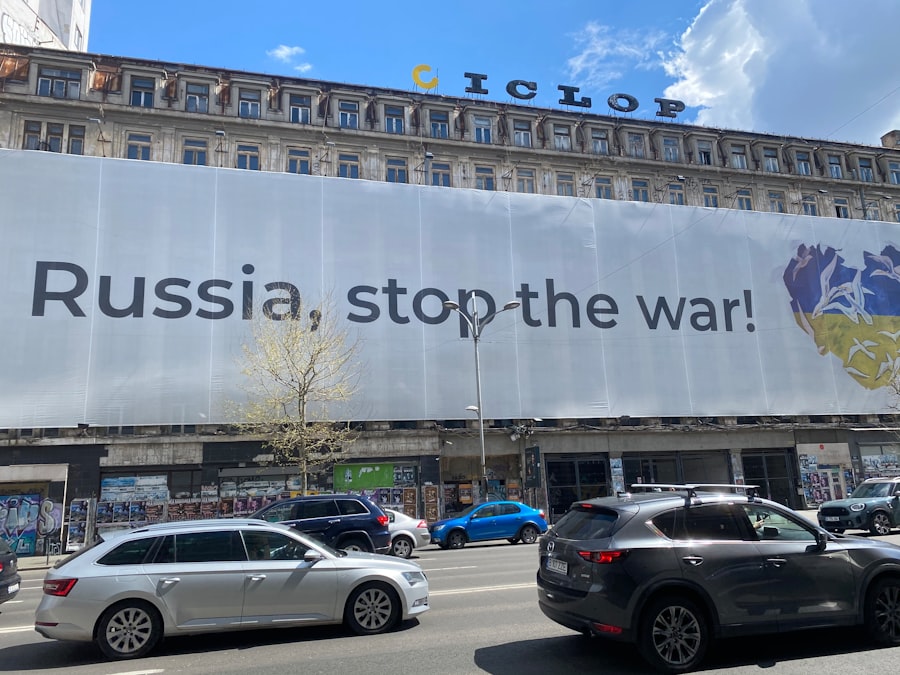
The Korean War marked one of the first significant military confrontations of the Cold War, illustrating the global reach of the ideological struggle between communism and capitalism. In 1950, North Korea, backed by the Soviet Union and China, invaded South Korea in an attempt to unify the peninsula under a communist regime. The United States quickly intervened, leading a coalition of United Nations forces to defend South Korea.
This conflict was not merely a regional struggle; it was emblematic of the broader tensions between superpowers. The war resulted in a bloody stalemate that lasted until 1953, with millions of lives lost and widespread destruction across the Korean Peninsula. The armistice agreement established a demilitarized zone along the 38th parallel, effectively maintaining the division between North and South Korea.
The Korean War underscored the willingness of both superpowers to engage in military action to protect their interests and ideologies, setting a precedent for future conflicts throughout the Cold War.
The Cuban Missile Crisis
The Cuban Missile Crisis in October 1962 represented one of the most perilous moments of the Cold War, bringing the world to the brink of nuclear conflict. The crisis began when American reconnaissance flights revealed that the Soviet Union was installing nuclear missiles in Cuba, just 90 miles from Florida. This development was perceived as an existential threat by President John F.
Kennedy and his administration, prompting a series of tense negotiations and military preparations. In response to this threat, Kennedy imposed a naval blockade around Cuba to prevent further shipments of military equipment. The standoff lasted for thirteen days, during which both superpowers engaged in intense diplomatic negotiations.
Ultimately, a resolution was reached when Soviet Premier Nikita Khrushchev agreed to dismantle the missile sites in exchange for a U.S. commitment not to invade Cuba and a secret agreement to remove American missiles from Turkey. The crisis highlighted the dangers of nuclear proliferation and underscored the need for better communication between superpowers to prevent future confrontations.
The Space Race
| Year | Event | Location | Significance | Casualties |
|---|---|---|---|---|
| 1947 | Truman Doctrine announced | United States | Start of US policy to contain communism | 0 |
| 1948-1949 | Berlin Airlift | Berlin, Germany | Western Allies supply West Berlin during Soviet blockade | 79 (aircrew deaths) |
| 1950-1953 | Korean War | Korean Peninsula | First major armed conflict of the Cold War | Approx. 2.5 million military and civilian deaths |
| 1961 | Bay of Pigs Invasion | Cuba | Failed US-backed attempt to overthrow Castro | Approx. 114 killed (invasion forces) |
| 1962 | Cuban Missile Crisis | Cuba | Closest Cold War came to nuclear war | 0 |
| 1965-1973 | Vietnam War | Vietnam | Major Cold War conflict involving US and communist forces | Approx. 3 million deaths |
| 1979-1989 | Soviet-Afghan War | Afghanistan | Proxy war between Soviet Union and US-backed mujahideen | Approx. 1 million deaths |
| 1983 | Able Archer 83 | Europe (NATO countries) | NATO exercise that nearly triggered Soviet nuclear alert | 0 |
| 1989 | Fall of the Berlin Wall | Berlin, Germany | Symbolic end of Cold War divisions in Europe | 0 |
The Space Race emerged as another arena for competition between the United States and the Soviet Union during the Cold War. It was not merely about technological advancement; it was also a reflection of national pride and ideological superiority. The launch of Sputnik by the Soviet Union in 1957 marked a significant milestone, as it became the first artificial satellite to orbit Earth.
This achievement shocked Americans and ignited fears that the Soviets were ahead in technological capabilities. In response, the United States accelerated its own space program, culminating in NASA’s establishment and ambitious goals such as landing a man on the Moon. The Apollo 11 mission in 1969 successfully achieved this objective when Neil Armstrong became the first human to set foot on lunar soil.
The Space Race symbolized not only scientific progress but also served as a battleground for demonstrating ideological supremacy. Each success or failure in space exploration was closely monitored and interpreted through the lens of Cold War rivalry.
The Vietnam War
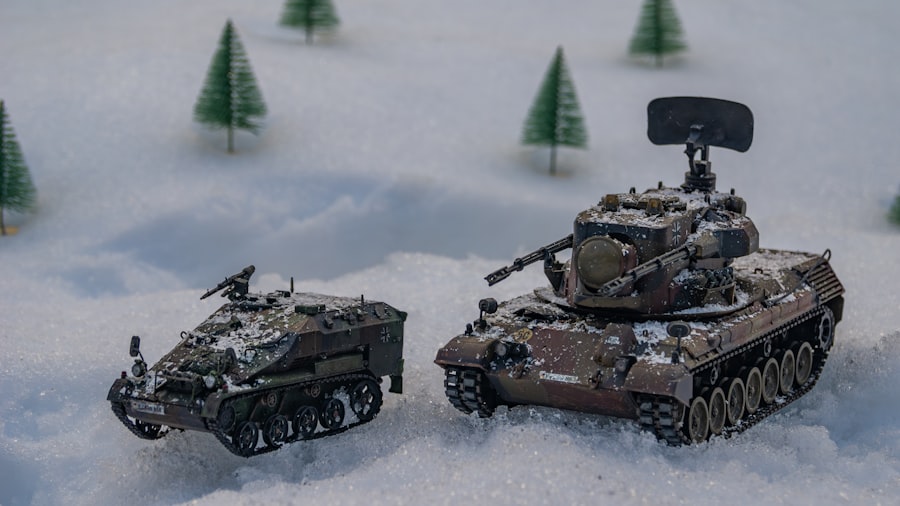
The Vietnam War became one of the most controversial conflicts associated with the Cold War, deeply affecting American society and foreign policy. Beginning in earnest in the late 1950s, U.S. involvement escalated as part of its commitment to contain communism in Southeast Asia.
The belief in the “domino theory” suggested that if one country fell to communism, neighboring nations would follow suit. As such, American military presence increased significantly throughout the 1960s. The war proved to be a quagmire for U.S.
forces, with guerrilla tactics employed by North Vietnamese troops and Viet Cong fighters complicating traditional military strategies. Public opposition to the war grew as images of its brutality were broadcast into American homes, leading to widespread protests and a questioning of U.S.
Ultimately, Vietnam became synonymous with failure for America, culminating in a withdrawal that left South Vietnam vulnerable to communist takeover in 1975.
The Arms Race
The arms race between the United States and the Soviet Union was characterized by an intense competition to develop increasingly sophisticated nuclear arsenals. Following World War II, both nations recognized that nuclear weapons would play a crucial role in maintaining power and deterrence against adversaries. This race led to an unprecedented accumulation of weapons capable of causing mass destruction.
As each superpower sought to outdo the other, advancements in missile technology and delivery systems became paramount. The development of intercontinental ballistic missiles (ICBMs) allowed for rapid strikes across vast distances, heightening fears of an accidental or preemptive nuclear war. Treaties such as SALT (Strategic Arms Limitation Talks) were initiated in an attempt to curb this escalation; however, mistrust remained pervasive throughout much of the Cold War era.
The Berlin Wall
The construction of the Berlin Wall in 1961 became one of the most potent symbols of Cold War division. Following World War II, Berlin had been divided into East and West sectors controlled by different powers. As East Germans began fleeing to West Berlin in search of freedom and opportunity, authorities in East Germany erected a wall to stem this exodus.
The wall physically separated families and friends while serving as a stark reminder of ideological differences. For nearly three decades, the Berlin Wall stood as a barrier not only between East and West Berlin but also between communism and democracy. Its fall in 1989 marked a significant turning point in history, symbolizing not just the collapse of physical barriers but also an ideological shift away from communism in Eastern Europe.
The event heralded a new era characterized by hopes for reunification and greater cooperation among nations previously divided by Cold War tensions.
Proxy Wars
Throughout the Cold War, proxy wars became a common strategy employed by both superpowers as they sought to expand their influence without direct confrontation. These conflicts often occurred in developing nations where local factions aligned themselves with either capitalist or communist ideologies. Notable examples include conflicts in Afghanistan, Angola, and Nicaragua.
In these proxy wars, superpowers provided military aid, training, and resources to support their respective allies while attempting to undermine their opponents’ efforts. This indirect approach allowed both sides to engage in conflict while avoiding full-scale war that could escalate into nuclear confrontation. However, these wars often resulted in devastating consequences for local populations and prolonged instability within affected regions.
Military Alliances
Military alliances played a crucial role in shaping global dynamics during the Cold War era. NATO (North Atlantic Treaty Organization), established in 1949, represented a collective defense pact among Western nations aimed at countering Soviet expansionism. In response, the Warsaw Pact was formed in 1955 as a counterbalance among Eastern Bloc countries under Soviet influence.
These alliances solidified divisions within Europe and beyond while fostering mutual support among member states during times of crisis. They also contributed to an atmosphere of suspicion and rivalry that characterized international relations throughout much of this period. As tensions escalated globally, these alliances became instrumental in shaping military strategies and responses to perceived threats.
The End of the Cold War
The end of the Cold War marked a profound transformation in global politics and international relations. By the late 1980s, internal pressures within the Soviet Union began to mount as economic stagnation and political dissent grew more pronounced under Mikhail Gorbachev’s leadership. His policies of glasnost (openness) and perestroika (restructuring) aimed at reforming Soviet society but inadvertently weakened state control over Eastern Europe.
As Eastern European nations began to assert their independence from Soviet influence—culminating in events such as Poland’s Solidarity movement—the foundations of communist rule began to crumble.
By 1991, with the dissolution of the Soviet Union itself, an era characterized by ideological confrontation came to an end.
The conclusion of the Cold War ushered in new opportunities for cooperation among former adversaries while reshaping global power dynamics. It marked not only a victory for democratic ideals but also raised questions about future international relations as new challenges emerged on the global stage.
The Cold War era was marked by a series of geopolitical tensions and military strategies that shaped the modern world. One insightful article that delves into the intricacies of military history during this period is available at this link. It explores the various conflicts, alliances, and the overarching ideological battle between the East and West, providing a comprehensive overview of how these factors influenced global dynamics.
WATCH THIS! 🕵️ HE CHOSE BETRAYAL—And His Wife Paid the Price | The Billion Dollar Spy
FAQs
What was the Cold War era?
The Cold War era was a period of geopolitical tension between the United States and its NATO allies and the Soviet Union and its satellite states, lasting roughly from 1947 to 1991. It was characterized by political, military, and ideological rivalry without direct large-scale fighting between the two superpowers.
What were the main military strategies during the Cold War?
The main military strategies during the Cold War included deterrence through nuclear weapons, the doctrine of Mutually Assured Destruction (MAD), proxy wars, espionage, and the buildup of conventional and nuclear forces. Both sides aimed to prevent direct conflict while competing for global influence.
What were some significant military conflicts during the Cold War?
Significant military conflicts during the Cold War included the Korean War (1950-1953), the Vietnam War (1955-1975), the Soviet-Afghan War (1979-1989), and various proxy wars in Africa, Latin America, and Asia. These conflicts often involved indirect confrontation between the US and the USSR.
How did nuclear weapons influence military history during the Cold War?
Nuclear weapons played a central role in Cold War military history by creating a balance of power based on the threat of mutual destruction. The arms race led to the development of vast arsenals and delivery systems, influencing diplomatic negotiations and military planning.
What was the role of espionage in Cold War military history?
Espionage was crucial during the Cold War, with both sides conducting extensive intelligence operations to gather information on military capabilities, political intentions, and technological developments. Agencies like the CIA and KGB were heavily involved in covert operations.
How did the Cold War end?
The Cold War ended with the dissolution of the Soviet Union in 1991, following a series of political reforms, economic challenges, and the easing of tensions through arms control agreements and diplomatic efforts between the US and USSR.
What impact did the Cold War have on military technology?
The Cold War spurred significant advancements in military technology, including the development of intercontinental ballistic missiles (ICBMs), nuclear submarines, stealth aircraft, satellite reconnaissance, and early warning systems, many of which continue to influence modern military capabilities.