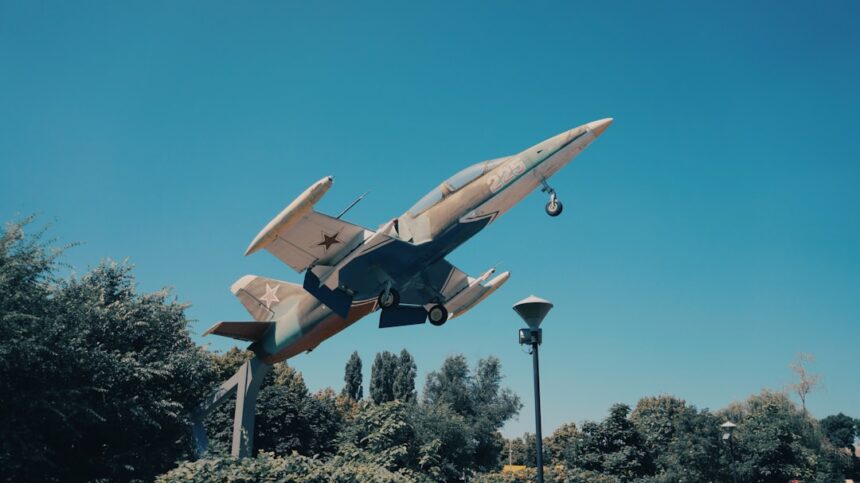
The Cold War, a period of geopolitical tension between the United States and the Soviet Union, spanned from the end of World War II in 1945 until the dissolution of the Soviet Union in 1991. Central to this era was the arms race, a competition that saw both superpowers amassing vast arsenals of weapons, particularly nuclear arms. This race was not merely about stockpiling weapons; it was a complex interplay of technological innovation, military strategy, and political ideology.
The stakes were incredibly high, as both nations sought to assert their dominance on the global stage while simultaneously deterring the other from potential aggression. The arms race was characterized by a series of developments that transformed military capabilities and international relations. Each side aimed to outdo the other in terms of weaponry, leading to an unprecedented escalation in military spending and technological advancements.
The fear of mutually assured destruction (MAD) loomed large, as both superpowers recognized that any direct conflict could lead to catastrophic consequences. This paradox of deterrence shaped not only military strategies but also diplomatic relations, as both nations navigated a precarious balance between competition and the need for stability.
Key Takeaways
- The Cold War arms race spurred rapid advancements in nuclear weapons, delivery systems, and missile defense technologies.
- Space exploration and satellite technology became critical components of military strategy and intelligence gathering.
- Innovations in electronic warfare, surveillance, and cyber communication reshaped modern combat and espionage.
- Proxy wars and arms sales extended the Cold War’s influence globally, fueling regional conflicts with advanced weaponry.
- Many Cold War-era technologies laid the foundation for contemporary military and civilian applications.
Nuclear Weapons and Delivery Systems
At the heart of the Cold War arms race were nuclear weapons, which represented the pinnacle of destructive capability. The United States and the Soviet Union developed increasingly sophisticated nuclear arsenals, with each nation striving to create more powerful bombs and more reliable delivery systems. The introduction of thermonuclear weapons, or hydrogen bombs, marked a significant escalation in destructive potential, as these devices could unleash energy equivalent to millions of tons of TNT.
The race to develop these weapons was not just about sheer power; it also involved intricate scientific advancements in nuclear physics and engineering. Delivery systems for nuclear weapons evolved rapidly during this period. Initially reliant on bombers, both nations soon turned to intercontinental ballistic missiles (ICBMs) that could strike targets thousands of miles away within minutes.
The development of submarine-launched ballistic missiles (SLBMs) added another layer of complexity to the strategic landscape, allowing for second-strike capabilities that enhanced deterrence. The ability to launch a nuclear attack from submerged submarines ensured that even if one side was attacked first, it could still retaliate with devastating force. This evolution in delivery systems underscored the importance of technological superiority in maintaining a credible deterrent. Learn about the fascinating story of a Soviet radar engineer espionage Cold War operation that changed history.
Space Race and Satellite Technology

The Cold War arms race extended beyond terrestrial weaponry into the realm of space exploration, culminating in what is often referred to as the Space Race. This competition was fueled by national pride and the desire for technological supremacy, as both superpowers recognized that advancements in space technology could have significant military implications. The launch of Sputnik by the Soviet Union in 1957 marked a pivotal moment, as it demonstrated their capability to send objects into orbit and raised concerns in the United States about potential missile applications.
In response, the United States accelerated its own space program, leading to significant advancements in satellite technology. Satellites became crucial for reconnaissance, communication, and navigation, providing both nations with vital intelligence on each other’s military capabilities. The ability to monitor missile launches and troop movements from space transformed military strategy and enhanced situational awareness.
Moreover, the development of satellite technology laid the groundwork for future advancements in civilian applications, including telecommunications and weather forecasting.
Missile Defense Systems
As both superpowers expanded their nuclear arsenals, the need for effective missile defense systems became increasingly apparent. The concept of defending against incoming missiles was fraught with challenges, yet both nations invested heavily in research and development to create systems capable of intercepting and neutralizing threats. The United States initiated programs such as the Strategic Defense Initiative (SDI), which aimed to develop a space-based missile defense system that could protect against a nuclear attack.
The Soviet Union also pursued its own missile defense strategies, focusing on ground-based systems designed to intercept incoming warheads. These efforts reflected a broader strategic shift towards defensive postures in addition to offensive capabilities. However, the effectiveness of missile defense systems remained a contentious issue, as critics argued that they could not provide foolproof protection against a determined adversary’s nuclear arsenal.
The ongoing development of these systems highlighted the complexities of deterrence and defense during the Cold War.
Submarine and Naval Technology
| Technology | Country | Year Introduced | Key Features | Impact on Arms Race |
|---|---|---|---|---|
| Intercontinental Ballistic Missile (ICBM) | USA | 1959 | Long-range missile capable of delivering nuclear warheads across continents | Initiated rapid missile development and deployment by both superpowers |
| Intercontinental Ballistic Missile (ICBM) | USSR | 1957 | First successful ICBM launch (R-7 Semyorka) | Triggered US efforts to develop comparable missile technology |
| Submarine-Launched Ballistic Missile (SLBM) | USA | 1960 | Missiles launched from submarines, increasing second-strike capability | Enhanced nuclear deterrence and strategic stability |
| Submarine-Launched Ballistic Missile (SLBM) | USSR | 1967 | Deployment of ballistic missile submarines (e.g., Yankee-class) | Balanced US naval nuclear capabilities |
| Strategic Bomber (B-52 Stratofortress) | USA | 1955 | Long-range bomber capable of carrying nuclear weapons | Provided flexible nuclear strike options |
| Strategic Bomber (Tupolev Tu-95) | USSR | 1956 | Long-range turboprop bomber with nuclear payload | Countered US strategic bombing capabilities |
| Anti-Ballistic Missile (ABM) Systems | USA | 1960s | Systems designed to intercept incoming ballistic missiles | Led to arms control talks due to destabilizing effects |
| Anti-Ballistic Missile (ABM) Systems | USSR | 1970s | Deployment of ABM around Moscow | Prompted US-Soviet ABM Treaty in 1972 |
| Multiple Independently Targetable Reentry Vehicle (MIRV) | USA | 1970s | Missiles carrying multiple warheads targeting different locations | Increased strike capability and complexity of defense |
| Multiple Independently Targetable Reentry Vehicle (MIRV) | USSR | 1970s | Developed MIRV technology to match US capabilities | Escalated arms race and strategic tension |
Submarine technology played a crucial role in the Cold War arms race, particularly with the advent of nuclear-powered submarines capable of carrying ballistic missiles. These vessels provided both superpowers with a stealthy platform for launching nuclear strikes while remaining hidden beneath the ocean’s surface. The development of fleet ballistic missile submarines (SSBNs) allowed for continuous at-sea deterrence, ensuring that each nation maintained a credible second-strike capability.
Naval technology also evolved significantly during this period, with advancements in anti-submarine warfare (ASW) capabilities becoming paramount. Both sides invested in sophisticated sonar systems, depth charges, and anti-submarine aircraft to detect and neutralize enemy submarines. The cat-and-mouse game between submarines and ASW forces added another layer of complexity to naval strategy during the Cold War.
As each side sought to outmaneuver the other, naval engagements became emblematic of the broader tensions that defined this era.
Electronic Warfare and Surveillance
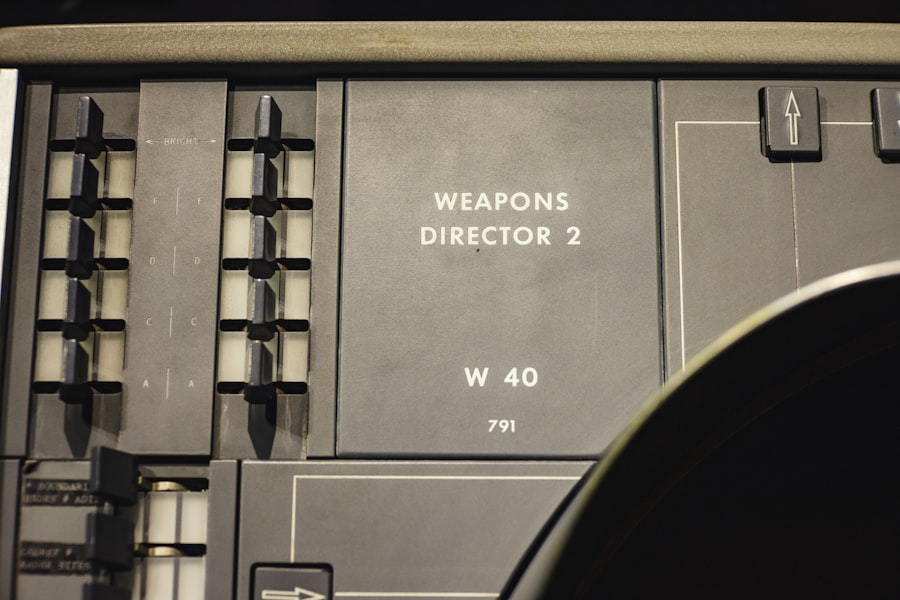
The Cold War arms race was not limited to conventional weaponry; it also encompassed advancements in electronic warfare and surveillance technologies. Both superpowers recognized that information superiority could provide a decisive advantage in military operations. As a result, they invested heavily in developing sophisticated electronic systems capable of intercepting communications, jamming enemy signals, and conducting reconnaissance.
Surveillance technologies evolved rapidly during this period, with both nations deploying high-altitude reconnaissance aircraft such as the U-2 and later the SR-71 Blackbird. These aircraft provided invaluable intelligence on enemy troop movements and missile installations. Additionally, advancements in radar technology allowed for improved detection capabilities, further enhancing situational awareness on both sides.
The integration of electronic warfare into military strategy underscored the importance of information dominance in modern conflicts.
Aircraft and Aviation Advancements
Aviation technology experienced remarkable advancements during the Cold War, driven by the need for superior air power. Both superpowers developed advanced fighter jets capable of engaging in aerial combat while also enhancing their strategic bombing capabilities. The introduction of supersonic aircraft like the Soviet MiG-21 and American F-4 Phantom II revolutionized air warfare, allowing for faster speeds and improved maneuverability.
Moreover, advancements in stealth technology began to emerge towards the latter part of the Cold War.
The introduction of stealth bombers like the B-2 Spirit showcased how technological innovation could alter the dynamics of air power.
These advancements not only influenced military tactics but also shaped international perceptions of air superiority during this tense period.
Chemical and Biological Weapons
While nuclear weapons dominated discussions about military capabilities during the Cold War, chemical and biological weapons also played a significant role in this arms race.
The potential for these weapons to cause mass casualties raised ethical concerns and led to international efforts aimed at limiting their proliferation.
Biological weapons research also advanced during this time, with both nations exploring various pathogens that could be weaponized for use against enemy populations or livestock. The fear of biological warfare prompted discussions about arms control agreements aimed at preventing their use. However, despite these efforts, concerns about clandestine research programs persisted throughout the Cold War era.
Cyber Warfare and Communication Technology
As technology continued to evolve during the Cold War, so too did methods of warfare. Cyber warfare emerged as a new frontier in military strategy, although its full implications were not yet understood at the time. Both superpowers recognized the importance of secure communication networks for coordinating military operations and intelligence gathering.
Efforts were made to develop encryption technologies that would safeguard sensitive information from interception by adversaries. The rise of computer technology also began to influence military operations towards the end of the Cold War. While cyber warfare was still in its infancy compared to today’s standards, early attempts at hacking and electronic espionage laid the groundwork for future conflicts fought in cyberspace.
As communication technology advanced rapidly, it became clear that information warfare would play an increasingly critical role in shaping military strategies in subsequent decades.
Proxy Wars and Arms Sales
The Cold War arms race extended beyond direct competition between the United States and the Soviet Union; it also manifested through proxy wars around the globe. Both superpowers sought to expand their influence by supporting allied governments or insurgent movements in various regions, often providing them with advanced weaponry and military training. This strategy allowed them to engage indirectly while avoiding direct confrontation.
Arms sales became a significant aspect of this geopolitical maneuvering, with both nations supplying weapons to allies engaged in conflicts across Asia, Africa, and Latin America. These proxy wars often resulted in prolonged violence and instability as local factions vied for power with external support from either superpower. The legacy of these conflicts continues to shape international relations today, as many regions still grapple with the consequences of Cold War-era interventions.
Legacy of Cold War Arms Race Technology
The legacy of the Cold War arms race is profound and far-reaching, influencing military strategies and international relations long after its conclusion. Many technological advancements developed during this period have had lasting impacts on modern warfare and defense systems. Nuclear deterrence remains a cornerstone of national security policies for several countries, while missile defense systems continue to evolve as new threats emerge.
Moreover, advancements in satellite technology have transformed civilian applications beyond military use, impacting global communications and navigation systems that are integral to daily life today. The lessons learned from electronic warfare and surveillance have shaped contemporary intelligence operations as nations navigate an increasingly complex security landscape. In conclusion, while the Cold War may have ended over three decades ago, its arms race left an indelible mark on global politics and military technology.
The innovations born from this era continue to influence contemporary conflicts and defense strategies as nations grapple with new challenges in an ever-evolving geopolitical landscape.
The Cold War arms race was marked by rapid advancements in military technology, as both the United States and the Soviet Union sought to outdo each other in weaponry and defense systems. A related article that delves deeper into the technological innovations of this era can be found at this link. This article explores the implications of these developments on global security and the balance of power during the Cold War.
WATCH THIS! 🕵️ HE CHOSE BETRAYAL—And His Wife Paid the Price | The Billion Dollar Spy
FAQs
What was the Cold War arms race?
The Cold War arms race was a period of intense competition between the United States and the Soviet Union from the late 1940s to the early 1990s, focused on developing and stockpiling advanced military weapons and technology, particularly nuclear arms.
What types of technology were developed during the Cold War arms race?
Technologies developed included nuclear weapons, intercontinental ballistic missiles (ICBMs), submarine-launched ballistic missiles (SLBMs), strategic bombers, missile defense systems, spy satellites, and advanced radar and communication systems.
Why was nuclear technology central to the Cold War arms race?
Nuclear technology was central because both superpowers sought to achieve deterrence through mutually assured destruction (MAD), ensuring that neither side would initiate a nuclear conflict due to the guaranteed catastrophic retaliation.
How did the arms race impact technological innovation?
The arms race accelerated technological innovation, leading to advancements in rocketry, aerospace, computing, and surveillance technologies, many of which later found civilian applications.
What role did space technology play in the Cold War arms race?
Space technology was crucial, as both nations developed satellite reconnaissance and missile early-warning systems. The competition also spurred the Space Race, leading to milestones like the launch of Sputnik and the Apollo moon landings.
Did the Cold War arms race lead to any arms control agreements?
Yes, several arms control agreements were established, including the Strategic Arms Limitation Talks (SALT I and II), the Anti-Ballistic Missile Treaty (ABM Treaty), and the Intermediate-Range Nuclear Forces Treaty (INF Treaty), aimed at limiting the proliferation and deployment of certain weapons.
What was the impact of the arms race on global security?
While the arms race heightened global tensions and the risk of nuclear war, it also led to a balance of power that some argue prevented direct conflict between the superpowers. However, it contributed to proxy wars and regional conflicts worldwide.
How did the Cold War arms race end?
The arms race began to wind down in the late 1980s with the easing of Cold War tensions, the signing of arms reduction treaties, and the eventual dissolution of the Soviet Union in 1991, which significantly reduced the competition in military technology development.