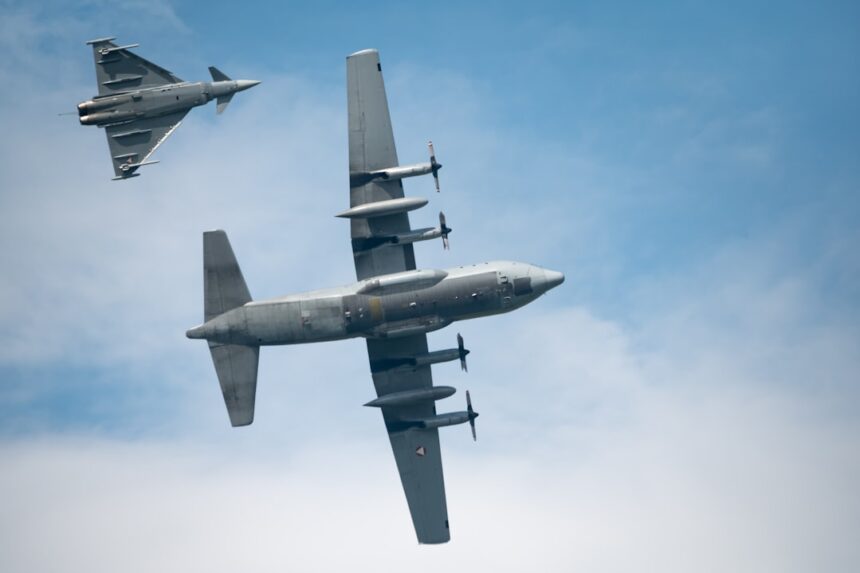
The origins of Cold War air combat doctrine can be traced back to the aftermath of World War II, a period marked by rapid technological advancements and shifting geopolitical landscapes. As the United States and the Soviet Union emerged as superpowers, their military strategies began to diverge significantly. The lessons learned from the air battles of World War II, particularly the importance of air superiority and strategic bombing, laid the groundwork for the development of new doctrines.
Both nations recognized that control of the skies would be crucial in any future conflict, leading to a race to develop more advanced aircraft and tactics. In this context, the United States adopted a doctrine that emphasized the need for a strong strategic bombing capability. This approach was influenced by the success of the Allied bombing campaigns in Europe and Japan, which demonstrated the potential of air power to achieve decisive results.
Conversely, the Soviet Union focused on a doctrine that prioritized massed formations of aircraft and ground support, reflecting its own experiences during the war. The ideological divide between capitalism and communism further fueled these differing approaches, as each superpower sought to assert its dominance through military might.
Key Takeaways
- Cold War air combat doctrine was heavily influenced by technological advancements and strategic bombing concepts.
- The evolution of fighter aircraft and air-to-air missiles significantly shaped air combat tactics and priorities.
- Air superiority and nuclear weapons played central roles in defining Cold War air combat strategies.
- Electronic warfare and tactical air combat doctrines emerged as critical components in response to evolving threats.
- The legacy of Cold War air combat doctrine continues to impact modern air warfare strategies and technologies.
The Role of Technology in Shaping Cold War Air Combat Doctrine
Technology played a pivotal role in shaping Cold War air combat doctrine, driving innovations that transformed aerial warfare. The introduction of jet engines revolutionized aircraft design, allowing for faster speeds and greater altitudes. This technological leap not only enhanced the performance of fighter jets but also necessitated new tactics and strategies.
As both superpowers invested heavily in research and development, they sought to leverage technological advancements to gain an edge over their adversaries. The advent of radar technology also significantly influenced air combat doctrine during this period. With improved detection capabilities, both the United States and the Soviet Union could track enemy aircraft more effectively, leading to the development of new interception tactics.
Additionally, advancements in avionics and weapon systems allowed for more precise targeting and engagement of enemy forces. As technology continued to evolve, so too did the strategies employed by air forces, resulting in a dynamic interplay between innovation and doctrine throughout the Cold War. Learn about the fascinating story of a Soviet radar engineer espionage Cold War operation that changed history.
The Influence of Strategic Bombing on Cold War Air Combat Doctrine
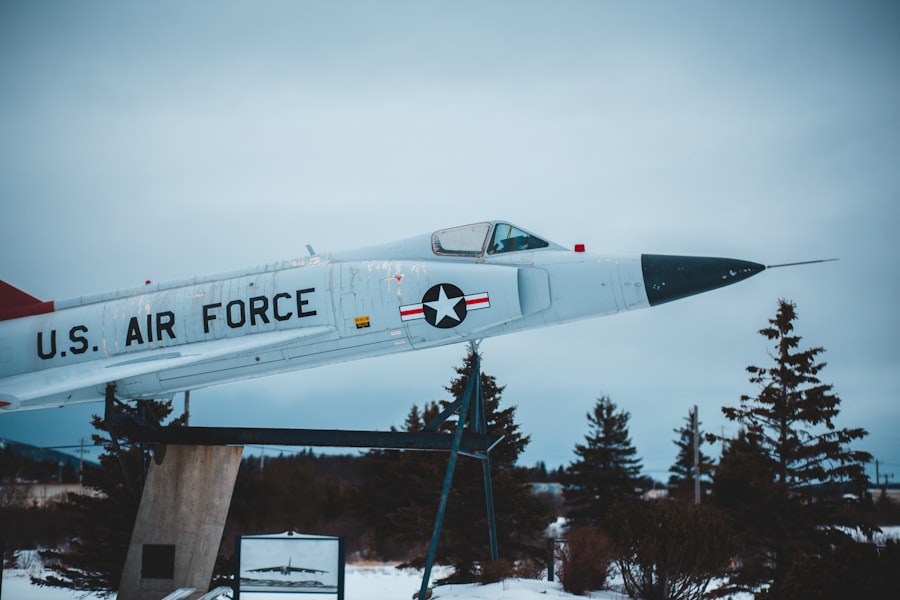
Strategic bombing emerged as a cornerstone of Cold War air combat doctrine, reflecting the belief that air power could deliver decisive blows to an enemy’s war-making capacity. The United States, in particular, embraced this concept, viewing strategic bombing as a means to deter aggression and project power globally. The legacy of World War II’s bombing campaigns informed this approach, leading to the development of doctrines that emphasized long-range bombers capable of striking deep into enemy territory.
The influence of strategic bombing extended beyond mere destruction; it also aimed to undermine an adversary’s morale and will to fight. This psychological aspect became increasingly important as both superpowers sought to demonstrate their military capabilities without engaging in direct conflict. The doctrine of mutually assured destruction (MAD) further reinforced the significance of strategic bombing, as both sides recognized that a successful strike could lead to catastrophic retaliation.
Consequently, air forces developed extensive plans for nuclear delivery systems, integrating them into their overall combat strategies.
The Evolution of Fighter Aircraft and its Impact on Cold War Air Combat Doctrine
The evolution of fighter aircraft during the Cold War had a profound impact on air combat doctrine, as advancements in design and technology led to new capabilities and tactics. Early in the conflict, jet fighters like the F-86 Sabre and MiG-15 showcased the potential of high-speed aerial engagements. These aircraft not only improved performance but also introduced concepts such as dogfighting and beyond-visual-range engagements, which would shape future combat scenarios.
As the Cold War progressed, fighter aircraft continued to evolve with the introduction of more sophisticated designs like the F-4 Phantom II and MiG-21. These aircraft incorporated advanced avionics, improved weapon systems, and enhanced maneuverability, allowing for greater versatility in combat roles. The development of multirole fighters further blurred the lines between air superiority and ground attack missions, leading to a more integrated approach to air combat.
This evolution necessitated a reevaluation of existing doctrines, as air forces adapted their strategies to leverage the capabilities of these new aircraft.
The Role of Air Superiority in Cold War Air Combat Doctrine
| Period | Doctrine Focus | Key Technologies | Notable Air Combat Strategies | Examples of Engagements |
|---|---|---|---|---|
| Late 1940s – Early 1950s | Transition from propeller to jet aircraft; emphasis on air superiority | Jet fighters (F-86 Sabre, MiG-15), early radar systems | Dogfighting with jet aircraft; use of radar for interception | Korean War air battles (MiG Alley) |
| Mid 1950s – 1960s | Introduction of missile technology; focus on beyond visual range (BVR) combat | Air-to-air missiles (AIM-7 Sparrow, K-13), improved radar and avionics | Shift from gun dogfights to missile engagements; electronic countermeasures | Vietnam War air combat; Operation Rolling Thunder |
| 1970s | Emphasis on multi-role fighters and electronic warfare | F-4 Phantom II, MiG-23, ECM pods, improved missile tech (AIM-9L) | Integration of electronic countermeasures; combined arms air tactics | Yom Kippur War air battles; Soviet-Afghan War air operations |
| 1980s | Stealth technology and precision strike capabilities | F-117 Nighthawk, advanced radar, precision-guided munitions | Low observable aircraft; network-centric warfare concepts | Operation Desert Storm (early 1990s but doctrine developed in 80s) |
Air superiority emerged as a fundamental tenet of Cold War air combat doctrine, underscoring the belief that control of the skies was essential for successful military operations. Both superpowers recognized that achieving air dominance would provide a significant advantage on the battlefield, enabling ground forces to operate with greater freedom and reducing vulnerability to enemy attacks. This emphasis on air superiority led to the development of dedicated fighter aircraft designed specifically for intercepting and defeating enemy planes.
The pursuit of air superiority also influenced training and tactics within both air forces. Pilots were trained not only in aerial combat maneuvers but also in coordination with ground forces and other branches of the military. This integrated approach aimed to ensure that air power could be effectively employed in support of broader strategic objectives.
As conflicts such as the Vietnam War unfolded, the importance of maintaining air superiority became increasingly evident, shaping operational decisions and influencing overall military outcomes.
The Impact of Nuclear Weapons on Cold War Air Combat Doctrine
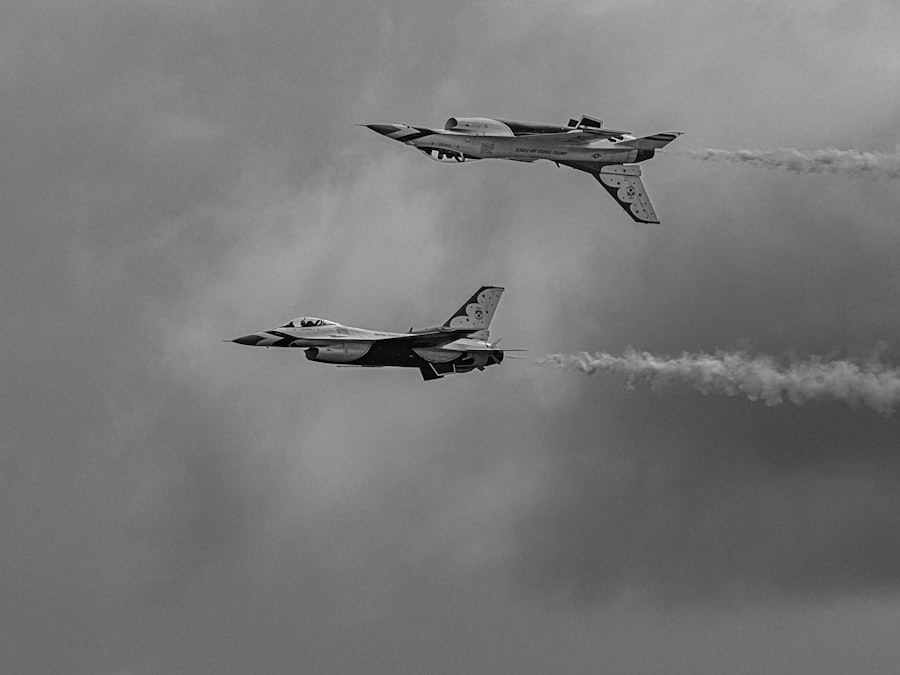
The advent of nuclear weapons fundamentally altered Cold War air combat doctrine, introducing a new dimension to military strategy. Both superpowers recognized that nuclear capabilities could serve as a deterrent against aggression, leading to a doctrine centered around mutually assured destruction (MAD). This concept posited that any nuclear strike would result in devastating retaliation, thereby discouraging direct conflict between the United States and the Soviet Union.
As a result, air forces prioritized the development of nuclear delivery systems, including long-range bombers and intercontinental ballistic missiles (ICBMs). The integration of nuclear weapons into air combat doctrine necessitated new strategies for targeting and engagement, as well as considerations for escalation control. The potential for catastrophic consequences influenced decision-making processes at all levels, leading to a cautious approach in military engagements.
This emphasis on nuclear deterrence shaped not only air combat doctrine but also broader geopolitical dynamics throughout the Cold War.
The Development of Tactical Air Combat Doctrine during the Cold War
Tactical air combat doctrine underwent significant development during the Cold War as military leaders sought to adapt to evolving threats and operational environments. While strategic bombing remained a key focus, there was an increasing recognition of the need for effective tactical support in conventional conflicts. This shift was particularly evident during regional conflicts such as those in Korea and Vietnam, where ground forces required close air support to achieve their objectives.
In response to these challenges, air forces began to refine their tactical doctrines, emphasizing coordination with ground troops and rapid response capabilities. The introduction of precision-guided munitions further enhanced tactical effectiveness, allowing for more accurate strikes against enemy positions while minimizing collateral damage. This evolution reflected a broader understanding that air power could play a crucial role not only in achieving strategic objectives but also in supporting conventional warfare operations.
The Role of Electronic Warfare in Cold War Air Combat Doctrine
Electronic warfare emerged as a critical component of Cold War air combat doctrine, reflecting the increasing reliance on technology in military operations. As radar systems became more sophisticated, so too did efforts to counteract them through electronic jamming and deception tactics. Both superpowers recognized that control over the electromagnetic spectrum could provide a significant advantage in aerial engagements.
The integration of electronic warfare capabilities into air combat doctrine necessitated new training programs and operational strategies. Pilots were trained not only in traditional aerial maneuvers but also in employing electronic countermeasures to disrupt enemy radar systems and communications. This multifaceted approach allowed for greater flexibility in combat scenarios, enabling air forces to adapt to changing conditions on the battlefield while maintaining an edge over adversaries.
The Influence of Air-to-Air Missiles on Cold War Air Combat Doctrine
The introduction of air-to-air missiles revolutionized Cold War air combat doctrine by providing pilots with new means to engage enemy aircraft from greater distances. Early missile systems like the AIM-7 Sparrow and R-3S gained prominence during this period, allowing for beyond-visual-range engagements that fundamentally changed aerial tactics. This shift reduced reliance on traditional dogfighting techniques while emphasizing missile accuracy and launch parameters.
As missile technology advanced, so too did strategies surrounding their use in combat scenarios. Pilots were trained to employ tactics that maximized missile effectiveness while minimizing exposure to enemy fire. The integration of missiles into air combat doctrine also prompted discussions about engagement rules and target prioritization, as commanders sought to balance offensive capabilities with risk management considerations.
The Adaptation of Cold War Air Combat Doctrine in Response to Changing Threats
Throughout the Cold War, air combat doctrine underwent continuous adaptation in response to evolving threats and geopolitical dynamics. As conflicts emerged around the globe—ranging from proxy wars in Asia to tensions in Europe—military leaders recognized the need for flexible strategies that could address diverse operational environments. This adaptability was particularly evident during crises such as the Cuban Missile Crisis when rapid decision-making became paramount.
The emergence of asymmetric warfare further challenged traditional notions of air combat doctrine. As non-state actors began employing unconventional tactics against established military forces, air power had to be redefined within this context. This shift prompted discussions about counterinsurgency operations and the role of air support in stabilizing regions affected by conflict.
Consequently, Cold War air combat doctrine evolved into a more nuanced framework capable of addressing both conventional and unconventional threats.
The Legacy of Cold War Air Combat Doctrine in Modern Air Warfare
The legacy of Cold War air combat doctrine continues to shape modern air warfare strategies across the globe. Many principles established during this period—such as the importance of air superiority, integration with ground forces, and technological innovation—remain relevant today. Contemporary military operations often reflect lessons learned from Cold War experiences, emphasizing adaptability and coordination among various branches of armed forces.
Moreover, advancements in technology have further transformed air combat dynamics since the end of the Cold War. Unmanned aerial vehicles (UAVs), advanced stealth capabilities, and network-centric warfare have redefined how nations approach aerial engagements. However, despite these changes, many foundational concepts from Cold War air combat doctrine endure, underscoring its lasting impact on military strategy and operations in an increasingly complex global landscape.
In conclusion, Cold War air combat doctrine was shaped by a confluence of historical experiences, technological advancements, and evolving geopolitical realities. Its legacy continues to influence modern military strategies while serving as a reminder of the intricate interplay between innovation and doctrine in shaping aerial warfare throughout history.
The evolution of air combat doctrine during the Cold War was a critical aspect of military strategy, reflecting the technological advancements and geopolitical tensions of the era. For a deeper understanding of this topic, you can explore the article on air combat strategies and their implications in modern warfare at In The War Room. This resource provides valuable insights into how air power was conceptualized and utilized during this pivotal period in history.
WATCH THIS! 🕵️ HE CHOSE BETRAYAL—And His Wife Paid the Price | The Billion Dollar Spy
FAQs
What was the primary focus of Cold War air combat doctrine?
The primary focus of Cold War air combat doctrine was to develop strategies and tactics for air superiority, strategic bombing, and nuclear deterrence, emphasizing the use of advanced jet aircraft, missile technology, and electronic warfare to counter potential threats from opposing superpowers.
How did technological advancements influence Cold War air combat doctrine?
Technological advancements such as the introduction of jet engines, guided missiles, radar systems, and electronic countermeasures significantly influenced Cold War air combat doctrine by enabling faster, more precise, and longer-range engagements, as well as enhancing reconnaissance and early warning capabilities.
What role did nuclear weapons play in Cold War air combat strategies?
Nuclear weapons played a central role in Cold War air combat strategies, with doctrines emphasizing the delivery of nuclear payloads via strategic bombers and intercontinental ballistic missiles (ICBMs) as a deterrent against enemy aggression, shaping the development of air forces and their operational planning.
How did air combat doctrine evolve from the early to late Cold War period?
Air combat doctrine evolved from focusing primarily on strategic bombing and nuclear delivery in the early Cold War to incorporating flexible response strategies, including conventional air superiority missions, close air support, and the integration of multirole fighter aircraft by the late Cold War period.
What impact did the Cold War air combat doctrine have on modern air forces?
The Cold War air combat doctrine laid the foundation for modern air forces by advancing concepts such as integrated air defense systems, precision-guided munitions, network-centric warfare, and the importance of maintaining air superiority, all of which continue to influence contemporary military aviation strategies.
Which countries were most influential in shaping Cold War air combat doctrine?
The United States and the Soviet Union were the most influential countries in shaping Cold War air combat doctrine, each developing distinct strategies and technologies that reflected their geopolitical goals and military capabilities, while NATO and Warsaw Pact allies adapted these doctrines to their own defense needs.
How did the threat of missile technology affect air combat tactics during the Cold War?
The threat of surface-to-air and air-to-air missile technology led to the development of new air combat tactics focused on missile evasion, electronic countermeasures, and the use of stealth and speed to reduce vulnerability, fundamentally changing dogfighting and interception methods during the Cold War.