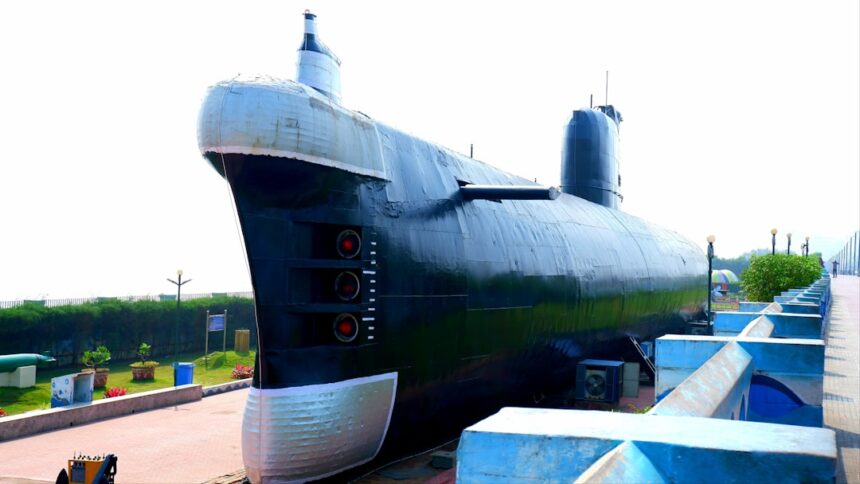
China’s submarine listening network constitutes a fundamental element of its defense infrastructure, directly supporting its expanding maritime objectives. This surveillance system enhances China’s awareness of underwater activities in the Asia-Pacific region while functioning as a strategic deterrent. The comprehensive array of acoustic sensors and monitoring equipment positioned along coastal areas and key maritime zones demonstrates the critical importance of subsurface intelligence gathering in contemporary naval operations.
The network serves broader strategic purposes beyond surveillance capabilities, reflecting China’s aspirations toward maritime dominance. Through substantial investments in sophisticated acoustic detection technologies, China seeks to safeguard vital sea lanes, reinforce territorial claims, and protect naval assets. In the context of increasing tensions throughout the South China Sea region, this submarine detection infrastructure significantly influences regional security dynamics and military strategic planning.
Key Takeaways
- China has developed an extensive submarine listening network integral to its maritime strategy and naval operations.
- The network employs advanced acoustic and sensor technologies to monitor underwater activities and enhance situational awareness.
- Its expansion raises significant regional security concerns and impacts global naval dynamics.
- Legal and ethical issues surround the deployment and use of such underwater surveillance systems.
- Despite technological advancements, the network faces challenges and limitations, with ongoing developments shaping its future capabilities.
The History and Development of China’s Submarine Listening Network
The evolution of China’s submarine listening network can be traced back to the Cold War era when the country began to recognize the strategic importance of underwater warfare. Initially, China’s capabilities were rudimentary, relying on basic sonar technology and limited surveillance systems. However, as geopolitical tensions escalated and the need for enhanced maritime security became apparent, China embarked on a comprehensive modernization program.
This initiative aimed to develop a sophisticated network capable of detecting and tracking submarines operating in its waters. Over the decades, significant advancements have been made in both technology and infrastructure. The establishment of dedicated research institutions and partnerships with foreign entities facilitated the rapid development of advanced sonar systems, underwater sensors, and data processing capabilities.
By the early 21st century, China’s submarine listening network had transformed into a formidable system, integrating various technologies to provide real-time intelligence on submarine activities. This evolution reflects not only technological progress but also a strategic shift towards a more proactive maritime defense posture.
The Role of Submarine Listening in China’s Maritime Strategy

Submarine listening plays a crucial role in shaping China’s maritime strategy, particularly as it seeks to safeguard its interests in contested waters. The ability to detect and track submarines allows China to maintain a strategic advantage over potential adversaries, particularly in scenarios involving naval confrontations. By monitoring submarine movements, China can better assess threats and respond effectively to any incursions into its territorial waters.
Moreover, the submarine listening network supports China’s broader objectives of asserting its claims in the South China Sea and enhancing its deterrence capabilities. The information gathered through this network enables Chinese naval forces to conduct more informed operations, ensuring that they can protect vital shipping lanes and respond to challenges posed by other regional powers. In this context, submarine listening is not merely a defensive measure; it is an integral part of China’s strategy to project power and influence across the maritime domain.
The Technology Behind China’s Submarine Listening Network
The technological foundation of China’s submarine listening network is built upon a combination of advanced sonar systems, underwater sensors, and sophisticated data analysis tools. These technologies work in concert to create a comprehensive surveillance capability that can detect submarines at varying depths and distances. The use of passive sonar technology allows for the monitoring of underwater sounds without emitting signals that could reveal the listener’s position, making it an effective tool for stealthy surveillance.
In addition to traditional sonar systems, China has invested heavily in developing underwater drones and autonomous vehicles equipped with advanced sensors. These platforms enhance the network’s reach and capabilities, allowing for more extensive monitoring of vast maritime areas. Furthermore, advancements in artificial intelligence and machine learning have enabled more efficient data processing and analysis, allowing Chinese analysts to quickly interpret complex acoustic data and identify potential threats.
The Implications of China’s Submarine Listening Network for Regional Security
| Metric | Details |
|---|---|
| Network Name | China Submarine Listening Network (CSLN) |
| Primary Purpose | Underwater surveillance and submarine detection |
| Operational Area | South China Sea, East China Sea, Yellow Sea |
| Technology Used | Hydrophone arrays, sonar systems, underwater acoustic sensors |
| Number of Listening Stations | Estimated 10-15 fixed and mobile stations |
| Deployment Depth | Varies from 100 meters to 1000 meters |
| Data Transmission Method | Undersea fiber optic cables and satellite uplinks |
| Integration | Linked with China’s naval command and control systems |
| Estimated Operational Since | Early 2000s |
| Purpose of Data Collected | Track foreign submarines, monitor naval exercises, maritime security |
The establishment of a robust submarine listening network has significant implications for regional security dynamics in East Asia. As China enhances its ability to monitor submarine activities, neighboring countries are compelled to reassess their own naval strategies and capabilities. This development has led to an arms race in underwater warfare technologies, with countries like Japan, South Korea, and India investing in their own submarine detection systems to counterbalance China’s growing influence.
Moreover, the increased surveillance capabilities may lead to heightened tensions in disputed maritime areas. As China asserts its claims over contested waters, the potential for miscalculations or confrontations with other nations rises. The submarine listening network serves as both a deterrent and a source of anxiety for regional actors, who may feel threatened by China’s expanding military reach.
Consequently, the balance of power in the region is shifting as nations navigate the complexities of underwater warfare and maritime security.
China’s Submarine Listening Network and its Impact on Global Naval Operations

China’s submarine listening network does not only affect regional dynamics; it also has far-reaching implications for global naval operations. As one of the world’s largest naval forces, China’s ability to monitor submarine movements influences how other nations conduct their maritime operations.
Additionally, the network’s capabilities could impact international naval exercises and freedom of navigation operations conducted by other countries. As nations seek to assert their rights to operate in international waters, they must consider the potential risks posed by China’s surveillance capabilities. This reality may lead to changes in operational planning and tactics among navies worldwide as they adapt to an environment where underwater monitoring is increasingly sophisticated.
The Legal and Ethical Considerations of China’s Submarine Listening Network
The expansion of China’s submarine listening network raises important legal and ethical questions regarding maritime surveillance practices. Under international law, particularly the United Nations Convention on the Law of the Sea (UNCLOS), nations have specific rights and responsibilities concerning their territorial waters and exclusive economic zones (EEZs).
Ethically, the implications of such surveillance practices also warrant consideration. The potential for invasive monitoring raises concerns about privacy and sovereignty for other nations operating in international waters. As China continues to develop its submarine listening capabilities, it must navigate these legal frameworks while balancing its national security interests with respect for international norms.
The Challenges and Limitations of China’s Submarine Listening Network
Despite its advancements, China’s submarine listening network faces several challenges and limitations that could impact its effectiveness. One significant challenge is the vastness of the maritime domain that needs to be monitored. While technological advancements have improved detection capabilities, there are still limitations regarding range and accuracy, particularly in deep-water environments where submarines can operate undetected.
Additionally, the network’s reliance on technology makes it vulnerable to countermeasures employed by adversaries. As other nations develop their own anti-submarine warfare capabilities, they may seek ways to evade detection or disrupt China’s surveillance efforts. This ongoing technological arms race poses a challenge for China as it strives to maintain an edge in underwater monitoring while adapting to evolving threats.
The Future of China’s Submarine Listening Network
Looking ahead, the future of China’s submarine listening network is likely to be shaped by continued technological advancements and evolving geopolitical dynamics. As artificial intelligence and machine learning technologies advance further, China may enhance its data processing capabilities, allowing for more accurate threat assessments and quicker responses to potential incursions. Moreover, as regional tensions persist, China may expand its network beyond its immediate coastal areas into deeper waters or even into international waters where it perceives threats.
This expansion could lead to increased friction with other nations as they navigate their own security concerns while operating near Chinese surveillance zones.
Comparisons with Other Countries’ Submarine Listening Networks
When comparing China’s submarine listening network with those of other countries, notable differences emerge in terms of scale, technology, and strategic focus. For instance, the United States maintains a sophisticated global network of underwater sensors known as the Integrated Undersea Surveillance System (IUSS), which has been developed over decades. This system emphasizes global reach and interoperability with allied forces.
In contrast, countries like Russia have focused on developing advanced anti-submarine warfare capabilities that emphasize stealthy operations rather than extensive monitoring networks. Each nation’s approach reflects its unique strategic priorities and operational environments, highlighting how different geopolitical contexts shape underwater surveillance strategies.
The Significance of China’s Submarine Listening Network in the Modern Era
In conclusion, China’s submarine listening network stands as a testament to its ambitions as a rising maritime power in an increasingly complex global landscape. By investing heavily in advanced technologies and infrastructure for underwater surveillance, China has positioned itself to monitor potential threats effectively while asserting its influence over contested waters. The implications of this network extend beyond regional security dynamics; they resonate throughout global naval operations and raise important legal and ethical considerations.
As nations navigate this evolving maritime environment characterized by heightened tensions and technological advancements, understanding the significance of China’s submarine listening network becomes paramount. It serves not only as a tool for national defense but also as a reflection of broader geopolitical trends that will shape international relations for years to come.
Recent developments in China’s submarine listening network have raised concerns among military analysts regarding the country’s growing underwater capabilities. For a deeper understanding of the strategic implications of this network, you can read more in the article available on In The War Room. This resource provides insights into how these advancements may affect regional security dynamics and naval operations. For further details, visit the article [here](https://www.inthewarroom.com/).
FAQs
What is the China submarine listening network?
The China submarine listening network refers to a series of underwater surveillance systems and hydrophone arrays deployed by China to monitor submarine activities and underwater acoustic signals in strategic maritime regions.
What is the primary purpose of the China submarine listening network?
The primary purpose of the network is to detect, track, and monitor foreign submarines and underwater vessels to enhance China’s maritime security and maintain strategic awareness in key ocean areas.
Where are the China submarine listening network installations located?
The installations are typically located in strategic maritime zones such as the South China Sea, the East China Sea, and near important naval chokepoints, although exact locations are often classified.
How does the submarine listening network work?
The network uses underwater hydrophones and sonar arrays to capture acoustic signals emitted by submarines and other underwater objects. These signals are then analyzed to identify and track submarine movements.
Is the China submarine listening network similar to other countries’ systems?
Yes, it is similar in concept to other countries’ underwater surveillance systems, such as the U.S. Navy’s SOSUS (Sound Surveillance System), which also uses hydrophone arrays to monitor submarine activity.
What technologies are involved in the China submarine listening network?
The network employs advanced sonar technology, underwater hydrophones, signal processing algorithms, and secure communication systems to detect and relay acoustic data to command centers.
What strategic advantages does the China submarine listening network provide?
It enhances China’s ability to detect and respond to potential underwater threats, supports naval operations, and contributes to maritime domain awareness, thereby strengthening national defense capabilities.
Are there any international concerns regarding the China submarine listening network?
Some countries express concerns about the expansion of underwater surveillance networks due to potential impacts on regional security dynamics and the risk of escalating maritime tensions.
Is information about the China submarine listening network publicly available?
Detailed information is limited due to the classified nature of military surveillance systems, but open-source intelligence and defense analyses provide some insights into its existence and capabilities.
How does the China submarine listening network impact global naval operations?
The network can influence naval strategies by increasing the risk of detection for foreign submarines operating near Chinese waters, potentially affecting freedom of navigation and underwater military activities.