Helicopter Anti-Submarine Warfare (ASW) constitutes an essential element of contemporary naval operations, serving as a primary method for detecting and neutralizing submarine threats. Modern naval forces rely on helicopters to provide flexible, rapid-response capabilities against underwater vessels that pose risks to maritime security and commercial shipping lanes. ASW helicopters operate from multiple platforms, including destroyers, frigates, aircraft carriers, and shore-based facilities.
This operational flexibility enables naval forces to extend their anti-submarine coverage across vast ocean areas and respond quickly to submarine contacts. The helicopters’ ability to deploy and recover from various vessel types allows for sustained operations in areas where submarines are most likely to operate. These aircraft employ sophisticated detection systems, including dipping sonar, sonobuoys, and magnetic anomaly detectors (MAD) to locate submerged submarines.
Once a submarine is detected, ASW helicopters can engage targets using torpedoes, depth charges, or coordinate attacks with surface vessels and other aircraft. The integration of advanced avionics, data-link systems, and real-time communication capabilities enables these helicopters to share tactical information with other naval units, creating a comprehensive anti-submarine network. The effectiveness of helicopter ASW operations stems from their unique combination of mobility, sensor capability, and weapon systems.
Unlike fixed-wing aircraft, helicopters can hover over specific areas for extended periods, maintain continuous sonar contact, and precisely deploy weapons. This capability proves particularly valuable in littoral waters and chokepoints where submarines attempt to remain undetected.
Key Takeaways
- Helicopters play a crucial role in modern anti-submarine warfare by detecting, tracking, and engaging submarines.
- Advanced sonar and electronic detection equipment are essential tools for effective submarine identification.
- Coordination between helicopters and surface ships enhances the success of ASW missions.
- Employing depth charges, torpedoes, and electronic countermeasures increases the effectiveness of submarine engagements.
- Continuous training and technological advancements are vital for maintaining and improving helicopter ASW capabilities.
Understanding the Threat: Submarine Warfare in Modern Times
Submarine warfare has evolved significantly since its inception, becoming a sophisticated and complex domain of military strategy. Modern submarines are equipped with stealth technology, advanced propulsion systems, and an array of weapons that make them formidable opponents. The ability to operate undetected allows submarines to pose a significant threat to naval vessels and coastal installations alike.
As nations expand their submarine fleets, the challenge of countering these underwater threats intensifies. The strategic implications of submarine warfare extend beyond traditional military engagements. Submarines can be employed for various missions, including intelligence gathering, surveillance, and even strategic deterrence.
The proliferation of advanced submarines among both state and non-state actors has heightened the urgency for effective ASW measures. In this context, helicopters play a pivotal role in detecting and neutralizing these threats before they can inflict damage on naval forces or civilian infrastructure.
The Role of Helicopters in ASW Operations
Helicopters serve as a vital link in the ASW chain, bridging the gap between surface ships and submarines.
Equipped with sophisticated sensors and weaponry, helicopters can detect submarines at considerable distances, providing critical information to naval commanders.
This capability enhances situational awareness and allows for timely responses to potential threats. Moreover, helicopters can operate in diverse environments, from open oceans to coastal regions, making them versatile assets in ASW operations. Their ability to launch from various platforms enables them to be deployed rapidly in response to emerging threats.
This flexibility is particularly important in modern naval warfare, where the speed of response can determine the outcome of engagements. As such, helicopters have become integral to the overall effectiveness of ASW strategies.
Key Tactics for Detecting and Tracking Submarines
Detecting and tracking submarines requires a combination of advanced technology and tactical acumen. Helicopters employ various methods to locate submerged threats, including passive and active sonar systems. Passive sonar relies on listening for sounds generated by submarines, while active sonar emits sound waves to detect objects underwater.
The choice of method often depends on the operational environment and the specific mission objectives. In addition to sonar technology, helicopters utilize visual reconnaissance techniques to enhance their detection capabilities. Aerial surveillance can provide valuable insights into submarine movements and activities.
By combining these tactics with intelligence from surface ships and other assets, helicopters can create a comprehensive picture of the underwater battlefield. This multi-faceted approach is essential for effective ASW operations, allowing naval forces to anticipate and counter submarine threats proactively.
Utilizing Sonar and Other Detection Equipment
| Metric | Description | Typical Values/Range | Relevance to Tactics |
|---|---|---|---|
| Detection Range | Maximum distance at which a helicopter can detect submarines using sonar or radar | 5 – 15 nautical miles (active sonar) | Determines early warning and engagement capability |
| Sonobuoy Deployment Rate | Number of sonobuoys deployed per minute | 2 – 5 sonobuoys/minute | Enhances area coverage for submarine detection |
| Weapon Loadout | Types and number of anti-submarine weapons carried | 2-4 torpedoes, depth charges, or anti-submarine rockets | Defines offensive capability against detected submarines |
| Search Pattern | Flight path pattern used to maximize sonar coverage | Expanding square, sector search, or barrier patrol | Optimizes detection probability in assigned area |
| Engagement Time | Time from detection to weapon deployment | Typically 5 – 15 minutes | Critical for successful neutralization of submarine threats |
| Operating Altitude | Altitude range for effective sonar and sensor operation | 50 – 150 feet above sea level | Balances sensor effectiveness and helicopter safety |
| Communication Latency | Delay in data transmission between helicopter and command ship | Less than 1 second (real-time data link) | Ensures timely coordination and tactical decisions |
Sonar technology is at the heart of helicopter ASW operations, enabling crews to detect submarines with remarkable precision. Modern helicopters are equipped with advanced sonar systems that can operate at various frequencies, allowing them to adapt to different underwater conditions. These systems can identify not only the presence of submarines but also their size and type, providing critical information for engagement decisions.
In addition to sonar, helicopters may employ other detection equipment such as magnetic anomaly detectors (MAD) and infrared sensors.
The integration of these technologies enhances the overall effectiveness of ASW operations, allowing helicopters to operate in diverse environments and under varying conditions.
Effective Communication and Coordination with Surface Ships
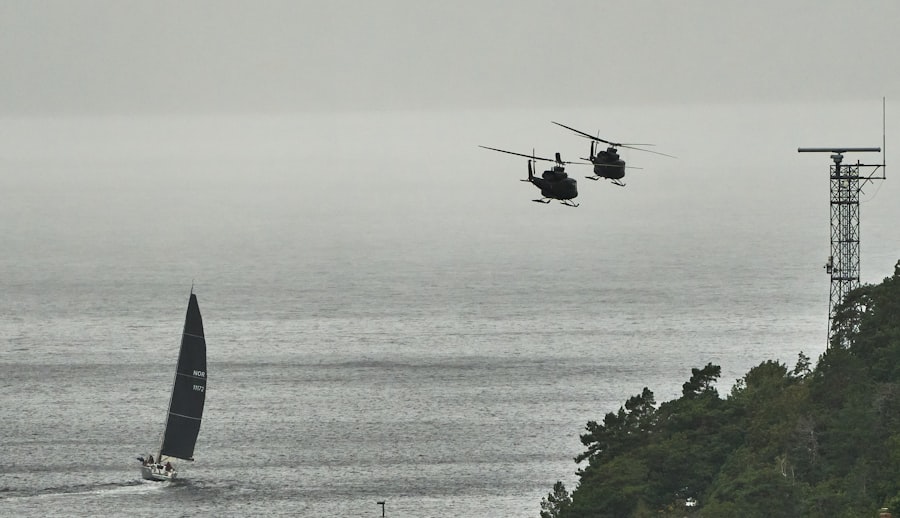
Successful ASW operations hinge on effective communication and coordination among various naval assets. Helicopters must work closely with surface ships to share intelligence and coordinate search patterns. This collaboration ensures that all available resources are utilized efficiently, maximizing the chances of detecting and engaging submarines.
Real-time communication is essential during ASW missions, as it allows for rapid adjustments to tactics based on emerging information. Helicopter crews must be trained to relay critical data back to command centers while also receiving updates from surface ships regarding potential submarine sightings or movements. This dynamic exchange of information fosters a cohesive operational environment where all units work towards a common goal: neutralizing underwater threats.
Employing Depth Charges and Torpedoes for Submarine Engagement
Once a submarine has been located, engaging it effectively becomes the next priority in ASW operations. Helicopters are equipped with various munitions designed specifically for this purpose, including depth charges and torpedoes. Depth charges are explosive devices designed to detonate at specific depths, creating shock waves that can damage or destroy submarines.
Their deployment requires precise targeting and timing to ensure maximum effectiveness. Torpedoes represent another option for helicopter crews when engaging submarines. These self-propelled weapons can be launched from helicopters at significant distances, allowing for standoff engagement capabilities.
The choice between depth charges and torpedoes often depends on the operational context and the specific characteristics of the target submarine. Regardless of the method employed, effective engagement requires thorough training and coordination among helicopter crews and supporting naval forces.
Utilizing Electronic Warfare and Countermeasures
In addition to conventional weapons, helicopters can employ electronic warfare (EW) tactics to enhance their ASW capabilities. EW involves using electronic systems to disrupt or deceive enemy sensors and communications. By jamming or spoofing submarine sonar systems, helicopters can create confusion and reduce the effectiveness of enemy detection efforts.
Countermeasures also play a crucial role in protecting helicopters during ASW operations. These may include deploying decoys or utilizing advanced radar-absorbing materials to minimize detection by enemy forces. The integration of EW capabilities into helicopter ASW operations adds another layer of complexity to submarine engagements, allowing naval forces to maintain an advantage over their adversaries.
Training and Readiness: Ensuring Helicopter ASW Effectiveness
The effectiveness of helicopter ASW operations hinges on rigorous training and preparedness among crews. Pilots and support personnel must undergo extensive training programs that encompass various aspects of submarine warfare, including detection techniques, engagement strategies, and emergency procedures. Realistic simulations and exercises are essential for honing skills and ensuring that crews are ready to respond effectively in high-pressure situations.
Moreover, ongoing training is vital for adapting to evolving threats in submarine warfare. As technology advances and new tactics emerge, helicopter crews must remain current with best practices in ASW operations. This commitment to continuous improvement ensures that naval forces maintain a competitive edge in countering underwater threats.
Case Studies: Successful Helicopter ASW Operations
Examining historical case studies provides valuable insights into the effectiveness of helicopter ASW operations. One notable example is the successful detection and engagement of enemy submarines during the Cold War by various naval forces around the world. Helicopters played a pivotal role in these operations by employing advanced sonar technology and coordinated tactics with surface ships.
Another significant case study involves recent joint exercises conducted by allied navies aimed at enhancing ASW capabilities in response to emerging threats from state actors. These exercises demonstrated the importance of interoperability among different nations’ naval forces while showcasing the effectiveness of helicopters in detecting and engaging submarines under realistic operational conditions.
The Future of Helicopter ASW: Advancements and Challenges
As technology continues to advance, the future of helicopter ASW holds both promise and challenges. Innovations in sensor technology, artificial intelligence, and unmanned systems are poised to enhance detection capabilities significantly. The integration of drones into ASW operations could provide additional surveillance options while reducing risks to manned aircraft.
However, challenges remain as adversaries also adapt their tactics and technologies in response to evolving threats. The proliferation of advanced submarine designs equipped with stealth features complicates detection efforts for even the most sophisticated helicopter systems. As such, ongoing investment in research and development will be crucial for ensuring that helicopter ASW remains effective in an increasingly complex maritime environment.
In conclusion, helicopter Anti-Submarine Warfare is a dynamic field that requires constant adaptation to emerging threats and technological advancements. By understanding the intricacies of submarine warfare and leveraging advanced tactics and technologies, navies can enhance their capabilities in this critical area of maritime security. The future will undoubtedly bring new challenges; however, with continued innovation and collaboration among naval forces worldwide, helicopter ASW will remain a cornerstone of effective maritime defense strategies.
Helicopter anti-submarine warfare (ASW) tactics have evolved significantly over the years, adapting to new technologies and threats. For a deeper understanding of these tactics and their implementation in modern naval operations, you can explore a related article on the subject at In The War Room. This resource provides valuable insights into the strategies and equipment used by naval forces to detect and neutralize submarine threats effectively.
FAQs
What is helicopter anti-submarine warfare (ASW)?
Helicopter anti-submarine warfare (ASW) refers to the use of helicopters equipped with specialized sensors and weapons to detect, track, and engage enemy submarines. These helicopters operate from ships or land bases to enhance naval defense capabilities.
What types of sensors do ASW helicopters use?
ASW helicopters typically use a combination of sonar systems, such as dipping sonar and sonobuoys, as well as radar and magnetic anomaly detectors (MAD) to locate and track submarines underwater.
What weapons are commonly deployed by ASW helicopters?
Common weapons include torpedoes, depth charges, and sometimes anti-submarine rockets. These weapons are designed to neutralize or destroy enemy submarines once detected.
How do helicopters detect submarines underwater?
Helicopters use dipping sonar, which is lowered into the water to emit sound pulses and listen for echoes from submarines. They also deploy sonobuoys—floating sensors dropped into the water to detect acoustic signals from submarines.
What advantages do helicopters offer in anti-submarine warfare?
Helicopters provide rapid deployment, high mobility, and the ability to cover large areas quickly. They can operate from ships, extending the reach of naval forces, and can hover or maneuver close to the water surface for effective sonar use.
How do helicopters coordinate with other naval assets in ASW operations?
Helicopters work in conjunction with surface ships, submarines, and maritime patrol aircraft by sharing sensor data and coordinating search patterns to improve the detection and tracking of enemy submarines.
What are common tactics used by ASW helicopters?
Tactics include systematic search patterns, coordinated use of sonar and sonobuoys, rapid response to submarine contacts, and employing evasive maneuvers to avoid counter-detection or attack by enemy submarines.
Can ASW helicopters operate in all weather conditions?
While ASW helicopters are designed to operate in various weather conditions, severe weather such as heavy storms or low visibility can limit their effectiveness and sensor performance.
What is the role of ASW helicopters in modern naval warfare?
ASW helicopters play a critical role in protecting naval fleets from submarine threats, enhancing maritime security, and maintaining control of sea lanes by detecting and neutralizing hostile submarines.
How has technology improved helicopter ASW tactics?
Advancements in sonar technology, data processing, communication systems, and weaponry have significantly enhanced the detection range, accuracy, and effectiveness of ASW helicopters, allowing for more precise and coordinated anti-submarine operations.