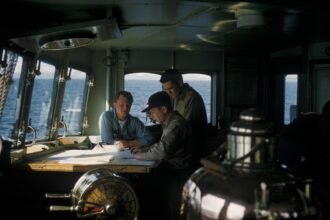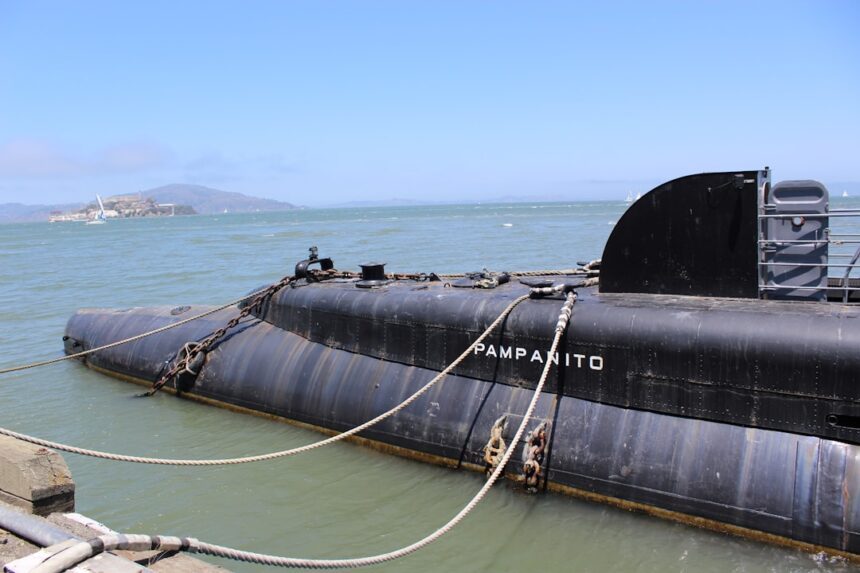
The Cold War, a period marked by intense geopolitical tension between the United States and the Soviet Union, saw the emergence of submarine espionage as a critical component of military strategy. As both superpowers sought to gain an upper hand, the underwater domain became a focal point for intelligence gathering and covert operations. The development of advanced submarine technology allowed for stealthy incursions into enemy waters, enabling nations to monitor naval movements, gather intelligence, and even conduct sabotage operations without detection.
Submarines, once primarily designed for combat, evolved into sophisticated tools of espionage. The introduction of nuclear-powered submarines in the 1950s revolutionized naval warfare, allowing vessels to remain submerged for extended periods.
This capability provided an unprecedented advantage in surveillance and reconnaissance missions. As both sides invested heavily in submarine technology, the race for underwater supremacy intensified, leading to a proliferation of espionage activities that would shape the course of the Cold War.
Key Takeaways
- Submarine espionage was a critical and covert aspect of Cold War underwater warfare, shaping political dynamics between superpowers.
- Advanced technologies like sonar, stealth capabilities, and underwater listening devices were pivotal in submarine espionage operations.
- Key Cold War players, including the US and USSR, engaged in high-stakes submarine missions involving espionage, surveillance, and intelligence gathering.
- Submarine espionage involved significant risks, including detection, confrontation, and potential escalation of conflicts beneath the sea.
- The legacy of Cold War submarine espionage continues to influence modern underwater warfare tactics and the future development of submarine espionage technologies.
The Role of Submarines in Cold War Underwater Warfare
Submarines played a multifaceted role in Cold War underwater warfare, serving not only as platforms for attack but also as vital instruments for intelligence collection. Their ability to operate undetected allowed them to gather crucial information about enemy fleets and coastal defenses. The strategic positioning of submarines near adversary waters enabled nations to monitor communications and movements, providing invaluable insights into military readiness and intentions.
This intelligence was essential for formulating responses to perceived threats and shaping broader military strategies. Moreover, submarines were integral to deterrence strategies during the Cold War. The presence of nuclear submarines equipped with ballistic missiles served as a powerful deterrent against potential aggression.
The concept of Mutually Assured Destruction (MAD) hinged on the understanding that any nuclear strike would be met with devastating retaliation from submarines lurking beneath the waves. This dynamic created a precarious balance, where the threat of submarine-launched nuclear weapons contributed to a tense stalemate between superpowers.
The Impact of Submarine Espionage on Cold War Politics

The impact of submarine espionage on Cold War politics was profound, influencing diplomatic relations and military strategies on both sides. The intelligence gathered through submarine operations often shaped policy decisions and military posturing. For instance, knowledge of Soviet naval capabilities gleaned from American submarine missions allowed U.S.
leaders to make informed decisions regarding military deployments and alliances. Conversely, Soviet submarines operating off the U.S. coast provided insights that informed their own strategic calculations.
Additionally, submarine espionage contributed to an atmosphere of mistrust and paranoia between the superpowers. Each side’s efforts to monitor and counteract the other’s submarine activities led to an escalation of military expenditures and technological advancements. The fear of being outmaneuvered or outgunned in the underwater domain fueled an arms race that extended beyond submarines to encompass all aspects of military capability.
This cycle of suspicion and competition ultimately shaped the geopolitical landscape of the era.
The Technologies Used in Submarine Espionage during the Cold War
The technological advancements during the Cold War significantly enhanced the capabilities of submarines engaged in espionage activities. Sonar systems, for instance, evolved from rudimentary designs to sophisticated arrays capable of detecting enemy vessels at great distances. Passive sonar technology allowed submarines to listen for sounds made by other ships without revealing their own position, making it an invaluable tool for intelligence gathering.
In addition to sonar, advancements in communication technology played a crucial role in submarine espionage. Secure communication systems enabled submarines to relay information back to command centers while remaining undetected. The development of satellite technology further augmented these capabilities, allowing for real-time data sharing and coordination between underwater assets and surface fleets.
These innovations not only improved operational effectiveness but also expanded the scope of what was possible in underwater warfare.
The Key Players in Submarine Espionage during the Cold War
| Metric | Details | Significance |
|---|---|---|
| Number of Espionage Submarines | Approximately 30 known specialized submarines used by US and USSR | Indicates scale of underwater intelligence gathering efforts |
| Primary Espionage Submarine Classes | US: USS Halibut (SSGN-587), USSR: Project 613 (Whiskey-class) | Key platforms for covert operations and surveillance |
| Typical Mission Duration | 30 to 60 days submerged | Shows endurance and operational range of espionage subs |
| Types of Intelligence Gathered | Communications interception, sonar mapping, cable tapping | Critical for strategic military advantage and early warning |
| Notable Operations | Operation Ivy Bells (US tapping Soviet undersea cables) | Demonstrates high-risk intelligence missions during Cold War |
| Countermeasures Developed | Underwater listening posts, anti-submarine warfare (ASW) tactics | Response to espionage submarine threats |
| Estimated Losses | Several submarines lost or damaged during covert missions | Reflects dangers and costs of underwater espionage |
Several key players emerged during the Cold War, each contributing to the complex landscape of submarine espionage. The United States Navy, with its formidable fleet of nuclear submarines, became a leader in underwater intelligence operations. Notable missions included surveillance activities along Soviet coastlines and monitoring naval exercises in contested waters.
The U.S. also developed specialized units such as the Submarine Force Undersea Warfare Center, which focused on enhancing submarine capabilities for espionage. On the other side, the Soviet Navy invested heavily in its submarine fleet, seeking to counterbalance American advantages.
The K-219 incident in 1986 highlighted the risks faced by Soviet submarines engaged in espionage missions. Despite these challenges, Soviet submarines successfully infiltrated U.S. waters, gathering intelligence that informed their military strategies.
The rivalry between these two naval powers underscored the high stakes involved in submarine espionage during this tumultuous period.
The Dangers and Risks of Submarine Espionage Operations
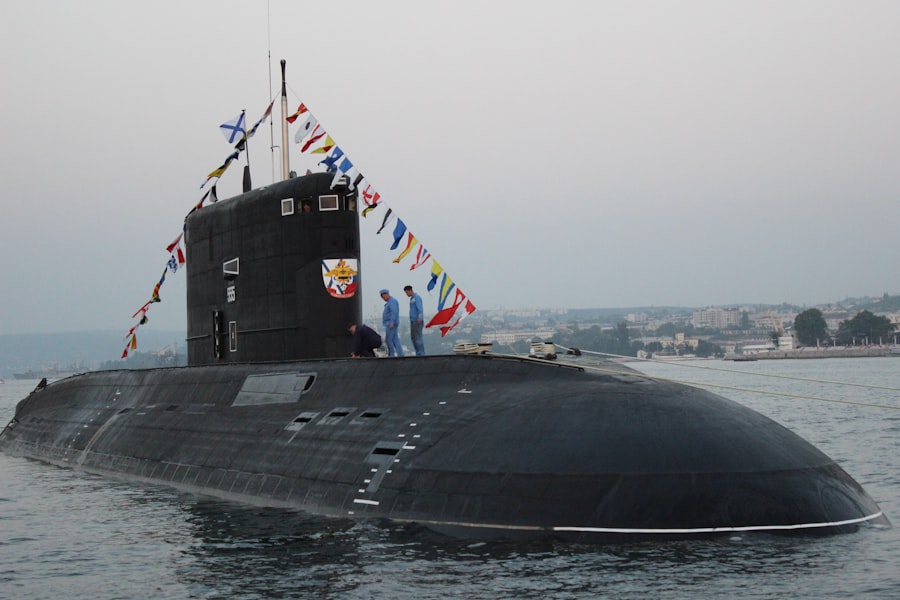
Submarine espionage operations were fraught with dangers and risks that could have dire consequences for both personnel and national security. The inherent challenges of operating underwater meant that submariners faced extreme conditions, including pressure, limited visibility, and potential mechanical failures. A malfunction could lead to catastrophic outcomes, including loss of life or loss of sensitive intelligence.
Moreover, the risk of detection loomed large over every mission. If a submarine were discovered while conducting espionage activities, it could trigger international incidents or escalate tensions between superpowers. The potential for miscommunication or misinterpretation of actions added another layer of complexity to these operations.
As such, commanders had to weigh the potential benefits of gathering intelligence against the risks involved in executing such missions.
The Legacy of Submarine Espionage in Modern Warfare
The legacy of submarine espionage during the Cold War continues to influence modern warfare strategies and naval operations. The lessons learned from this era have shaped contemporary approaches to underwater warfare and intelligence gathering. Today’s submarines are equipped with advanced technologies that allow for even greater stealth and operational flexibility, reflecting the innovations born out of Cold War experiences.
Furthermore, the geopolitical landscape has evolved, but the principles of submarine espionage remain relevant. Nations continue to invest in underwater capabilities as they seek to monitor adversaries and protect their interests in contested waters. The Cold War’s emphasis on stealth and intelligence gathering has laid the groundwork for modern naval doctrines that prioritize information superiority as a key component of military strategy.
The Espionage Tactics and Strategies Used by Submarines during the Cold War
Espionage tactics employed by submarines during the Cold War were diverse and often innovative. One common strategy involved covertly trailing enemy vessels to gather intelligence on their movements and capabilities. This tactic required exceptional skill from crew members who had to maintain stealth while navigating complex underwater environments.
Another tactic involved deploying unmanned underwater vehicles (UUVs) for reconnaissance missions. These vehicles could be sent ahead of manned submarines to gather data without risking human lives or revealing the presence of a larger vessel.
The Cat and Mouse Game of Submarine Espionage during the Cold War
The dynamic between American and Soviet submarines during the Cold War resembled a high-stakes game of cat and mouse, characterized by constant maneuvering and counter-maneuvering beneath the waves. Each side sought to outsmart the other through a combination of deception, stealth, and technological innovation. This relentless pursuit created an environment where both superpowers were compelled to continuously adapt their strategies in response to perceived threats.
As submarines engaged in espionage operations, they often employed tactics designed to mislead or confuse their adversaries. For instance, submarines might simulate mechanical failures or alter their acoustic signatures to evade detection while conducting surveillance missions. This intricate dance underscored not only the technological prowess of both navies but also their commitment to maintaining an edge in underwater warfare.
The Espionage Missions and Operations of Submarines during the Cold War
Numerous espionage missions undertaken by submarines during the Cold War stand out as pivotal moments in naval history. One notable operation was Project Ivy Bells, where U.S. submarines tapped into Soviet underwater communication lines using specialized equipment designed for covert surveillance.
This operation provided critical insights into Soviet military planning and capabilities. Another significant mission involved the recovery of a sunken Soviet submarine by U.S. forces in 1974, known as Project Jennifer.
This operation not only aimed to retrieve valuable intelligence but also demonstrated the lengths to which nations would go to gain an advantage over their adversaries. Such missions highlighted the high stakes involved in submarine espionage and its potential impact on global power dynamics.
The Future of Submarine Espionage and Underwater Warfare
As technology continues to advance at an unprecedented pace, the future of submarine espionage and underwater warfare is poised for transformation. Emerging technologies such as artificial intelligence (AI) and machine learning are likely to enhance decision-making processes and operational efficiency within naval forces. These innovations could enable submarines to conduct more sophisticated surveillance missions while minimizing risks associated with human error.
Moreover, as geopolitical tensions persist in various regions around the world, nations are likely to continue investing heavily in their underwater capabilities. The lessons learned from Cold War-era submarine espionage will inform contemporary strategies as countries seek to navigate an increasingly complex security environment characterized by hybrid threats and asymmetric warfare tactics. In conclusion, submarine espionage during the Cold War represented a critical evolution in military strategy that shaped not only naval operations but also broader geopolitical dynamics.
As nations continue to adapt their approaches to underwater warfare, understanding this legacy will be essential for navigating future challenges in an ever-changing global landscape.
During the Cold War, submarine warfare became a critical component of espionage tactics, as nations sought to gain an advantage over their adversaries through stealth and intelligence gathering. A fascinating exploration of this topic can be found in the article on submarine operations during this tense period, which highlights the technological advancements and strategic maneuvers employed by both sides. For more insights, you can read the full article [here](https://www.inthewarroom.com/sample-page/).
WATCH THIS 🛑 The Submarine Captain Who Said NO to Nuclear War
FAQs
What was the role of submarines in Cold War espionage?
During the Cold War, submarines played a crucial role in espionage by conducting covert surveillance, gathering intelligence, and deploying special operations forces. They were used to monitor enemy naval movements, tap underwater communication cables, and deploy reconnaissance equipment without detection.
Which countries were primarily involved in submarine espionage during the Cold War?
The United States and the Soviet Union were the primary countries involved in submarine espionage during the Cold War. Both nations developed advanced submarine fleets and technologies to conduct underwater intelligence missions against each other and their allies.
What types of submarines were used for espionage purposes?
Both nuclear-powered and diesel-electric submarines were used for espionage. Specially designed spy submarines, such as the U.S. Navy’s USS Halibut and Soviet Project 613 submarines, were equipped with sophisticated sonar, surveillance equipment, and sometimes mini-submersibles for covert operations.
How did submarines gather intelligence during the Cold War?
Submarines gathered intelligence by tapping underwater communication cables, conducting sonar surveillance, intercepting radio transmissions, and deploying underwater sensors. They also carried out reconnaissance missions near enemy coastlines and naval bases to collect strategic information.
Were there any notable submarine espionage incidents during the Cold War?
Yes, several incidents stand out, including the U.S. Navy’s tapping of Soviet underwater communication cables using the USS Halibut, and the Soviet submarine K-129 sinking under mysterious circumstances, which led to the CIA’s secret recovery operation known as Project Azorian.
What technologies were developed to support submarine espionage?
Technologies developed included advanced sonar systems, underwater listening devices (hydrophones), mini-submersibles for deep-sea operations, stealth technology to reduce noise and detection, and specialized equipment for tapping underwater cables.
How did submarine espionage impact Cold War naval strategy?
Submarine espionage significantly influenced naval strategy by emphasizing stealth, intelligence gathering, and the importance of undersea warfare capabilities. It led to increased investment in submarine technology and anti-submarine warfare tactics to counter espionage threats.
What risks did submariners face during espionage missions?
Submariners faced risks such as detection by enemy forces, mechanical failures in hostile environments, depth charge attacks, and the inherent dangers of operating in deep underwater conditions. Espionage missions often required operating close to enemy shores, increasing the risk of confrontation.
Did submarine espionage continue after the Cold War?
Yes, submarine espionage has continued post-Cold War, though the focus and technologies have evolved. Modern submarines still conduct intelligence-gathering missions, but with updated equipment and in different geopolitical contexts.