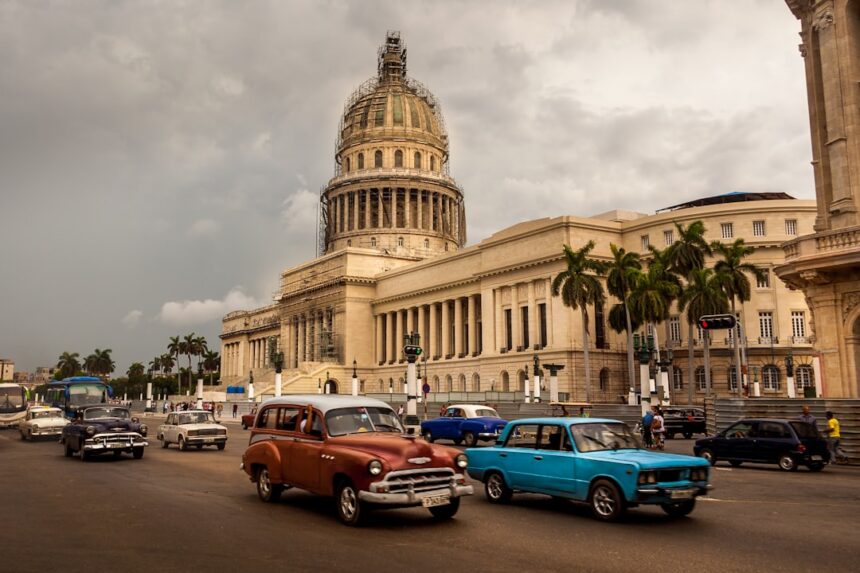
The period preceding the Cuban Missile Crisis was characterized by increasing tensions between the United States and the Soviet Union, stemming from ideological, political, and military conflicts. After the Cuban Revolution concluded in 1959, Fidel Castro’s assumption of power concerned the U.S. government, which perceived the establishment of a communist state 90 miles from American territory as a threat to national security.
The Eisenhower administration initiated covert operations designed to destabilize Castro’s government, culminating in the Bay of Pigs invasion in April 1961. The failure of this operation to remove Castro strengthened his position and drove Cuba toward closer alignment with the Soviet Union, which sought to expand its sphere of influence in the Western Hemisphere. During the early 1960s, Cold War competition intensified.
The United States and Soviet Union participated in a nuclear arms race, with both nations developing extensive nuclear weapon stockpiles.
Soviet Premier Nikita Khrushchev responded by planning to install nuclear missiles in Cuba, extending Soviet strategic reach and creating a counterweight to American missile deployments.
These strategic decisions created the conditions for the international crisis that would follow.
On October 14, 1962, a U.S. U-2 spy plane flying over Cuba captured photographic evidence that would change the course of history. The images revealed the construction of missile sites on the island, indicating that the Soviet Union was in the process of deploying nuclear missiles capable of striking the United States.
This discovery sent shockwaves through Washington, D.C., as officials grappled with the implications of having a nuclear adversary so close to American soil.
In the days that followed, President John F.
Kennedy convened a group of advisors known as the Executive Committee of the National Security Council (ExComm) to discuss the situation. The atmosphere was tense as they weighed their options, ranging from diplomatic negotiations to military action. The gravity of the situation was not lost on anyone involved; they understood that any miscalculation could lead to nuclear war.
As discussions unfolded, it became clear that this was not merely a regional conflict but a pivotal moment in the Cold War that could redefine global power dynamics.
Key Takeaways
- The Cuban Missile Crisis unfolded between 1959 and 1962, culminating in the discovery of Soviet missiles in Cuba by the U.S. on October 14, 1962.
- President Kennedy publicly addressed the nation on October 22, 1962, announcing the crisis and the U.S. naval blockade of Cuba initiated on October 24.
- Intense diplomatic exchanges occurred through letters between Kennedy and Khrushchev on October 26 and 27, escalating tensions to a critical point.
- The crisis peaked on October 27-28 but was resolved peacefully by October 29, avoiding nuclear conflict.
- The aftermath led to significant lessons and a lasting legacy in Cold War diplomacy and nuclear arms control.
President Kennedy’s Address to the Nation: October 22, 1962
On October 22, 1962, President Kennedy addressed the nation in a televised speech that would become one of the defining moments of his presidency. With calm yet resolute demeanor, he informed Americans about the presence of Soviet missiles in Cuba and outlined the U.S. response. Kennedy emphasized that these weapons posed an unacceptable threat to national security and declared that the United States would not tolerate their presence. His words resonated deeply with a nation already on edge from years of Cold War anxiety. Kennedy’s address was not just a statement of facts; it was also a call to unity and resolve. He urged Americans to remain vigilant and assured them that their government was taking decisive action to protect their safety. The president announced a naval quarantine around Cuba to prevent further shipments of military equipment from reaching the island. This bold move signaled to both allies and adversaries that the U.S. was prepared to confront Soviet aggression head-on. The speech galvanized public opinion and solidified Kennedy’s position as a leader willing to stand firm against communism.
On October 24, 1962, the United States officially imposed a naval blockade around Cuba, a move that would escalate tensions further and bring the two superpowers closer to confrontation. The blockade was designed to prevent any additional Soviet shipments of military supplies from reaching Cuba and was framed as a necessary measure for national security. As U.S. Navy ships moved into position, the world held its breath, aware that any misstep could lead to war. The blockade was met with mixed reactions internationally. While many nations supported Kennedy’s decision as a legitimate response to Soviet provocation, others criticized it as an act of aggression that could provoke an armed conflict. In Moscow, Khrushchev viewed the blockade as an act of war and began mobilizing Soviet forces in response. The situation became increasingly precarious as both sides prepared for potential military engagement, with each moment fraught with uncertainty about how events might unfold.
The Soviet Union Sends a Letter to President Kennedy: October 26, 1962
On October 26, 1962, amidst rising tensions and fears of imminent conflict, Khrushchev sent a letter to President Kennedy that would play a crucial role in shaping the course of events during the crisis. In this communication, Khrushchev expressed his desire for peaceful resolution and proposed that both nations work together to avoid war. He emphasized that the Soviet Union had no intention of initiating hostilities but insisted that U.S.
actions were provocative and unjustified. Khrushchev’s letter reflected his understanding of the gravity of the situation and his desire to de-escalate tensions. However, it also contained elements of defiance, as he reiterated Soviet support for Cuba and warned against any military action by the United States.
This duality created a complex dynamic for Kennedy and his advisors as they weighed their next steps. The letter was both an olive branch and a challenge, illustrating how precarious diplomacy could be in such a charged atmosphere.
The following day, October 27, 1962, brought another letter from Khrushchev that shifted the tone significantly. In this second communication, he made demands that were more assertive and less conciliatory than his previous message. Khrushchev proposed that if the United States promised not to invade Cuba, he would withdraw Soviet missiles from the island.
This ultimatum placed Kennedy in a difficult position; accepting it could be seen as capitulation while rejecting it risked escalating tensions further. As Kennedy and his advisors deliberated over how to respond, they faced immense pressure from various factions within the government and military who advocated for more aggressive action against Cuba. The stakes were incredibly high; with both sides on high alert and military readiness at an all-time peak, any miscommunication or miscalculation could lead to catastrophic consequences.
The world watched anxiously as leaders navigated this treacherous diplomatic landscape.
The Crisis Intensifies: October 27-28, 1962
The crisis reached its zenith over the weekend of October 27-28, 1962, as both sides braced for potential conflict. On October 27, an American U-2 spy plane was shot down over Cuba, killing its pilot, Major Rudolf Anderson. This incident heightened tensions dramatically and pushed both nations closer to war.
Kennedy faced mounting pressure from military advisors who urged him to retaliate against Cuba decisively; however, he remained committed to finding a peaceful resolution. In this charged atmosphere, backchannel communications continued between Washington and Moscow as both leaders sought to avoid escalation into full-scale war. Kennedy’s restraint in responding to the downing of the U-2 was critical; he recognized that any aggressive action could trigger a chain reaction leading to nuclear confrontation.
Meanwhile, Khrushchev faced pressure from hardliners within his own government who were advocating for a more aggressive stance against the United States. The world held its breath as both leaders navigated this perilous moment in history.
The Resolution of the Crisis: October 28-29, 1962
| Date | Event | Description | Impact |
|---|---|---|---|
| April 1961 | Bay of Pigs Invasion | Failed attempt by US-backed Cuban exiles to overthrow Fidel Castro’s government. | Strengthened Castro’s position and increased tensions between US and Cuba. |
| October 14, 1962 | Discovery of Soviet Missiles in Cuba | US U-2 spy planes photographed Soviet missile sites under construction in Cuba. | Triggered the Cuban Missile Crisis, bringing US and USSR to the brink of nuclear war. |
| October 22, 1962 | US Naval Blockade Announced | President Kennedy announced a naval quarantine to prevent further Soviet shipments of missiles to Cuba. | Increased military alert and global tension. |
| October 24, 1962 | Soviet Ships Approach Blockade | Soviet ships carrying missiles approached the US naval blockade but turned back. | De-escalation of immediate conflict risk. |
| October 26-27, 1962 | Secret Negotiations | US and USSR engaged in back-channel talks; USSR agreed to remove missiles in exchange for US non-invasion pledge. | Resolved the crisis peacefully. |
| October 28, 1962 | Public Announcement of Resolution | Kennedy announced the removal of missiles from Cuba; Khrushchev agreed to dismantle missile sites. | Marked the end of the Cuban Missile Crisis. |
| November 20, 1962 | US Ends Blockade | The US lifted the naval quarantine on Cuba. | Normalization of immediate military tensions. |
By October 28-29, 1962, signs began to emerge that both sides were seeking an exit from this dangerous standoff. In a dramatic turn of events, Khrushchev announced publicly that he would dismantle Soviet missile sites in Cuba in exchange for a U.S. pledge not to invade the island nation.
This announcement marked a significant de-escalation of tensions and was met with relief across the globe. Kennedy’s measured response had paid off; he had managed to avert disaster while maintaining U.S. credibility on the world stage.
The resolution came after intense negotiations behind closed doors, where both leaders recognized that continued confrontation would only lead to mutual destruction. In addition to agreeing not to invade Cuba, Kennedy also secretly agreed to remove Jupiter missiles from Turkey at a later date—a concession that would not be made public until years later but was crucial in facilitating Khrushchev’s decision to withdraw from Cuba.
The Aftermath: November 1962-Present
In the aftermath of the Cuban Missile Crisis, both superpowers emerged with lessons learned about the perils of brinkmanship and nuclear confrontation. For Kennedy, it solidified his reputation as a leader capable of navigating one of history’s most dangerous moments with poise and restraint. His administration took steps to improve communication with Moscow, leading to initiatives such as the establishment of a direct hotline between Washington and Moscow designed to prevent future misunderstandings.
For Khrushchev, the crisis represented both a failure and an opportunity for reflection on Soviet foreign policy strategies. While he had successfully avoided war, he faced criticism at home for appearing weak in front of American leadership. The fallout from this event would ultimately contribute to his political decline within the Soviet Union by 1964.
Lessons Learned from the Cuban Missile Crisis
The Cuban Missile Crisis imparted several critical lessons about international relations and crisis management that continue to resonate today. One key takeaway was the importance of communication during times of crisis; both Kennedy and Khrushchev recognized that clear dialogue could prevent misunderstandings that might lead to war. This realization prompted subsequent efforts toward arms control agreements and diplomatic engagement between superpowers.
Another lesson was the necessity for restraint in military responses during high-stakes situations. Kennedy’s decision not to retaliate aggressively after the downing of the U-2 spy plane demonstrated how measured responses can avert escalation into catastrophic conflict. This principle remains relevant in contemporary international relations where leaders must navigate complex geopolitical landscapes fraught with potential flashpoints.
The Legacy of the Cuban Missile Crisis
The legacy of the Cuban Missile Crisis is profound and multifaceted; it reshaped not only U.S.-Soviet relations but also global perceptions of nuclear warfare’s dangers. It underscored how close humanity had come to annihilation during moments driven by fear and misunderstanding—a reality that continues to inform discussions about nuclear proliferation today. Moreover, it served as a catalyst for subsequent arms control agreements such as the Nuclear Non-Proliferation Treaty (NPT) established in 1968 and various Strategic Arms Limitation Talks (SALT) throughout subsequent decades aimed at curbing nuclear arsenals worldwide.
Ultimately, the Cuban Missile Crisis remains a pivotal moment in history—a stark reminder of both humanity’s capacity for destruction and its ability to find pathways toward peace amidst chaos.
The Cuban Missile Crisis was a pivotal moment in Cold War history, marked by a series of tense events that unfolded over a short period in October 1962. For a detailed timeline of these critical events, you can refer to the article available at In the War Room, which provides an in-depth analysis of the crisis and its implications on international relations.
WATCH THIS 🛑 The Submarine Captain Who Said NO to Nuclear War
FAQs
What was the Cuban Missile Crisis?
The Cuban Missile Crisis was a 13-day confrontation in October 1962 between the United States and the Soviet Union over the presence of Soviet ballistic missiles in Cuba. It is considered one of the closest moments the Cold War came to escalating into a full-scale nuclear war.
When did the Cuban Missile Crisis take place?
The Cuban Missile Crisis occurred from October 16 to October 28, 1962.
What triggered the Cuban Missile Crisis?
The crisis was triggered when American reconnaissance flights over Cuba discovered Soviet nuclear missile installations being built on the island, just 90 miles from the U.S. coast.
Who were the main leaders involved in the Cuban Missile Crisis?
The main leaders were U.S. President John F. Kennedy, Soviet Premier Nikita Khrushchev, and Cuban leader Fidel Castro.
What were the key events during the Cuban Missile Crisis?
Key events include the discovery of missiles on October 14, President Kennedy’s public announcement and naval blockade on October 22, intense negotiations between the U.S. and the USSR, and the eventual Soviet agreement to remove the missiles by October 28.
How was the Cuban Missile Crisis resolved?
The crisis was resolved when the Soviet Union agreed to dismantle and remove its missiles from Cuba in exchange for a U.S. public declaration not to invade Cuba and a secret agreement to remove U.S. missiles from Turkey.
What was the significance of the Cuban Missile Crisis?
The crisis highlighted the dangers of nuclear weapons and led to improved communication between the U.S. and the Soviet Union, including the establishment of the Moscow-Washington hotline to prevent future crises.
Did the Cuban Missile Crisis lead to any long-term changes in U.S.-Soviet relations?
Yes, it led to a temporary easing of Cold War tensions, increased arms control negotiations, and greater diplomatic efforts to avoid nuclear conflict.
Were there any military actions during the Cuban Missile Crisis?
No direct military conflict occurred, but the U.S. implemented a naval blockade (termed a “quarantine”) around Cuba to prevent further Soviet shipments of missiles.
What role did Cuba play in the crisis?
Cuba was the location of the missile installations and was allied with the Soviet Union. Cuban leader Fidel Castro was involved but was not directly part of the negotiations between the U.S. and USSR.