Maritime risk assessment is a systematic process for identifying, analyzing, and mitigating risks in maritime operations. The maritime industry includes shipping, fishing, and offshore activities, all of which face hazards such as environmental threats, human error, and equipment failures. As global trade expands and maritime operations become more complex, effective risk assessment methodologies are increasingly important.
These processes protect crew members and passengers, preserve the marine environment, and maintain the continuity of maritime commerce. Maritime risk assessment functions as both a regulatory requirement and a proactive management tool. Through systematic risk evaluation, stakeholders can make informed decisions that improve safety and operational efficiency.
The maritime sector operates in a dynamic environment where unexpected events can result in significant consequences. Comprehensive risk assessment knowledge is therefore essential for all maritime stakeholders, including shipowners, operators, regulatory authorities, and insurance providers.
Key Takeaways
- Maritime risk assessment is essential for identifying and managing potential hazards in maritime operations.
- Various types of risks include environmental, operational, technical, and human factors.
- Safety is critical to prevent accidents, protect lives, and minimize environmental damage.
- Effective risk assessment models incorporate hazard identification, risk analysis, and mitigation strategies.
- Continuous improvement and regulatory compliance are vital for adapting to evolving maritime safety challenges.
Types of Maritime Risks
Maritime risks can be broadly categorized into several types, each presenting unique challenges and requiring tailored mitigation strategies. One of the most prominent categories is operational risk, which encompasses human errors, equipment malfunctions, and procedural failures. Human error remains a leading cause of maritime accidents, often stemming from inadequate training or fatigue among crew members.
Equipment failures can also lead to significant disruptions, highlighting the importance of regular maintenance and inspections. Environmental risks represent another critical category in maritime operations. These risks include adverse weather conditions, such as storms and fog, which can severely impact navigation and safety.
Additionally, environmental hazards like oil spills and marine pollution pose significant threats to ecosystems and can result in substantial financial liabilities for shipping companies. Understanding these diverse types of risks is essential for developing effective risk management strategies that address the specific challenges faced by the maritime industry.
Importance of Safety in Maritime Operations
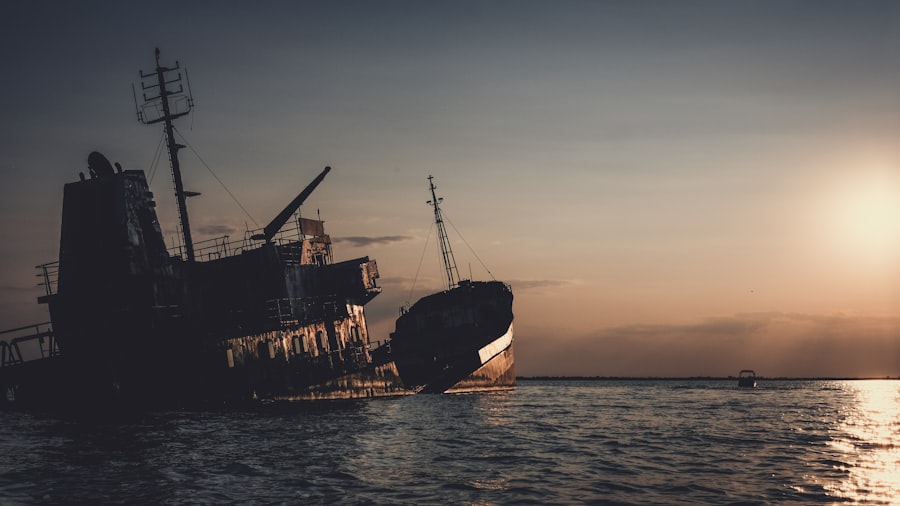
Safety in maritime operations is paramount, as it directly affects not only the crew and passengers but also the environment and the economy. The maritime industry operates under high-stakes conditions where the consequences of accidents can be devastating. A single incident can lead to loss of life, environmental degradation, and significant financial losses for companies involved.
Therefore, prioritizing safety is not merely a regulatory requirement; it is a moral obligation that underscores the industry’s commitment to protecting human life and natural resources. Moreover, a strong safety culture within maritime organizations fosters trust among stakeholders, including employees, customers, and regulatory authorities. When safety is prioritized, it enhances operational efficiency and reduces the likelihood of accidents.
Companies that invest in safety training and risk management practices often experience lower insurance premiums and improved reputations in the marketplace. Thus, the importance of safety in maritime operations extends beyond compliance; it is a strategic advantage that can lead to long-term success.
Assessment Models for Maritime Risk
Various assessment models have been developed to evaluate maritime risks effectively. These models provide structured frameworks for identifying potential hazards and assessing their likelihood and impact. One widely used model is the Hazard Identification (HAZID) approach, which focuses on systematically identifying hazards associated with specific maritime operations.
This model encourages collaboration among stakeholders to ensure comprehensive hazard identification. Another prominent model is the Failure Mode and Effects Analysis (FMEA), which examines potential failure modes within systems or processes and evaluates their consequences. FMEA allows organizations to prioritize risks based on their severity and likelihood, enabling them to allocate resources effectively for risk mitigation.
Additionally, the Bowtie model visually represents the relationship between hazards, preventive measures, and recovery strategies, providing a clear overview of risk management efforts. Each of these models offers unique advantages and can be adapted to suit the specific needs of different maritime operations.
Key Components of Maritime Risk Assessment Models
| Model Name | Type | Key Metrics | Application | Strengths | Limitations |
|---|---|---|---|---|---|
| Ship Risk Assessment Model (SRAM) | Quantitative | Probability of collision, grounding, fire, and explosion | Assessing vessel operational risks | Comprehensive risk factors, data-driven | Requires extensive historical data |
| Bayesian Network Model | Probabilistic | Conditional probabilities of accident scenarios | Predicting accident likelihoods and causes | Handles uncertainty well, adaptable | Complex model structure, needs expert input |
| Fault Tree Analysis (FTA) | Deterministic | Failure probabilities of system components | Identifying root causes of maritime accidents | Systematic failure analysis | May oversimplify complex interactions |
| Analytic Hierarchy Process (AHP) | Multi-criteria decision making | Weighted risk factors, priority scores | Ranking risk factors and mitigation options | Incorporates expert judgment | Subjective weighting can bias results |
| Markov Chain Model | Stochastic | Transition probabilities between risk states | Modeling dynamic risk changes over time | Captures temporal risk evolution | Assumes Markov property, may not fit all cases |
Maritime risk assessment models typically consist of several key components that work together to provide a comprehensive evaluation of risks. One fundamental element is hazard identification, which involves recognizing potential threats that could impact maritime operations. This step requires input from various stakeholders, including crew members, engineers, and safety experts, to ensure a thorough understanding of all possible hazards.
Another critical component is risk analysis, which assesses the likelihood and consequences of identified hazards. This analysis often employs quantitative methods, such as statistical modeling or simulations, to estimate potential outcomes. Additionally, risk evaluation plays a vital role in determining the acceptability of identified risks based on organizational tolerance levels.
Finally, risk treatment strategies are developed to mitigate or eliminate identified risks through preventive measures or contingency plans. Together, these components form a cohesive framework for effective maritime risk assessment.
Implementing Maritime Risk Assessment Models
The successful implementation of maritime risk assessment models requires a systematic approach that involves several key steps. First and foremost, organizations must foster a culture of safety that encourages open communication about risks and hazards. This cultural shift often begins with leadership commitment to safety initiatives and the allocation of resources for training and development.
Once a safety culture is established, organizations can begin to integrate risk assessment models into their operational processes. This integration may involve conducting regular risk assessments as part of routine operations or during specific projects. Training programs should be developed to ensure that all personnel understand the importance of risk assessment and are equipped with the necessary skills to identify hazards effectively.
Furthermore, organizations should establish feedback mechanisms to continuously improve their risk assessment processes based on lessons learned from past incidents.
Case Studies of Successful Implementation
Several case studies illustrate the successful implementation of maritime risk assessment models in various contexts. One notable example is a major shipping company that adopted the HAZID approach to enhance its safety protocols. By involving crew members in hazard identification workshops, the company was able to uncover previously overlooked risks related to cargo handling and navigation.
As a result, they implemented targeted training programs and revised operational procedures, leading to a significant reduction in accidents over time. Another case study involves an offshore oil drilling company that utilized FMEA to assess potential failure modes in its drilling operations. By systematically analyzing each component of their drilling systems, they identified critical failure points that could lead to catastrophic incidents.
The company then prioritized these risks and implemented engineering controls and maintenance schedules to mitigate them effectively. This proactive approach not only improved safety but also enhanced operational efficiency by minimizing downtime due to equipment failures.
Challenges in Maritime Risk Assessment
Despite its importance, maritime risk assessment faces several challenges that can hinder its effectiveness. One significant challenge is the dynamic nature of maritime operations, where conditions can change rapidly due to weather fluctuations or operational demands. This unpredictability makes it difficult to maintain up-to-date risk assessments that accurately reflect current conditions.
Additionally, there may be resistance to change within organizations when implementing new risk assessment models or practices. Employees may be hesitant to adopt new procedures or may lack confidence in their ability to identify hazards effectively. Overcoming this resistance requires strong leadership support and ongoing training initiatives that emphasize the value of risk assessment in enhancing safety.
Furthermore, data availability poses another challenge in maritime risk assessment. Accurate data on past incidents and near-misses is crucial for effective analysis; however, many organizations struggle with data collection and management practices. Without reliable data, it becomes challenging to identify trends or develop effective mitigation strategies.
Continuous Improvement in Safety Measures
Continuous improvement is essential for enhancing safety measures within maritime operations. Organizations must adopt a proactive approach that emphasizes learning from past experiences and adapting practices accordingly. This process often involves conducting regular audits of risk assessment models to identify areas for improvement and ensure compliance with evolving regulations.
Feedback loops play a crucial role in continuous improvement efforts. By encouraging open communication among crew members and stakeholders regarding safety concerns or near-misses, organizations can gather valuable insights that inform future risk assessments. Additionally, incorporating lessons learned from incidents into training programs helps reinforce a culture of safety and ensures that personnel are equipped with the knowledge needed to navigate potential hazards effectively.
Moreover, technological advancements offer new opportunities for continuous improvement in maritime safety measures. Innovations such as predictive analytics and real-time monitoring systems enable organizations to anticipate risks before they escalate into incidents. By leveraging technology alongside traditional risk assessment methods, maritime operators can enhance their ability to manage risks proactively.
Regulatory Compliance and Maritime Risk Assessment
Regulatory compliance is a fundamental aspect of maritime risk assessment that cannot be overlooked. Various international conventions and national regulations govern safety standards within the maritime industry, requiring organizations to adhere strictly to established guidelines. Compliance not only ensures legal accountability but also serves as a benchmark for best practices in risk management.
Organizations must stay informed about changes in regulations that may impact their operations or risk assessment processes. Regular training sessions on regulatory requirements help ensure that personnel understand their responsibilities regarding compliance. Additionally, engaging with regulatory bodies fosters collaboration between industry stakeholders and authorities, promoting a shared commitment to enhancing safety standards across the sector.
Failure to comply with regulations can result in severe consequences for organizations, including fines, legal liabilities, and reputational damage. Therefore, integrating regulatory compliance into risk assessment models is essential for maintaining operational integrity while safeguarding human life and the environment.
Future Trends in Maritime Risk Assessment Models
As the maritime industry continues to evolve, so too will the methodologies employed in risk assessment models. One emerging trend is the increased use of artificial intelligence (AI) and machine learning algorithms to analyze vast amounts of data related to maritime operations. These technologies have the potential to enhance predictive capabilities by identifying patterns that may not be apparent through traditional analysis methods.
Additionally, there is a growing emphasis on integrating sustainability considerations into maritime risk assessments. As environmental concerns become more pressing globally, organizations are recognizing the need to assess not only operational risks but also their impact on marine ecosystems. This holistic approach aligns with broader sustainability goals within the industry.
Furthermore, collaboration among stakeholders will likely play an increasingly vital role in shaping future risk assessment practices. By sharing data and insights across organizations—whether through partnerships or industry-wide initiatives—stakeholders can develop more comprehensive assessments that address shared challenges effectively. In conclusion, maritime risk assessment is an indispensable process that underpins safety within the industry while promoting operational efficiency and regulatory compliance.
By understanding various types of risks, implementing effective assessment models, and fostering a culture of continuous improvement, stakeholders can navigate the complexities of maritime operations with greater confidence as they work towards a safer future for all involved.
Maritime risk assessment models play a crucial role in ensuring the safety and efficiency of maritime operations. For a deeper understanding of the methodologies and frameworks used in this field, you can refer to a related article that discusses various aspects of maritime risk management. This article can be found at this link, where you will find valuable insights and case studies that highlight the importance of effective risk assessment in maritime contexts.
WATCH THIS! 🌊 The Invisible Army That Controls Global Shipping
FAQs
What are maritime risk assessment models?
Maritime risk assessment models are systematic tools used to identify, evaluate, and manage risks associated with maritime operations. These models help in predicting potential hazards, assessing their impact, and implementing measures to mitigate risks in shipping, port operations, and offshore activities.
Why are maritime risk assessment models important?
They are crucial for ensuring the safety of vessels, crew, cargo, and the marine environment. By identifying potential risks early, these models help prevent accidents, reduce financial losses, and comply with international safety regulations.
What types of risks do maritime risk assessment models evaluate?
These models assess various risks including navigational hazards, mechanical failures, environmental threats, human errors, piracy, and security threats. They also consider natural factors like weather conditions and sea states.
How are maritime risk assessment models developed?
They are developed using historical data, statistical analysis, expert judgment, and simulation techniques. Models may incorporate probabilistic methods, fault tree analysis, and scenario-based assessments to evaluate risk levels.
Who uses maritime risk assessment models?
Ship owners, operators, port authorities, maritime insurers, regulatory bodies, and safety managers use these models to enhance operational safety and decision-making processes.
Are maritime risk assessment models standardized?
While there are international guidelines and frameworks, such as those from the International Maritime Organization (IMO), models can vary depending on the specific application, region, and type of maritime activity.
Can maritime risk assessment models prevent accidents?
While they cannot eliminate all risks, these models significantly reduce the likelihood and severity of accidents by enabling proactive risk management and informed decision-making.
What role does technology play in maritime risk assessment models?
Advanced technologies like GPS, AIS (Automatic Identification Systems), real-time monitoring, and data analytics enhance the accuracy and effectiveness of risk assessments by providing up-to-date information and predictive capabilities.
How often should maritime risk assessments be conducted?
Risk assessments should be performed regularly and updated whenever there are changes in operations, equipment, regulations, or after incidents to ensure ongoing safety and compliance.
Are maritime risk assessment models applicable to offshore activities?
Yes, these models are also used in offshore oil and gas operations, wind farms, and other marine installations to assess risks related to structural integrity, environmental impact, and operational hazards.