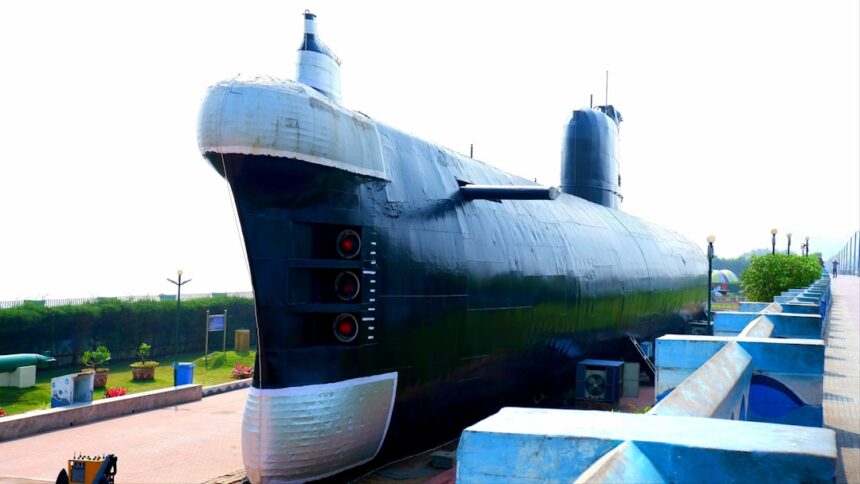
Sonar technology, an acronym for Sound Navigation and Ranging, has become an indispensable tool in various fields, particularly in marine exploration and military applications. By utilizing sound waves to detect and locate objects underwater, sonar systems have revolutionized how humans interact with the ocean’s depths. The technology operates on the principle of emitting sound pulses and analyzing the echoes that return after bouncing off objects, allowing for the mapping of underwater terrains and the identification of submerged vessels.
As the world continues to explore the mysteries of the deep sea, sonar technology remains at the forefront of these endeavors, providing critical data that enhances safety, navigation, and research. The significance of sonar extends beyond mere detection; it plays a crucial role in environmental monitoring, search and rescue operations, and even in the study of marine life. With its ability to penetrate water, sonar has opened up new avenues for understanding aquatic ecosystems and their inhabitants.
As advancements in technology continue to emerge, the capabilities of sonar systems are expanding, making them more efficient and versatile. This article delves into the history, mechanics, and future of sonar technology, highlighting its importance in both military and civilian contexts.
Key Takeaways
- Sonar technology uses sound waves to detect and locate objects underwater, primarily submarines.
- The Doppler Effect and variations in frequency and pitch are crucial for interpreting sonar signals accurately.
- Different sonar systems, including active and passive types, serve various detection and navigation purposes.
- Advancements in sonar technology have improved detection capabilities but challenges like noise interference remain.
- Sonar is vital in both military operations and civilian applications, with ongoing innovations shaping its future.
The History of Sonar
The origins of sonar technology can be traced back to the early 20th century, during a time when maritime navigation was becoming increasingly complex. The advent of World War I marked a pivotal moment in the development of sonar, as nations sought effective means to detect enemy submarines lurking beneath the waves. The first practical application of sonar was developed by the British Royal Navy, which utilized sound waves to locate submarines.
This early form of sonar was rudimentary but laid the groundwork for more sophisticated systems that would follow. As technology progressed through the decades, so too did sonar capabilities. The interwar period saw significant advancements in underwater acoustics, leading to improved detection methods.
By World War II, sonar had evolved into a critical component of naval warfare, with both Allied and Axis powers employing it extensively to gain an advantage over their adversaries. The post-war era witnessed further innovations, as researchers began to explore the potential applications of sonar beyond military use, paving the way for its integration into civilian sectors such as fishing, oceanography, and underwater construction.
The Basics of Sound Waves
To understand how sonar technology functions, it is essential to grasp the fundamentals of sound waves. Sound is a mechanical wave that travels through a medium—such as air or water—by causing particles within that medium to vibrate. These vibrations create pressure waves that propagate outward from their source.
In water, sound travels significantly faster than in air due to the denser molecular structure of the liquid. This property is crucial for sonar systems, as it allows sound waves to cover vast distances underwater. Sonar systems typically operate by emitting short bursts of sound waves known as “pings.” When these pings encounter an object, they reflect back toward the source.
The time it takes for the echo to return is measured and used to calculate the distance to the object based on the speed of sound in water. This process not only reveals the presence of submerged objects but also provides information about their size and shape. By analyzing these echoes, sonar operators can create detailed images of underwater environments, facilitating navigation and exploration.
How Sonar Detects Submarines
The detection of submarines using sonar technology involves a combination of sophisticated techniques and equipment designed to identify and track these stealthy vessels. Submarines are engineered to minimize their acoustic signature, making them challenging targets for detection. However, sonar systems have evolved to counteract these challenges by employing various methods to enhance detection capabilities.
Active sonar is one approach used to locate submarines. In this method, a sonar system emits sound waves that travel through the water until they encounter a submarine or other object. The returning echoes are analyzed to determine the object’s location and characteristics.
Conversely, passive sonar relies on listening for sounds generated by submarines themselves, such as engine noise or propeller cavitation. This method allows for stealthy detection without revealing the position of the detecting vessel. By combining both active and passive techniques, naval forces can effectively monitor submarine activity and maintain maritime security.
The Role of Frequency and Pitch in Sonar
| Metric | Description | Typical Values | Importance in Detection |
|---|---|---|---|
| Frequency (kHz) | Sound wave frequency used in sonar pulses | 1 – 100 kHz | Higher frequencies provide better resolution but shorter range |
| Range (km) | Maximum distance at which a submarine can be detected | 1 – 50 km (active sonar), up to 100+ km (passive sonar) | Determines how far away a submarine can be detected |
| Signal-to-Noise Ratio (SNR) | Ratio of sonar signal strength to background noise | Typically > 10 dB for reliable detection | Higher SNR improves detection accuracy |
| Pulse Duration (ms) | Length of the sonar pulse emitted | 1 – 100 ms | Longer pulses increase energy but reduce resolution |
| Beamwidth (degrees) | Angular width of the sonar beam | 1° – 30° | Narrow beams improve target localization |
| Detection Probability (%) | Likelihood of correctly detecting a submarine | 70% – 95% | Indicates effectiveness of sonar system |
| False Alarm Rate | Frequency of false detections per hour | 0.01 – 0.1 per hour | Lower rates reduce unnecessary responses |
| Depth (m) | Operational depth range for sonar detection | 0 – 1000 m | Sonar performance varies with depth and water conditions |
Frequency and pitch are critical components in the functioning of sonar technology. Frequency refers to the number of sound wave cycles that occur in one second, measured in hertz (Hz). In sonar applications, different frequencies are used depending on the specific requirements of detection and imaging.
Low-frequency sound waves can travel longer distances through water but may provide less detailed information about objects. In contrast, high-frequency waves offer greater resolution but are limited in range. The choice of frequency impacts not only detection capabilities but also how sonar interacts with various underwater environments.
For instance, low-frequency sonar is often employed for long-range detection of submarines or large marine structures, while high-frequency sonar is utilized for detailed mapping of seabeds or identifying smaller objects like fish schools. Understanding these nuances allows operators to select the appropriate frequency for their specific mission objectives.
Understanding the Doppler Effect in Sonar
The Doppler Effect is a phenomenon that plays a significant role in sonar technology, particularly in determining the speed and direction of moving objects underwater. Named after Austrian physicist Christian Doppler, this effect describes how the frequency of a wave changes based on the relative motion between the source of the wave and an observer. In sonar applications, this means that if a submarine is moving toward a sonar system, the frequency of the returning echoes will be higher than when it is stationary or moving away.
By analyzing these frequency shifts, sonar operators can calculate not only the distance to a submarine but also its speed and trajectory. This information is invaluable for naval operations where tracking enemy vessels is crucial for strategic planning and engagement. The Doppler Effect enhances situational awareness by providing real-time data on moving targets, allowing for more informed decision-making during critical missions.
Different Types of Sonar Systems
Sonar systems can be broadly categorized into two main types: active and passive sonar. Active sonar systems emit sound waves and listen for echoes that return after bouncing off objects.
On the other hand, passive sonar systems do not emit sound; instead, they listen for sounds produced by other vessels or marine life. This method is particularly useful for stealth operations where maintaining silence is paramount. Within these categories, there are several specialized types of sonar systems designed for specific applications.
For instance, side-scan sonar is used primarily for mapping underwater terrains and locating shipwrecks or submerged objects along the seafloor. Multibeam sonar systems provide detailed bathymetric data by emitting multiple beams simultaneously, creating comprehensive maps of underwater landscapes. Each type of sonar system has its unique advantages and limitations, making it essential for operators to choose the right system based on their mission requirements.
Advancements in Sonar Technology
The field of sonar technology has witnessed remarkable advancements over recent years, driven by innovations in digital signal processing and materials science. Modern sonar systems are now equipped with sophisticated algorithms that enhance their ability to filter out background noise and improve target detection accuracy. These advancements have led to increased operational efficiency and effectiveness in both military and civilian applications.
Additionally, miniaturization has played a significant role in expanding the capabilities of sonar technology. Smaller sensors can now be deployed on unmanned underwater vehicles (UUVs) or integrated into various platforms such as drones and autonomous vessels. This flexibility allows for more extensive data collection across diverse environments while reducing operational costs.
As research continues into new materials and technologies, future developments promise even greater enhancements in sonar performance.
Challenges in Submarine Detection
Despite advancements in sonar technology, detecting submarines remains a complex challenge due to several factors inherent to underwater environments. One significant obstacle is background noise generated by natural phenomena such as waves, marine life, and even other vessels operating nearby. This ambient noise can mask the sounds produced by submarines, making them difficult to detect.
Moreover, submarines are designed with stealth features that minimize their acoustic signatures. Advanced hull designs and noise-reduction technologies allow submarines to operate quietly while evading detection by traditional sonar systems. As a result, naval forces must continually adapt their strategies and technologies to counter these challenges effectively.
Ongoing research into new detection methods and improved signal processing techniques aims to enhance submarine detection capabilities further.
Sonar in Military and Civilian Applications
Sonar technology serves a dual purpose in both military and civilian sectors, each with its unique applications and requirements. In military contexts, sonar is primarily used for anti-submarine warfare (ASW), maritime surveillance, and reconnaissance missions. Navies around the world rely on advanced sonar systems to monitor potential threats and ensure maritime security in contested waters.
Fishermen utilize sonar systems to locate schools of fish efficiently while minimizing bycatch. Environmental scientists employ sonar technology to study marine ecosystems and assess habitat health through mapping seabed structures or monitoring changes over time.
The versatility of sonar technology underscores its importance across multiple domains.
The Future of Sonar Technology
Looking ahead, the future of sonar technology appears promising as researchers continue to explore innovative solutions to enhance its capabilities further. One area of focus is integrating artificial intelligence (AI) into sonar systems to improve target recognition and classification accuracy. By leveraging machine learning algorithms, future sonar systems could analyze vast amounts of data more efficiently than ever before.
Additionally, advancements in materials science may lead to more sensitive sensors capable of detecting even quieter objects at greater distances. As underwater environments become increasingly crowded with vessels and marine life alike, developing more sophisticated algorithms will be essential for filtering out noise while maintaining high levels of detection accuracy. In conclusion, sonar technology has come a long way since its inception over a century ago.
Its evolution reflects not only advancements in science but also humanity’s enduring quest to understand and navigate our oceans effectively. As challenges persist in submarine detection and underwater exploration continues to expand into new frontiers, ongoing research will undoubtedly shape the future landscape of this vital technology.
Sonar technology has played a crucial role in naval warfare, particularly in the detection of submarines. For a deeper understanding of how sonar systems operate and their historical significance, you can read more in this related article on the topic. Check it out here: Sonar Detection of Submarines.
WATCH THIS! 🎖️ The Silent Underwater Network That Doomed Every Soviet Submarine
FAQs
What is sonar and how does it work?
Sonar, which stands for Sound Navigation and Ranging, is a technique that uses sound waves to detect and locate objects underwater. It works by emitting sound pulses into the water and listening for echoes that bounce back from objects such as submarines. The time it takes for the echoes to return helps determine the distance and position of the object.
How is sonar used to detect submarines?
Sonar systems send out sound waves that travel through the water. When these waves hit a submarine, they reflect back to the sonar receiver. By analyzing the strength and timing of these echoes, operators can identify the presence, distance, and movement of submarines, even when they are submerged and not visible.
What are the types of sonar used in submarine detection?
There are two main types of sonar used for detecting submarines: active and passive sonar. Active sonar emits sound pulses and listens for echoes, while passive sonar listens for sounds produced by submarines, such as engine noise or propeller cavitation, without emitting any signals.
What are the limitations of sonar in detecting submarines?
Sonar effectiveness can be limited by factors such as water temperature, salinity, depth, and underwater terrain, which affect sound propagation. Additionally, submarines can use noise-reduction technologies and operate in areas with high ambient noise to avoid detection.
How has sonar technology evolved over time?
Sonar technology has advanced significantly since its early use in World War I. Modern sonar systems use sophisticated signal processing, multiple frequencies, and arrays of sensors to improve detection range and accuracy. Advances also include the development of towed array sonar and low-frequency active sonar for enhanced submarine detection.
Can sonar detect all types of submarines?
While sonar is effective at detecting many submarines, some advanced submarines are designed to be extremely quiet and use stealth technologies to minimize their acoustic signature, making them harder to detect. However, improvements in sonar technology continue to enhance detection capabilities.
Is sonar harmful to marine life?
Certain types of active sonar, especially those using high-intensity sound waves, can potentially affect marine animals, particularly marine mammals that rely on sound for communication and navigation. Research and regulations aim to minimize these impacts during sonar operations.