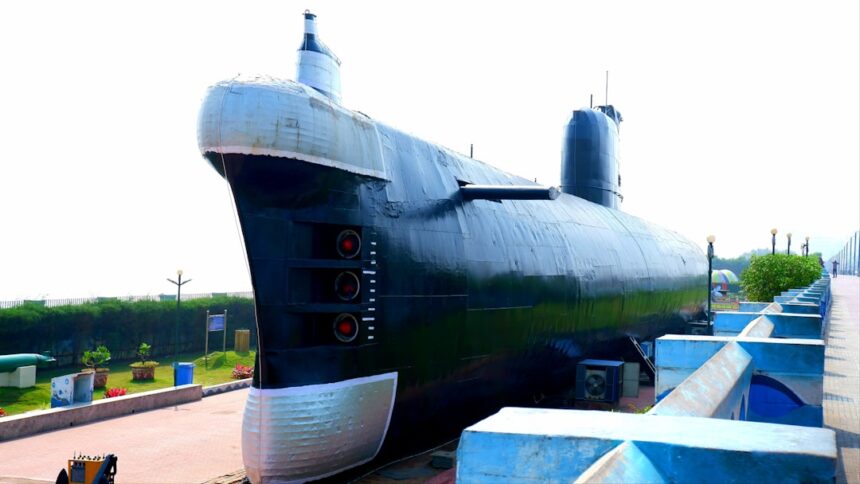
Silent submarine tracking has emerged as a critical component of modern naval warfare and maritime security. As submarines have evolved into stealthy vessels capable of operating undetected, the need for effective tracking methods has become paramount. The ability to locate and monitor submarines is not only essential for national defense but also for maintaining maritime peace and security.
This article delves into the various techniques and technologies that have been developed to track submarines silently, exploring their evolution, effectiveness, and the challenges they face in an increasingly complex underwater environment. The significance of silent submarine tracking extends beyond military applications; it also plays a vital role in environmental monitoring and research. Submarines can inadvertently impact marine ecosystems, and tracking their movements can help mitigate these effects.
This article will provide a comprehensive overview of the evolution of submarine tracking techniques, highlighting the innovative approaches that have emerged over the years.
Key Takeaways
- Silent submarine tracking has evolved through acoustic, magnetic, sonar, satellite, and drone technologies.
- Acoustic and magnetic anomaly detection remain foundational methods for locating submarines.
- Advanced sonar and underwater drones significantly enhance real-time submarine surveillance capabilities.
- Emerging quantum technology promises to revolutionize the future of silent submarine tracking.
- International collaboration is crucial to overcoming challenges and improving tracking effectiveness.
The Evolution of Submarine Tracking Techniques
The journey of submarine tracking techniques began with rudimentary methods that relied heavily on visual sightings and surface-based intelligence. Early naval forces utilized ships and aircraft to spot submarines, but these methods were often hampered by the limitations of visibility and the stealth capabilities of submarines. As technology advanced, so did the methods employed to track these elusive vessels.
The introduction of sonar technology marked a significant turning point in submarine tracking, allowing for the detection of underwater sounds produced by submarines. Over the decades, tracking techniques have continued to evolve in response to advancements in submarine design and operational tactics. The Cold War era saw a surge in submarine activity, prompting nations to invest heavily in sophisticated tracking systems.
This period witnessed the development of various acoustic and non-acoustic methods, each with its own strengths and weaknesses. As submarines became quieter and more advanced, tracking systems had to adapt, leading to the integration of multiple technologies to enhance detection capabilities.
Acoustic Tracking: Utilizing Sound to Locate Submarines
Acoustic tracking remains one of the most widely used methods for locating submarines. This technique relies on the principle that submarines generate sounds during operation, whether through engine noise, propeller cavitation, or other mechanical activities. By deploying hydrophones—underwater microphones—naval forces can listen for these sounds and triangulate the position of a submarine based on the time it takes for sound waves to reach different listening posts.
The effectiveness of acoustic tracking is influenced by various factors, including water temperature, salinity, and ambient noise levels. These environmental conditions can significantly affect sound propagation underwater, making it challenging to detect submarines in certain scenarios. Despite these challenges, advancements in signal processing and machine learning have improved the accuracy of acoustic tracking systems.
Modern sonar systems can filter out background noise and enhance the detection of submarine signatures, allowing for more precise tracking even in noisy environments.
Magnetic Anomaly Detection: Using Earth’s Magnetic Field to Track Submarines
Magnetic anomaly detection (MAD) is another innovative technique employed in silent submarine tracking. This method capitalizes on the fact that submarines disrupt the Earth’s magnetic field due to their metallic hulls and internal structures. By using sensitive magnetometers, naval forces can detect these anomalies and infer the presence of a submarine beneath the surface.
MAD systems are particularly effective when used in conjunction with other tracking methods. While they may not provide precise location data on their own, they can serve as an early warning system that alerts operators to potential submarine activity in a given area. The integration of MAD with acoustic tracking enhances overall situational awareness, allowing naval forces to respond more effectively to potential threats.
Advanced Sonar Systems: Enhancing Submarine Tracking Capabilities
| Method | Description | Key Metrics | Effectiveness |
|---|---|---|---|
| Passive Sonar | Listening for sounds emitted by submarines without sending out signals. | Frequency range: 10 Hz – 10 kHz Detection range: up to 20 km |
High in quiet waters, limited by background noise |
| Magnetic Anomaly Detection (MAD) | Detecting disturbances in Earth’s magnetic field caused by submarine metal hulls. | Detection range: 500 m – 1 km Altitude: low-flying aircraft |
Effective for close-range detection, limited by depth and distance |
| Underwater Hydrophone Arrays | Networks of underwater microphones to triangulate submarine positions silently. | Array length: several kilometers Detection range: 50+ km |
Very effective in deep ocean environments |
| Seismic Monitoring | Detecting vibrations and sounds transmitted through the seabed. | Sensitivity: microseismic levels Range: varies with seabed composition |
Limited use, supplementary to sonar |
| Infrared Detection | Detecting heat signatures from submarine exhaust or disturbances on the surface. | Detection range: few kilometers Requires surface or near-surface presence |
Limited, mostly for shallow or surfaced submarines |
The development of advanced sonar systems has revolutionized submarine tracking capabilities. Modern sonar technology employs sophisticated algorithms and signal processing techniques that enable operators to detect submarines with greater accuracy and reliability. These systems can operate in various modes, including active sonar, which emits sound waves and listens for echoes, and passive sonar, which relies solely on listening for sounds generated by submarines.
These systems provide operators with a comprehensive view of the seafloor and any objects present, including submarines. Additionally, advancements in artificial intelligence have allowed for real-time analysis of sonar data, enabling quicker decision-making and response times during submarine tracking operations.
Satellite Tracking: Monitoring Submarine Movements from Space
In recent years, satellite technology has emerged as a powerful tool for monitoring submarine movements from space. Satellites equipped with synthetic aperture radar (SAR) can detect surface vessels and even track their movements over time. While this method primarily focuses on surface ships, it can also provide valuable insights into submarine activity by monitoring their launch and recovery operations.
Satellite tracking offers several advantages over traditional methods. It provides a broad area of coverage and can operate independently of weather conditions or time of day. Furthermore, satellite data can be integrated with other intelligence sources to create a comprehensive picture of maritime activity.
As satellite technology continues to advance, its role in silent submarine tracking is expected to grow, offering new opportunities for enhanced surveillance capabilities.
Underwater Drones: Autonomous Vehicles for Submarine Surveillance
The advent of underwater drones has introduced a new dimension to silent submarine tracking efforts. These autonomous vehicles are capable of operating at various depths and can be equipped with advanced sensors for detecting submarines. Underwater drones can be deployed for extended periods, providing continuous surveillance without risking human lives.
One of the key advantages of underwater drones is their ability to operate silently, making them less detectable by enemy submarines. They can be programmed to follow specific routes or respond to real-time data inputs, allowing for flexible and adaptive tracking strategies. As technology continues to evolve, underwater drones are expected to play an increasingly vital role in maritime security operations.
Quantum Technology: The Future of Submarine Tracking
Quantum technology represents a frontier in silent submarine tracking that holds immense potential for revolutionizing detection capabilities. Quantum sensors leverage the principles of quantum mechanics to achieve unprecedented levels of sensitivity and accuracy in detecting magnetic fields and gravitational anomalies. This could enable naval forces to detect submarines with greater precision than ever before.
Research into quantum technology is still in its early stages; however, its implications for submarine tracking are profound. If successfully developed and deployed, quantum sensors could significantly enhance the ability to locate submarines operating at great depths or in challenging environments where traditional methods struggle. The integration of quantum technology into existing tracking systems could lead to a paradigm shift in how navies monitor underwater threats.
Challenges and Limitations of Silent Submarine Tracking
Despite the advancements in silent submarine tracking techniques, several challenges and limitations persist. One major hurdle is the increasing sophistication of modern submarines, which are designed specifically to evade detection through advanced stealth technologies. These vessels often employ noise-reduction measures and other counter-detection strategies that complicate tracking efforts.
Additionally, environmental factors such as ocean currents, temperature variations, and background noise can hinder detection capabilities. The underwater environment is inherently complex, making it difficult for even the most advanced systems to maintain consistent performance across different conditions. Furthermore, the sheer size of oceanic areas that need monitoring poses logistical challenges for naval forces attempting to track submarines effectively.
International Collaboration in Submarine Tracking Efforts
Recognizing the global nature of maritime security threats, international collaboration has become increasingly important in submarine tracking efforts. Nations are beginning to share intelligence and resources to enhance their collective ability to monitor submarine activity effectively. Joint exercises and information-sharing agreements allow countries to pool their expertise and technologies for improved situational awareness.
Collaborative initiatives also extend beyond military applications; they encompass environmental monitoring efforts aimed at understanding the impact of submarines on marine ecosystems. By working together, nations can develop comprehensive strategies that address both security concerns and environmental protection while fostering trust among allies.
Conclusion and Future Outlook for Silent Submarine Tracking
The future of silent submarine tracking is poised for significant advancements as technology continues to evolve at an unprecedented pace. With innovations such as quantum sensors on the horizon and ongoing developments in artificial intelligence and machine learning, naval forces are likely to gain enhanced capabilities for detecting submarines operating in increasingly challenging environments. As nations navigate the complexities of modern maritime security, the importance of effective submarine tracking will only grow.
The integration of diverse technologies—ranging from acoustic systems to satellite monitoring—will be crucial in developing comprehensive strategies that address both national defense needs and environmental considerations. Ultimately, silent submarine tracking will remain a vital aspect of ensuring maritime safety and security in an ever-changing global landscape.
In the realm of naval warfare, the ability to track submarines silently has become a critical aspect of modern military strategy. For a deeper understanding of the techniques and technologies involved in this covert tracking, you can explore the article on submarine tracking methods available at this link. This resource delves into the advancements in sonar technology and other innovative approaches that have revolutionized how navies monitor underwater activities.
WATCH THIS! 🎖️ The Silent Underwater Network That Doomed Every Soviet Submarine
FAQs
How are submarines typically tracked?
Submarines are usually tracked using sonar systems, which emit sound waves and detect their echoes. Both active sonar (which sends out pulses) and passive sonar (which listens for sounds) are commonly used by naval forces to locate submarines underwater.
What does it mean to track submarines silently?
Tracking submarines silently refers to detecting and monitoring submarines without revealing the tracking vessel’s presence. This often involves passive sonar systems that listen for sounds emitted by submarines without sending out detectable signals.
What technologies enable silent tracking of submarines?
Technologies such as passive sonar arrays, magnetic anomaly detectors, and underwater hydrophone networks enable silent tracking. These systems detect noise, magnetic disturbances, or other subtle signs of submarine presence without active emissions.
Why is silent tracking important in submarine warfare?
Silent tracking is crucial because active sonar can reveal the position of the tracking vessel, potentially compromising its safety. Silent methods allow navies to monitor enemy submarines covertly, maintaining tactical advantage.
Can submarines be tracked from the air or space silently?
Yes, aircraft and satellites can use specialized sensors, such as magnetic anomaly detectors and infrared sensors, to detect submarines indirectly. These methods can complement underwater silent tracking techniques.
What challenges exist in tracking submarines silently?
Challenges include the quiet design of modern submarines, ocean noise interference, and the vastness of the underwater environment. These factors make it difficult to detect submarines without active sonar.
How have advancements in technology improved silent submarine tracking?
Advancements in sensor sensitivity, signal processing, and networked detection systems have enhanced the ability to detect faint submarine signatures silently. Improved algorithms help distinguish submarine sounds from background noise more effectively.
Are there international efforts to monitor submarine activity silently?
Yes, some countries collaborate on underwater surveillance networks and share intelligence to monitor submarine activity. These efforts aim to maintain maritime security and prevent surprise attacks.