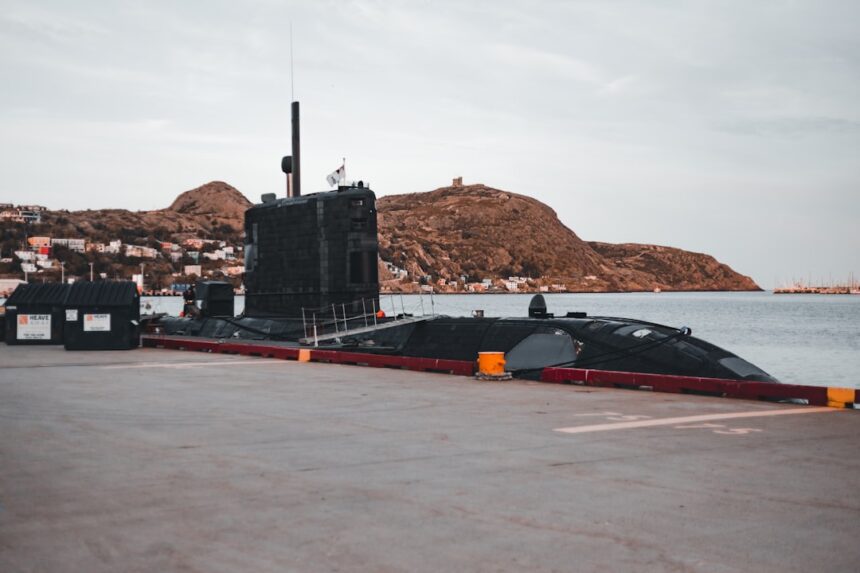
During the Cold War, submarines emerged as pivotal instruments of military strategy, serving as both deterrents and offensive capabilities for the superpowers. The United States and the Soviet Union invested heavily in their submarine fleets, recognizing that these underwater vessels could operate stealthily and strike with precision. The strategic importance of submarines was underscored by their ability to launch nuclear missiles, which fundamentally altered the landscape of warfare.
The presence of submarines in the oceans provided a sense of security and power projection, allowing nations to maintain a constant threat against adversaries while remaining hidden beneath the waves. Submarines also played a crucial role in intelligence gathering and surveillance during this tense period. They were equipped with advanced technology that enabled them to monitor enemy movements and communications without detection.
This capability was particularly significant given the geopolitical climate of the time, where espionage and information warfare were rampant. The Cold War saw an arms race not only in terms of nuclear weapons but also in the development of submarine technology, leading to innovations that would shape naval warfare for decades to come.
Key Takeaways
- Submarines played a critical strategic role during the Cold War, necessitating advanced detection methods.
- Acoustic signature detection was key to identifying and tracking submarines by analyzing their unique sound patterns.
- Technological advancements significantly improved the accuracy and range of acoustic detection over time.
- Despite progress, challenges such as noise interference and stealth technologies complicated submarine detection.
- Acoustic signature detection remains vital in modern naval warfare, with ongoing international collaboration and ethical considerations.
Understanding Acoustic Signature Detection
Acoustic signature detection is a sophisticated method used to identify and track submarines based on the unique sounds they produce while operating underwater. Each submarine generates a distinct acoustic signature, which can be influenced by various factors such as its design, machinery, and operational conditions.
By analyzing these sounds, naval forces can determine the type and location of a submarine, making acoustic signature detection an essential tool in maritime security. The process of acoustic signature detection involves advanced sonar technology that can capture and analyze sound waves in the ocean. Sonar systems can be deployed from surface ships, aircraft, or even other submarines, allowing for a multi-faceted approach to submarine detection.
The ability to differentiate between various acoustic signatures is critical; it requires not only sophisticated technology but also skilled personnel who can interpret the data accurately. As submarines became more advanced during the Cold War, so too did the methods for detecting them, leading to an ongoing arms race in underwater warfare technology.
How Acoustic Signatures Helped in Cold War Submarine Detection
During the Cold War, acoustic signatures became a cornerstone of submarine detection strategies employed by both NATO and Warsaw Pact forces. The ability to identify a submarine based on its unique sound profile allowed naval forces to track enemy vessels without direct confrontation. This capability was particularly vital given the stealthy nature of submarines, which could operate undetected for extended periods.
By employing sophisticated sonar systems, naval forces could monitor vast expanses of ocean and maintain situational awareness regarding enemy submarine movements. The effectiveness of acoustic signature detection was evident in several key incidents during the Cold War. For instance, the U.S.
Navy’s ability to track Soviet submarines in the Atlantic Ocean relied heavily on this technology. By analyzing the acoustic signatures of various Soviet submarine classes, U.S. forces could predict their movements and potential threats.
This intelligence not only informed military strategy but also contributed to broader geopolitical dynamics, as both sides sought to outmaneuver each other in a high-stakes game of cat and mouse beneath the waves.
The Evolution of Acoustic Signature Detection Technology
| Year | Technology | Key Features | Applications | Performance Metrics |
|---|---|---|---|---|
| 1950s | Basic Hydrophones | Single frequency detection, analog signal processing | Submarine detection, naval surveillance | Detection range: ~5 km; Frequency range: 10 Hz – 10 kHz |
| 1970s | Array Hydrophones with Beamforming | Directional detection, improved signal-to-noise ratio | Anti-submarine warfare, oceanographic research | Detection range: ~20 km; Frequency range: 10 Hz – 20 kHz |
| 1990s | Digital Signal Processing (DSP) | Real-time analysis, noise filtering, pattern recognition | Military surveillance, marine biology | Detection range: ~30 km; Frequency range: 10 Hz – 40 kHz; Processing latency: <1 sec |
| 2010s | Machine Learning Enhanced Detection | Automated classification, adaptive filtering, anomaly detection | Underwater vehicle tracking, environmental monitoring | Detection accuracy: >90%; False alarm rate: <5% |
| 2020s | AI-Driven Acoustic Signature Analysis | Deep learning models, multi-sensor fusion, predictive analytics | Smart defense systems, autonomous underwater vehicles | Detection accuracy: >95%; Real-time processing; Multi-source integration |
The evolution of acoustic signature detection technology has been marked by significant advancements since its inception. Early sonar systems were relatively rudimentary, relying on basic sound wave analysis to detect submarines. However, as technology progressed, so did the sophistication of sonar systems.
The introduction of digital signal processing revolutionized acoustic detection, allowing for more precise analysis of sound waves and improved differentiation between various underwater noises. In addition to technological advancements, the development of machine learning algorithms has further enhanced acoustic signature detection capabilities. These algorithms can analyze vast amounts of data quickly and accurately, identifying patterns that may be imperceptible to human operators.
As a result, modern naval forces are better equipped to detect and track submarines in real-time, significantly improving their operational effectiveness. This evolution reflects not only advancements in technology but also an ongoing commitment to maintaining maritime security in an increasingly complex global landscape.
Challenges in Detecting Cold War Submarines
Despite the advancements in acoustic signature detection technology during the Cold War, significant challenges remained in effectively identifying and tracking submarines. One major obstacle was the inherent noise of the ocean itself, which could mask or distort the sounds produced by submarines. Oceanographic conditions such as temperature gradients and currents could affect sound propagation, complicating detection efforts.
Additionally, submarines were designed with stealth in mind; many incorporated technologies aimed at reducing their acoustic signatures, making them harder to detect. Another challenge was the sheer scale of the oceans where these submarines operated. The vastness of the underwater environment posed logistical difficulties for surveillance operations.
Even with advanced sonar systems, covering large areas effectively required significant resources and coordination among naval forces. This complexity meant that while acoustic signature detection was a powerful tool, it was not infallible; there were instances where submarines evaded detection entirely or operated undetected for extended periods.
Advancements in Acoustic Signature Detection

In recent years, advancements in acoustic signature detection have continued to evolve rapidly, driven by technological innovation and changing military needs. Modern sonar systems now incorporate advanced algorithms that enhance their ability to filter out background noise and focus on specific acoustic signatures. These systems can utilize multiple frequencies and arrays of sensors to create a more comprehensive picture of underwater activity, significantly improving detection rates.
Moreover, the integration of artificial intelligence into acoustic signature detection has transformed how naval forces analyze data. AI algorithms can learn from historical data sets to improve their predictive capabilities, allowing for faster identification of potential threats. This technological leap not only enhances operational efficiency but also reduces the cognitive load on human operators who must interpret complex sonar data in real-time.
The Importance of Acoustic Signature Detection in Modern Naval Warfare
In contemporary naval warfare, acoustic signature detection remains a critical component of maritime security strategies. As nations continue to invest in advanced submarine technology, the ability to detect and track these vessels has become increasingly vital for maintaining strategic advantages at sea. Modern submarines are equipped with stealth features designed to minimize their acoustic signatures; thus, naval forces must continually adapt their detection methods to counter these advancements.
Nations are increasingly aware that control over maritime domains is essential for national security and economic interests. Acoustic signature detection provides a means for navies to monitor potential adversaries while ensuring their own submarines can operate effectively without being compromised.
International Efforts in Acoustic Signature Detection
International collaboration has played a significant role in advancing acoustic signature detection capabilities among allied nations. Joint exercises and information-sharing initiatives have allowed countries to pool resources and expertise in developing more effective detection technologies. For instance, NATO has established frameworks for sharing sonar data among member states, enhancing collective maritime security efforts.
Additionally, international agreements aimed at regulating submarine operations have fostered cooperation in acoustic signature detection research and development. By working together, nations can address common challenges posed by emerging submarine technologies while ensuring that their own fleets remain competitive in an evolving maritime landscape.
Future Prospects in Acoustic Signature Detection
Looking ahead, the future prospects for acoustic signature detection are promising yet complex. As technology continues to advance at a rapid pace, naval forces will likely see further improvements in detection capabilities through innovations such as quantum sensing and enhanced machine learning techniques. These developments could revolutionize how submarines are detected and tracked, potentially rendering current methods obsolete.
However, with these advancements come new challenges as well. As nations develop more sophisticated stealth technologies for their submarines, the arms race in underwater warfare will persist. Future efforts will need to focus not only on improving detection capabilities but also on developing countermeasures against emerging stealth technologies that could further complicate submarine tracking efforts.
Ethical and Legal Implications of Acoustic Signature Detection
The use of acoustic signature detection raises important ethical and legal considerations that must be addressed as technology evolves. Issues surrounding privacy and surveillance come into play when considering how acoustic data is collected and utilized by military forces. The potential for misuse or overreach in monitoring underwater activities necessitates clear guidelines and regulations governing the use of such technologies.
Moreover, international law regarding maritime operations must adapt to account for advancements in acoustic signature detection capabilities. As nations navigate complex geopolitical landscapes, ensuring compliance with established treaties while pursuing national security interests will be crucial for maintaining stability at sea.
The Ongoing Significance of Acoustic Signature Detection
In conclusion, acoustic signature detection remains a vital aspect of modern naval warfare that has evolved significantly since its inception during the Cold War. As nations continue to invest in advanced submarine technologies and face new challenges in maritime security, the importance of effective detection methods cannot be overstated. The ongoing advancements in technology promise to enhance these capabilities further while also presenting new ethical and legal dilemmas that must be navigated carefully.
As global tensions persist and maritime domains become increasingly contested, understanding and improving acoustic signature detection will be essential for maintaining strategic advantages at sea. The lessons learned from past conflicts will inform future developments as nations strive to balance national security interests with ethical considerations in an ever-changing geopolitical landscape.
During the Cold War, the development of acoustic signature submarine detection technology played a crucial role in naval warfare, as it allowed for the tracking of submarines based on the unique sounds they produced. This technological advancement not only enhanced the capabilities of naval forces but also led to an arms race in underwater stealth technology. For a deeper understanding of the implications of these developments, you can read more in the article available at this link.
WATCH THIS! The Billion-Dollar Whisper: How One KGB Mole Made Every Soviet Submarine Visible
FAQs
What is an acoustic signature in the context of submarines?
An acoustic signature refers to the unique sound profile produced by a submarine, including noises from its engines, propellers, and onboard machinery. This signature can be detected and analyzed to identify and track the submarine.
How was acoustic signature used for submarine detection during the Cold War?
During the Cold War, both NATO and Warsaw Pact navies used passive and active sonar systems to detect submarines by their acoustic signatures. By listening for distinctive sounds, naval forces could locate and monitor enemy submarines covertly.
What technologies were developed to improve acoustic detection in the Cold War?
Technologies such as towed array sonar systems, hydrophone networks, and advanced signal processing techniques were developed to enhance the detection and classification of submarine acoustic signatures during the Cold War.
Why was submarine acoustic stealth important during the Cold War?
Submarine acoustic stealth was crucial because quieter submarines were harder to detect, allowing them to carry out reconnaissance, surveillance, and strategic deterrence missions without being tracked by enemy forces.
Did both sides in the Cold War develop countermeasures against acoustic detection?
Yes, both NATO and Soviet forces invested in noise reduction technologies, such as improved hull designs, quieter propulsion systems, and sound-absorbing coatings, to reduce their submarines’ acoustic signatures and evade detection.
What role did the SOSUS system play in submarine detection?
The Sound Surveillance System (SOSUS) was a network of underwater hydrophone arrays deployed by the United States to detect and track Soviet submarines by monitoring their acoustic signatures across vast ocean areas.
How did acoustic signature analysis contribute to naval strategy during the Cold War?
By identifying and tracking enemy submarines through their acoustic signatures, naval commanders could make informed decisions about fleet movements, anti-submarine warfare tactics, and strategic deterrence, thereby maintaining a balance of power.
Are acoustic signatures still relevant in modern submarine detection?
Yes, acoustic signatures remain a fundamental aspect of submarine detection, although modern technologies have advanced to include non-acoustic methods such as magnetic anomaly detection and satellite surveillance.