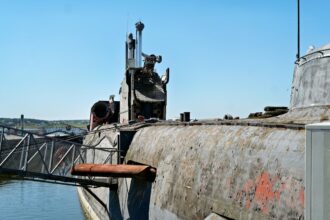
Project Azorian, a covert operation initiated by the United States during the height of the Cold War, stands as a remarkable testament to the lengths to which nations will go in the pursuit of intelligence and technological advancement. Launched in the early 1970s, this ambitious endeavor aimed to recover a sunken Soviet submarine, the K-129, which had met its fate in the depths of the Pacific Ocean. The project was not merely a salvage operation; it was a complex interplay of espionage, engineering, and geopolitical maneuvering.
The stakes were high, as the submarine was believed to contain sensitive materials and technology that could provide invaluable insights into Soviet military capabilities. The operation was shrouded in secrecy, reflecting the tense atmosphere of the Cold War era. The U.S.
government recognized that acquiring information from the K-129 could shift the balance of power in favor of the West. As such, Project Azorian was not only a mission to retrieve a sunken vessel but also a strategic move in the ongoing battle for supremacy between the United States and the Soviet Union. The project would ultimately reveal much about the capabilities of both nations and their willingness to engage in high-risk operations to secure an advantage over one another.
Key Takeaways
- Project Azorian was a secret Cold War mission aimed at recovering a sunken Soviet submarine.
- The Glomar Explorer played a crucial role as the specially designed ship for the recovery operation.
- The project faced significant technical and operational challenges, including deep-sea recovery difficulties.
- While partially successful, Project Azorian had mixed outcomes and sparked controversies over its secrecy.
- The mission influenced Cold War politics and left a lasting legacy on modern maritime and intelligence operations.
The Mission and Goals of Project Azorian
The primary mission of Project Azorian was to locate and recover the K-129 submarine, which had sunk approximately 16,000 feet beneath the surface of the ocean. The U.S. intelligence community believed that the submarine housed critical technology and cryptographic materials that could provide insights into Soviet naval operations and capabilities.
The overarching goal was to gather intelligence that could inform U.S. military strategies and enhance national security during a period marked by intense rivalry and suspicion. To achieve these ambitious goals, Project Azorian involved a multifaceted approach that combined advanced engineering with clandestine operations.
The U.S. government enlisted the help of Howard Hughes, a prominent industrialist and aviator, who provided funding and resources for the project. Hughes’ involvement lent an air of legitimacy to the operation while also ensuring access to cutting-edge technology.
The mission’s objectives extended beyond mere recovery; it aimed to analyze and understand Soviet technology, thereby gaining a competitive edge in naval warfare.
The Challenges Faced During Project Azorian

Despite its ambitious goals, Project Azorian encountered numerous challenges that tested the limits of human ingenuity and technological capability. One of the most significant hurdles was the extreme depth at which the K-129 lay submerged. At 16,000 feet, the ocean’s pressure posed a formidable obstacle for any recovery operation.
Additionally, the secrecy surrounding Project Azorian added layers of complexity to its execution. The U.S.
government had to ensure that no information leaked to the Soviets, which required meticulous planning and compartmentalization of knowledge among those involved in the project. This secrecy extended to the operational aspects as well; even those working on the recovery vessel were often unaware of the full scope of their mission. The combination of technical challenges and operational secrecy created an environment fraught with uncertainty and risk.
The Role of the Glomar Explorer in Project Azorian
| Metric | Details |
|---|---|
| Project Name | Project Azorian |
| Vessel Used | Glomar Explorer |
| Purpose | Recovery of Soviet submarine K-129 |
| Operation Period | 1974 |
| Depth of Recovery | Approximately 16,500 feet (5,000 meters) |
| Length of Glomar Explorer | approximately 619 feet (189 meters) |
| Displacement | Approximately 38,000 tons |
| Recovery Device | Mechanical claw known as the “Capture Vehicle” |
| Outcome | Partial recovery of submarine; some sections lost during lift |
| Significance | One of the deepest and most complex salvage operations in history |
Central to Project Azorian was the Glomar Explorer, a specially designed ship that served as the operational base for the recovery mission. Constructed by Howard Hughes’ company, the Glomar Explorer was equipped with advanced technology that allowed it to operate at extreme depths. Its design included a unique claw-like mechanism intended for retrieving objects from the ocean floor, making it an essential tool for the success of Project Azorian.
The Glomar Explorer’s role extended beyond mere recovery; it also served as a platform for intelligence gathering and analysis. Equipped with sophisticated sensors and communication systems, the ship was capable of monitoring underwater activities and collecting data that could inform U.S. military strategies.
The vessel’s design reflected a blend of engineering prowess and strategic foresight, embodying the innovative spirit that characterized Project Azorian.
The Successes and Failures of Project Azorian
Project Azorian yielded both successes and failures, illustrating the complexities inherent in such an ambitious undertaking. On one hand, the operation successfully located and partially recovered sections of the K-129 submarine, providing valuable insights into Soviet technology and capabilities. The retrieval of materials from the wreckage allowed U.S.
intelligence agencies to analyze Soviet naval operations more effectively, contributing to a deeper understanding of potential threats. However, not all aspects of Project Azorian can be deemed successful. The operation faced significant setbacks, including technical malfunctions and operational challenges that hindered its progress.
The recovery process was fraught with difficulties, leading to incomplete retrievals and unanswered questions about what other critical materials may have remained on the ocean floor. These failures underscored the inherent risks associated with such high-stakes missions and highlighted the limitations of even the most advanced technology.
The Impact of Project Azorian on Cold War Politics

The implications of Project Azorian extended far beyond its immediate objectives; it had a profound impact on Cold War politics and international relations. By successfully recovering materials from the K-129 submarine, the United States gained a strategic advantage over the Soviet Union, allowing for more informed military planning and decision-making. This intelligence contributed to shaping U.S.
Moreover, Project Azorian served as a demonstration of American ingenuity and determination in the face of adversity. The successful execution of such a complex operation sent a message to both allies and adversaries about U.S.
capabilities in intelligence gathering and technological innovation. It reinforced perceptions of American strength during a time when confidence in national security was paramount.
The Legacy of Project Azorian
The legacy of Project Azorian is multifaceted, encompassing both its immediate outcomes and its long-term implications for maritime operations and intelligence gathering. In terms of technological advancements, the project pushed the boundaries of underwater exploration and recovery techniques, paving the way for future endeavors in deep-sea research and salvage operations. The innovations developed during Project Azorian have had lasting effects on various fields, including marine engineering and oceanography.
Furthermore, Project Azorian has become emblematic of Cold War-era espionage efforts, illustrating how nations leveraged technology and ingenuity in their quest for dominance. It serves as a case study in balancing risk with reward in high-stakes operations, offering valuable lessons for contemporary intelligence agencies engaged in similar endeavors today.
The Controversies Surrounding Project Azorian
Despite its achievements, Project Azorian was not without controversy. Critics have raised ethical questions regarding the lengths to which governments will go in pursuit of intelligence, particularly when it involves covert operations that may violate international norms or laws. The secrecy surrounding Project Azorian also led to debates about transparency in government actions and accountability for decisions made during such high-stakes missions.
Additionally, some have argued that Project Azorian exemplified an overreliance on technology at the expense of human judgment and diplomacy. While technological advancements played a crucial role in achieving its objectives, there are concerns that such operations may prioritize military solutions over diplomatic engagement in resolving conflicts between nations.
The Declassification of Project Azorian Documents
In recent years, many documents related to Project Azorian have been declassified, shedding light on its intricacies and revealing previously unknown details about its execution. This declassification process has allowed historians and researchers to gain deeper insights into not only the operational aspects of Project Azorian but also its broader implications for Cold War dynamics. The release of these documents has sparked renewed interest in Project Azorian among scholars and enthusiasts alike, prompting discussions about its significance within the context of Cold War history.
As more information becomes available, it is likely that new interpretations will emerge regarding its impact on international relations and military strategy during this pivotal period.
The Influence of Project Azorian on Modern Maritime Operations
The lessons learned from Project Azorian continue to influence modern maritime operations today. Advances in underwater technology developed during this project have paved the way for contemporary deep-sea exploration efforts, including scientific research initiatives aimed at understanding marine ecosystems and recovering lost artifacts from shipwrecks. Moreover, Project Azorian has informed current practices in intelligence gathering and surveillance operations conducted by naval forces around the world.
The emphasis on technological innovation combined with strategic planning remains relevant as nations navigate complex geopolitical landscapes where maritime security is increasingly paramount.
Evaluating the Success of Project Azorian
In evaluating the success of Project Azorian, one must consider both its tangible outcomes and its broader implications for international relations during a tumultuous period in history. While it achieved significant milestones in recovering materials from a sunken Soviet submarine, it also faced challenges that highlighted limitations inherent in such ambitious undertakings. Ultimately, Project Azorian serves as a reminder of how nations navigate complex geopolitical landscapes through ingenuity, risk-taking, and strategic planning.
Its legacy endures not only in terms of technological advancements but also as a case study in balancing ethical considerations with national security imperatives—a challenge that continues to resonate in contemporary discussions surrounding intelligence operations today.
The discussion surrounding Project Azorian, a covert operation aimed at recovering a sunken Soviet submarine, raises intriguing questions about the effectiveness of such secretive missions. For a deeper understanding of the implications and outcomes of similar military operations, you can explore the article on In The War Room, which delves into the complexities of intelligence and military strategy. This resource provides valuable insights that can help contextualize the success or failure of Project Azorian within the broader scope of Cold War tactics.
WATCH THIS! The CIA’s Secret Mission to Recover a Nuclear Submarine: Project Azorian
FAQs
What was Project Azorian?
Project Azorian was a secret CIA operation in the early 1970s aimed at recovering a sunken Soviet submarine, K-129, from the Pacific Ocean floor.
Was Project Azorian successful in recovering the submarine?
Project Azorian partially succeeded in recovering a portion of the K-129 submarine, but the entire submarine was not retrieved as planned due to mechanical failures during the lift.
What was the purpose of recovering the K-129 submarine?
The purpose was to obtain Soviet military technology, cryptographic materials, and intelligence from the sunken submarine during the Cold War.
How was Project Azorian carried out?
The CIA used a specially designed ship, the Hughes Glomar Explorer, equipped with a large mechanical claw to lift the submarine from the ocean floor at a depth of about 16,500 feet.
Did the Soviets know about Project Azorian?
The Soviets were unaware of the operation at the time, and the project was conducted under strict secrecy to avoid detection.
What challenges did Project Azorian face?
The operation faced significant technical challenges, including the extreme depth of the ocean floor, the complexity of the lifting mechanism, and the risk of detection by the Soviet Union.
What was the outcome of Project Azorian in terms of intelligence gained?
Although only part of the submarine was recovered, the operation yielded valuable intelligence, including cryptographic materials and missile technology, which contributed to U.S. Cold War efforts.
Is Project Azorian considered a success or failure?
Project Azorian is generally considered a partial success because it achieved some of its objectives despite not recovering the entire submarine, and it demonstrated advanced deep-sea recovery capabilities.
When was Project Azorian declassified?
Details about Project Azorian were declassified in the 2010s, allowing the public to learn about the operation for the first time.
What impact did Project Azorian have on future deep-sea recovery operations?
The project advanced technology and techniques for deep-sea salvage, influencing future underwater recovery missions and marine engineering developments.