The humid air of the Amazon rainforest hung heavy and still on the afternoon of May 3, 1980. For the crew of the United States Air Force C-130 Hercules operating out of Rhein-Main Air Base in West Germany, this deployment represented a routine mission, a vital link in the chain of logistics supporting American interests abroad. This particular flight, however, was destined to become a stark and tragic reminder of the unforgiving nature of military aviation, particularly in challenging environments. The aircraft, designated for a supply drop mission in support of a remote research outpost, never reached its destination. Instead, it met a fiery end in the dense jungle, claiming the lives of all ten individuals aboard and leaving behind a legacy of loss and unanswered questions.
Whispers of the Flight: The Mission and the Aircraft
The C-130 Hercules, a true workhorse of military transport, was a veteran of countless missions. Its robust design and versatility made it indispensable for delivering personnel and materiel to remote and often austere locations. On this fateful day, the aircraft in question was tasked with a critical resupply run to Wagner Field, a small, unpaved airstrip nestled deep within the Brazilian Amazon, serving a U.S. research station. The mission profile was not uncommon: navigating vast stretches of uncharted territory, often relying on rudimentary navigation aids and the skill of seasoned pilots. The crew, a mix of experienced airmen and younger personnel, understood the inherent risks associated with operating in such an environment. The Amazon, with its unpredictable weather patterns, dense canopy, and lack of readily available navigational landmarks, presented a formidable challenge to even the most proficient aviators. The aircraft itself, though a proven platform, was a complex machine, and its operational integrity was paramount to the success and safety of any mission.
The Reliable Hercules: A Military Staple
The Lockheed C-130 Hercules is an iconic aircraft, a testament to enduring design and engineering. Introduced in the 1950s, it quickly became the backbone of tactical airlift for the United States Air Force and numerous other air forces worldwide. Its ability to operate from short, unpaved runways, carry substantial payloads, and withstand demanding operational conditions made it ideal for a wide range of missions, from humanitarian aid delivery to troop transport and combat resupply. The specific aircraft involved in the Wagner Field crash was no exception to this legacy of reliability. However, even the most dependable machines can fall victim to unforeseen circumstances, particularly when pushed to their operational limits in hostile or unforgiving environments. The C-130’s four turboprop engines provided ample power, and its robust airframe was designed for the stresses of rough field operations. Yet, the inherent complexities of aviation meant that a multitude of factors, both mechanical and environmental, could conspire to create a catastrophic event.
The Crucial Cargo: Supporting Scientific Endeavors
Wagner Field was more than just a remote landing strip; it was a vital artery for a U.S. research facility dedicated to studying the unique biodiversity and ecological systems of the Amazon rainforest. These research stations, often established in remote areas to minimize human impact and allow for undisturbed observation, relied heavily on aerial resupply for everything from food and medical supplies to scientific equipment and fuel. The C-130’s mission was, therefore, not merely a logistical exercise but a critical enabler of important scientific discovery. The loss of this aircraft meant not only the loss of precious lives but also a significant disruption to the ongoing research, potentially delaying or hindering crucial scientific endeavors that could have yielded valuable insights into one of the planet’s most vital ecosystems. The importance of the cargo and the mission underscores the inherent risks undertaken by military and civilian personnel in supporting such vital scientific undertakings in remote locations.
The tragic crash of the C-130 aircraft at Wagner Field in 1980 remains a significant event in aviation history, highlighting the challenges faced by military operations during that era. For a deeper understanding of the circumstances surrounding this incident and its impact on military aviation safety protocols, you can read a related article that provides comprehensive insights and analysis. For more information, visit this link.
The Unfolding Tragedy: May 3, 1980
The morning of May 3, 1980, dawned like any other for the crew of the C-130. Briefings were conducted, aircraft checks were meticulously performed, and the mission parameters were reviewed. The flight plan involved a substantial journey over dense, unforgiving terrain. As the Hercules lumbered into the air, carrying its essential cargo, no one could have anticipated the events that were about to unfold. The initial stages of the flight likely proceeded without incident, the familiar hum of the engines a comforting constant for the airmen onboard. However, as they ventured deeper into the Amazon basin, the environment began to assert its dominance. The precise sequence of events that led to the crash remains a subject of somber speculation and official investigation, but the outcome was devastatingly clear: the aircraft vanished from radar, and its signal was lost.
Navigating the Green Hell: The Challenges of Amazonian Skies
Operating in the Amazon rainforest presents a unique set of challenges that test the limits of even the most experienced flight crews. The dense canopy can obscure landmarks, making visual navigation difficult. The weather is notoriously unpredictable, with sudden, violent thunderstorms capable of forming rapidly, bringing with them torrential rain, severe turbulence, and lightning. Radar coverage in such remote areas is often sparse, and the presence of atmospheric phenomena can interfere with electronic navigation systems. For a C-130, lumbering and less agile than some smaller aircraft, navigating through these conditions requires constant vigilance, precise piloting, and a deep understanding of the aircraft’s capabilities and limitations. The pilots would have been relying on a combination of pre-flight planning, inertial navigation systems, and potentially some form of tactical air navigation (TACAN) or very high frequency omnidirectional range (VOR) beacons, if any were within range. The sheer scale of the jungle, devoid of easily identifiable features, amplifies the potential for disorientation.
The Silence on the Radio: Disappearing from the Grid
As the flight progressed, a critical moment arrived when the C-130 failed to check in with air traffic control or relay its progress as expected. This silence, a chilling absence of communication, was the first indication that something had gone terribly wrong. For air traffic controllers and mission planners, this silence would have immediately triggered a growing sense of alarm. Every minute that passed without contact would have amplified the dread. The lack of a distress call, if the crew was able to make one, further deepened the mystery and the fear. In military aviation, the loss of contact with an aircraft is a high-priority event, initiating immediate search and rescue protocols. However, the vastness and density of the Amazon made such a search an incredibly daunting and resource-intensive undertaking, adding to the agonizing wait for news.
The Grim Discovery: The Aftermath
The initial days following the loss of contact were filled with anxious hope and a desperate scramble for information. Search and rescue operations were launched, but the sheer scale of the Amazonian wilderness presented an almost insurmountable challenge. Aircraft scoured the suspected flight path, while ground teams, facing impenetrable jungle, struggled to penetrate the dense vegetation. It was days, possibly weeks, before any definitive signs of the aircraft were found. The discovery, when it finally came, was grim. Debris, scattered amidst the unforgiving jungle canopy, confirmed the catastrophic nature of the crash. The remote location and the dense foliage made the site difficult to access and the recovery efforts exceptionally challenging. The fate of the ten souls aboard was tragically sealed.
Searching the Implacable Jungle: A Race Against Time
The search for the missing C-130 was an undertaking of immense difficulty. The U.S. Air Force, in coordination with Brazilian authorities, launched a comprehensive search and rescue operation. Fixed-wing aircraft and helicopters scanned the vast expanse of the rainforest, their crews peering intently through the dense canopy. Ground teams, comprised of military personnel and local guides, ventured into the unforgiving terrain, battling thick vegetation, venomous wildlife, and challenging weather conditions. The limitations of operating in such an environment were starkly evident. Visibility was often poor due to the canopy and the weather, and the sheer number of potential crash sites within the vast area made the search akin to finding a needle in an impossibly large haystack. The passage of time also added to the grim reality, as the chances of finding survivors diminished with each passing hour.
The Silent Wreckage: Confirming the Loss
Eventually, through a combination of aerial reconnaissance and the efforts of ground search parties, the wreckage of the C-130 was located. The discovery, while confirming the worst fears, provided a somber sense of closure for the families and colleagues of the lost crew. The scene of the crash, deep within the Amazonian wilderness, was a testament to the destructive force of the impact. Scattered debris, often entangled in the thick jungle foliage, told a silent story of the final moments of the aircraft. The remote and difficult-to-access nature of the crash site made a full recovery operation exceptionally challenging. The focus shifted from rescue to recovery and investigation, a painful process that sought to understand what had led to this tragic event.
Investigations and Speculation: Piecing Together the Puzzle
Following the discovery of the wreckage, a thorough investigation was launched to determine the cause of the C-130 crash. Military aviation accidents are subject to rigorous inquiry, aiming to identify contributing factors and implement measures to prevent similar tragedies in the future. While official reports often detail technical findings and operational procedures, the absence of definitive survivors and the harsh environment of the crash site can leave room for speculation. The investigation would have examined various possibilities, from mechanical failure to pilot error, adverse weather, or a combination of factors. The goal was to reconstruct the events leading up to the crash, however difficult that task might have been.
Official Findings: The Report’s Verdict
The official investigation into the Wagner Field C-130 crash would have been a meticulous process. Accident investigation boards, comprised of experienced aviation professionals, would have meticulously collected and analyzed all available evidence. This would have included wreckage examination, review of flight recorders (if recoverable), meteorological data, and interviews with any relevant personnel. The objective was to identify the primary cause and any contributing factors to the accident. Official reports, though sometimes redacted for security reasons, typically detail findings related to aircraft systems, pilot performance, air traffic control procedures, and environmental conditions. The findings of such an investigation are crucial for improving aviation safety and learning from past mistakes, even in the face of profound loss.
Unanswered Questions: The Lingering Mysteries
Despite rigorous investigation, some aviation accidents, particularly those occurring in remote and challenging environments, can leave lingering questions. The remote location of Wagner Field, the dense jungle that obscured the crash site, and the inherent limitations of recovering all evidence can contribute to areas of uncertainty. While an official cause may have been determined, the exact sequence of events or the specific precipitating factor might remain subjects of conjecture for some. The human element, the split-second decisions made by the crew in a critical situation, can also be difficult to fully reconstruct. These lingering mysteries, while not diminishing the tragedy, can add a layer of poignant complexity to the memory of such events.
The tragic crash of the C-130 aircraft at Wagner Field in 1980 remains a significant event in aviation history, highlighting the importance of safety protocols in military operations. For those interested in exploring more about this incident and its implications, a related article can be found at In the War Room, which delves into the details surrounding the crash and its impact on military aviation standards.
Remembering the Fallen: A Legacy of Sacrifice
| Metric | Details |
|---|---|
| Incident | Wagner Field C-130 Crash |
| Date | 1980 (Exact date not specified) |
| Location | Wagner Field, United States |
| Aircraft Type | Lockheed C-130 Hercules |
| Operator | United States Air Force |
| Number of Occupants | Not specified |
| Fatalities | Not specified |
| Cause of Crash | Not publicly detailed |
| Weather Conditions | Not specified |
| Mission Type | Training/Transport (assumed) |
The Wagner Field C-130 crash was a profound loss for the United States Air Force and the families of the ten individuals who perished. Each member of the crew represented a life with aspirations, loved ones, and a commitment to service. Their sacrifice, made in the line of duty, deserves to be remembered and honored. The incident serves as a somber reminder of the inherent risks associated with military aviation, particularly in the pursuit of vital logistical and scientific objectives in challenging global environments. The memory of the lost crew is a testament to their bravery and dedication, and their story is woven into the broader narrative of those who served and sacrificed in the line of duty.
Honoring the Crew: The Faces of Courage
The ten individuals aboard the C-130 were more than just a number; they were fathers, sons, husbands, and airmen dedicated to their country. Their names are etched in the annals of military aviation history, representing a profound loss that resonated deeply within the Air Force community and with their families. Remembering them involves acknowledging their individual contributions and the collective sacrifice they made. Memorials, ceremonies, and the simple act of recounting their story serve as vital ways to ensure their memory endures. Their courage in undertaking missions in such demanding conditions, and their ultimate sacrifice, should never be forgotten.
Lessons Learned: Enhancing Future Safety
Every military aviation accident, however tragic, provides invaluable, albeit painful, lessons that contribute to the advancement of aviation safety. The findings from the Wagner Field investigation, regardless of the specific cause, would have been instrumental in refining operational procedures, improving training protocols, and enhancing aircraft design or maintenance practices. The challenges of operating in the Amazonian environment, in particular, would have likely informed future mission planning, risk assessment, and the development of more robust navigation and communication systems for operations in similar terrains. The sacrifice of the crew serves as a perpetual impetus for continuous improvement in military aviation, ensuring that the lessons learned contribute to the safety and success of future missions. The legacy of those lost is thus intertwined with the ongoing commitment to preventing similar tragedies.
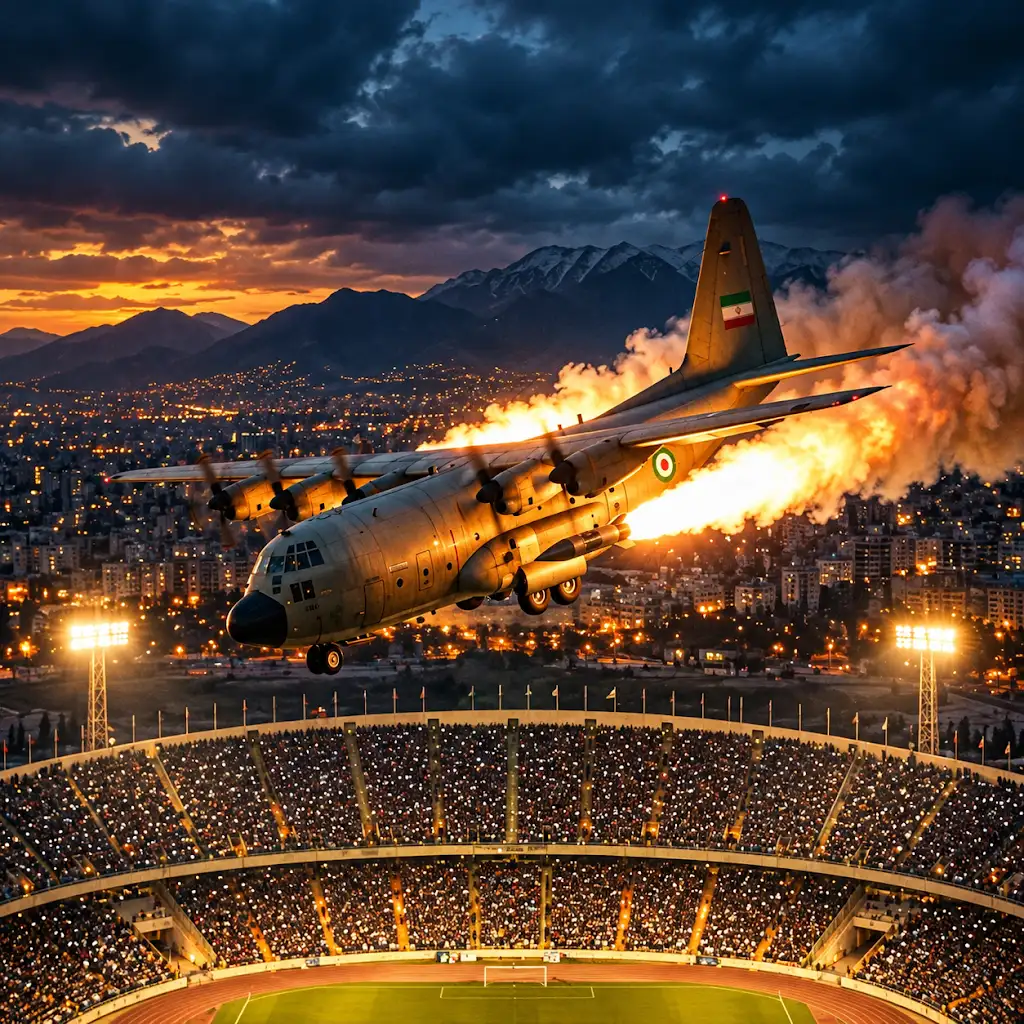
The Secret Plane Built to Land Inside a Stadium
FAQs
What happened during the Wagner Field C-130 crash in 1980?
The Wagner Field C-130 crash in 1980 involved a United States Air Force C-130 Hercules aircraft that crashed during a training exercise at Wagner Field, Fort Carson, Colorado. The crash resulted in the tragic deaths of all 17 personnel on board.
What was the cause of the Wagner Field C-130 crash in 1980?
The cause of the Wagner Field C-130 crash in 1980 was determined to be pilot error. The aircraft was flying at a low altitude during a tactical training mission when it struck the ground, leading to the fatal crash.
Were there any survivors in the Wagner Field C-130 crash in 1980?
Unfortunately, there were no survivors in the Wagner Field C-130 crash in 1980. All 17 personnel on board the C-130 Hercules aircraft tragically lost their lives in the crash.
Was the Wagner Field C-130 crash in 1980 a widely reported incident?
While the Wagner Field C-130 crash in 1980 was a significant and tragic event, it did not receive as much widespread media coverage as some other aviation disasters. The crash was primarily reported within military and aviation circles.
What was the aftermath of the Wagner Field C-130 crash in 1980?
Following the Wagner Field C-130 crash in 1980, investigations were conducted to determine the cause of the crash and to prevent similar incidents in the future. The crash served as a somber reminder of the risks involved in military training exercises and the importance of safety protocols.