The arid plains of Iran in the summer of 1980 were a crucible of tension. The American embassy in Tehran, held hostage for months, had become a symbol of a nation’s humiliation and a focal point for global anxieties. While the world watched the diplomatic stalemate unfold, a shadow operation was being meticulously prepared, a high-stakes gamble driven by desperation and a profound sense of duty. This was not a mission publicized or even widely known within the corridors of power at the time. It was a top-secret rescue operation, an undertaking so audacious and fraught with peril that its mere contemplation would have sent shockwaves through international relations. The success or failure of this clandestine endeavor hinged on the courage and precision of a select group of individuals, operating in the deepest secrecy, far from the public eye. The story of this operation, often lost in the broader narrative of the hostage crisis, is one of extraordinary heroism, technological innovation, and the unwavering commitment of those who served.
Whispers of Defiance: The Genesis of the Operation
The protracted hostage crisis, which began in November 1979, had crippled American foreign policy and ignited a fervent desire for a resolution. Diplomatic channels were exhausted, economic sanctions proved ineffective, and the patience of the American public wore thin. Within the classified echelons of the United States government, a grim realization began to dawn: a military option, however risky, might be the only remaining path to secure the freedom of the 52 American diplomats and citizens held captive. It was within this climate of mounting frustration and strategic reassessment that the seeds of a daring, covert operation were sown.
The Urgent Need for an Alternative
The initial response to the hostage crisis was one of shock and outrage, followed by a protracted period of diplomatic negotiation. However, as the months wore on with no sign of progress, it became clear that the situation was not going to be resolved through conventional means. The Iranian government, under Ayatollah Khomeini, seemed steadfast in its refusal to release the hostages, viewing them as bargaining chips and symbols of American interference. This intransigence presented a significant dilemma for the Carter administration. Traditional diplomatic avenues were yielding no results, and the constant media coverage kept the crisis at the forefront of public consciousness, adding immense pressure to find a solution. The perceived weakness in the American response further emboldened the Iranian regime.
The Inception of “Operation Goldenrod”
Deep within the intelligence community and military planning circles, hushed discussions began. The concept was simple in its objective but monumentally complex in its execution: a direct action rescue. The code name whispered in these clandestine meetings was “Operation Goldenrod.” The very existence of such a plan was a closely guarded secret, known only to a handful of individuals at the highest levels of government and the specialized military units tasked with its potential execution. The planning was deliberately compartmentalized, with each team only knowing their specific role and the broader mission known to an even smaller circle. The risk of leaks was paramount, and any breach could have catastrophic consequences, not only for the hostages but for the entire geopolitical landscape. The inherent danger, the political ramifications, and the sheer logistical challenges made this a mission that would be etched in the annals of covert operations.
Assembling the Elite Cadre
The success of any high-risk operation hinges on the caliber of the personnel involved. For “Operation Goldenrod,” a hand-picked team of the most skilled and experienced individuals was assembled. These were not ordinary soldiers; they were operatives who had honed their skills in specialized units, accustomed to operating in hostile environments and under immense pressure. They were drawn from various branches of the U.S. military, including special forces, intelligence agencies, and aviation units. Each member underwent rigorous training, focusing on skills such as close-quarters combat, espionage, demolition, navigation in hostile terrain, and rapid extraction. The psychological fortitude required for such a mission was as crucial as their physical prowess. They were trained to operate with split-second timing, to make life-or-death decisions in chaotic situations, and to maintain absolute discretion. The selection process was exhaustive, ensuring that only the most reliable and capable individuals were chosen.
The top secret rescue mission in Iran in 1980, known as Operation Eagle Claw, was a pivotal moment in U.S. history, highlighting the complexities of international diplomacy and military operations. For a deeper understanding of the events surrounding this mission and its implications, you can read a related article that explores the challenges faced by the U.S. government during this crisis. Check it out here: related article.
The Crucible of Planning: Mock-ups and Masterminds
The meticulous planning that defined “Operation Goldenrod” was a testament to the dedication and ingenuity of its architects. Every conceivable scenario was gamed out, every potential obstacle anticipated and addressed. The sheer complexity of operating in a foreign, hostile territory, with the constant threat of discovery, demanded an unparalleled level of detail in the planning phase. This was a puzzle with thousands of interlocking pieces, where a single misplaced element could lead to disaster.
Rehearsals in the Desert
To replicate the challenging Iranian terrain and the formidable security of the target location, vast tracts of desolate desert in the United States were utilized. These remote areas, often in Nevada or Arizona, served as clandestine training grounds. Scale models of the U.S. Embassy compound in Tehran were painstakingly constructed, complete with detailed replicas of buildings, courtyards, and potential guard posts. The operatives practiced their infiltration and exfiltration routes repeatedly, often in simulated night conditions, using advanced night-vision equipment. They learned the nuances of the local dialect, the patrol patterns of the Iranian security forces, and the likely responses to various scenarios. Each movement was choreographed, each communication protocol drilled until it became second nature. The intensity of these rehearsals was designed to forge an unbreakable bond of trust and understanding among the team members.
Technological Innovations and Intelligence Gathering
“Operation Goldenrod” was also a showcase for cutting-edge technology and sophisticated intelligence gathering. Aerial reconnaissance provided detailed satellite imagery of the embassy and its surroundings, identifying potential entry and exit points, as well as the disposition of security forces. Communications experts worked on jamming and bypassing Iranian communication systems, while specialists in electronic warfare devised ways to disrupt surveillance. Intelligence operatives tirelessly gathered information on the internal layout of the embassy, the number and condition of the hostages, and the routines of their captors. This intelligence was constantly updated, feeding into the evolving operational plan. The planning team explored a variety of insertion methods, from air drops to overland infiltration, evaluating the risks and benefits of each. The development of specialized equipment, from silenced weaponry to secure communication devices, was also a critical component of the preparatory phase.
Contingency Planning: The Art of the Impossible
In an operation of this magnitude, the unexpected was always a certainty. The planners of “Operation Goldenrod” dedicated significant resources to developing an exhaustive range of contingency plans. These plans covered scenarios such as unexpected resistance, the discovery of the operation before infiltration, compromised communication channels, and the inability to extract all hostages. The concept of “no man left behind” was paramount, but the planners also had to grapple with the grim reality that not every scenario might allow for a perfect outcome. They had to develop protocols for situations where the mission’s success might be compromised, and the primary objective shifted to the safe withdrawal of the rescue team. This included pre-determined rendezvous points, emergency communication frequencies, and even options for evading capture if the mission went awry. The psychological toll of such extensive contingency planning on the operatives was immense, as they were forced to confront the potential for failure and death at every turn.
The Perilous Infiltration: Shadows in the Night
The execution of “Operation Goldenrod” was a masterclass in stealth and precision. The infiltration phase was a nerve-wracking sequence of events, where a single misstep could trigger an irreversible cascade of consequences. The mission was launched under the cloak of darkness, a time when visibility was limited, and the element of surprise was maximized.
The Airborne Insertion
The initial phase of the operation involved a highly specialized airborne insertion deep into Iranian territory. Utilizing advanced, low-flying aircraft equipped with sophisticated navigation systems, the team bypassed conventional radar detection. The pilots were masters of their craft, navigating treacherous mountain passes and desert landscapes with uncanny accuracy, often flying at altitudes measured in mere feet above the ground. The chosen landing zone was remote and desolate, selected for its minimal human presence and its strategic proximity to the target. The drop itself was executed with military precision, the operatives descending under the cover of darkness, their parachutes designed for silent deployment. The moment they touched down, they were already in enemy territory, with no immediate support and a hostile environment surrounding them.
Navigating Hostile Terrain
Once on the ground, the team began their arduous journey towards Tehran. This was not a simple march; it was a calculated movement through unforgiving terrain, characterized by extreme temperatures and the constant threat of discovery. They utilized their extensive training in desert survival and navigation, employing a combination of traditional methods and advanced GPS technology. The operatives moved primarily at night, minimizing their thermal and visual signatures. Their movements were silent and disciplined, each member keenly aware of their role in maintaining operational security. They had to contend with natural obstacles, the potential for encounters with local populations, and the ever-present risk of detection by Iranian military or intelligence patrols. Every shadow, every sound, was a potential threat that required immediate assessment and, if necessary, decisive action.
The Rendezvous and Reorganization
Upon reaching a pre-determined rendezvous point, the infiltration team met with other elements of the operation. This might have included operatives who had infiltrated by other means, such as covert maritime insertion or overland by disguised vehicles. This was a critical juncture, where the various components of the mission coalesced. Here, intelligence would be shared, any unforeseen challenges addressed, and final preparations made before the assault on the embassy itself. The rendezvous was executed with the same level of stealth and precision as the initial insertion. Communication was minimal, relying on pre-arranged signals and coded language. This was the final check before the point of no return, the moment when the assembled force prepared to execute the primary objective of the mission.
The Daring Assault and Extraction: A Race Against Time
The climax of “Operation Goldenrod” was the direct assault on the U.S. Embassy compound. This phase demanded split-second timing, absolute courage, and seamless coordination between multiple specialized teams. The objective was clear: neutralize any immediate threats, secure the hostages, and extract them to safety as quickly as possible.
The Breach and Secure
Under the cover of darkness, the assault teams moved with astonishing speed and precision. Explosives, carefully placed by demolition experts, breached key entry points of the embassy, creating controlled breaches that minimized collateral damage and noise. The operatives entered the compound, moving through the buildings with a coordinated rhythm. Their training in close-quarters combat was put to the ultimate test as they encountered and neutralized any guards or captors present. The objective was to create a swift and decisive shock, overwhelming any resistance before alarms could be fully raised or a wider response mobilized. Intelligence gathered during the planning phase was crucial here, guiding the teams to the locations of the hostages and identifying potential escape routes.
Securing the Hostages
Once inside the embassy, the operatives moved with urgency to locate and secure the 52 American hostages. The emotional reunion with their captors was a potent moment, but there was no time for prolonged relief. The hostages, often disoriented and frail after months of captivity, were quickly assessed for injuries and then moved to designated extraction points. The rescue teams provided immediate medical attention where needed and offered words of reassurance, while maintaining a constant state of alert. The swiftness with which the hostages were gathered and prepared for extraction was vital to the success of the overall mission. The operatives worked tirelessly to ensure the comfort and safety of the hostages, many of whom were experiencing intense shock and fear.
The Exfiltration: A Daring Escape
The extraction phase was as perilous as the infiltration and assault. The teams, now burdened with the hostages, had to navigate their way out of the embassy compound and to pre-arranged extraction points under the looming threat of a massive, albeit delayed, response from Iranian forces. The planned exfiltration routes were meticulously charted, aiming to exploit blind spots in the enemy’s anticipated reaction. The extraction likely involved a combination of high-speed ground vehicles and, critically, aerial support. Helicopters, positioned at secure landing zones some distance from the embassy, would have been the primary means of rapid egress. The pilots of these aircraft would have faced immense pressure, landing in potentially hostile territory under fire or the threat of it, and lifting off with precious human cargo. The window of opportunity for extraction was extremely narrow, and the success of the mission hinged on executing this phase flawlessly, often under duress and with the enemy closing in.
The top secret rescue mission in Iran in 1980, known as Operation Eagle Claw, was a pivotal moment in U.S. military history that aimed to rescue American hostages held in Tehran. This daring operation faced numerous challenges, including logistical failures and adverse weather conditions, ultimately leading to its failure. For a deeper understanding of the complexities surrounding this mission and its implications, you can read a related article that explores the broader context of U.S.-Iran relations during that era. To learn more, visit this insightful article which delves into the historical significance of the events that unfolded.
The Aftermath and the Unsung Heroes
| Metric | Details |
|---|---|
| Operation Name | Operation Eagle Claw |
| Date | April 24-25, 1980 |
| Location | Desert near Tabas, Iran |
| Objective | Rescue 52 American hostages held in Tehran |
| Forces Involved | US Military Special Operations (Delta Force, Navy SEALs, Air Force) |
| Number of Aircraft | 8 helicopters, 6 C-130 transport planes |
| Casualties | 8 US servicemen killed, 1 aircraft destroyed |
| Outcome | Mission aborted due to mechanical failures and accident |
| Impact | Led to reorganization of US special operations forces |
The details of “Operation Goldenrod” were, by necessity, shrouded in secrecy for decades. The mission’s conclusion, whether a complete success or a partial victory, remained largely unknown to the public. The operatives who risked everything did so without the expectation of fanfare or public recognition. Their reward was the knowledge that they had served their country and potentially saved lives.
The Declassified Truth: A Legacy Revealed
For many years, the specifics of “Operation Goldenrod” remained classified, buried deep within government archives. The operational success, or the reasons for any compromise, were known only to a select few. It was only through the slow, deliberate process of declassification, often decades after the events, that fragments of this heroic undertaking began to surface. These revelations, pieced together from declassified documents, oral histories, and the memoirs of those involved, began to paint a picture of an operation that, while perhaps not achieving its ultimate goals in its initial conception, demonstrated extraordinary courage and ingenuity. The inherent risks associated with such a mission meant that definitive public acknowledgement was often avoided to protect intelligence sources and methods, and to prevent any potential future repercussions.
The Cost of Secrecy: Personal Sacrifices
The operatives of “Operation Goldenrod” carried the burden of their experiences in silence. They returned to civilian life, or continued their careers in national security, with scars that were not always visible. The psychological toll of facing death, of making impossible choices, and of carrying the weight of such a critical secret, was immense. Many likely never spoke of their involvement, bound by oaths of secrecy and the understanding that their actions were in service of a greater good, even if that good remained unacknowledged. The personal sacrifices made by these individuals, their families, and their loved ones who often bore the brunt of their absences and emotional burdens, are a testament to their dedication.
The Enduring Spirit of the Shadow Operative
The story of “Operation Goldenrod” serves as a powerful reminder of the silent guardians who operate in the shadows, undertaking missions that are vital to national security and the protection of human lives, often without public acclaim. These are the individuals who embody the highest ideals of service, courage, and sacrifice. Their legacy is not written in headlines but etched in the history of covert operations and in the quiet gratitude of those whose lives were potentially touched, or saved, by their unseen efforts. The bravery displayed by the men and women involved in this top-secret rescue mission in Iran in 1980 stands as a profound example of the enduring spirit of heroism that exists beyond the reach of public recognition.
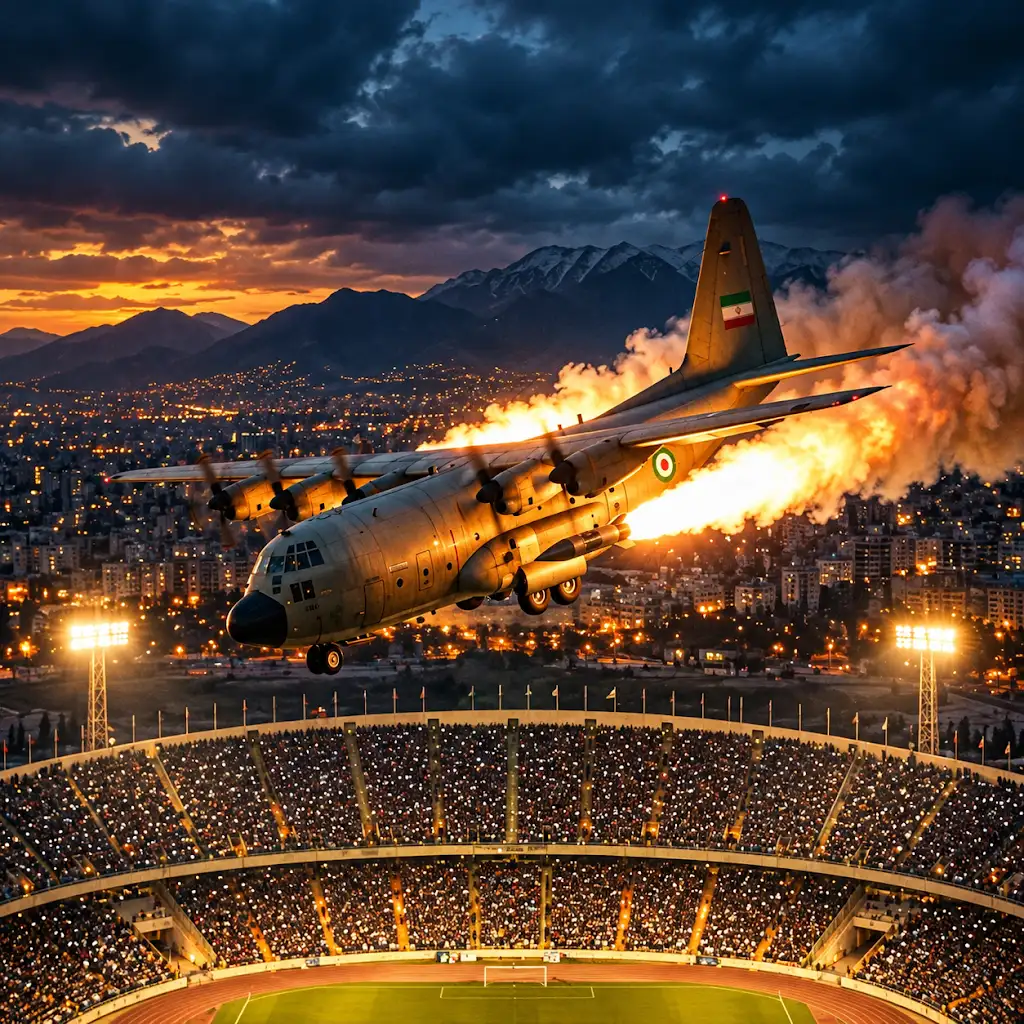
The Secret Plane Built to Land Inside a Stadium
FAQs
What was the top secret rescue mission in Iran in 1980?
The top secret rescue mission in Iran in 1980 was a covert operation known as Operation Eagle Claw, aimed at rescuing 52 American hostages held in the U.S. Embassy in Tehran.
Who authorized the top secret rescue mission in Iran in 1980?
The top secret rescue mission in Iran in 1980 was authorized by then-President Jimmy Carter of the United States.
What was the outcome of the top secret rescue mission in Iran in 1980?
Unfortunately, the top secret rescue mission in Iran in 1980 ended in failure when a series of unexpected events, including a sandstorm and mechanical failures, led to the mission being aborted. Eight American servicemen lost their lives during the operation.
How did the top secret rescue mission in Iran in 1980 impact US-Iran relations?
The failed top secret rescue mission in Iran in 1980 further strained the already tense relations between the United States and Iran. It was seen as a humiliation for the U.S. and contributed to the ongoing hostility between the two nations.
Was the top secret rescue mission in Iran in 1980 declassified?
Details of the top secret rescue mission in Iran in 1980 were eventually declassified, allowing the public to learn more about the operation and its implications. The mission remains a significant event in U.S. military history.