
The sands of the Dasht-e Kavir desert hold the ghosts of a mission that never was, a phantom operation etched into the annals of geopolitical history not for its success, but for its spectacular failure before it even began. The Tehran Rescue Mission, codenamed Operation Eagle Claw, was a daring, complex, and ultimately doomed attempt by the United States to liberate 52 American hostages held in the U.S. Embassy in Tehran following the Iranian Revolution. Its unraveling was not a single catastrophic event, but a cascade of strategic miscalculations, operational flaws, and a fundamental underestimation of the adversary and the operational environment. The reasons for its failure are multifaceted, offering a stark lesson in the perils of ambitious special operations when planning and execution falter.
The Grand Ambition and the Shadow of Politics
The impetus for Operation Eagle Claw was undeniably the searing humiliation of the hostage crisis, which had gripped the United States for over 14 months. The American public was outraged, and the Carter administration was desperate for a solution. The immense pressure to achieve a swift and decisive victory fueled a desire for a high-risk, high-reward military operation. However, this political imperative, while understandable, often overshadowed the sober realities of military planning. The urgency to act, coupled with a perception that swift action would demonstrate American resolve, contributed to a rushed planning process and a failure to adequately explore less risky alternatives.
The Lure of a Decisive Blow
The strategic objective was clear: rescue the hostages and restore American prestige. The chosen method, however, leaned towards the spectacular rather than the prudent. The concept of a direct, forceful intervention appealed to a national psyche yearning for a display of strength. This desire for a decisive blow, a triumphant return of American citizens, perhaps contributed to a dismissal of potential pitfalls. The political climate demanded a solution, and Operation Eagle Claw presented itself as the most direct, albeit perilous, path to achieving that solution. The administration, facing declining approval ratings and relentless media attention on the hostage situation, felt compelled to explore all options, and a military rescue, despite its inherent risks, became a prominent one.
Underestimating the “Soft” Power of the Hostages
A critical failure lay in the administration’s underestimation of the leverage the hostages provided to Iran. The holding of American personnel was not merely an act of defiance; it was a powerful political tool, a means of exerting pressure on the United States and rallying domestic support within Iran. The Iranian leadership, including Ayatollah Khomeini, understood this dynamic intimately. They recognized that any direct military action against the embassy, while potentially freeing the hostages, would also create a powerful incentive for continued negotiation and potentially even a more favorable outcome for Iran in the long run, by forcing the U.S. to concede on certain demands. The U.S., in its eagerness to resolve the crisis militarily, seemed to overlook the psychological and political dimension of the hostages’ captivity.
The Tehran Rescue Mission, an operation aimed at rescuing American hostages during the Iran hostage crisis, ultimately never took place due to a combination of logistical challenges and political considerations. For a deeper understanding of the factors that contributed to the mission’s failure, you can read a related article that explores the complexities surrounding this historical event. To learn more, visit this article.
The Flawed Foundation: Intelligence and Planning Gaps
The success of any complex special operation hinges on impeccable intelligence and meticulous planning. Operation Eagle Claw, however, was built on shaky foundations, plagued by insufficient reconnaissance, a lack of comprehensive contingency planning, and an overly optimistic assessment of the operational environment. The planners, operating under immense pressure, made critical assumptions that would prove to be their undoing.
The Myth of the Desert Oasis: Terrain and Weather Miscalculations
One of the most significant planning failures was the inadequate understanding of the Iranian desert terrain and its unforgiving weather patterns. The chosen landing zone, codenamed “Desert One,” was a desolate salt flat. While seemingly remote and offering a degree of concealment, its soft, powdery surface proved to be a critical vulnerability. The intelligence available regarding the specific soil composition and its behavior under heavy aircraft traffic was insufficient. Furthermore, the planners underestimated the impact of sandstorms, a common occurrence in the region. The operational timeline was dictated by factors such as the need for darkness and minimal air traffic, but the susceptibility of the desert environment to unforeseen weather events was not adequately factored into the mission’s flexibility.
The Elusive “Perfect” Intelligence
The intelligence gathered on the U.S. Embassy in Tehran, while extensive, was not sufficient to guarantee the success of such a complex operation. While the layout of the embassy compound was known, the precise location and disposition of all hostages within the compound, and more importantly, the Iranian Revolutionary Guard Corps (IRGC) and civilian guards, were not definitively mapped. The intelligence on potential escape routes and the likelihood of immediate, overwhelming Iranian response was also, at best, speculative. The assumption that a swift, overwhelming strike would neutralize any resistance proved to be a dangerous oversimplification of a volatile political and military landscape. The nature of the Iranian regime, its revolutionary fervor, and its willingness to employ unconventional tactics were not fully appreciated.
The Crumbling Pillars: Operational Shortcomings
Even with flawed intelligence and planning, a well-executed operation can sometimes overcome deficiencies. However, Operation Eagle Claw suffered from a series of cascading operational failures that were, in themselves, significant. These were not just isolated incidents but interconnected breakdowns in critical phases of the mission.
The Helicopter Debacle: Mechanical Woes and Desert Dust
The heart of the rescue plan involved a fleet of eight RH-53D Sea Stallion helicopters, which were to fly from the aircraft carrier USS Nimitz to Desert One, refuel, and then proceed to Tehran. This leg of the mission was plagued by mechanical problems. Of the eight helicopters that launched, one aborted due to a hydraulic failure. Another suffered a rotor blade malfunction. During the refueling operation at Desert One, a severe sandstorm kicked up. The pilots, struggling with poor visibility and the abrasive sand, found it difficult to locate the fuel tankers. In the chaos of the sandstorm, one helicopter collided with a C-130 transport aircraft, igniting a fire and killing eight U.S. service members. This catastrophic event effectively ended the mission. The reliance on helicopters for the primary insertion, coupled with their known mechanical vulnerabilities and the extreme environmental conditions, proved to be a critical flaw in the mission architecture. The limited range of the helicopters without refueling also necessitated the exposed refueling stop at Desert One.
The Echoes of Desert One: Communication Breakdowns and Command Confusion
The events at Desert One highlighted significant communication breakdowns and command confusion. The pilots were unable to effectively communicate with the ground forces and air controllers due to the sandstorm and equipment issues. The decision-making process during the crisis at Desert One was also criticized, with a lack of clear command and control contributing to the inability to adapt and reassess the rapidly deteriorating situation. The absence of a unified command structure that could effectively manage the unforeseen challenges and make decisive, rapid adjustments proved to be a fatal flaw. The inherent complexity of coordinating multiple aircraft, ground forces, and refueling operations in a hostile environment was exacerbated by a lack of robust, redundant communication systems and a clear chain of command for emergency situations.
The Unseen Enemy: The Iranian Response and its Implications
A critical element in understanding the failure of Operation Eagle Claw is acknowledging the capabilities and motivations of the Iranian response, which was more effective and immediate than anticipated by the planners. The Iranian government and its security forces, though perhaps surprised by the timing, were not unprepared for the possibility of such an intervention.
The Revolutionary Guard’s Vigilance
The Islamic Revolutionary Guard Corps (IRGC) was a formidable force, fiercely loyal to the new regime and highly motivated to defend the revolution. They had established a significant presence around the U.S. Embassy and had contingency plans in place for various scenarios, including a rescue attempt. While the initial intelligence suggested a less robust security posture, the reality was that the IRGC was a highly organized and dedicated force, capable of mounting a swift and effective counter-response. The element of surprise, crucial for the mission’s success, was ultimately compromised by the IRGC’s vigilance and preparedness. Their intelligence network, though perhaps not on par with the U.S. in every aspect, was sufficient to detect unusual activity and initiate defensive measures.
The Power of Local Support and the Information Vacuum
The Iranian authorities were also adept at leveraging local support and controlling the narrative. In the event of a raid, they had the capacity to mobilize sympathizers and create a chaotic, overwhelming human shield around the embassy. Furthermore, the information vacuum that existed for the U.S. side meant that the Iranian government could disseminate its own version of events, potentially galvanizing public opinion against the U.S. and isolating any surviving American forces. The U.S. planners likely did not fully account for the extent to which the Iranian population, inflamed by anti-American sentiment, would actively participate in resisting any perceived foreign aggression. The lack of reliable, real-time intelligence regarding the broader Iranian response on the ground and in the surrounding areas was a significant blind spot.
The Tehran Rescue Mission, aimed at rescuing American hostages during the Iran hostage crisis, ultimately never took place due to a combination of logistical challenges and political considerations. For a deeper understanding of the factors that contributed to this failed operation, you can explore a related article that delves into the complexities surrounding the mission. This insightful piece highlights the various elements that influenced decision-making at the time, offering a comprehensive perspective on why the mission was ultimately abandoned. To read more about this intriguing historical event, visit this article.
The Lingering Legacy: Lessons Unlearned and Consequences Endured
| Factor | Description | Impact on Rescue Mission |
|---|---|---|
| Hostage Location Uncertainty | Limited intelligence on the exact location and layout of the hostage site in Tehran. | Increased risk of mission failure and hostage casualties. |
| Political Constraints | Concerns about international diplomatic repercussions and potential escalation of conflict. | Led to hesitation and delays in authorizing a direct military rescue. |
| Logistical Challenges | Long distance to Tehran and lack of suitable staging areas for a covert operation. | Complicated planning and reduced chances of a successful extraction. |
| Military Readiness | Limited availability of specialized forces and equipment for a high-risk rescue mission. | Reduced operational capability and increased risk to personnel. |
| Hostage Safety Concerns | Fear that a rescue attempt could provoke hostage takers to harm captives. | Prioritized negotiation over military intervention. |
| Intelligence Failures | Inaccurate or incomplete information about hostage takers’ strength and defenses. | Compromised mission planning and increased uncertainty. |
The failure of Operation Eagle Claw was a deeply humbling experience for the United States, exposing critical flaws in its military planning, intelligence gathering, and understanding of complex geopolitical situations. The lessons learned, though painful, have shaped future special operations and international policy.
The Birth of Delta Force and the Evolution of Special Operations
The direct aftermath of Operation Eagle Claw saw a significant overhaul of U.S. special operations forces. The catastrophic failure led to the establishment of Delta Force (1st Special Forces Operational Detachment-Delta), a dedicated counter-terrorism and hostage rescue unit, designed to address the deficiencies exposed by the mission. This led to a greater emphasis on specialized training, advanced equipment, and more robust intelligence integration for such high-stakes operations. The mission also highlighted the need for better interoperability between different branches of the military and a more streamlined command structure for complex joint operations. The lessons learned from the failures at Desert One and the subsequent abort were meticulously analyzed, leading to improved tactics, techniques, and procedures for helicopter operations in hostile environments and for complex insertions.
The Prolonged Agony and Diplomatic Recourse
The failure of the military option did not immediately resolve the hostage crisis. Instead, it led to a further agonizing period of captivity for the hostages and prolonged diplomatic efforts. The U.S. was forced back to the negotiating table, eventually securing the hostages’ release through the Algerian mediation in January 1981, shortly after Ronald Reagan took office. The entire affair served as a stark reminder that military might, while a potent tool, is not always the most effective solution to complex political and diplomatic challenges. The perception of American weakness, amplified by the failed rescue attempt, lingered, influencing subsequent U.S. foreign policy in the region. The mission’s failure underscored the importance of patience and diplomacy, even in the face of immense public pressure and national humiliation. The high cost of Operation Eagle Claw, in terms of lives lost and the continued humiliation of the hostage situation, served as a potent testament to the fact that even the most well-intentioned military intervention can have unintended and devastating consequences when not underpinned by thorough planning, accurate intelligence, and a profound understanding of the adversary and the operational environment.
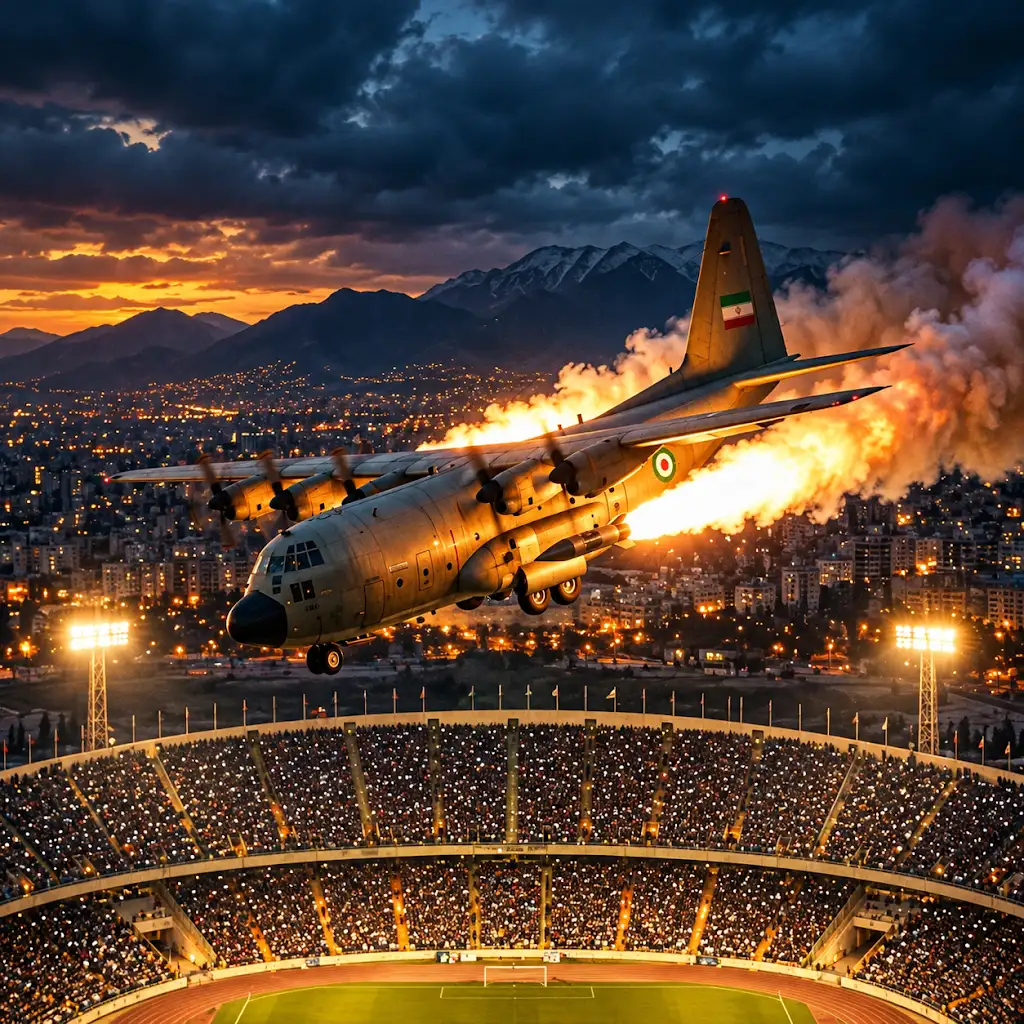
The Secret Plane Built to Land Inside a Stadium
FAQs
1. Why was the Tehran rescue mission planned?
The Tehran rescue mission was planned in response to the Iran hostage crisis, where 52 American diplomats and citizens were held hostage at the U.S. Embassy in Tehran by Iranian revolutionaries in 1979.
2. What were the main reasons for the Tehran rescue mission never happening?
The Tehran rescue mission, known as Operation Eagle Claw, never happened due to a series of setbacks and failures, including mechanical problems with helicopters, a sandstorm causing a collision that resulted in the loss of lives, and lack of coordination among the military branches involved.
3. How did the failure of the Tehran rescue mission impact U.S.-Iran relations?
The failure of the Tehran rescue mission further strained the already tense relations between the United States and Iran. It was seen as a humiliation for the U.S. military and government, while Iran viewed it as a sign of American weakness.
4. Were there any lessons learned from the Tehran rescue mission failure?
Yes, the failure of the Tehran rescue mission led to a thorough review of U.S. military capabilities and procedures. It highlighted the need for better coordination, training, and equipment for special operations forces, which eventually led to the creation of the U.S. Special Operations Command (USSOCOM).
5. How did the Tehran rescue mission failure impact future U.S. military operations?
The failure of the Tehran rescue mission served as a catalyst for improvements in U.S. special operations capabilities and planning. It influenced the development of new tactics, techniques, and procedures that have been applied in subsequent military operations, such as Operation Neptune Spear, which resulted in the death of Osama bin Laden.