The notion of rockets is almost universally associated with immense power, acceleration, and the audacious journey into the cosmos. They are the engines that defy gravity, propelling spacecraft and missiles at incredible speeds. However, the same principles of thrust and controlled expulsion of mass that enable such powerful propulsion can, counterintuitively, be harnessed for the opposite purpose: slowing down. This is the fascinating realm of rocket-assisted braking, a sophisticated application of rocket technology designed to decelerate vehicles with precision and safety, often in scenarios where conventional braking methods fall short or are insufficient.
The Fundamental Principle: Newton’s Third Law in Reverse
At its core, rocket-assisted braking operates on the same fundamental physics as rocket propulsion: Newton’s Third Law of Motion, which states that for every action, there is an equal and opposite reaction. When a rocket engine expels hot gases at high velocity in one direction, the engine itself and the vehicle it’s attached to are propelled in the opposite direction. For braking, this principle is inverted. Instead of firing rockets to accelerate forward, small, strategically placed rocket thrusters are fired in the direction of the vehicle’s motion. The expelled gases push against the vehicle, generating a force that opposes its forward momentum, effectively slowing it down.
Counteracting Inertia with Controlled Force
Inertia is the tendency of an object to resist changes in its state of motion. A fast-moving vehicle possesses significant kinetic energy, which is the energy of motion. To stop this vehicle, this kinetic energy must be dissipated. Conventional braking systems, like friction brakes, convert kinetic energy into heat through friction between brake pads and rotors. While effective for most everyday scenarios, friction brakes can be overwhelmed by extreme forces, high speeds, or repeated high-energy braking events, leading to brake fade or failure. Rocket-assisted braking provides an additional, controlled force that directly counteracts the vehicle’s inertia, offering a powerful and predictable deceleration. The force generated by the rockets can be precisely controlled by adjusting the duration and intensity of the thrust, allowing for a more nuanced and adaptable braking profile compared to the often binary on-off nature of some conventional braking systems.
Generating Thrust in the Direction of Travel
The critical aspect of rocket-assisted braking is the orientation of the thrusters. Unlike propulsion rockets that fire backward to move forward, braking rockets are fired forward, parallel to the vehicle’s direction of travel. This forward-firing thrust creates a force that directly opposes the vehicle’s existing motion. The greater the force exerted by these rockets, and the longer they are applied, the more effectively the vehicle’s velocity will be reduced. The design of these braking thrusters is often optimized for a specific thrust profile, prioritizing rapid deceleration when needed, but also allowing for fine-tuned control for smoother stops.
Rocket assisted braking is an innovative technique designed to enhance the deceleration of vehicles, particularly in aerospace applications. This method employs rocket propulsion systems to provide additional thrust in the opposite direction of travel, effectively reducing speed more efficiently than traditional braking systems alone. For a deeper understanding of the principles and mechanics behind rocket assisted braking, you can explore a related article that delves into its applications and benefits at this link.
Applications of Rocket-Assisted Braking
The unique capabilities of rocket-assisted braking make it indispensable in a variety of specialized applications where extreme deceleration is paramount or where conventional methods are impractical. These applications span across aerospace, defense, and even extreme terrestrial environments.
Spacecraft Re-entry and Landing
Perhaps the most iconic application of rocket-assisted braking is in the realm of space exploration. When a spacecraft returns to Earth’s atmosphere, it is traveling at orbital velocities, meaning it is moving at thousands of miles per hour. The immense kinetic energy of the spacecraft must be dissipated to ensure a safe landing. While atmospheric drag plays a significant role, it’s often not enough on its own, especially for large or high-speed re-entry vehicles. Rocket thrusters, often referred to as “retro-rockets” or “deceleration thrusters” in this context, are fired against the direction of travel to significantly reduce the spacecraft’s velocity before atmospheric entry. This initial braking phase is crucial for managing the intense heat and forces generated during re-entry. Further braking is then applied during the descent, often in conjunction with parachutes, to bring the spacecraft to a gentle touchdown. In missions involving landings on celestial bodies with thin or no atmospheres, such as the Moon or Mars, rocket-assisted braking becomes the primary, and often sole, method of deceleration. Lander engines are precisely throttled to control the descent rate, bringing the spacecraft to a soft landing, preventing catastrophic impact.
Aerospace and Aviation Safety
Beyond space missions, rocket-assisted braking finds utility in aviation, particularly for large aircraft or in emergency scenarios. Runway overruns are a significant concern, especially during adverse weather conditions or when landing with a heavy load. Certain aircraft, particularly military and some larger commercial jets, can be equipped with braking rockets or “deceleration rockets” that can be deployed during landing. These rockets provide an additional surge of braking force, supplementing conventional wheel brakes and aerodynamic braking (spoilers and flaps). This is especially useful for reducing landing distance on shorter runways or in situations where emergency braking is required. The quick and powerful deceleration offered by these rockets can be the difference between a safe landing and a dangerous runway excursion.
Military and Defense Applications
In the military sphere, rapid and controlled deceleration is often a critical requirement. This includes bringing high-speed aircraft to a halt quickly on aircraft carriers or in emergency situations. The arresting gear systems on aircraft carriers, while mechanical, employ a hook and cable system that can be thought of as a form of assisted braking. However, for vehicles like missiles, drones, or even specialized ground vehicles that need to stop rapidly, rocket-assisted braking can be employed. For example, some guided missiles might use small retro-rockets to adjust their trajectory and decelerate upon reaching their target to ensure a precise impact, rather than overshooting. Similarly, some experimental or specialized ground vehicles designed for high-speed reconnaissance or rapid deployment might incorporate rocket braking for quick halts.
High-Speed Transportation and Testing
The development and testing of advanced transportation systems, such as high-speed trains or experimental vehicles, often involve extreme speeds and braking challenges. Rocket-assisted braking can be utilized during test runs to safely bring these vehicles to a stop from very high velocities, especially in controlled environments where conventional infrastructure might not be sufficient. Furthermore, in certain conceptual designs for ultra-high-speed terrestrial transport, where aerodynamic and mechanical braking limitations become severe, rocket-assisted braking might be considered as a supplementary or primary braking mechanism.
Design and Engineering Considerations
Implementing rocket-assisted braking is not simply a matter of attaching a rocket engine to a vehicle. It requires careful design, precise engineering, and a deep understanding of the forces involved to ensure effectiveness and safety.
Thruster Placement and Configuration
The placement and configuration of the braking thrusters are critical. They are typically positioned to generate a braking force that is aligned with the vehicle’s center of mass, minimizing any unwanted torques that could destabilize the vehicle. For aircraft and spacecraft, thrusters might be mounted on the rear fuselage or wings, pointing forward. For ground vehicles, they could be integrated into the chassis, pointing forward. The number of thrusters, their size, and their firing sequence are all carefully calculated to achieve the desired deceleration profile. A common approach involves using multiple smaller thrusters rather than one large one, allowing for finer control and redundancy.
Propellant Selection and Storage
The choice of propellant is crucial and depends on the application’s requirements for thrust, burn time, and storability. For short-duration, high-thrust applications, solid rocket propellants might be used due to their simplicity and high energy density. However, for applications requiring more precise control and longer burn times, liquid propellants are often preferred. Liquid propellants offer the advantage of being able to throttle the thrust by controlling the flow rate of fuel and oxidizer, as well as allowing for multiple firings. The storage of propellants also needs careful consideration, especially in terms of safety, weight, and environmental conditions.
Control Systems and Integration
The control system is the “brain” of the rocket-assisted braking system. It receives information from various sensors (e.g., speed sensors, accelerometers, gyroscopes) and activates the braking thrusters at the appropriate time and with the correct intensity. This requires sophisticated algorithms that can dynamically adjust the braking force based on real-time vehicle dynamics and external conditions. The integration of the rocket braking system with the vehicle’s primary control systems and other braking mechanisms (like friction brakes) is also a complex engineering task, ensuring a seamless and coordinated braking effort. Safety interlocks and fail-safe mechanisms are paramount to prevent accidental or unintended firing of the rockets.
Heat Management and Structural Integrity
The high temperatures generated by rocket exhaust pose a significant challenge. The exhaust nozzles and surrounding structures must be designed to withstand these extreme temperatures. Heat-resistant materials, specialized coatings, and effective cooling systems are often employed. Furthermore, the forces generated by the braking rockets can be substantial, placing stress on the vehicle’s structure. The airframe or chassis must be strong enough to withstand these forces without structural failure. This often involves reinforcement of specific areas and careful analysis of load paths.
Challenges and Limitations
Despite its impressive capabilities, rocket-assisted braking is not without its challenges and limitations, which often dictate its specific use cases.
Fuel Consumption and Range Limitations
The primary limitation of rocket-assisted braking is its reliance on onboard propellant. Unlike friction brakes that dissipate energy into the environment as heat, rockets consume fuel to generate their braking force. This means that the amount of braking available is limited by the amount of propellant carried. For applications requiring extensive braking over long periods, the fuel requirements can become prohibitive, leading to significant weight penalties. This is why rocket braking is often used as a supplementary system for critical braking events rather than as a primary, continuous braking method.
Complexity and Cost
Rocket engines, especially those designed for controlled thrust and repeated firing, are inherently complex and expensive to design, manufacture, and maintain. The specialized propellants, advanced materials, and sophisticated control systems all contribute to a higher cost compared to conventional braking systems. This cost factor often restricts the use of rocket-assisted braking to high-value applications where its unique performance benefits outweigh the financial investment.
Environmental Concerns and Safety
The exhaust from rocket motors can contain various byproducts, some of which may have environmental implications. Depending on the propellant used, emissions can include greenhouse gases, particulate matter, and other compounds. While often short-lived and localized due to the intermittent nature of braking firings, these aspects are increasingly considered in system design. Safety is also a paramount concern. Accidental ignition, uncontrolled thrust, or structural failure during braking can have catastrophic consequences. Rigorous testing, redundant safety systems, and strict operational protocols are essential to mitigate these risks.
Noise and Vibration
Rocket firings generate significant noise and vibration. This can be a concern in noise-sensitive environments or for the comfort of occupants. While methods exist to mitigate noise and vibration, they can add to the system’s complexity and cost. For some applications, the intense noise and vibration might be an acceptable trade-off for the braking performance, but for others, it could be a limiting factor.
Rocket assisted braking is a fascinating concept that combines traditional braking methods with rocket propulsion to enhance deceleration, particularly in aerospace applications. This innovative technique was designed to allow spacecraft to slow down more effectively during landing phases, thereby improving safety and efficiency. For a deeper understanding of how this technology was envisioned to work, you can explore a related article that delves into the mechanics and potential applications of rocket assisted braking. To read more about it, visit this article which provides insightful details on the subject.
The Future of Rocket-Assisted Braking
| Metric | Description | Expected Value | Unit |
|---|---|---|---|
| Thrust Force | Force generated by rocket engines to decelerate the vehicle | 50,000 | Newtons |
| Deceleration Rate | Rate at which the vehicle slows down due to rocket braking | 5 | m/s² |
| Burn Time | Duration for which the rocket engines fire during braking | 10 | Seconds |
| Fuel Consumption | Amount of propellant used during rocket-assisted braking | 20 | kg |
| Initial Velocity | Speed of the vehicle before rocket braking begins | 100 | m/s |
| Final Velocity | Speed of the vehicle after rocket braking ends | 50 | m/s |
| Braking Distance | Distance covered during rocket-assisted braking | 100 | meters |
The ongoing advancements in propulsion technology, materials science, and control systems suggest a promising future for rocket-assisted braking, potentially expanding its applications and improving its efficiency.
Advanced Propellants and Efficiency
Research into more efficient and cleaner propellants is continuously underway. This includes exploring propellants with higher specific impulse (a measure of efficiency) or those that produce fewer harmful emissions. Innovations in hybrid rocket systems, which combine solid fuel with liquid oxidizer, offer a potential balance of simplicity and controllability, which could make rocket braking more accessible and adaptable. Furthermore, advancements in additive manufacturing (3D printing) are enabling the creation of more complex and optimized thruster geometries, potentially leading to improved performance and reduced weight.
Miniaturization and Integration
As technology advances, rocket braking systems are becoming more compact and integrated. This allows for their incorporation into a wider range of vehicles and platforms without significant compromises in payload or maneuverability. The trend towards smaller, more powerful thrusters, coupled with sophisticated micro-control systems, could see rocket-assisted braking become a standard feature in applications where even moderate speed reduction is critical.
Synergistic Braking Systems
The future likely involves even more sophisticated integration of rocket-assisted braking with other braking technologies. Instead of acting as a standalone system, it could be a key component within a holistic braking strategy. Imagine a system that seamlessly blends regenerative braking (common in electric vehicles), aerodynamic braking, friction braking, and precisely timed rocket pulses to optimize stopping distance, energy recovery, and passenger comfort under all conditions. This synergistic approach would leverage the strengths of each technology while mitigating their individual weaknesses.
Autonomous and AI-Driven Braking
The increasing role of artificial intelligence (AI) and autonomous systems in vehicles opens up new possibilities for rocket-assisted braking. AI algorithms can analyze a vast array of real-time data—from environmental conditions to vehicle dynamics and predicted trajectories—to make incredibly rapid and precise decisions about when and how to deploy rocket braking. This could lead to enhanced safety margins, shorter stopping distances in emergencies, and more efficient energy management during deceleration. For instance, an autonomous vehicle could utilize AI to predict potential hazards far in advance and deploy a controlled rocket braking burst to avoid a collision, a feat that might be beyond human reaction times.
In conclusion, rocket-assisted braking, while often associated with the dramatic visual of fiery exhaust, represents a sophisticated and indispensable technology. By reversing the fundamental principles of rocket propulsion, engineers have unlocked a powerful tool for controlled deceleration. From guiding spacecraft through the harsh vacuum of space to ensuring the safety of aircraft and pioneering new modes of transportation, rocket-assisted braking demonstrates the ingenious application of physics to solve critical engineering challenges. As technology continues to evolve, its role is likely to expand, making our vehicles safer, more capable, and more adaptable to the diverse demands of the modern world.
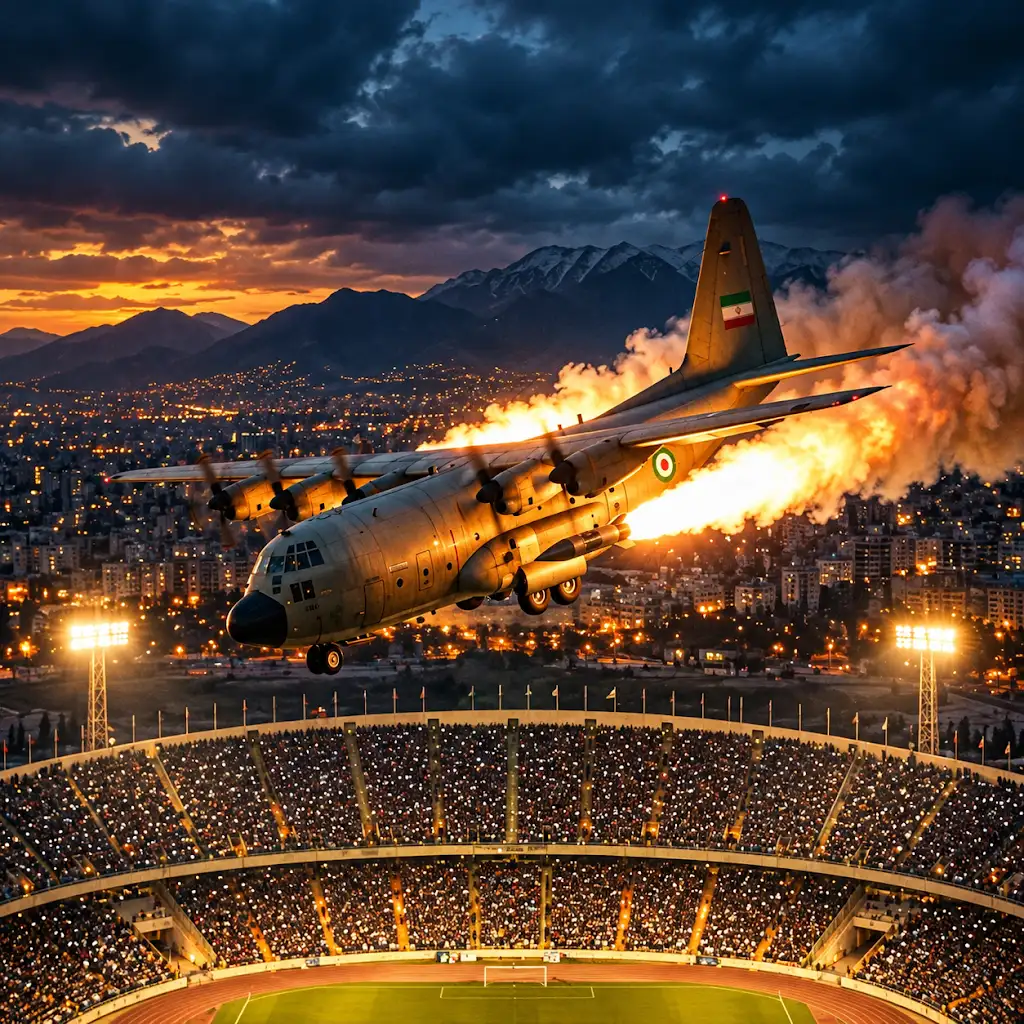
The Secret Plane Built to Land Inside a Stadium
FAQs
How does rocket assisted braking work?
Rocket assisted braking involves using rockets attached to a vehicle to provide additional thrust in the opposite direction of travel, helping to slow down the vehicle more quickly than traditional braking methods.
What are the benefits of using rocket assisted braking?
The main benefit of rocket assisted braking is the ability to quickly decelerate a vehicle, especially in emergency situations where traditional braking systems may not be sufficient. This can help prevent accidents and improve overall safety.
Are there any limitations to rocket assisted braking?
One limitation of rocket assisted braking is the need for additional space and infrastructure to accommodate the rockets and their exhaust. Additionally, the cost and complexity of implementing this system may be prohibitive for some applications.
Has rocket assisted braking been successfully used in any real-world applications?
While rocket assisted braking has been tested in various scenarios, it has not been widely adopted for practical use. Some experimental vehicles and aircraft have incorporated rocket assisted braking systems, but they have not become mainstream due to the aforementioned limitations.
What are some potential future developments for rocket assisted braking technology?
Researchers and engineers continue to explore ways to improve rocket assisted braking systems, including developing more efficient rockets, integrating them with existing braking systems, and finding new applications where the benefits of this technology can be fully realized.