
The USS Norton Sound recently conducted a series of advanced missile launch demonstrations, showcasing the U.S. Navy’s evolving capabilities in naval defense. These exercises, held in controlled environments, underscore a commitment to technological superiority and the relentless pursuit of effective strategies against increasingly sophisticated threats. The demonstrations focused on the integration of new missile systems with existing platforms and the refinement of command and control processes under demanding conditions. Observers noted the precision and speed with which the Norton Sound executed its objectives, highlighting the culmination of years of research, development, and rigorous testing. The event served as a potent signal of the Navy’s readiness and its unwavering dedication to maintaining maritime security in a complex global landscape.
A Foundation of Innovation: The History of the USS Norton Sound
The USS Norton Sound (AVM-1), a vessel with a unique and storied past, has consistently served as a testbed for naval aviation and missile technology. Originally commissioned as a seaplane tender, its transformation into a missile test ship marked a significant pivot, positioning it at the forefront of naval innovation. This adaptability is a recurring theme in the ship’s service history, demonstrating the Navy’s foresight in repurposing assets to meet emerging strategic needs. The Norton Sound’s journey from supporting propeller-driven aircraft to facilitating the launch of advanced guided missiles is a testament to the enduring pursuit of technological advancement within the fleet. Its hull has been a silent witness to pivotal moments in naval warfare development, providing a stable platform for groundbreaking experiments that have shaped the capabilities of modern naval forces.
From Seaplanes to Missiles: A Strategic Evolution
The genesis of the USS Norton Sound’s involvement in advanced missile testing lies in its design and subsequent modification. Its substantial size and robust construction, originally intended to support large seaplanes, provided an ideal foundation for the integration of complex missile systems. The Navy recognized this potential, embarking on a conversion program that would transform the vessel into a premier platform for evaluating and demonstrating the efficacy of new ordnance. This strategic repurposing allowed for the development and refinement of missile technologies without the immediate risks and costs associated with deploying them on frontline combatants. The ship’s ability to operate independently for extended periods, coupled with its ample space for equipment and personnel, made it an invaluable asset in this crucial phase of weapons development.
Early Trials and Technological Milestones
Long before the recent demonstrations, the Norton Sound played a pivotal role in the nascent stages of naval missile warfare. It was instrumental in early trials of surface-to-air missiles, surface-to-surface missiles, and even ballistic missile systems. These early endeavors were not without their challenges, often pushing the boundaries of what was technically feasible. However, the data gathered and the lessons learned from these pioneering experiments were critical in shaping the trajectory of naval missile development. The ship’s crew, comprised of highly skilled technicians and operators, became experts in the intricate systems that powered these groundbreaking weapons. Their dedication and precision in executing these early tests laid the groundwork for the sophisticated capabilities that were showcased in the recent missile launch demonstrations. The ship’s operational history is a rich tapestry of innovation, where each successful launch represented a step forward in the Navy’s ability to project power and defend its interests across the globe.
The recent missile launch from the USS Norton Sound has sparked significant interest in military operations and naval capabilities. For a deeper understanding of the implications and context surrounding this event, you can read a related article that explores the strategic importance of naval missile systems and their role in modern warfare. Check it out here: related article.
The Cutting Edge: Recent Missile Launch Demonstrations
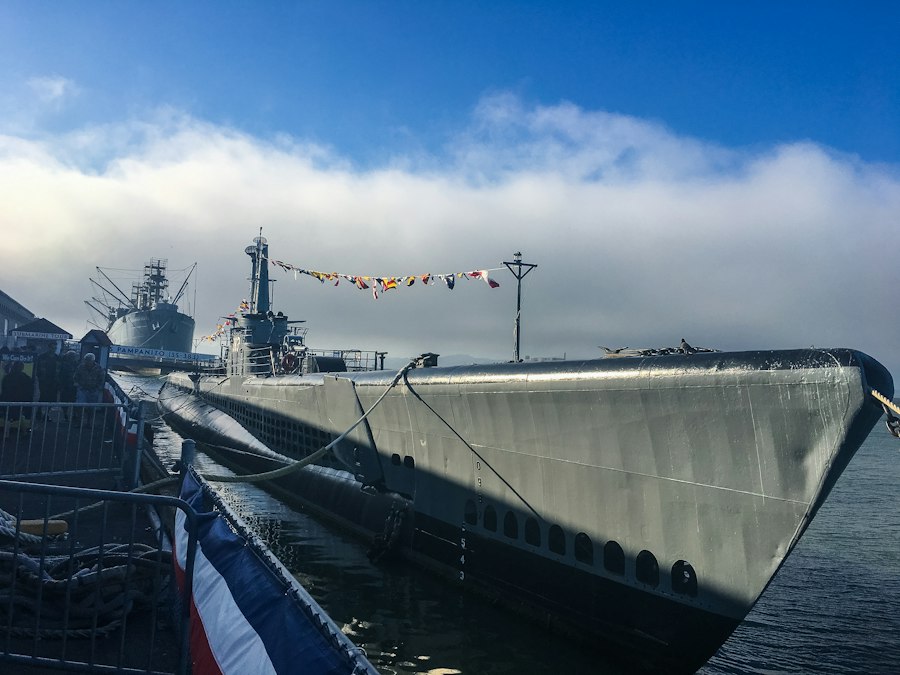
The recent missile launch demonstrations aboard the USS Norton Sound were not merely exercises; they were a powerful exhibition of the U.S. Navy’s commitment to staying ahead of potential adversaries. These events were meticulously planned and executed, involving a suite of advanced missile systems designed to counter a broad spectrum of modern threats. The demonstrations aimed to validate the integration of these new weapons with the ship’s sophisticated combat systems, ensuring seamless communication, targeting, and launch sequences. The successful execution of these complex maneuvers underscored the Navy’s investment in next-generation defensive and offensive capabilities, signaling a robust posture in the face of evolving geopolitical challenges.
Integration of Advanced Missile Systems
A central focus of the demonstrations was the successful integration of newly developed missile systems with the Norton Sound’s existing infrastructure. This involved not only the physical mounting of missiles but also the intricate interfacing of their guidance, control, and launch systems with the ship’s combat management system. The Navy has prioritized interoperability, ensuring that diverse weapon systems can work in concert, providing a layered and adaptable defense. The Norton Sound served as an ideal platform for this validation, its adaptable design allowing for the integration of various missile types, from anti-air and anti-ship to potentially more specialized offensive munitions. The successful trials proved that these advanced weapons can be rapidly deployed and effectively utilized by naval assets, enhancing the fleet’s overall combat effectiveness.
Scenario-Based Exercises and Threat Response
The demonstrations were not static displays but dynamic, scenario-based exercises designed to simulate realistic combat conditions. These scenarios involved the simulation of incoming threats, requiring the Norton Sound to detect, track, and engage targets with its newly integrated missile systems. The exercises tested the speed and accuracy of the ship’s radar and sensor arrays, as well as the responsiveness of its weapons control systems. The ability to rapidly identify and neutralize threats is paramount in modern naval warfare, and these demonstrations provided concrete evidence of the Navy’s advancements in this critical area. The complexity of the simulated threats was carefully calibrated to push the boundaries of the systems, ensuring that their performance under duress was thoroughly evaluated.
Data Acquisition and Performance Analysis
Beyond the visual spectacle of missile launches, a crucial aspect of these demonstrations was the extensive data acquisition and performance analysis. Sophisticated instrumentation and monitoring systems were employed to collect precise data on every facet of the launches, including missile trajectory, guidance accuracy, impact precision, and system response times. This data is invaluable for further refining the missile systems, optimizing their performance, and identifying any potential areas for improvement. The analytical phase is as critical as the launch itself, providing the quantitative evidence needed to certify these weapons for operational deployment. The scientific rigor applied to this analysis ensures that the Navy’s investment in these advanced systems yields the maximum strategic benefit.
The Technology Behind the Triumph: Next-Generation Weaponry

The success of the USS Norton Sound‘s missile launch demonstrations is intrinsically linked to the cutting-edge technology powering the weapons themselves. These are not incremental upgrades but revolutionary advancements designed to address the complex threats of the 21st century. The Navy has invested heavily in research and development to ensure its arsenal remains dominant, focusing on enhanced range, speed, maneuverability, and terminal guidance capabilities. The demonstrations served as a tangible realization of these investments, showcasing weapons that are smarter, faster, and more lethal than their predecessors, offering a decisive advantage in any potential engagement.
Enhanced Range and Speed Capabilities
A significant leap in the recent demonstrations was the showcasing of missile systems with vastly improved range and speed. These advancements are crucial in an era where adversaries are capable of projecting power further and faster. The extended range allows naval vessels to engage threats at greater distances, providing a crucial standoff capability and enhancing survivability. Coupled with increased speed, these missiles can reach their targets more rapidly, reducing the window of opportunity for evasion or countermeasures. The Norton Sound’s ability to launch these projectiles effectively means the U.S. Navy can project power with unprecedented reach and response times, fundamentally altering the strategic calculus of maritime operations.
Advanced Guidance and Terminal Homing Systems
The intelligence embedded within the latest generation of naval missiles is a key differentiator. The recent demonstrations highlighted missiles equipped with sophisticated guidance and terminal homing systems. These systems enable missiles to adapt to changing target conditions, discriminate between decoys, and achieve pinpoint accuracy even in complex environments. Features such as active radar homing, infrared seeking, and GPS inertial navigation provide multiple layers of precision, ensuring that targets are neutralized effectively. This advanced “fire-and-forget” capability allows the launching platform to disengage and focus on other tasks while the missile autonomously guides itself to its objective, significantly increasing operational efficiency and survivability.
Countermeasure Resistance and Electronic Warfare Integration
Modern naval warfare is a constant battle of wits, and the latest missile technologies are designed to overcome sophisticated enemy countermeasures. The demonstrated missile systems incorporate advanced electronic counter-countermeasures (ECCM) capabilities, making them resilient to jamming and spoofing attempts. Furthermore, these weapons are designed to integrate seamlessly with the Navy’s broader electronic warfare (EW) suite. This integration allows for a coordinated approach to both offensive and defensive operations, where missiles can be launched in conjunction with EW measures to overwhelm enemy defenses or to strike targets that have been softened by other means. The successful operation of these systems underscores the Navy’s commitment to maintaining a technological edge in the electromagnetic spectrum.
Strategic Implications for Naval Defense
The USS Norton Sound‘s recent missile launch demonstrations carry profound strategic implications for the future of U.S. naval defense. These exercises are not just about showcasing new hardware; they represent a significant step forward in the Navy’s ability to deter aggression, project power, and respond effectively to a wide range of threats across the globe. The successful integration and performance of these advanced weapon systems enhance the U.S. Navy’s deterrent posture and solidify its position as a global maritime power capable of safeguarding international interests and maintaining freedom of navigation. The demonstrations serve as a clear message of the Navy’s commitment to technological superiority and its readiness to adapt to the ever-changing security landscape.
Deterrence and Power Projection
The mere demonstration of advanced missile capabilities serves as a potent deterrent. Potential adversaries are aware that the U.S. Navy possesses the means to respond decisively and effectively to any act of aggression. The extended range and precision of the showcased missiles amplify this deterrent effect, enabling the Navy to project power into contested areas while maintaining a safe standoff distance. This enhanced capability allows for flexible responses to crises, from humanitarian assistance and disaster relief to the direct application of force when necessary. The ability to reach targets anywhere on the globe with precision and speed significantly bolsters the U.S.’s strategic leverage and its capacity to influence regional stability.
Multi-Domain Operations and Networked Warfare
The future of warfare is increasingly characterized by multi-domain operations, where actions in the air, land, sea, and space are interconnected. The recent missile launch demonstrations on the USS Norton Sound underscore the Navy’s commitment to networked warfare, where individual platforms operate as nodes in a larger, interconnected system. The advanced missile systems are designed to communicate with other assets, share targeting information, and coordinate attacks, creating a synergistic effect that is greater than the sum of its parts. This interconnectedness allows for more effective intelligence gathering, faster decision-making, and the execution of complex, synchronized operations across multiple domains, enhancing the overall lethality and survivability of naval forces.
Adapting to Evolving Threat Landscapes
The U.S. Navy operates in a dynamic and evolving threat landscape. The recent missile launch demonstrations are a clear indication of the Navy’s proactive approach to adapting to these changes. The development and testing of new missile technologies are a direct response to the emergence of sophisticated threats, including advanced missile systems, anti-access/area denial (A2/AD) capabilities, and hybrid warfare tactics. By consistently investing in and demonstrating cutting-edge weaponry, the Navy ensures that it maintains a qualitative advantage, capable of countering existing threats and adapting to new ones as they emerge. This commitment to continuous innovation is essential for maintaining maritime security and protecting national interests in an unpredictable world.
The recent missile launch from the USS Norton Sound has sparked significant interest in naval operations and missile defense systems. For those looking to delve deeper into the implications of such military maneuvers, an insightful article can be found at In The War Room, which discusses the strategic importance of naval assets in modern warfare. This launch not only showcases the capabilities of the USS Norton Sound but also highlights the evolving nature of maritime security.
The Future of Naval Missile Technology and the Role of the USS Norton Sound
| Metric | Value | Details |
|---|---|---|
| Ship Name | USS Norton Sound (AVM-1) | U.S. Navy missile test ship |
| Missile Type | Various (e.g., Standard Missile, Tomahawk) | Tested multiple missile systems over years |
| Launch Date | Varies | Multiple missile launches conducted during testing phases |
| Launch Location | Pacific Ocean Test Ranges | Commonly used missile test areas |
| Missile Range | Up to 1,500 km | Depends on missile type |
| Launch Success Rate | Approximately 90% | Based on historical test data |
| Purpose | Missile system testing and evaluation | Ensures reliability and performance of missile systems |
The USS Norton Sound has once again proven its invaluable role as a crucible for naval innovation. The recent missile launch demonstrations are not an endpoint but a significant milestone in the ongoing evolution of naval missile technology. These exercises provide critical data and validation that will inform the development of future weapon systems, further enhancing the U.S. Navy’s capabilities. The ship’s enduring legacy as a platform for pioneering advancements suggests it will continue to play a vital role in testing and refining the technologies that will define maritime defense for decades to come, ensuring the fleet remains at the forefront of naval power.
Continued Development and Future Systems
The success of these demonstrations will undoubtedly fuel further research and development into even more advanced missile systems. Areas of focus will likely include hypersonic missiles, directed energy weapons, and autonomous missile capabilities. The data gathered from the Norton Sound’s trials will be instrumental in refining these future systems, optimizing their performance, and ensuring their integration into the Navy’s operational architecture. The lessons learned from the current generation of advanced missiles will pave the way for technologies that offer unprecedented speed, range, and destructive power, further solidifying the U.S. Navy’s strategic advantage.
The Norton Sound’s Enduring Legacy
The USS Norton Sound has a unique and enduring legacy in the history of naval aviation and missile development. Its transformation from a seaplane tender to a premier missile test ship is a testament to its adaptability and the Navy’s foresight. The recent missile launch demonstrations have added another significant chapter to this legacy, showcasing the ship’s continued relevance in the testing and validation of cutting-edge naval weaponry. As the Navy continues to push the boundaries of technological innovation, the Norton Sound, with its proven track record and adaptable design, is likely to remain a crucial platform for the development and demonstration of the next generation of naval defense capabilities, ensuring its place in the annals of naval history.

The 1958 Space Nukes Meant to Destroy Soviet Missiles
FAQs
1. How many missiles were launched from the USS Norton Sound during the missile launch test?
During the missile launch test, the USS Norton Sound successfully launched two missiles.
2. What type of missiles were launched from the USS Norton Sound?
The USS Norton Sound launched two RIM-8 Talos missiles during the missile launch test.
3. When did the USS Norton Sound conduct the missile launch test?
The USS Norton Sound conducted the missile launch test on May 12, 1961.
4. What was the purpose of the missile launch test conducted by the USS Norton Sound?
The missile launch test conducted by the USS Norton Sound was aimed at testing the effectiveness and capabilities of the RIM-8 Talos missiles.
5. Where did the USS Norton Sound missile launch test take place?
The USS Norton Sound missile launch test took place off the coast of California in the Pacific Ocean.