The Shadowy Legacy: Unearthing Secret Cold War Endeavors
The Cold War, a period of intense geopolitical tension and ideological struggle, was not solely fought on battlefields or in the halls of diplomacy. Beneath the veneer of public pronouncements and proxy conflicts lay a labyrinth of clandestine operations, fueled by an insatiable hunger for technological superiority and strategic advantage. Two such endeavors, Operation Paperclip and Project Azorian, stand as stark testaments to the lengths to which nations would go to secure their dominance in this unprecedented era of global brinkmanship. These projects, born from the ashes of World War II and evolving through the decades, reveal a fascinating, and at times unsettling, narrative of ambition, espionage, and the relentless pursuit of cutting-edge capabilities.
During the Cold War, numerous secret military projects were developed under codenames that often concealed their true purpose from both the public and potential adversaries. One intriguing article that delves into these enigmatic project names and their implications is available at this link. This resource provides an in-depth exploration of how these codenames reflected the strategic priorities of the time and the innovative technologies that emerged from them.
## The Scientific Scramble: Operation Paperclip’s Unconventional Recruitment
Following the devastating conclusion of World War II, a desperate race ensued between the victorious Allied powers, particularly the United States and the Soviet Union, to seize the scientific and technological prowess of Nazi Germany. Among the most coveted assets were the brilliant, albeit morally compromised, scientists and engineers who had propelled German rocketry, jet propulsion, and chemical warfare to terrifying new heights. Operation Paperclip, a top-secret program initiated by the Joint Intelligence Objectives Agency (JIOA), emerged as the American solution to this scientific imperative. Its objective was audacious: to recruit, transport, and employ German scientists on American soil, ostensibly to prevent their knowledge from falling into Soviet hands and to accelerate the United States’ own technological development.
### The Architects of the V-Weapons: Rocketry’s Dark Pioneers
The most recognizable figures associated with Operation Paperclip were undoubtedly the rocket scientists from Peenemünde, the infamous Nazi research center responsible for the development of the V-2 ballistic missile. Wernher von Braun, a charismatic and highly skilled engineer, became the de facto leader of this group. His vision of space exploration, though initially entwined with the grim realities of wartime weapons development, ultimately fueled America’s nascent space program. The V-2, a weapon of terror that rained down on Allied cities, was also a revolutionary piece of engineering, a precursor to the rockets that would eventually carry humans to the moon. Paperclip ensured that this expertise, along with the valuable blueprints and manufacturing techniques, was brought under American control, bypassing the Soviets and securing a significant technological advantage.
### Beyond Rockets: Chemical and Medical Innovations
While rocketry often dominates the narrative of Operation Paperclip, its scope extended far beyond aerospace. The program also targeted experts in other critical fields. German chemists and toxicologists, responsible for developing advanced chemical agents, were also brought to the United States. Their knowledge was instrumental in advancing American chemical defense capabilities and, regrettably, in understanding and developing offensive chemical weapons. Similarly, medical researchers with experience in areas like hypothermia, high-altitude physiology, and medical experimentation conducted under duress were also identified and recruited. The ethical quandaries surrounding the recruitment of individuals who had been complicit in Nazi atrocities were a constant, albeit often suppressed, undercurrent of the operation.
### The Ethical Tightrope: Moral Compromises and National Security
The recruitment of German scientists under Operation Paperclip was a deeply controversial undertaking. Many of these individuals had been members of the Nazi Party and had direct involvement in the regime’s war crimes and atrocities. The JIOA employed various strategies to circumvent U.S. immigration laws, including falsifying personnel records and categorizing scientists as “special assets” to avoid the scrutiny that would have revealed their past. This moral compromise, the decision to prioritize national security and technological advancement over justice for victims of Nazi persecution, remains a significant stain on the operation’s legacy. The debate over whether the benefits of their scientific contributions outweighed the ethical costs continues to this day. Despite the controversy, the influx of German scientific talent undeniably accelerated the United States’ post-war progress in numerous fields, shaping the trajectory of the Cold War technological arms race.
## The Ultimate Prize: The Submarine’s Secrets and Project Azorian’s Grand Design
Decades after Operation Paperclip concluded, the Cold War continued to simmer, and the technological stakes remained astronomically high. As the Soviet Union developed increasingly sophisticated naval capabilities, the United States became obsessed with understanding the full extent of their advancements, particularly their submarine fleet. This obsession culminated in one of the most audacious and secretive intelligence operations of the Cold War: Project Azorian. Orchestrated by the Central Intelligence Agency (CIA), Project Azorian aimed to recover a sunken Soviet Golf-class submarine, the K-129, from the crushing depths of the Pacific Ocean. The potential intelligence gains – access to Soviet codes, advanced sonar technology, and detailed operational plans – were deemed invaluable.
### The Silent Hunt: Locating the Sunken Ghost
The K-129, a diesel-electric ballistic missile submarine, sank in mysterious circumstances in 1968. For years, its resting place remained unknown. The U.S. Navy, utilizing advanced sonar and surveillance technology, eventually pinpointed its location at an astonishing depth of over 16,000 feet in the Pacific. The challenge, however, was not merely finding the submarine, but retrieving it from such an extreme depth, a feat that had never before been attempted. This required the development of entirely new technologies and a colossal engineering undertaking. The project was shrouded in such extreme secrecy that even many within the U.S. government were unaware of its true purpose.
During the Cold War, many secret military projects were developed under codenames that often reflected their objectives or the secrecy surrounding them. One fascinating example is Project Blue Book, which aimed to investigate unidentified flying objects and their potential implications for national security. For a deeper dive into the intricacies of these covert operations, you can read more in this insightful article on military project names that shaped the era. Understanding these projects helps to shed light on the strategies and concerns that defined a pivotal time in history.
### The Herculean Feat: Building a Monster Machine
To achieve the seemingly impossible task of lifting a submerged submarine from the ocean floor, the CIA commissioned the construction of a specialized vessel named the Glomar Explorer. This colossal ship was designed to be a floating platform for an enormous submersible claw, capable of grasping and lifting the massive Soviet submarine. The Glomar Explorer itself was a marvel of engineering, equipped with advanced dynamic positioning systems to maintain its stability in rough seas and a massive winch system capable of handling the immense weight. The project also involved the development of a revolutionary lifting system, a giant “capture vehicle” with articulated arms that would cradle the submarine for its ascent. The sheer scale and complexity of this undertaking underscored the immense importance the U.S. placed on the success of Project Azorian.
### The Deep-Sea Heist: Recovery and Revelation
In 1974, after years of planning and construction, the Glomar Explorer set sail for its mission. The operation was a nerve-wracking dance with the abyss. The submersible claw descended to the ocean floor, meticulously maneuvering to secure the K-129. The subsequent ascent was agonizingly slow, a nail-biting process fraught with the risk of failure. While the full extent of the recovered intelligence remains classified, it is widely believed that the operation yielded significant findings. Though some reports suggest that only a portion of the submarine was successfully brought to the surface, the intelligence gathered is thought to have provided crucial insights into Soviet naval capabilities, communication protocols, and possibly even their nuclear arsenal. Project Azorian, a testament to human ingenuity and daring, stands as one of the most ambitious and secretive salvage operations in history, a hidden chapter in the Cold War’s silent battles.
## The Ghosts of Espionage: The Enduring Impact of Secret Projects
The echoes of Operation Paperclip and Project Azorian resonate through history, leaving behind a complex legacy of innovation, ethical debate, and the enduring power of clandestine operations. These projects, born out of the existential anxieties of the Cold War, demonstrate the lengths to which nations would go to secure their perceived advantage, often blurring the lines between pragmatism and morality. The scientific advancements spurred by Paperclip undeniably contributed to America’s technological prowess, shaping everything from the space race to medical research. Yet, the moral compromises inherent in recruiting individuals with Nazi ties continue to cast a long shadow, prompting ongoing discussions about the ethical responsibilities of nations in times of conflict.
### Scientific Advancements and Their Double-Edged Sword
The direct contributions of Operation Paperclip scientists to American technological development are undeniable. Wernher von Braun’s leadership in the U.S. space program, culminating in the Apollo missions, is a prime example. His expertise, honed in the crucible of German rocketry, propelled humanity towards the stars. Similarly, advancements in fields like aerodynamics, jet propulsion, and even early forms of computing can be traced, in part, to the knowledge brought over by these scientists. However, the “double-edged sword” aspect of these contributions cannot be ignored. The same minds that developed V-2 rockets also contributed to the development of technologies that could have been used for mass destruction. The ethical dilemma lies in separating the scientific knowledge from its application and the individuals who wielded it.
### The Unseen Hand: Shaping Geopolitical Landscapes
Beyond technological leaps, these secret projects had a profound, albeit often unseen, impact on the geopolitical landscape of the Cold War. By denying critical scientific expertise to the Soviet Union, Operation Paperclip significantly influenced the balance of power. The intelligence gleaned from Project Azorian, even if partially successful, provided the United States with crucial insights into Soviet naval strength, potentially informing strategic decisions and influencing arms control negotiations. These operations were not merely about acquiring technology; they were about shaping the very trajectory of global power dynamics through covert means, demonstrating the potent influence of intelligence gathering and scientific acquisition in the protracted ideological struggle.
### The Shadows of Secrecy: Lessons for the Future
The enduring legacy of Operation Paperclip and Project Azorian lies not only in their tangible achievements but also in the lessons they offer about the nature of secrecy, the ethics of intelligence, and the relentless pursuit of national interests. These projects highlight the inherent tension between national security imperatives and ethical considerations. They underscore the importance of transparency and accountability, even in the realm of clandestine operations, and raise questions about the long-term consequences of morally ambiguous decisions. As the world continues to grapple with complex geopolitical challenges, the stories of these top-secret Cold War projects serve as stark reminders of the difficult choices nations face and the indelible marks left by their clandestine endeavors.
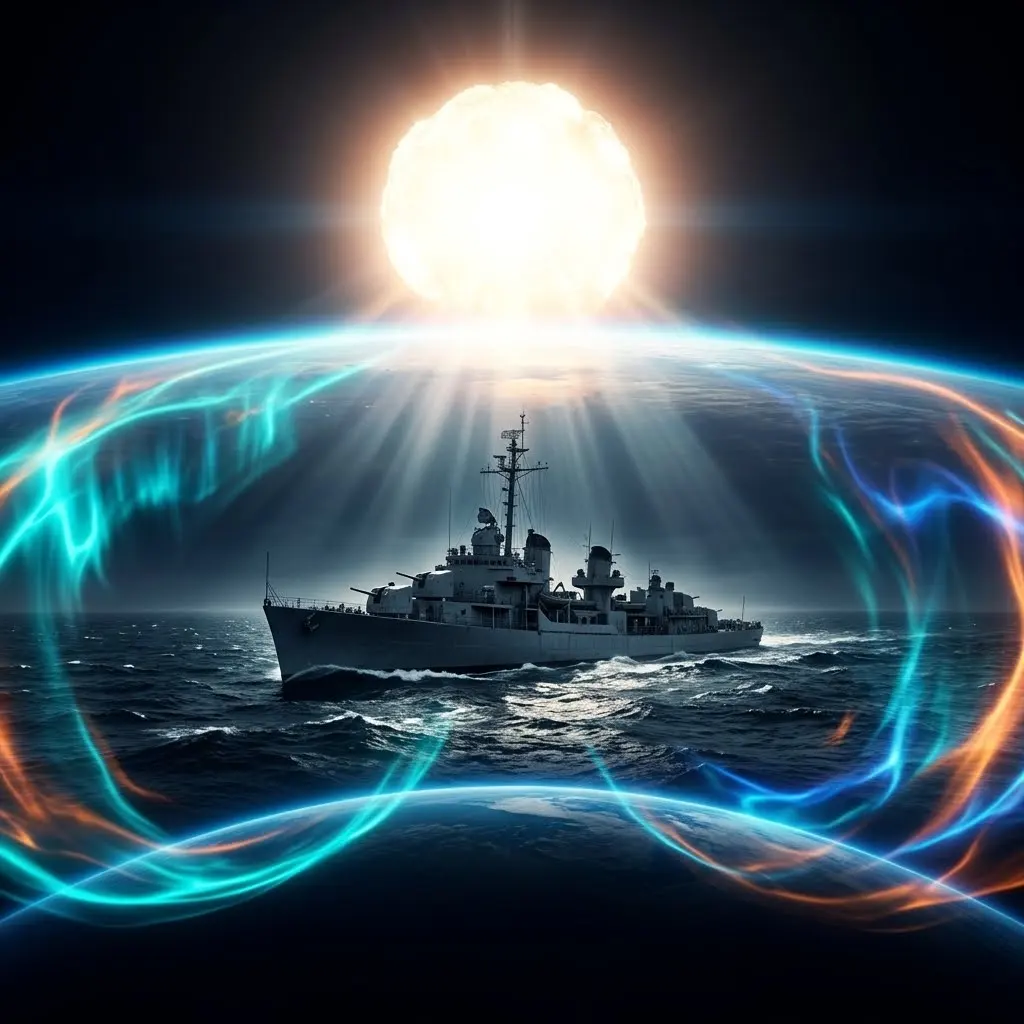
The 1958 Space Nukes Meant to Destroy Soviet Missiles
FAQs
What was the purpose of secret military project names during the Cold War?
Secret military project names during the Cold War were used to conceal the true nature and objectives of various military operations and initiatives from enemies and the general public.
How were secret military project names chosen during the Cold War?
Secret military project names during the Cold War were often chosen randomly or based on a specific theme to maintain secrecy and prevent easy identification of the project’s purpose.
Were all secret military project names during the Cold War declassified?
No, not all secret military project names from the Cold War era have been declassified. Some projects remain classified due to ongoing national security concerns.
Did secret military project names play a significant role in the outcome of the Cold War?
Secret military project names played a crucial role in the outcome of the Cold War by allowing military operations to be conducted discreetly and strategically, contributing to the overall efforts of the conflict.
How were secret military project names revealed to the public after the Cold War ended?
After the Cold War ended, some secret military project names were declassified and revealed to the public through historical documents, memoirs, and government disclosures, shedding light on previously unknown operations and initiatives.