
The history of warfare, a constant pursuit of dominance and security, has perpetually been shaped by humanity’s technological advancements. As humanity gazed skyward, a new frontier emerged, not just for exploration and scientific inquiry, but also for the potential application of conflict: outer space. The evolution of space warfare concepts is a fascinating narrative, tracing a trajectory from speculative science fiction to increasingly sophisticated strategic considerations. This journey reflects humanity’s enduring capacity to adapt its instruments of war to the prevailing technological landscape, now extending beyond the confines of Earth’s atmosphere.
Early Visions and the Dawn of the Space Age
The initial concepts of warfare extending into space were largely confined to the realm of imagination. Writers and filmmakers, unburdened by the practicalities of early rocketry, conjured visions of aerial combat elevated to an interplanetary scale. These early narratives, while fictional, laid the groundwork for a conceptual understanding of space as a potential battleground.
Pulp Fiction and Rocketry Dreams
Long before Sputnik, stories of space battles captivated audiences. Jules Verne’s “From the Earth to the Moon” and H.G. Wells’ “The War of the Worlds”, though not strictly military in focus, instilled a sense of the possible – that humanity could traverse the void and, by extension, project power there. The pulp magazines of the early 20th century were replete with tales of laser guns, ray shields, and epic clashes between star fleets. These narratives, while often fantastical, tapped into a primal human desire to extend influence and protect interests, a desire that would later find a more grounded, albeit still aspirational, expression in military planning. The rudimentary understanding of physics and engineering in these stories was irrelevant; the core idea was established: the cosmos was not merely a passive backdrop but a potential arena for human endeavor, including conflict.
The Sputnik Shock and the Militarization of Orbit
The launch of Sputnik 1 by the Soviet Union in 1957 was a pivotal moment. It shattered the illusion that space was solely the domain of scientists and dreamers. The fact that a nation could place an object into orbit demonstrated a technological capability that, by its very nature, had dual-use potential. The immediate implication for military strategists was profound. Suddenly, the concept of orbital bombardment, once purely theoretical, seemed within reach. The “Sputnik Shock” spurred the United States to accelerate its own space program, primarily driven by national security concerns. This marked the transition from purely conceptual space warfare to its nascent integration into strategic thinking. The initial focus was on reconnaissance and early warning systems, but the seeds of a broader military application had been sown.
The concept of space warfare has evolved significantly over the decades, influenced by advancements in technology and shifting geopolitical landscapes. For a deeper understanding of the historical development of space warfare concepts, you can refer to the article available at this link. This resource provides insights into how nations have strategized and prepared for potential conflicts beyond Earth’s atmosphere, highlighting key milestones and the implications for future military operations in space.
The Cold War Crucible: Reconnaissance and Deterrence

The Cold War era, characterized by an intense arms race between the United States and the Soviet Union, was the primary incubator for practical space warfare concepts. While direct kinetic conflict in space was largely avoided, the strategic importance of space for military intelligence and deterrence became paramount.
The Eyes in the Sky: Satellite Reconnaissance
The development of reconnaissance satellites was a direct outgrowth of the Cold War arms race. The ability to observe enemy territory, track missile launches, and monitor military movements from space offered an unprecedented strategic advantage. These satellites, initially primitive, evolved rapidly, incorporating increasingly sophisticated imaging technologies. The strategic implications were immense, providing real-time intelligence that could inform military planning and de-escalate potential conflicts by offering transparency, or conversely, heighten tensions by revealing capabilities. The very existence of these “eyes in the sky” fundamentally altered the nature of strategic warning and intelligence gathering, making surprise attacks considerably more difficult.
Orbital Mechanics and Strategic Bombardment Fantasies
While the direct use of space-based weapons for kinetic bombardment remained largely in the realm of science fiction during the Cold War, the theoretical underpinnings were explored. The concept of an “orbital bombardment system” (OBS), such as the Soviet Union’s Almaz program, which envisioned space stations with cannons, or the American Project Orion, which considered nuclear-powered spacecraft for launching projectiles, highlighted a persistent, albeit technically challenging, military aspiration. The sheer speed of orbital platforms offered the potential for rapid delivery of payloads anywhere on Earth, a terrifying prospect. However, the prohibitive costs, technological limitations, and the risk of escalation meant that such systems never reached operational deployment during this period. Nevertheless, the intellectual exploration of these capabilities contributed to the evolving understanding of space as a domain that could be weaponized.
The Space Race as a Proxy for Military Might
The Space Race itself, while ostensibly a competition for scientific and ideological prestige, served as a significant proxy for military technological superiority. The ability to launch satellites, conduct crewed missions, and develop advanced rocket technology was directly transferable to military applications. The development of ICBMs (Intercontinental Ballistic Missiles), the primary delivery systems for nuclear weapons, was intrinsically linked to the advancements made in space launch capabilities. The Space Race, therefore, was not just about reaching the moon; it was a high-stakes competition that underscored the military potential inherent in mastering space. Every successful mission, every technological leap, was scrutinized for its implications in the broader strategic balance of power.
The Post-Cold War Era: The Rise of Space Control and Space Situational Awareness
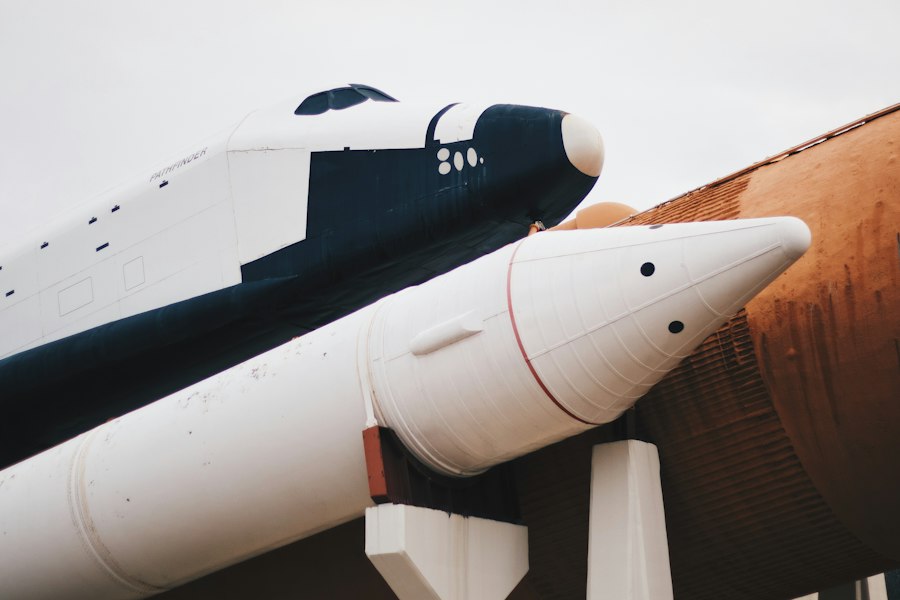
The end of the Cold War did not diminish the importance of space for military operations. Instead, it shifted the focus towards ensuring access to space, protecting space assets, and understanding the increasingly crowded orbital environment. The concept of “space control” emerged, emphasizing the ability to deny an adversary the use of space while ensuring one’s own unimpeded access.
Protecting the High Ground: Space Control Doctrine
With the decline of the bipolar world, the focus shifted from mutually assured destruction to ensuring the continued utility of space for a variety of national interests, including military command and control, intelligence, and navigation. Space control doctrine aimed to establish principles for the responsible and secure use of space, while simultaneously preparing for scenarios where an adversary might attempt to disrupt or deny these capabilities. This involved developing technologies and strategies to protect friendly satellites, monitor adversary activities, and, if necessary, deter or respond to space-based threats. The concept of “denial of space” to an adversary became a significant strategic consideration, recognizing that control of the orbital domain could offer decisive advantages in terrestrial conflicts.
Knowing What’s Up There: Space Situational Awareness (SSA)
As more nations and private entities began to launch satellites, the orbital environment became increasingly congested. This led to a growing need for Space Situational Awareness (SSA) – the ability to track, identify, and monitor all objects in orbit. SSA is crucial for preventing collisions, managing space debris, and, critically for military applications, identifying potential threats posed by adversary satellites. A robust SSA capability allows for the monitoring of an adversary’s space assets, providing early warning of potential hostile actions and enabling defensive measures. It is the foundation upon which effective space control is built.
The Growing Utility of Space in Terrestrial Warfare
The Gulf War in the early 1990s demonstrated the indispensable role of space-based assets in modern terrestrial warfare. GPS (Global Positioning System) enabled precision-guided munitions and troop navigation, while communication satellites provided vital command and control links. Reconnaissance satellites offered unparalleled battlefield awareness. This solidified the understanding that space was no longer an independent theater of war but an integral enabler of terrestrial military operations. The reliance on space assets for the successful execution of conventional military campaigns grew exponentially, making the protection of these assets a paramount concern.
Emerging Threats and the Weaponization of Space
The 21st century has witnessed a resurgence of interest in the weaponization of space, driven by the development of anti-satellite (ASAT) capabilities and the increasing strategic importance of space assets. The line between defensive and offensive capabilities in space is becoming increasingly blurred.
The Specter of Anti-Satellite (ASAT) Weapons
The development and testing of Anti-Satellite (ASAT) weapons by various nations have raised significant concerns about the future of space warfare. These weapons, which can range from kinetic kill vehicles that physically strike satellites to electronic warfare systems that disrupt their operation, pose a direct threat to the space-based infrastructure upon which modern society and militaries depend. The potential for ASAT tests to create vast amounts of space debris further complicates the issue, threatening all spacecraft regardless of origin or intent. The demonstrated capability to destroy satellites in orbit fundamentally alters the strategic calculus, introducing a new layer of vulnerability.
Cyber and Electronic Warfare in the Space Domain
Beyond kinetic threats, cyber and electronic warfare are emerging as critical components of potential space conflict. Adversaries could attempt to hack into satellite command and control systems, disrupt communication links, or jam sensor data. The interconnected nature of space systems makes them susceptible to sophisticated cyberattacks, with potentially devastating consequences for military operations and civilian infrastructure. The invisible nature of these attacks makes them particularly insidious, as attribution can be difficult and the impact can be swift and widespread.
The Debate Over Space-Based Weapons Systems
The development of dedicated space-based weapons systems remains a contentious issue. While some nations advocate for the development of defensive capabilities to protect their space assets, others view any offensive space weapon as a destabilizing development. The international community grapples with establishing norms of behavior in space to prevent an arms race. The dual-use nature of many space technologies makes the distinction between defensive and offensive systems inherently ambiguous, leading to a continuous cycle of suspicion and counter-development. The fundamental question of whether space should be weaponized or remain a domain for peaceful exploration and utility continues to be debated.
The concept of space warfare has evolved significantly over the decades, influenced by advancements in technology and shifting geopolitical landscapes. A fascinating exploration of this topic can be found in a related article that delves into the historical development of space warfare strategies and their implications for modern military operations. For those interested in understanding how these strategies have shaped current defense policies, you can read more about it in this insightful piece on In the War Room. This resource provides a comprehensive overview of the challenges and opportunities that arise as nations increasingly turn their attention to the final frontier.
The Future Landscape: Autonomy, AI, and Contested Domains
| Year | Event/Development | Description | Significance |
|---|---|---|---|
| 1945 | Project RAND Formation | RAND Corporation begins studies on space as a military domain. | Laid groundwork for strategic thinking about space warfare. |
| 1957 | Launch of Sputnik 1 | First artificial satellite launched by the USSR. | Triggered US interest in space military capabilities. |
| 1960s | Development of ASAT Weapons | US and USSR develop anti-satellite (ASAT) missile technology. | Introduced direct offensive capabilities in space. |
| 1983 | Strategic Defense Initiative (SDI) | US announces missile defense program including space-based systems. | Marked a shift towards space-based missile defense concepts. |
| 1990s | Space Control and Surveillance | Focus on tracking and protecting satellites from threats. | Emphasized defensive aspects of space warfare. |
| 2007 | China’s ASAT Test | China destroys one of its own satellites with a missile. | Demonstrated operational ASAT capability, raising global concerns. |
| 2019 | Establishment of US Space Force | US creates a separate military branch focused on space operations. | Institutionalized space warfare as a key military domain. |
| 2020s | Development of Space-Based Weapons and Defense Systems | Advancements in directed energy weapons, satellite jamming, and cyber warfare in space. | Indicates ongoing evolution and modernization of space warfare capabilities. |
Looking ahead, the evolution of space warfare concepts is likely to be shaped by advancements in artificial intelligence, autonomy, and the increasing recognition of space as a contested domain. The strategies and technologies developed in the coming decades will determine the stability and security of the orbital environment.
The Role of Artificial Intelligence and Autonomy
Artificial intelligence (AI) and autonomous systems are poised to play a transformative role in future space warfare. AI-powered systems could enable satellites to make real-time decisions in dynamic combat scenarios, identify threats, and even engage targets autonomously. Autonomous spacecraft could also be used for reconnaissance, logistics, and even offensive operations, reducing the need for human intervention and increasing operational speed and efficiency. This raises complex ethical and strategic questions about accountability and escalation. The ability of AI to process vast amounts of data and react at speeds far exceeding human capabilities presents both opportunities and significant risks.
Space as a Contested Domain and the Need for Resilience
The future of space warfare will likely see space increasingly treated as a contested domain, where multiple actors compete for access and dominance. This necessitates the development of resilient space architectures that can withstand attacks and continue to function even when parts of the system are compromised. Strategies such as satellite constellation redundancy, decentralized command and control, and the ability to quickly reconstitute lost capabilities will be crucial. The concept of “space resilience” will be paramount, ensuring that essential space-based services can be maintained despite the threat of conflict.
International Cooperation and the Prevention of Conflict
Ultimately, the peaceful and secure use of space for all nations hinges on international cooperation. Establishing clear rules of the road, fostering transparency, and developing mechanisms for conflict resolution are essential to prevent an unchecked arms race in space. While the allure of military advantage may drive the development of space-based weapon systems, the long-term consequences of unchecked weaponization could be catastrophic, leading to a degraded orbital environment and widespread disruption of essential services. The ongoing dialogue and diplomatic efforts to de-escalate tensions and promote responsible behavior in space are therefore of utmost importance for the future of humanity.

The 1958 Space Nukes Meant to Destroy Soviet Missiles
FAQs
What is the history of space warfare concept development?
The concept of space warfare dates back to the Cold War era when the United States and the Soviet Union began developing technologies for military use in space. Since then, various countries have continued to explore and develop space warfare capabilities.
How has space warfare concept development evolved over time?
Space warfare concept development has evolved from the initial focus on reconnaissance and surveillance to include offensive and defensive capabilities such as anti-satellite weapons, space-based missile defense systems, and electronic warfare tools.
What are some key milestones in the history of space warfare concept development?
Key milestones in the history of space warfare concept development include the launch of the first military satellites, the development of anti-satellite weapons, the deployment of space-based missile defense systems, and the integration of space assets into military operations.
Which countries are actively involved in space warfare concept development?
Several countries are actively involved in space warfare concept development, including the United States, Russia, China, India, and France. These countries have dedicated military space programs and are continuously advancing their space warfare capabilities.
What are some challenges and concerns associated with space warfare concept development?
Some challenges and concerns associated with space warfare concept development include the potential for creating space debris, the risk of escalating conflicts into space, the need for international regulations to prevent weaponization of space, and the vulnerability of space assets to attacks.