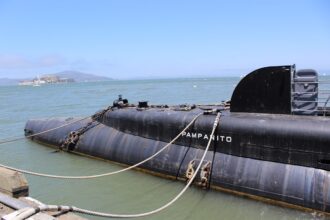
The behemoths of the sea have long dictated the tempo of naval engagements. For centuries, battleships, aircraft carriers, and submarines have been the undisputed rulers of maritime dominance. Yet, a revolutionary concept, born from a unique intersection of aeronautics and naval architecture, promises to fundamentally alter this landscape. The ekranoplan, a ground-effect vehicle, once a Cold War curiosity, is now re-emerging with advanced capabilities that position it as a potent force capable of revolutionizing naval warfare strategies. Its ability to skim the surface of the water at high speeds, riding on a cushion of air, grants it a distinct set of advantages that traditional naval assets simply cannot match. This article will delve into the combat capability of the ekranoplan, exploring its unique characteristics, potential operational roles, technological advancements, and the profound strategic implications it holds for future naval conflicts.
The Physics of Flight: Understanding the Ekranoplan’s Unique Advantage
At its core, the ekranoplan’s combat effectiveness stems from its ingenious application of the ground effect principle. This phenomenon, observed when a wing flies very close to a surface, significantly increases its lift while reducing drag. Unlike conventional aircraft that require high altitudes for efficient flight, an ekranoplan operates just meters above the water, a realm previously dominated by slower, less versatile vessels. This proximity to the surface creates a high-pressure air cushion beneath its wings.
Harnessing the Ground Effect for Speed and Stealth
The primary benefit of the ground effect is the dramatic increase in lift-to-drag ratio. As the ekranoplan’s wings generate lift, the proximity to the water surface traps the air beneath them, creating a dense cushion. This cushion effectively supports the vehicle, allowing it to fly with significantly less power than a conventional aircraft of similar size and weight. This translates directly into higher speeds and greater fuel efficiency when operating within its designated altitude range. Furthermore, this low-altitude flight profile offers a unique stealth advantage. Traditional radar systems, particularly those designed to detect aircraft at higher altitudes, can have difficulty acquiring and tracking a vehicle skimming the water’s surface. The ekranoplan’s low radar cross-section, combined with the radar clutter inherent in a maritime environment, makes it a challenging target to detect and engage. Its speed also compresses the reaction time for potential adversaries, further enhancing its survivability. The ability to rapidly cover vast distances at speeds exceeding those of most surface vessels, while remaining relatively elusive to radar, presents a significant tactical advantage. This inherent characteristic alone begins to redefine the parameters of naval reconnaissance, interdiction, and rapid deployment.
The Water’s Embrace: Operational Limitations and Synergies
While the ground effect provides immense benefits, it also imposes certain operational constraints. Ekranoplans are inherently tied to the water’s surface. They cannot operate over land or in rough seas where the wave height exceeds their operational altitude. This limitation, however, does not negate their strategic value but rather defines their optimal operating environment. Within this environment, the ekranoplan can achieve speeds of 300-500 kilometers per hour, a capability unmatched by any conventional naval vessel. This allows for rapid deployment of troops, cargo, or weaponry across significant maritime distances. Furthermore, the ekranoplan’s ability to operate at lower altitudes means it is less susceptible to weather conditions that might ground higher-flying aircraft, such as strong crosswinds. Its operation within the “aerodynamic ground effect” means it can, in essence, “ride” the waves, using them to its advantage rather than being hindered by them, provided the sea state is within operational parameters. The synergy with existing naval assets is also crucial. Ekranoplans can act as force multipliers, providing rapid mobile platforms for various roles that complement the strengths of traditional warships and aircraft.
The ekranoplan, often referred to as a “ground effect vehicle,” has garnered attention for its unique combat capabilities, particularly in coastal and riverine operations. Its ability to skim just above the water’s surface allows for high-speed travel while evading radar detection, making it a formidable asset in modern warfare. For a deeper understanding of the strategic implications and operational potential of this innovative vehicle, you can read a related article at this link.
Envisioning the Battlefield: Ekranoplan Roles in Modern Naval Warfare
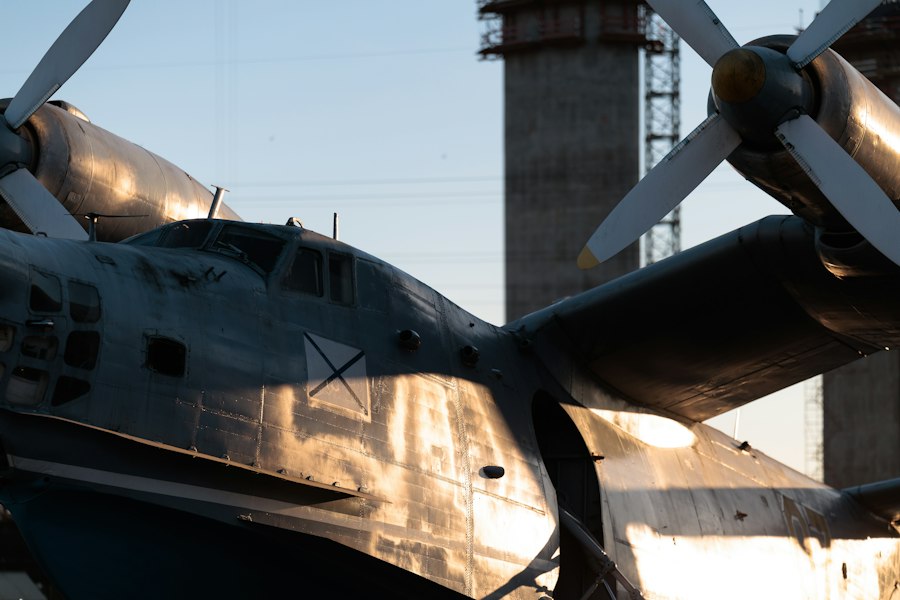
The unique capabilities of the ekranoplan lend themselves to a diverse array of combat roles, each capable of fundamentally altering existing naval strategies. From rapid troop deployment to precision strike missions, these ekranoplans offer a blend of speed, payload capacity, and survivability that could prove decisive. Their strategic impact lies not just in performing existing roles faster, but in enabling entirely new operational paradigms.
The Swift Hammer: Amphibious Assault and Rapid Deployment
One of the most compelling roles for advanced ekranoplans lies in amphibious assault and the rapid deployment of forces. Traditional amphibious operations, relying on landing craft and helicopters, are often slow and vulnerable. An ekranoplan, capable of carrying significant numbers of troops and their equipment, could reach shorelines at high speeds, bypassing coastal defenses and delivering forces directly to their objective before significant opposition can mobilize. Imagine an ekranoplan disgorging a company of soldiers and their armored vehicles onto a beach in minutes, rather than hours. This drastically reduces the time window for enemy response and increases the element of surprise. Furthermore, the ekranoplan’s payload capacity could extend beyond personnel to include vital supplies, anti-tank missiles, or even light artillery, significantly enhancing the initial combat power of a landing force. This capability alone could force a complete re-evaluation of coastal defense strategies for potential adversaries. The speed at which these forces can be inserted also offers a significant advantage in rapid response scenarios, allowing for swift intervention in contested maritime regions.
The Silent Hunter: Maritime Interdiction and Anti-Submarine Warfare
The ekranoplan’s speed and low-altitude flight make it an ideal platform for maritime interdiction and potentially anti-submarine warfare. Its ability to patrol vast stretches of ocean at high speed allows for rapid detection and interception of suspicious vessels, including those engaged in smuggling, piracy, or illicit military activities. Equipped with advanced sensor suites, including radar, electro-optical systems, and potentially sonar arrays, an ekranoplan could identify and track targets with a level of efficiency previously unimaginable. For anti-submarine warfare, while not directly engaging submarines underwater, an ekranoplan could act as a highly effective surface search and targeting platform. Its speed allows it to cover vast areas quickly, identifying surface wakes or other indicators of submerged activity. Once a potential submarine contact is made, the ekranoplan could vector in more specialized ASW assets, such as helicopters or other naval vessels, significantly reducing the time from detection to engagement. The ability to rapidly deploy ASW torpedoes or depth charges from an ekranoplan itself, given advancements in payload integration, could also offer a potent close-in defense capability against submarines that have surfaced or are operating very shallowly.
The Precision Strike: Launching Missiles and Drones
The ekranoplan’s substantial payload capacity and stable flight characteristics make it an excellent launch platform for a variety of precision-guided munitions. Imagine an ekranoplan, silently skimming the waves, launching a volley of anti-ship missiles at a distant enemy fleet, or delivering a strike package of loitering munitions against shore-based targets. Its speed allows it to approach targets rapidly and engage them before they can effectively react. Furthermore, the ekranoplan can serve as a mobile command and control platform for unmanned aerial vehicles (UAVs) or unmanned surface vessels (USVs). It can launch, recover, and control these drones, extending its operational reach and intelligence-gathering capabilities significantly. This synergistic relationship between the ekranoplan and its unmanned counterparts creates a formidable, adaptable, and multi-layered strike capability. The ability to conduct strikes from unexpected directions and at high speeds adds a significant layer of complexity to enemy defensive planning.
Technological Frontiers: Advancements Powering the New Generation of Ekranoplans

The resurgence of the ekranoplan is not merely a nostalgic revival; it is fueled by significant advancements in materials science, propulsion, avionics, and operational systems. These technological leaps are transforming the once-cumbersome ground-effect vehicles into sophisticated, combat-ready platforms.
Lighter, Stronger, Faster: Innovations in Materials and Propulsion
Modern composite materials have revolutionized aircraft and naval construction, and ekranoplans are no exception. The use of advanced carbon fiber composites and other lightweight alloys allows for larger, more robust airframes that are also significantly lighter, leading to improved performance and fuel efficiency. This also translates to increased payload capacity, enabling ekranoplans to carry more weaponry, sensors, or troops. Propulsion systems have also seen substantial evolution. While early ekranoplans relied on turbojet engines, modern designs are exploring more efficient turbofan engines, hybrid-electric systems, and even advanced water-jet propulsion for improved maneuverability at lower speeds and for operating in shallower waters. The integration of fly-by-wire and advanced fly-by-light control systems provides pilots with unprecedented control and stability, even in challenging maritime conditions. These advancements are not only making ekranoplans more capable but also more reliable and cost-effective to operate.
The Digital Cockpit: Integrating Advanced Avionics and Sensor Systems
The true combat power of a modern ekranoplan lies in its integrated avionics and sensor suites. Advanced radar systems, capable of long-range detection and tracking of both air and surface targets, are essential. Electro-optical and infrared (EO/IR) sensors provide visual identification and targeting capabilities, particularly in low-light or adverse weather conditions. Electronic warfare systems are crucial for detecting, identifying, and countering enemy radar and communication signals, as well as for self-protection. The integration of these diverse sensor systems into a unified command and control network allows the ekranoplan to build a comprehensive operational picture of its environment. This data fusion enables real-time decision-making and rapid response to threats and opportunities. Furthermore, the ekranoplan’s cockpit is becoming a sophisticated digital hub, with advanced displays and intuitive interfaces that reduce pilot workload and enhance situational awareness. The ability to network with other naval assets and share real-time data further amplifies its effectiveness in a joint operational environment.
Swarming Capabilities and AI Integration
The future of ekranoplan warfare may involve “swarming” tactics, where multiple ekranoplans operate in concert, coordinated by artificial intelligence (AI). AI algorithms can optimize flight paths, manage target allocation, and coordinate defensive maneuvers for a group of ekranoplans, presenting a complex and overwhelming threat to adversaries. AI can also enhance the ekranoplan’s autonomy, allowing it to perform complex missions with minimal human intervention, especially in high-threat environments where human pilot safety is a paramount concern. This could involve autonomous reconnaissance, patrol missions, or even coordinated strike operations. The integration of AI not only enhances the efficiency and effectiveness of individual ekranoplans but also transforms them into nodes within a networked combat system, capable of adapting to dynamic battlefield conditions with unparalleled speed and agility.
Strategic Implications: Rewriting the Rules of Naval Power Projection
The advent of the combat-capable ekranoplan represents a paradigm shift in naval strategy, challenging established doctrines and forcing a re-evaluation of maritime power projection. Its unique capabilities introduce new tactical considerations and create strategic dilemmas for potential adversaries.
Redefining Naval Dominance: A New Dimension of Warfare
The ekranoplan’s ability to combine speed, stealth, and significant payload capacity fundamentally alters the calculus of naval dominance. It challenges the traditional hierarchy of naval assets by offering a platform that can outmaneuver and outgun many existing surface combatants while remaining more elusive than conventional aircraft. This creates a new dimension of warfare, one that operates at the interface between air and sea, requiring navies to develop entirely new strategies and countermeasures. The speed at which an ekranoplan can transit between operational areas and launch attacks means that the strategic initiative can be seized and maintained with a speed and fluidity previously associated only with air power. This forces a broader definition of “naval power” to encompass the rapid mobility and strike capabilities of these unique vehicles.
The Unblinking Eye: Enhanced Maritime Domain Awareness
The ekranoplan’s extensive patrol capabilities, coupled with its advanced sensor suites, significantly enhance maritime domain awareness (MDA). Its ability to cover vast areas of ocean at high speeds allows for more effective monitoring of shipping lanes, exclusive economic zones, and potential threat areas. This persistent surveillance capability provides a continuous flow of real-time intelligence, enabling commanders to make informed decisions and respond proactively to emerging threats. Furthermore, its ability to operate in conjunction with other ISR (Intelligence, Surveillance, and Reconnaissance) assets, such as satellites and P-8 Poseidon aircraft, creates a comprehensive and layered MDA network. This enhanced awareness can deter hostile actions, disrupt illegal activities, and provide crucial intelligence for offensive operations. The ekranoplan acts as a mobile sensor node, extending the reach and depth of a navy’s eyes and ears.
Asymmetric Advantages: Challenging Established Navies
For nations with smaller or less technologically advanced navies, the ekranoplan can offer a significant asymmetric advantage. By investing in and developing ekranoplan technology, these nations can project power and challenge the dominance of larger naval forces in ways that were previously impossible. The cost-effectiveness of ekranoplans compared to large aircraft carriers or fleets of cruisers and destroyers also makes them an attractive option for resource-constrained militaries. This democratization of naval power projection could lead to a more multipolar and unpredictable maritime environment. The ekranoplan represents a potential equalizer, allowing smaller navies to engage in effective power projection without the immense financial and logistical burdens of traditional blue-water navies.
The ekranoplan, often referred to as a “ground effect vehicle,” has garnered attention for its unique combat capabilities, particularly in naval warfare. Its ability to skim just above the water’s surface allows for high-speed travel while remaining difficult to detect. For a deeper understanding of how this innovative technology can reshape modern military strategies, you can explore a related article that discusses its potential applications in various combat scenarios. This insightful piece can be found here.
The Future of the Waves: Integrating Ekranoplans into Naval Doctrine
| Metric | Value | Unit | Description |
|---|---|---|---|
| Maximum Speed | 550 | km/h | Top speed over water surface |
| Operational Range | 1500 | km | Maximum distance without refueling |
| Payload Capacity | 20 | tons | Maximum weight of weapons and equipment |
| Armament | 6-8 | missiles | Number of anti-ship cruise missiles carried |
| Crew Size | 10-15 | persons | Number of personnel required to operate |
| Radar Cross Section | Low | – | Stealth capability against radar detection |
| Sea State Operation | Up to 4 | Beaufort scale | Maximum sea conditions for safe operation |
| Armored Protection | Light | – | Level of armor against small arms fire |
The successful integration of ekranoplans into naval forces requires more than just technological development; it necessitates a fundamental rethinking of naval doctrine and operational planning. This involves training personnel, developing new tactics, and fostering inter-service cooperation.
Training and Personnel: Cultivating a New Breed of Warrior
Operating ekranoplans requires specialized training for pilots, navigators, and maintenance crews. These individuals need to be proficient in both aeronautical and maritime operations, understanding the unique physics and operational characteristics of ground-effect vehicles. Training programs must focus on high-speed, low-altitude flight over water, precision navigation, and the effective utilization of the ekranoplan’s combat systems. Furthermore, the development of new command and control structures will be necessary to integrate ekranoplan units seamlessly into larger naval operations. This might involve creating dedicated ekranoplan squadrons or integrating them into existing air wings or surface flotillas, depending on their primary roles. The emphasis will be on creating a workforce capable of harnessing the full potential of these advanced platforms.
Developing New Tactics and Operational Concepts
Naval doctrine will need to evolve to fully leverage the ekranoplan’s capabilities. This includes developing new tactics for amphibious assaults, maritime interdiction, reconnaissance, and strike missions. Concepts such as “ekranoplan swarming,” where multiple vehicles operate in coordinated attacks, or the use of ekranoplans as mobile command centers for drone operations, will need to be explored and refined. The integration of ekranoplans into joint operations with other branches of the military, such as the army and air force, will also be critical. This collaborative approach will ensure that the ekranoplan is employed in a way that maximizes its contribution to overall mission success. The iterative process of tactical development and refinement will be crucial to unlocking the full strategic potential of this new class of naval asset.
The Unfolding Horizon: A New Era of Maritime Power
The ekranoplan, once a visionary concept, is rapidly evolving into a tangible reality with the potential to redefine the very nature of naval warfare. Its unique combination of speed, stealth, and payload capacity offers unprecedented advantages in a wide range of combat scenarios. As technology continues to advance and naval strategists embrace its potential, the ekranoplan is poised to become an indispensable component of future maritime power projection, ushering in a new era of speed, agility, and decisive action on the world’s oceans. The strategic implications are profound, promising to reshape the balance of power and challenge established notions of naval superiority for decades to come.

The Soviet Warship That Learned to Fly
FAQs
What is an ekranoplan?
An ekranoplan is a type of aircraft that uses ground effect to fly at low altitudes over water surfaces. It is also known as a ground effect vehicle (GEV) or a wing-in-ground-effect (WIG) craft.
How does an ekranoplan differ from a traditional aircraft?
An ekranoplan differs from a traditional aircraft in that it relies on the ground effect to generate lift, allowing it to fly closer to the surface of the water at higher speeds than conventional aircraft. This unique design gives ekranoplans their distinctive appearance and capabilities.
What is the combat capability of an ekranoplan?
Ekranoplans have been explored for their potential use in military applications due to their ability to fly at high speeds over water, making them suitable for maritime patrol, anti-ship missions, and amphibious assault operations. Their low-altitude flying capability also provides them with a stealth advantage against radar detection.
Can ekranoplans be armed with weapons?
Yes, ekranoplans can be equipped with a variety of weapons, including missiles, torpedoes, machine guns, and other armaments, depending on their intended combat role. This allows them to engage in offensive and defensive operations in a maritime environment.
What are some advantages of using ekranoplans in combat situations?
Some advantages of using ekranoplans in combat situations include their high speed, low radar signature, ability to operate in shallow waters, and cost-effectiveness compared to traditional aircraft and naval vessels. These factors make ekranoplans a versatile and efficient option for various military missions.