The Shadow Beneath the Surface
The year 1956 pulsed with a tension that permeated every corner of the globe, a palpable anxiety born from the escalating Cold War. Amidst this geopolitical chess match, a clandestine operation, meticulously planned and executed in the shadows beneath the divided city of Berlin, was poised to unveil secrets that could shake the very foundations of international relations. This was the era of espionage, of silent gambits and hidden agendas, where the ideological chasm between East and West manifested in increasingly audacious and ingenious strategies. While the world’s attention was often fixed on pronouncements from Washington or Moscow, or on the tense standoffs along the Iron Curtain, the true battle for information, for strategic advantage, was frequently waged in places unseen, in subterranean realms where human ingenuity met the unforgiving realities of engineering and espionage. The story of the 1956 Berlin Tunnel is not merely an account of a physical excavation; it is a chronicle of bravery, technical prowess, and the desperate measures undertaken by intelligence agencies to gain an edge in a world teetering on the brink of conflict.
The city of Berlin, itself a stark symbol of this division, became a focal point for such clandestine activities. Its unique position, a democratic enclave deep within Soviet-controlled East Germany, offered both unparalleled risks and unparalleled opportunities for intelligence gathering. Agents moved in and out of the city, whispers of defection and betrayal were commonplace, and the air crackled with the constant threat of discovery. Beneath this vibrant, yet fractured, urban landscape lay a network of tunnels, sewers, and forgotten infrastructure – a subterranean labyrinth that offered both concealment and a potential conduit for unprecedented intelligence operations. The decision to construct a tunnel beneath the heavily fortified border separating East and West Berlin was not born out of casual ambition, but from a calculated assessment of the strategic value of the intelligence that could be intercepted. It represented a bold, high-stakes gamble, a testament to the lengths to which nations would go to understand the intentions and capabilities of their adversaries.
The Genesis of a Subterranean Gambit
The genesis of the 1956 Berlin Tunnel project can be traced back to the escalating intelligence demands of the Cold War. Following the Second World War and the subsequent division of Germany and Berlin, both the United States and its Western allies recognized the critical need to monitor Soviet and East German activities. The Berlin Wall, though not yet erected in 1956, was a looming specter, and the city’s division already presented a formidable barrier to effective intelligence gathering. Traditional methods, such as human intelligence agents operating within East Berlin, were fraught with danger and often yielded incomplete or delayed information. The need for a more direct, continuous, and secure channel for intercepted communications became paramount.
The idea of tunneling beneath the sector border emerged as a solution to this problem. It offered the potential to tap into critical Soviet military communication lines that ran between East and West Berlin. These lines carried not only military orders and operational data but also a wealth of information about Soviet troop movements, political directives, and technological advancements. The strategic implications of accessing such unfiltered communication were immense, promising an unparalleled insight into the Soviet bloc’s inner workings. The planning stages were shrouded in absolute secrecy, involving a select group of intelligence professionals and engineers who understood the immense technical and logistical challenges involved. Every detail, from the choice of excavation site to the methods of ventilation and power, was scrutinized to ensure the operation’s success and, crucially, its continued deniability.
The Strategic Imperative
The strategic imperative driving the tunnel project was the stark information asymmetry between the Western powers and the Soviet Union. The Soviets possessed a vast and increasingly sophisticated military apparatus, and their communications networks were the arteries through which their strategic decisions flowed. For the West, understanding the nature and intent of these communications was not merely desirable; it was a matter of national security. Without reliable intelligence, Western policymakers were essentially flying blind, susceptible to surprise and unable to formulate effective countermeasures. The tunnel offered a direct bypass of overt intelligence channels, providing an opportunity to intercept raw, unvarnished communications, rather than relying on potentially compromised human sources or limited technical surveillance from afar. This direct access promised to fill critical intelligence gaps and provide a more accurate assessment of the Soviet threat. The psychological advantage of knowing what the enemy was planning, or even thinking, was also a significant factor, allowing for proactive diplomatic and military responses rather than reactive ones.
The Early Planning and Covert Preparations
The early planning for the Berlin Tunnel was an exercise in extreme compartmentalization and deception. The project was initially codenamed “Operation Gold,” a seemingly innocuous title designed to deflect any suspicion should the operation encounter unforeseen scrutiny. The primary intelligence agency involved was the CIA, working in close coordination with the British Secret Intelligence Service (MI6). The chosen location for the tunnel’s entrance was in the American sector of West Berlin, specifically in the Steglitz district, an area with a relatively lower population density and proximity to key Soviet communication lines in East Berlin. Extensive geological surveys were conducted to determine the most stable and navigable routes beneath the city’s infrastructure, including subway lines and existing utility tunnels. The technical specifications for the tunnel were demanding: it needed to be deep enough to avoid detection by conventional means, wide enough to accommodate essential equipment, and long enough to reach its target. Furthermore, it had to be structurally sound to withstand the immense pressure of the earth above and the potential for ground shifts. Covert procurement of materials and equipment was carried out through shell companies and intermediaries, ensuring that no direct link to the intelligence agencies could be easily established. The recruitment of the construction crew was equally discreet, with individuals chosen for their skills, their discretion, and their ability to withstand the pressures of working in an isolated and dangerous environment.
The Berlin Tunnel of 1956 was a significant event during the Cold War, highlighting the intense espionage activities between East and West. For those interested in exploring more about this fascinating historical episode, you can read a related article that delves into the intricacies of the tunnel’s construction and its impact on intelligence operations. Check it out here: Berlin Tunnel 1956 Article.
Beneath the Streets: The Engineering Marvel
The construction of the 1956 Berlin Tunnel was a feat of engineering and logistical ingenuity, undertaken in conditions that would have daunted even the most seasoned engineers. The team faced not only the inherent difficulties of tunneling beneath a densely populated urban area but also the constant threat of discovery by Soviet or East German intelligence services. The subterranean environment presented a host of challenges, from unstable soil to the presence of underground water sources. The tunnel’s design had to account for these factors while also ensuring the comfort and safety of the men working within its confines.
The sheer scale of the operation was remarkable for its time. Miles of earth had to be excavated by hand, with rudimentary equipment, and the spoil meticulously removed to avoid any surface indications of the digging. The tunnel was constructed with reinforced concrete, designed to withstand the immense pressures from the earth above. Ventilation systems were crucial, as the confined space would quickly become unbreathable without a constant supply of fresh air. Lighting, communication lines for the construction crew, and even rudimentary sanitary facilities had to be integrated into the design. The construction proceeded in segments, with each section completed and then seamlessly joined to the next, a testament to the precision and skill of the engineering team. The constant threat of detection meant that work often had to be conducted in shifts, with noise levels carefully managed and any unusual activity explained away by plausible cover stories. The psychological toll on the workers was also a significant consideration, as they were operating in extreme isolation and under constant, albeit unspoken, pressure.
Excavation and Construction Techniques
The excavation of the Berlin Tunnel employed a combination of traditional and adapted engineering techniques, prioritizing stealth and efficiency. The initial approach involved digging shafts from disguised locations in West Berlin, from which the main tunneling would commence. Hydraulic jacks and tunneling shields, adapted from contemporary mining practices, were utilized to bore through the soil and rock. The spoil, consisting of thousands of tons of earth and debris, was a significant logistical challenge. It was initially transported to disguised disposal sites on the surface, often disguised as construction waste from legitimate building projects. Later in the construction, as the tunnel deepened, the spoil was transported back through the tunnel itself and loaded onto trucks under the cover of darkness.
The tunnel’s construction was primarily done using pre-cast reinforced concrete segments, which were assembled in place to form the tunnel lining. This method provided structural integrity and allowed for relatively rapid progress once the excavation had progressed. The dimensions of the tunnel were carefully calculated to be just large enough to accommodate the necessary equipment for the listening operation without being excessively cumbersome to construct or increasing the risk of detection. The creation of a parallel tunnel, designed to house the sophisticated electronic eavesdropping equipment, ran alongside the main access tunnel, further complicating the engineering task. This dual-tunnel design was a testament to the foresight of the planners, ensuring that the listening station would be adequately protected and supplied.
The Challenge of Ground Stability and Water Management
The subterranean environment of Berlin presented significant challenges to the tunnel’s structural integrity, particularly concerning ground stability and water management. The soil composition beneath the city varied, with layers of sand, clay, and gravel, some of which were prone to collapse. The presence of the city’s extensive underground water table was a constant concern. Any breach in the tunnel lining could lead to flooding, which would not only halt construction but could also compromise the entire operation and potentially lead to catastrophic structural failure.
To combat these issues, the engineers employed a sophisticated system of dewatering pumps, which continuously removed groundwater from the excavation area. The tunnel lining itself was constructed with special waterproof concrete and sealed with bitumen membranes to prevent water ingress. Furthermore, temporary supports were used extensively during the excavation phase to shore up the tunnel walls and prevent collapses. The selection of the tunnel’s depth was a crucial decision, balancing the need to remain undetected with the geological realities of the ground conditions. Deeper sections were more challenging to excavate and manage water, but offered greater security. The engineers had to constantly monitor the ground conditions, using sophisticated seismic sensors and ground-penetration radar to identify potential risks and adjust their construction methods accordingly.
Powering the Operation: A Hidden Lifeline
The success of the 1956 Berlin Tunnel hinged not only on its physical construction but also on its ability to sustain a complex electronic eavesdropping operation deep beneath the earth. This required a constant and reliable supply of power, a challenge in an environment where traditional power grids were inaccessible and overt connections were impossible. The solution involved creating a completely self-sufficient power system, hidden from view and designed to operate for extended periods without external intervention.
The power for the tunnel and its sophisticated listening equipment was generated by a series of generators housed in a camouflaged facility on the West Berlin side. These generators were diesel-powered, chosen for their reliability and portability. To minimize noise and exhaust fumes, the generators were equipped with advanced silencing systems and exhaust scrubbers. The power was then transmitted through heavily shielded cables, buried deep underground, to the listening station. The entire power supply system was designed with redundancy in mind, with backup generators and multiple power lines to ensure uninterrupted operation. The meticulous planning and execution of this power supply system were as crucial to the mission’s success as the physical excavation itself, demonstrating the comprehensive nature of the intelligence operation.
Redundancy and Concealment of the Power Network
The power network for the Berlin Tunnel was a marvel of covert engineering, designed for both unwavering reliability and absolute concealment. Redundancy was built into every stage of the system. Multiple diesel generators, stored in soundproofed bunkers, were available to ensure that a single generator failure would not disrupt the entire operation. These generators were fueled by a hidden underground reservoir, capable of sustaining operations for weeks on end. The power cables themselves were not merely buried; they were laid within reinforced conduits, further protecting them from accidental damage and making them extremely difficult to detect through ground-penetrating radar.
The concealment of the power generation and distribution network was paramount. The generators were located in a nondescript industrial building in West Berlin that served as a legitimate cover for other, less sensitive, operations. Any maintenance or refueling of the generators was conducted under the guise of routine upkeep of this front. The exhaust from the generators was channeled through a complex system of underground pipes that terminated in disguised ventilation shafts, blending seamlessly with the surrounding urban environment. The noise generated by the generators was also a significant concern, and advanced soundproofing techniques were employed to ensure that any emitted sound was indistinguishable from the ambient noise of the city. The entire power network operated as a silent, unseen heartbeat, fueling the crucial intelligence gathering that took place below.
The Listening Post: A Technological Frontier
Once the physical construction of the 1956 Berlin Tunnel was complete, the focus shifted to its primary purpose: to establish a state-of-the-art listening post deep beneath the Soviet-controlled communications lines. This was not a simple matter of placing a microphone in a hole. The operation required cutting-edge technology, sophisticated signal processing, and a dedicated team of technicians and analysts to decipher the intercepted communications. The success of the listening post was a testament to the technological advancements of the era and the willingness of intelligence agencies to invest heavily in pushing the boundaries of what was technically possible.
The tunnel provided a unique advantage: it allowed for the physical tapping of Soviet communication cables. These cables, carrying voice and data traffic, were a treasure trove of information. The equipment installed within the tunnel was designed to intercept these signals with minimal disruption to the original transmission, a critical factor in avoiding detection. The signals were then amplified, filtered, and recorded for later analysis. The design of the listening station within the tunnel was meticulously planned to optimize the performance of the equipment and the comfort of the personnel working there. This included climate control, lighting, and soundproofing, all of which were essential for maintaining operational efficiency and personnel well-being.
Intercepting the Soviet Dialogue
The heart of the 1956 Berlin Tunnel operation was its ability to intercept the flow of information through Soviet communication lines. The tunnel provided direct physical access to crucial underwater telephone and telegraph cables that served Soviet military installations and government offices in East Berlin. Specialized equipment, designed to tap into these cables with precision, was installed. This equipment allowed for the interception of both analog and early forms of digital transmissions. The process was delicate, as any significant disruption to the cable could trigger alarms and alert the Soviets to the intrusion.
Once the signals were intercepted, they were fed into a sophisticated array of recording and analysis equipment. This included reel-to-reel tape recorders, high-frequency radio receivers, and early forms of digital signal processors. The sheer volume of data collected was immense, requiring round-the-clock operation by a team of highly skilled technicians and cryptanalysts. The goal was not just to record the communications but to understand their content. This involved deciphering coded messages, translating foreign languages, and identifying key individuals and operational patterns. The insights gained from these intercepted communications provided Western intelligence agencies with an unprecedented, real-time understanding of Soviet intentions and capabilities.
The Sophistication of Eavesdropping Equipment
The eavesdropping equipment deployed within the 1956 Berlin Tunnel represented the cutting edge of signal intelligence technology for its time. The core of the operation relied on highly sensitive magnetic tape recorders, capable of capturing hours of audio and telegraphic traffic. These were complemented by advanced signal amplifiers and filters, designed to isolate specific communication channels and remove background noise. The equipment was also designed to be modular and relatively compact, allowing for its installation and maintenance within the confined space of the tunnel.
A critical component was the signal processing and analysis equipment. While not as advanced as today’s digital systems, it included specialized devices for frequency analysis and rudimentary pattern recognition. This allowed technicians to identify anomalies in communication patterns and to flag potentially significant transmissions for further investigation by cryptanalysts. The entire setup was designed to operate continuously with minimal human intervention, with technicians monitoring the equipment and making adjustments as needed. The power consumption of this sophisticated electronic array was a significant factor that had to be meticulously managed by the tunnel’s independent power system. The constant evolution of Soviet communication technology also meant that the listening equipment had to be periodically updated and modified to remain effective.
The Berlin Tunnel of 1956 was a significant event during the Cold War, showcasing the lengths to which both sides would go for intelligence gathering. For those interested in a deeper understanding of the geopolitical implications and the operational details of this covert operation, a related article can provide valuable insights. You can explore more about this fascinating topic in the article found here.
From Raw Data to Actionable Intelligence
The intercepted communications from the 1956 Berlin Tunnel were not immediately useful. They represented a deluge of raw data – voices, code words, technical transmissions – that required meticulous processing and analysis to yield actionable intelligence. This was the role of the dedicated intelligence analysts who worked tirelessly in secure facilities on the surface, receiving the recorded data from the tunnel. They were the interpreters of the Soviet world, translating whispers and coded messages into concrete information that could inform policy decisions.
The process involved multiple layers of scrutiny. Cryptanalysts worked to break any codes and ciphers, while linguists translated foreign language transmissions. Subject matter experts, familiar with Soviet military doctrine, political structures, and technological capabilities, then interpreted the meaning and significance of the decoded information. Patterns were identified, key individuals were profiled, and potential threats were assessed. This painstaking work transformed the raw intercepts into reports that were disseminated to high-level government officials, informing strategic planning and diplomatic initiatives. The intelligence derived from the tunnel was instrumental in understanding Soviet intentions, troop movements, and technological developments, providing the West with a crucial advantage in the Cold War.
The Role of Analysts and Cryptanalysts
The success of the 1956 Berlin Tunnel operation was as dependent on the human element as it was on the technological one. A highly skilled cadre of analysts and cryptanalysts formed the backbone of the intelligence processing pipeline. These individuals, often recruited from academia and government service, possessed specialized skills in linguistics, mathematics, computer science, and regional studies.
The cryptanalysts were tasked with the complex and often frustrating challenge of deciphering encrypted Soviet communications. This involved employing a range of techniques, from statistical analysis of message frequencies to sophisticated pattern recognition algorithms. Their success in breaking codes directly unlocked vast amounts of previously inaccessible information. The analysts, on the other hand, focused on understanding the meaning and implications of the decoded messages. They pieced together fragmented information, identified key actors, and assessed the strategic significance of military movements or political pronouncements. Their work provided the context that transformed raw data into actionable intelligence, enabling Western leaders to make informed decisions in a constantly evolving geopolitical landscape.
Discovery and Its Aftermath
The 1956 Berlin Tunnel, a monument to clandestine ingenuity, did not remain undiscovered forever. Like many such secret operations, its existence was eventually revealed, not through a dramatic espionage breakthrough, but through an unexpected and rather mundane failure. The discovery of the tunnel marked the end of its operational life, but it also ushered in a new phase of analysis and public understanding of the immense efforts undertaken during the Cold War. The revelation of the tunnel’s existence sent ripples through the intelligence community and beyond, highlighting the lengths to which both sides were willing to go to gain an advantage.
The circumstances of its discovery were particularly ironic, given the meticulous planning undertaken to ensure its secrecy. While the tunnel itself was a remarkable feat, the operational side, the infrastructure supporting the listening operation, eventually faltered. This failure, though ultimately leading to the tunnel’s exposure, also served as a testament to the lengths to which the West had gone to gather intelligence, and the constant cat-and-mouse game that defined the Cold War. The aftermath saw extensive debriefing, analysis of the intelligence gathered, and a reassessment of security protocols.
The Unforeseen Vulnerability and Exposure
The operational life of the 1956 Berlin Tunnel, though extending for a significant period, was ultimately brought to an end by an unforeseen vulnerability. Despite the sophisticated engineering and the constant vigilance, the complex systems supporting the operation were not infallible. The specific details of the breach are still debated among historians and former intelligence operatives, but the prevailing theory points to a failure in the tunnel’s power supply or communication infrastructure, rather than a direct discovery by Soviet patrols.
One plausible scenario suggests that a power surge or an equipment malfunction within the tunnel may have triggered an alert within the Soviet communication network, leading to a localized investigation. Alternatively, a more mundane issue, such as a leak in the ventilation system or a structural weakness in a less reinforced section, could have been detected through more routine surveillance. Whatever the precise cause, the discovery was not a direct raid on the tunnel itself, but rather a gradual realization by Soviet intelligence that a clandestine operation was underway beneath their communications lines. This led to a heightened state of alert and eventually to the discovery and neutralization of the listening post.
The Soviet Response and Security Implications
The Soviet response to the discovery of the 1956 Berlin Tunnel was swift and decisive. Once the existence and purpose of the tunnel were confirmed, Soviet forces moved to neutralize the operation. This involved disabling the eavesdropping equipment and securing the tunnel entrance and exit points on their side of the border. While the operation was compromised, the West managed to withdraw most of its sensitive equipment and personnel before a full Soviet takeover of the tunnel. The immediate aftermath involved a period of intense diplomatic posturing and propaganda from both sides, though the full extent of the operation and the intelligence gathered remained largely classified.
The discovery of the tunnel had significant security implications. It demonstrated to the Soviets the lengths to which Western intelligence agencies would go to gather information, prompting them to enhance their own security measures and to invest in more sophisticated counter-intelligence techniques. For the West, the experience provided invaluable lessons about the challenges of subterranean espionage, the importance of redundant systems, and the constant need for innovation in the face of an equally determined adversary. The incident also served as a stark reminder of the constant and pervasive nature of the Cold War struggle, a conflict waged not only on the diplomatic stage but also in the hidden depths beneath the earth.
Legacy and Lessons Learned
The 1956 Berlin Tunnel, despite its eventual discovery, left an indelible mark on the history of Cold War intelligence. It stands as a testament to human ingenuity, courage, and the relentless pursuit of information in the face of extreme adversity. The operational and engineering successes achieved in its construction and deployment were remarkable, pushing the boundaries of what was technically feasible at the time. The intelligence gathered through the tunnel provided invaluable insights that shaped Western policy and understanding of Soviet intentions.
The lessons learned from the tunnel’s operation and eventual exposure were profound and far-reaching. It underscored the critical importance of redundancy in all aspects of covert operations, from power supply to communication lines. It highlighted the need for continuous adaptation and innovation to stay ahead of an equally resourceful adversary. Furthermore, the experience reinforced the understanding that even the most sophisticated technical operations are vulnerable to unforeseen weaknesses and that meticulous planning must also account for the human element and the possibility of operational errors. The legacy of the 1956 Berlin Tunnel is not just one of secrecy and espionage, but also one of resilience, learning, and the enduring human drive to uncover the truth, even when it lies buried deep beneath the surface.
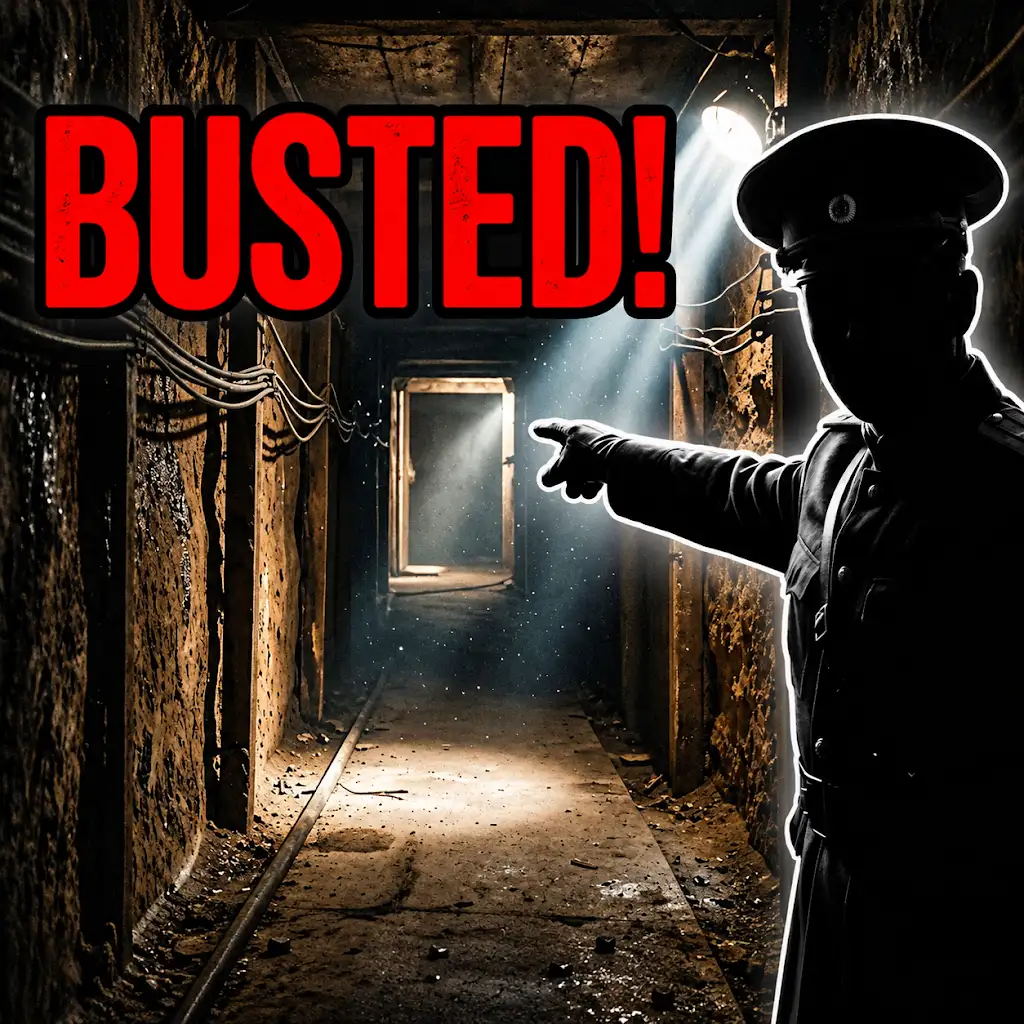
Operation Gold: The Day the Soviets Busted the CIA’s Secret Tunnel
FAQs
What was the Berlin tunnel 1956?
The Berlin tunnel 1956 was a secret tunnel built by the CIA and the British intelligence agency MI6 to tap into communication lines in East Berlin during the Cold War.
Where was the Berlin tunnel 1956 located?
The tunnel was located underneath the Soviet sector of Berlin, connecting West Berlin to the Soviet-occupied zone in East Berlin.
How long did it take to build the Berlin tunnel 1956?
The construction of the Berlin tunnel 1956 took approximately 11 months, from May 1955 to April 1956.
What was the purpose of the Berlin tunnel 1956?
The main purpose of the tunnel was to intercept and gather intelligence on Soviet and East German communications, including phone calls and telex messages.
Was the Berlin tunnel 1956 successful?
Although the tunnel was discovered by the Soviets shortly after it became operational, it did provide valuable intelligence to the Western allies before its closure.