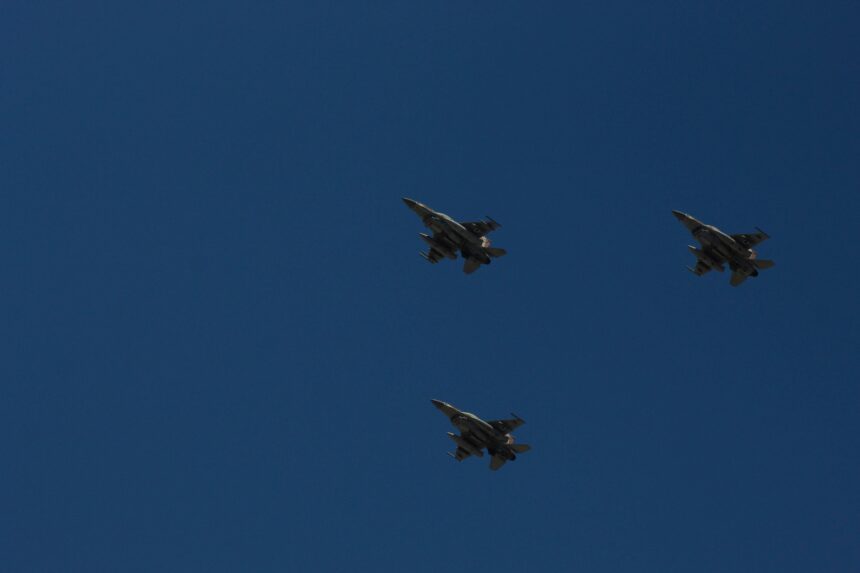
The narrative of Israel’s military triumphs is often marked by its ability to swiftly establish and maintain air superiority. This dominance, far from being accidental, is the product of a deliberate and consistently evolving set of strategic doctrines, technological adoption, and operational tactics. Understanding how Israel achieved and sustains this critical advantage requires a deep dive into the foundational principles that have guided its air force and defense establishment for decades. It’s a story of foresight, adaptation, and a relentless pursuit of technological and qualitative edges.
The Genesis of Air Power Doctrine: Preemptive Strikes and Decisive Engagement
From its inception, the Israeli Air Force (IAF) recognized the existential imperative of neutralizing immediate threats before they could materialize into catastrophic attacks. This understanding shaped a doctrine centered on preemptive action, leveraging air power as the primary instrument for achieving strategic objectives and dictating the terms of engagement. The emphasis was not on attrition warfare, but on swift, decisive strikes designed to cripple enemy capabilities and morale.
The Six-Day War: A Defining Moment for Preemption
The Six-Day War of 1967 stands as the most potent illustration of Israel’s preemptive doctrine. The IAF, through a meticulously planned and executed surprise attack, decimated the air forces of Egypt, Syria, and Jordan on the ground within hours of the conflict’s commencement. This audacious operation, codenamed “Focus,” targeted airfields across the region, destroying hundreds of enemy aircraft before they could even take off. This act of strategic air power projection not only secured immediate air superiority but also fundamentally altered the course of the war, paving the way for overwhelming Israeli ground victories. The success of Operation Focus cemented the belief within the Israeli military establishment that air power, wielded decisively and preemptively, could neutralize even numerically superior adversaries. This doctrine became a cornerstone of Israeli military thinking, influencing planning and procurement for decades to come. It was not merely about having planes, but about how and when to use them with maximum impact.
The Yom Kippur War: Adapting to Evolving Threats
While the Six-Day War showcased the success of preemption, the Yom Kippur War of 1973 presented new challenges. The combined arms approach of Egypt and Syria, which included sophisticated Soviet-made air defense systems like the SA-6 Gainful, demonstrated that air superiority could not be taken for granted. The IAF initially suffered significant losses during its attempts to penetrate these dense SAM (Surface-to-Air Missile) belts. This experience forced a critical reassessment of existing tactics and doctrines. Instead of solely relying on brute force and speed, the IAF began to develop and refine tactics for suppressing and destroying enemy air defenses, a capability that would become paramount in future conflicts. The lessons learned were harsh but invaluable, leading to a renewed focus on electronic warfare, SEAD (Suppression of Enemy Air Defenses) operations, and the development of specialized aircraft and munitions. The war underscored that while preemption was vital, ongoing adaptation and technological superiority were equally critical for maintaining air dominance.
In the ongoing analysis of military strategies, an insightful article on how Israel gained air superiority can be found at this link: In The War Room. This piece delves into the technological advancements and tactical innovations that have allowed Israel to maintain a significant advantage in aerial combat, highlighting key historical events and contemporary developments in their air force capabilities.
Technological Superiority and Innovation: The Pursuit of the Qualitative Edge

Israel’s strategic location, surrounded by often hostile neighbors, necessitated a constant pursuit of technological superiority. Recognizing that it could not match the sheer numbers of some potential adversaries, Israel prioritized acquiring and developing cutting-edge military hardware, with a particular emphasis on its air force. This commitment to innovation has been a defining characteristic of the IAF, allowing it to punch far above its weight.
The F-15 Eagle and F-16 Fighting Falcon: Game-Changing Platforms
The acquisition of advanced American fighter jets, most notably the McDonnell Douglas F-15 Eagle and the General Dynamics F-16 Fighting Falcon, marked a significant leap in the IAF’s capabilities. The F-15, with its superior speed, range, and missile capabilities, provided Israel with an unmatched air-to-air combat platform. The F-16, a more versatile multirole fighter, offered exceptional agility and firepower, proving adept at both air-to-air and air-to-ground missions. These aircraft, when integrated with Israeli electronic warfare systems and advanced targeting pods, provided pilots with a decisive advantage over their Soviet-equipped counterparts. The introduction of these platforms was not merely an upgrade; it represented a fundamental shift in the IAF’s ability to project power and achieve air dominance. The focus was always on obtaining aircraft that were not just technologically advanced but also adaptable to the specific threats and operational environments faced by Israel.
Indigenous Development: The Lavi Program and Beyond
Beyond the acquisition of foreign technology, Israel has also invested heavily in indigenous defense development. The IAI Lavi fighter jet program, although eventually canceled due to cost and political considerations, demonstrated Israel’s ambition and capability to design and build its own advanced combat aircraft. While the Lavi itself did not enter widespread service, the technological advancements and lessons learned from its development significantly influenced subsequent Israeli aerospace projects, including upgrades to existing platforms and the development of unmanned aerial vehicles (UAVs). The emphasis on indigenous development provides Israel with greater flexibility, control over its supply chain, and the ability to tailor systems to its unique requirements. This self-reliance has been a crucial factor in maintaining its technological edge over time.
Advanced Electronic Warfare and Intelligence: Seeing and Disrupting the Enemy
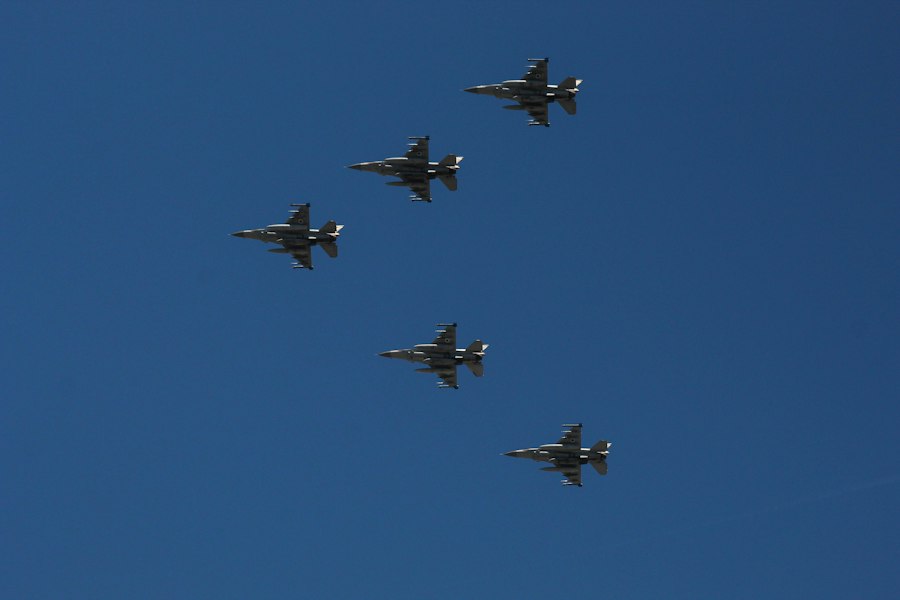
In the modern era, air superiority is not solely about kinetic capabilities; it is also profoundly influenced by the ability to gather intelligence, jam enemy communications, and disrupt their sensor networks. Israel has consistently invested in sophisticated electronic warfare (EW) and intelligence-gathering capabilities, which have proven to be as crucial as its fighter jets in securing and maintaining air dominance.
The Importance of SIGINT and Electronic Warfare
The IAF’s EW capabilities are designed to achieve several critical objectives. Firstly, they aim to detect and track enemy radar and missile systems, providing vital warning and allowing for evasive maneuvers or targeted strikes. Secondly, they are used to jam enemy radar, communications, and guidance systems, creating confusion and disrupting their ability to effectively engage Israeli aircraft. Thirdly, EW systems are employed to deceive enemy missile systems, causing them to miss their targets. This multifaceted approach to electronic warfare allows Israeli aircraft to operate with greater impunity in contested airspace, minimizing their vulnerability to ground-based air defenses and enemy fighter aircraft. The proactive use of SIGINT (Signals Intelligence) further enhances these capabilities by providing real-time information on enemy dispositions and intentions, allowing for even more precise and effective EW operations.
Integrating Intelligence with Air Operations
The seamless integration of intelligence, surveillance, and reconnaissance (ISR) with air operations is another hallmark of the IAF’s success. Advanced sensor systems on aircraft, UAVs, and ground platforms provide a constant flow of information to command and control centers. This data is analyzed in real-time, allowing for rapid threat assessment, target identification, and the reallocation of air assets as needed. The ability to have a comprehensive understanding of the battlefield, both in the air and on the ground, is crucial for making informed decisions and executing successful missions. This intelligence-driven approach ensures that air power is applied precisely where and when it is most effective, maximizing its impact and minimizing collateral damage.
Air Defense Suppression and Offensive Counter-Air: Neutralizing the Threat
A critical component of achieving and maintaining air superiority is the ability to neutralize the enemy’s air defense network. This involves both direct attacks on air defense assets and broader offensive operations aimed at degrading enemy air force capabilities. Israel has developed specialized tactics and acquired specialized weaponry to excel in these demanding missions.
SEAD Operations: Clearing the Path for Air Dominance
SEAD (Suppression of Enemy Air Defenses) operations are a vital part of any air superiority campaign. For Israel, given the proliferation of sophisticated SAM systems in its neighborhood, these operations are paramount. The IAF employs a range of tactics and platforms for SEAD, including the use of specialized anti-radiation missiles that home in on enemy radar emissions, electronic jamming to disrupt radar signals, and direct kinetic attacks on SAM sites and command posts. Often, these operations are conducted by dedicated SEAD aircraft or by fighter jets equipped with specialized payloads. The objective is to systematically degrade the enemy’s ability to detect, track, and engage Israeli aircraft, creating safe corridors for other strike packages and allowing for unhindered air operations over enemy territory.
Offensive Counter-Air: Striking at the Root
Beyond SEAD, Offensive Counter-Air (OCA) operations are designed to strike at the heart of the enemy’s air power. This can involve attacking enemy airfields, command and control facilities, and aircraft on the ground. The goal of OCA is to prevent the enemy from effectively launching their own air operations and to reduce their ability to challenge Israeli air dominance. The preemptive strikes of the Six-Day War are the quintessential example of OCA, but the principle remains relevant in modern conflicts. By degrading the enemy’s air force infrastructure and personnel, Israel seeks to ensure that its own forces can operate with relative freedom and impunity.
In recent years, Israel has strategically enhanced its air superiority through a combination of advanced technology and tactical innovations. This shift has been crucial in maintaining its defense capabilities in a volatile region. For a deeper understanding of the factors contributing to Israel’s air advantage, you can explore a related article that discusses the evolution of its military strategies and technological advancements. Check it out here for more insights.
Training, Readiness, and Adaptability: The Human Element
| Factor | Description | Impact on Air Advantage |
|---|---|---|
| Advanced Aircraft Acquisition | Procurement of superior fighter jets like the Mirage III and later F-4 Phantom II and F-15 Eagles. | Provided technological edge and superior combat capabilities. |
| Pilot Training | Rigorous and continuous training programs emphasizing tactics, simulation, and real combat scenarios. | Produced highly skilled pilots capable of outperforming adversaries. |
| Intelligence and Reconnaissance | Effective use of intelligence gathering, including aerial reconnaissance and signal interception. | Enabled preemptive strikes and informed tactical decisions. |
| Preemptive Strikes | Operations like Operation Focus in 1967 targeting enemy airfields at the start of conflict. | Neutralized enemy air forces on the ground, securing air superiority early. |
| Air Defense Systems | Deployment of radar and surface-to-air missile systems to protect airspace. | Reduced vulnerability to enemy air attacks and maintained control of airspace. |
| Technological Innovation | Development and integration of electronic warfare, avionics, and missile technology. | Enhanced combat effectiveness and survivability of aircraft. |
| Strategic Alliances | Support and military aid from allies providing equipment and intelligence. | Strengthened air force capabilities and operational readiness. |
While technology and strategy are crucial, the human element – the pilots, ground crews, and commanders – remains the most vital component of any successful air force. The IAF places an immense emphasis on rigorous training, constant readiness, and a culture of continuous adaptation to ensure its personnel are prepared for any contingency.
Elite Pilot Training and Simulation
Israeli fighter pilots are renowned for their exceptional skill and combat experience. The IAF invests heavily in advanced pilot training programs that emphasize realistic combat scenarios, complex aerial maneuvers, and the effective use of advanced avionics and weapon systems. The use of sophisticated simulators allows pilots to practice in a safe environment against a wide range of threats, honing their decision-making skills and tactical proficiency. This emphasis on high-quality training ensures that pilots are not only technically proficient but also possess the mental fortitude and tactical acumen required for high-stakes aerial combat.
Maintaining Combat Readiness and Flexibility
The IAF maintains a state of high operational readiness, with aircraft and personnel constantly prepared for immediate deployment. This readiness is crucial for responding effectively to emerging threats and for executing surprise operations. Furthermore, the IAF fosters a culture of adaptability and continuous improvement. Lessons learned from real-world operations, exercises, and analyses of potential adversaries are incorporated into training, doctrine, and equipment procurement. This ongoing process of adaptation ensures that the IAF remains at the forefront of air power, capable of meeting the evolving challenges of the modern battlefield and maintaining its hard-won air superiority. The ability to quickly adapt to new technologies, enemy tactics, and geopolitical shifts is as important as the initial acquisition of advanced capabilities.

A 3-Year Drought Hit the Hittite Empire. Did It Cause the Collapse?
FAQs
1. How did Israel gain air advantage in the Middle East?
Israel gained air advantage in the Middle East through a combination of strategic planning, advanced technology, and skilled pilots. They invested heavily in their air force, acquiring modern aircraft and developing innovative tactics.
2. What role did the Six-Day War play in Israel’s air superiority?
The Six-Day War in 1967 was a turning point for Israel’s air superiority. During this conflict, Israel launched a preemptive strike on Egyptian airfields, destroying a significant portion of the Egyptian Air Force. This decisive move helped Israel establish air dominance in the region.
3. How has Israel maintained its air advantage over the years?
Israel has maintained its air advantage through continuous investment in research and development, as well as close cooperation with international partners. They have also prioritized training and simulation exercises to ensure their pilots are always prepared for any scenario.
4. What role do technological advancements play in Israel’s air superiority?
Technological advancements have played a crucial role in Israel’s air superiority. Israel has developed cutting-edge aircraft, drones, and missile defense systems that give them a significant edge over their adversaries. They continue to innovate and adapt to stay ahead in the ever-evolving field of aerial warfare.
5. How does Israel’s air advantage impact regional security?
Israel’s air advantage has a significant impact on regional security by acting as a deterrent to potential threats. The country’s strong air force capabilities serve as a crucial defense mechanism, deterring adversaries from engaging in hostile actions. This air superiority also allows Israel to swiftly respond to any security challenges that may arise in the region.