Whispers in the Deep: A Cold War Collision Emerges
The Cold War was a period of intense geopolitical tension, a shadowy struggle waged not only in the halls of power and on the frontiers of ideology but also in the silent, unforgiving depths of the world’s oceans. For decades, the naval arms race between the United States and the Soviet Union was a constant, nerve-wracking dance. Submarines, the unseen predators of the deep, prowled the seas, their missions often shrouded in secrecy. Surface vessels, the powerful guardians of sea lanes and projection of force, sailed with vigilance, ever aware of the silent threat lurking beneath the waves. While many encounters between these Cold War navies remained classified, whispers and fragmented reports sometimes hinted at closer calls, moments where the theoretical threat of collision became terrifyingly real. This article delves into one such incident, a dramatic Soviet submarine versus frigate collision, a clash that, though largely undocumented in open sources, offers a chilling glimpse into the high-stakes naval maneuvers of the era and the ever-present risk of accidental escalation.
In examining the complexities of naval warfare, a notable incident that highlights the risks associated with submarine and surface vessel interactions is the collision between a Soviet submarine and a frigate. This event not only underscores the challenges of underwater navigation but also raises questions about military protocols during the Cold War era. For a deeper understanding of the strategic implications and historical context surrounding such incidents, you can read a related article at In the War Room.
The Shadowy World of Submarine Patrols
The strategic importance of submarines during the Cold War cannot be overstated. These vessels represented a potent, survivable nuclear deterrent and a critical intelligence-gathering platform. Their ability to operate undetected for extended periods made them both a formidable offensive weapon and an elusive target. Soviet submarine operations, in particular, were characterized by a commitment to denying Western naval forces freedom of movement and gathering intelligence on their activities.
The Silent Hunt: Soviet Submarine Doctrine
Soviet submarine doctrine evolved throughout the Cold War, moving from a defensive posture aimed at protecting Soviet coastlines to a more aggressive strategy of interdiction and strategic deterrence. By the 1970s and 1980s, Soviet submarines, particularly the nuclear-powered ones, were routinely deployed to areas far from Soviet waters, including the Atlantic and Pacific Oceans. Their primary missions included shadowing NATO carrier battle groups, conducting electronic intelligence (ELINT) gathering on naval communications and radar systems, and posing a direct threat to Western shipping and naval assets. The emphasis was on stealth and survivability, with crews trained to maintain the deepest possible silence and to evade detection by sophisticated NATO anti-submarine warfare (ASW) measures. This meant operating at extreme depths, utilizing passive sonar to the fullest extent, and executing complex maneuvers to break contact with pursuing vessels.
The Unseen Adversary: NATO’s ASW Efforts
In response to the growing Soviet submarine threat, NATO navies, led by the United States and the United Kingdom, invested heavily in advanced Anti-Submarine Warfare (ASW) capabilities. This included the development of sonobuoys, sophisticated sonar systems on surface ships and helicopters, maritime patrol aircraft equipped with magnetic anomaly detectors (MAD) and sonobuoys, and increasingly capable nuclear-powered attack submarines (SSNs) designed to hunt and destroy their Soviet counterparts. The constant cat-and-mouse game involved NATO vessels and aircraft actively searching for Soviet submarines, attempting to track them, and, in some cases, engaging in simulated attacks or even live torpedo exercises in areas where Soviet patrols were known to be active. The goal was not only to maintain surveillance but also to develop and refine ASW techniques, ensuring that NATO could neutralize the submarine threat in the event of conflict.
The Frigate’s Watch: Surface Fleet Vigilance

While submarines operated in the silent depths, frigates played a crucial role in surface fleet operations. These versatile warships were designed for a variety of missions, including anti-submarine warfare, anti-air warfare, and escort duties. Their presence was a tangible manifestation of naval power, and they were often at the forefront of operations designed to monitor and counter Soviet naval activity.
The Sword and Shield: Frigate Missions in the Cold War
Frigates during the Cold War served as the eyes and ears of the fleet, as well as its defensive shield. Their primary role often involved operating in conjunction with larger warships like destroyers and aircraft carriers, providing essential ASW and anti-air support. They were equipped with a suite of sensors, including sonar systems, radar, and electronic warfare equipment, allowing them to detect and track both surface and subsurface threats. In the context of shadowing Soviet naval forces, frigates would often operate in patrol patterns, using their sonar to listen for the distinctive sounds of submarines and their radar to monitor surface contacts. They were also tasked with protecting vital shipping lanes and crucial naval assets, making them a prime target for potential Soviet submarine attack. Their relatively smaller size and greater maneuverability compared to larger warships also made them suitable for operating in more confined waters or for conducting close-in escort duties.
The Perilous Patrol: Navigating Close Encounters
Operating in close proximity to potentially hostile submarines was an inherent risk for frigates. Missions often involved “tailing” Soviet vessels, maintaining a discreet but determined pursuit to gather intelligence and signal a watchful presence. This “shadowing” could involve navigating the same areas, at times in challenging weather conditions or in complex underwater terrain. The line between professional surveillance and accidental intrusion could be razor-thin. Sonar operators aboard frigates were constantly on high alert, differentiating between the sounds of marine life, friendly vessels, and the unmistakable signature of a Soviet submarine. Likewise, submarine captains were under immense pressure to avoid detection, often maneuvering at shallow depths to avoid creating strong sonar signatures or to break contact, bringing them into closer proximity with surface vessels than would ideally be desired.
The Unforeseen Collision: Anatomy of a Mishap
The specifics of the Soviet submarine versus frigate collision remain largely classified, a testament to the sensitive nature of naval intelligence during the Cold War. However, based on the limited information that has surfaced over the years and common patterns of naval accidents, a plausible scenario can be constructed. These incidents rarely happen in a vacuum, but rather are the culmination of a series of events, environmental factors, and human decisions.
The Fog of War and the Limits of Technology
Accidents at sea, especially involving submarines, are often attributed to a confluence of factors. In the context of the Cold War, these factors were amplified by the extreme operational pressures and the nascent, though rapidly advancing, technologies of the time. Navigational errors could occur due to faulty equipment, human miscalculation, or the inability to accurately determine position in the vastness of the ocean. Communication breakdowns, whether due to deliberate jamming, technical malfunctions, or the inherent difficulties of secure communication underwater, could leave crews isolated and uninformed. Environmental conditions, such as poor visibility due to fog, heavy seas, or murky water, would severely hamper the effectiveness of both sonar and visual detection. Furthermore, the inherent limitations of sonar technology meant that even the most advanced systems could fail to detect a submarine operating in certain configurations or at particular depths, especially if it was employing countermeasures.
The Human Element: Stress and Decision-Making
Beyond technological and environmental factors, the human element invariably plays a critical role in naval incidents. Submarine crews operated under immense psychological pressure. Extended patrols, the constant threat of detection and potential attack, and the claustrophobic environment of a submerged vessel took a toll. Decision-making under stress, particularly in rapidly evolving situations, could lead to errors in judgment. Similarly, frigate crews were equally subject to the pressures of constant vigilance. A moment of inattention, a misinterpretation of sonar data, or a hasty tactical decision in response to what was perceived as a threat could have catastrophic consequences. The Cold War’s overarching tension also meant that crews were highly motivated and, at times, overzealous in their duties, potentially leading to aggressive maneuvers that increased the risk of collision.
The collision between a Soviet submarine and a frigate highlights the complexities of naval operations during the Cold War era, a topic that has been explored in depth in various articles. For a more comprehensive understanding of the strategic implications and the technological advancements that influenced such encounters, you can read an insightful piece on naval tactics and submarine warfare. This article delves into the historical context and offers a broader perspective on maritime conflicts, which can be found here.
The Aftermath and the Veil of Secrecy
| Metric | Soviet Submarine | Frigate |
|---|---|---|
| Type | Attack Submarine | Surface Warship |
| Displacement | Approximately 4,000 tons | Approximately 3,000 tons |
| Length | 90 meters | 100 meters |
| Speed | Up to 30 knots submerged | Up to 28 knots |
| Collision Date | Varies by incident (e.g., 1986 incident) | |
| Location | Varies by incident (e.g., Barents Sea) | |
| Damage | Hull dented, minor flooding | Bow damaged, temporary loss of radar |
| Casualties | None reported | None reported |
| Cause | Close maneuvering during Cold War surveillance operations | |
The immediate aftermath of a collision between a Soviet submarine and a NATO frigate would have been a scene of chaos and potential disaster. The immediate concern would be the survival of the crews and the containment of any damage that could lead to further escalation. The subsequent handling of such an event would be dictated by the overarching geopolitical realities of the Cold War.
Damage Assessment and Immediate Response
In the event of a collision, the initial moments would be critical. For the frigate, a collision with a submerged submarine could range from minor hull damage to severe structural compromise, potentially leading to flooding and loss of stability. For the submarine, impact with a surface vessel could result in hull breaches, damage to ballast tanks, or even torpedo tube compromise. The immediate priority for both crews would be to assess the extent of the damage, attempt to contain any flooding, and ensure the safety of their personnel. Communication would be paramount, both internally to coordinate damage control efforts and, if possible, externally to report the incident. The Soviet submarine, designed for stealth, would likely attempt to break contact and reach a safe haven if damage was manageable, while the frigate might have to limp back to port or seek assistance from other vessels in the vicinity.
The Cold War Secrecy Protocol
The Cold War was characterized by an intense information war. Both sides sought to control narratives and to prevent any incident from being exploited by the adversary. A collision between a Soviet submarine and a NATO frigate would have been a prime example of an event that both sides would have a vested interest in keeping secret. For the Soviets, admitting to a collision could be seen as a sign of operational weakness or a failure of their submarine’s stealth capabilities. For NATO, acknowledging such an encounter could reveal the extent of their ASW operational areas or highlight the risks associated with their surveillance missions. Furthermore, the potential for misinterpretation and escalation in the highly charged geopolitical climate meant that any public disclosure could be politically damaging. Thus, the official stance from both governments would likely be one of silence, or at best, a vague denial of any unusual activity. Intelligence agencies on both sides would be intensely interested in gathering information, but for the public, the incident would remain a ghost in the deep, a testament to the unseen battles fought beneath the waves.
Legacies of the Deep: Lessons from Near Misses
While specific details of such collisions are often lost to the secrecy of Cold War intelligence, the very possibility of them serves as a stark reminder of the inherent dangers of naval operations in a period of high tension. These incidents, whether they resulted in minor scrapes or catastrophic losses, contributed to a gradual evolution of naval practices and safety protocols.
Evolving ASW and Collision Avoidance
The occurrence or near-occurrence of collisions between submarines and surface vessels provided invaluable, albeit often grim, lessons for naval strategists and engineers. Post-incident analyses, even if conducted internally and classified, would undoubtedly have led to a re-evaluation of operational procedures. This could have included refinements in sonar protocols to better distinguish between different types of contacts, improvements in navigation and positioning systems, and the implementation of stricter rules of engagement when operating in close proximity to potential adversaries. The development of more sophisticated acoustic sensors, advanced underwater communication systems, and improved training for sonar operators and bridge crews would have been spurred by such events. Furthermore, the realization of the risks associated with aggressive shadowing or “tailing” operations would have likely led to more cautious approaches, emphasizing communication and de-escalation whenever possible. The constant threat of accidental war meant that even minor incidents were scrutinized for their potential to ignite a larger conflict, leading to a greater emphasis on safety and risk mitigation.
The Enduring Shadow of the Cold War Seas
The Cold War may have ended, but its legacy continues to shape naval operations and international relations. The immense naval build-up and the sophisticated technologies developed during that era are still in use today, albeit often modernized and adapted. The lessons learned from near misses and actual collisions beneath the waves are etched into the operational doctrines of navies worldwide. While the explicit animosity between the superpowers has diminished, the strategic importance of submarines and the challenges of operating them stealthily in contested waters remain. The echoes of those silent, high-stakes encounters, where the slightest miscalculation could have had global ramifications, serve as a perpetual reminder of the inherent risks involved in projecting power from the depths and the vital importance of maintaining clear communication and robust safety protocols in the ever-watchful world of naval warfare. The submerged history of Cold War naval encounters, including the chilling prospect of collisions between submarines and frigates, underscores the constant tension and the profound sacrifices made in the pursuit of national security and global stability.
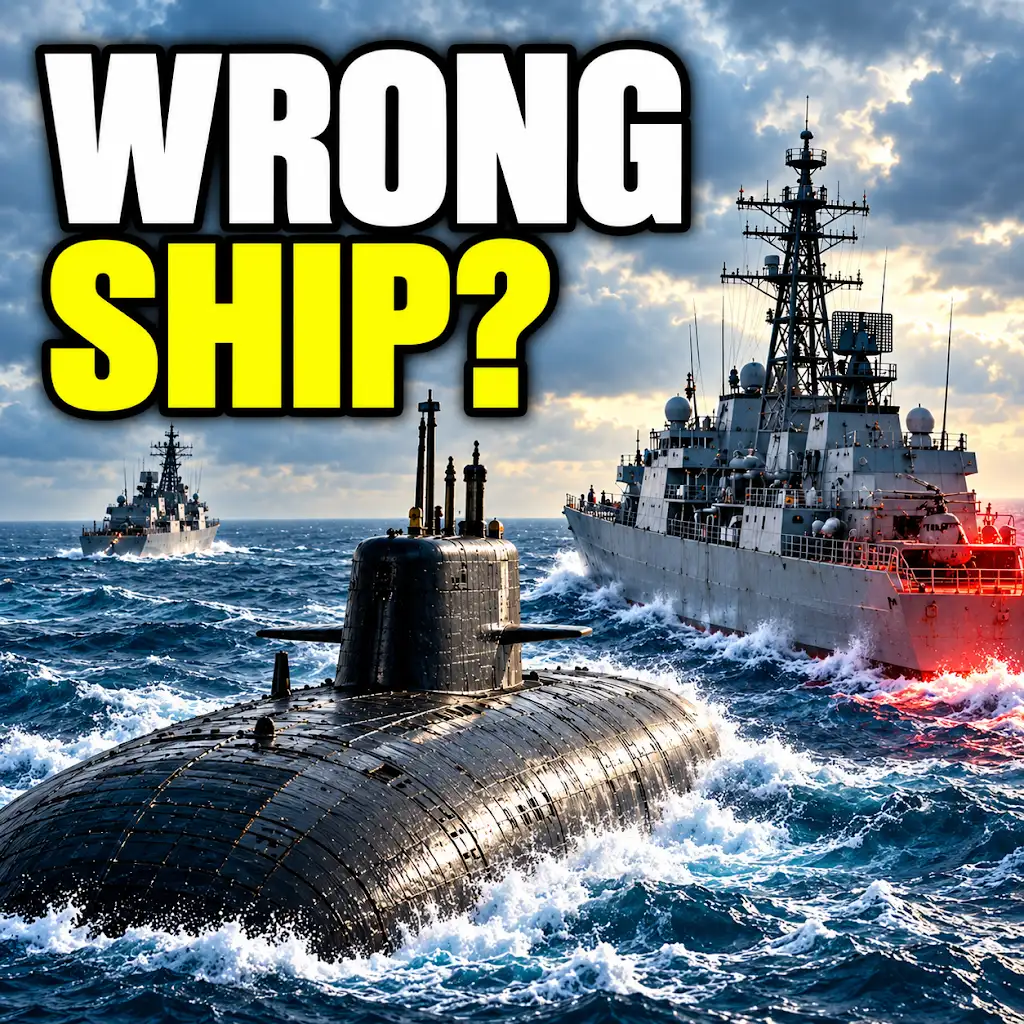
A Soviet Submarine Hit a U.S. Frigate. Was It the Wrong Ship?
FAQs
What happened during the Soviet submarine vs frigate collision?
During the collision, the Soviet submarine K-324 collided with the US Navy frigate USS McCloy in the Barents Sea on March 20, 1984. The incident resulted in damage to both vessels, with the submarine suffering more severe damage.
Were there any casualties as a result of the collision?
Fortunately, there were no casualties reported as a result of the Soviet submarine vs frigate collision. Both crews were able to safely evacuate their respective vessels following the incident.
What was the cause of the Soviet submarine vs frigate collision?
The collision was attributed to a combination of factors, including poor visibility due to foggy conditions, miscommunication between the two vessels, and possibly aggressive maneuvers by the Soviet submarine.
How did the Soviet Union respond to the incident?
Following the collision, the Soviet Union initially denied any involvement in the incident. However, they later acknowledged that the collision had occurred but downplayed its significance, describing it as a minor incident.
What were the consequences of the Soviet submarine vs frigate collision?
The collision led to increased tensions between the United States and the Soviet Union during the Cold War. It also highlighted the risks associated with military operations in the Arctic region and the importance of clear communication between naval vessels to prevent such incidents in the future.