The Silent Sentinels: A Journey Through US Navy Towed Array Sonar
The vast, mysterious depths of the ocean have always presented a formidable challenge to humanity’s ability to observe and understand. For naval powers, particularly during periods of heightened geopolitical tension, the ability to detect and track submerged threats has been paramount. Central to this capability, especially for the United States Navy, has been the development and evolution of towed array sonar systems. These sophisticated arrays of acoustic sensors, trailed behind a vessel, have become the silent sentinels of the underwater domain, providing crucial intelligence and ensuring strategic advantage. This article will explore the historical trajectory of US Navy towed array sonar, from its nascent beginnings to its highly advanced modern iterations, examining the technological leaps, operational imperatives, and enduring significance of this vital underwater warfare technology.
The history of the US Navy’s towed array sonar technology is a fascinating journey that showcases advancements in underwater acoustics and naval warfare. For a deeper understanding of this topic, you can explore a related article that delves into the evolution and significance of towed array systems in modern naval operations. To read more about it, visit this article.
Genesis of the Towed Array: Early Concepts and Cold War Imperatives
The concept of using a long, flexible sensor array towed behind a ship to improve sonar performance wasn’t an overnight invention. It was a gradual evolution driven by the relentless pursuit of better underwater detection capabilities, particularly in the face of increasingly capable submarine threats. The Cold War era, with its intense naval competition and the proliferation of sophisticated Soviet submarines, served as the primary catalyst for the rapid development and deployment of towed array sonar systems by the US Navy.
The Need for Enhanced Subsurface Detection
Before the advent of the towed array, sonar systems were largely hull-mounted. While effective for their time, these systems had inherent limitations. The ship’s own noise, including propeller cavitation and machinery vibrations, could mask faint underwater sounds, significantly reducing detection range and accuracy. Furthermore, the physical limitations of a hull-mounted transducer meant that the array’s size and directivity were constrained. As submarines became quieter and more adept at evading detection, especially at longer ranges and lower frequencies, the need for a sonar system that could overcome these limitations became increasingly urgent. The idea was to move the sonar sensors away from the noisy platform and into a quieter, more optimal position in the water column.
Early Explorations and Theoretical Underpinnings
The theoretical groundwork for towed arrays was laid by acousticians and engineers who understood the principles of wave propagation and sensor arrays. The concept of using multiple, spatially separated acoustic sensors to improve signal-to-noise ratio and achieve directional sensitivity was well-established in physics. Early experiments, often conducted in laboratories or on smaller, specialized vessels, began to explore the practical challenges of deploying and operating long, flexible sensor bundles in the ocean. These early efforts focused on understanding the hydrodynamics of towed bodies, the signal processing requirements for multi-element arrays, and the reliability of underwater cabling. The development of robust, flexible cabling capable of transmitting sensitive acoustic data over significant distances was a critical hurdle.
The Cold War Arms Race and the Rise of the Towed Array
The geopolitical climate of the Cold War provided the impetus and funding for a concentrated effort to develop effective towed array sonar. The perceived threat of Soviet ballistic missile submarines and increasingly stealthy attack submarines demanded a qualitative leap in US anti-submarine warfare (ASW) capabilities. Hull-mounted sonars, even advanced ones, were struggling to keep pace. Towed arrays offered a promising solution because they could be significantly longer than hull-mounted arrays, providing better resolution and the ability to discern faint sounds from specific directions. Moreover, by deploying the array at a distance from the escorting vessel, the detrimental effects of the ship’s own acoustic signature could be substantially mitigated. This led to the prioritization of towed array development for both surface escorts and submarines, recognizing its potential to revolutionize underwater surveillance.
From Passive Prowess to Active Engagement: Core Technologies and Design Evolution
The development of towed array sonar has been a continuous process of refinement, driven by advancements in sensor technology, signal processing, and materials science. Initially, towed arrays were primarily passive systems, designed to “listen” for the sounds produced by submarines. However, as the technology matured, active sonar capabilities were integrated, allowing the systems to emit sound pulses and analyze the echoes.
The Foundation: Passive Acoustics and Hydrophone Arrays
The heart of early towed array sonar systems lay in their passive hydrophone arrays. These arrays consisted of a series of individual hydrophones (underwater microphones) distributed
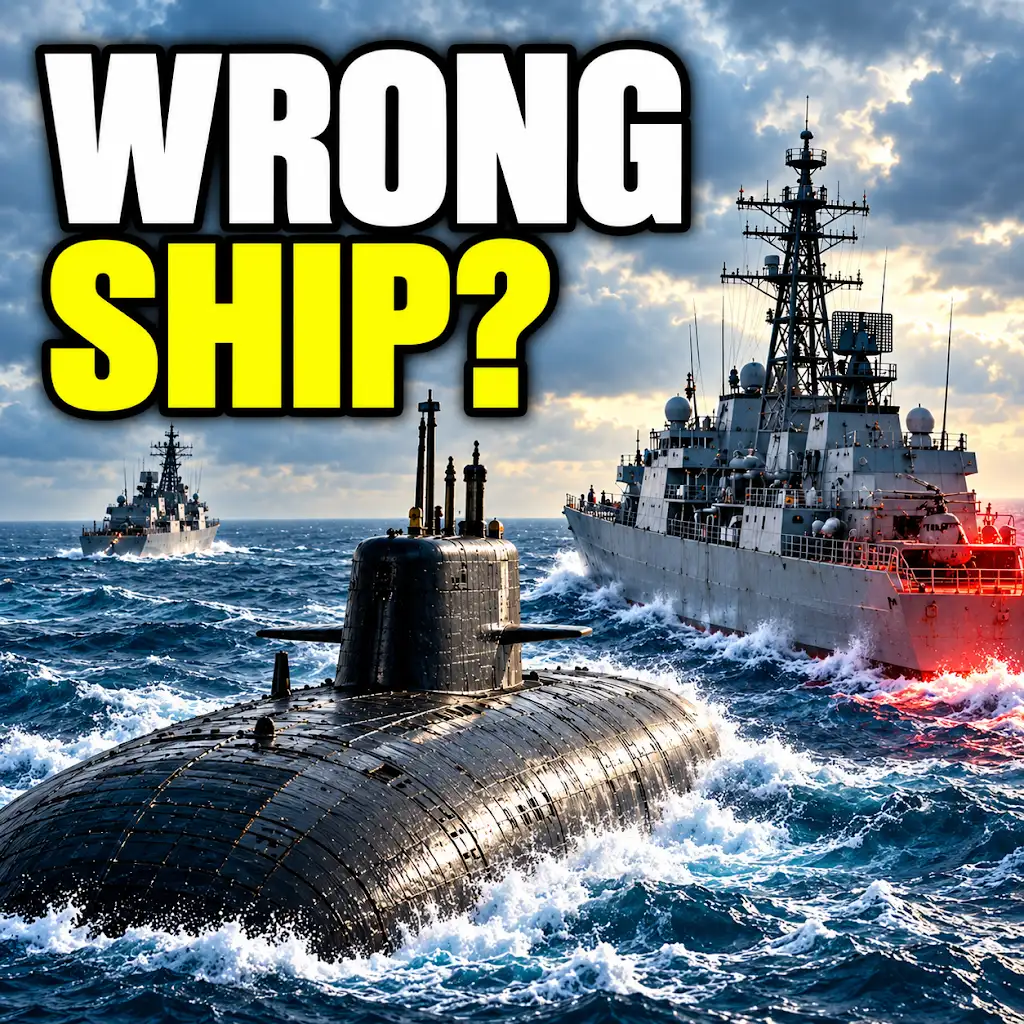
A Soviet Submarine Hit a U.S. Frigate. Was It the Wrong Ship?
FAQs
What is a towed array sonar?
A towed array sonar is a type of sonar system used by the US Navy to detect and track underwater objects, such as submarines. It consists of a long cable, or “tow,” that is towed behind a ship and contains sensors for detecting sound waves in the water.
When was the towed array sonar first used by the US Navy?
The towed array sonar was first used by the US Navy in the 1960s during the Cold War. It was developed to improve the Navy’s ability to detect and track Soviet submarines, which posed a significant threat at the time.
How does a towed array sonar work?
A towed array sonar works by listening for sound waves in the water and using them to create a picture of the underwater environment. The sensors in the towed array can detect the sound waves emitted by submarines or other objects, allowing the Navy to track their movements.
What are the advantages of using a towed array sonar?
Some advantages of using a towed array sonar include its ability to detect submarines at longer ranges compared to other sonar systems, its ability to operate at greater depths, and its ability to reduce the noise interference from the ship’s own machinery.
How has towed array sonar technology evolved over the years?
Over the years, towed array sonar technology has evolved to become more advanced and effective. Modern towed array sonar systems are equipped with digital signal processing capabilities, improved sensors, and better data processing algorithms, making them more reliable and accurate in detecting underwater threats.