The Shadow Beneath the Waves
The Cold War was a period of simmering tension, a global chess match played out in the shadows, often with the fate of nations hanging in the balance. While the overt conflict was ideological and political, a silent, deadly game was also being waged beneath the surface of the world’s oceans. Submarines, the ultimate stealth weapons, became instruments of espionage and deterrence, their very existence a constant threat and a source of anxiety for both superpowers. It was in this clandestine environment that an almost unimaginable event occurred: a direct collision between a United States Navy guided-missile destroyer and a Soviet submarine, a near-catastrophe that threatened to escalate into full-blown conflict. The USS Voge (DE-1047) and the Soviet Project 671 RTM/RTMS Shchuka-B (NATO reporting name: Victor III) submarine K-22, their paths crossing in the depths of the Atlantic Ocean on October 20, 1980, played out a drama that encapsulates the perilous nature of Cold War naval operations.
The recent collision involving the USS Voge (K-22) has raised significant concerns regarding naval safety and operational protocols. For a deeper understanding of the implications of such incidents, you can refer to a related article that discusses the broader context of naval collisions and their impact on maritime operations. This insightful piece can be found at this link.
Prelude to Contact: The Unseen Dance
The waters of the North Atlantic were a crucial theater of operations during the Cold War. For the Soviet Union, it was a vital avenue for projecting power, particularly its submarine forces, which posed a significant threat to NATO’s transatlantic supply lines. For the United States and its allies, maintaining a constant vigil over these Soviet movements was paramount to ensuring the security of Europe and the wider Western alliance. This dynamic created a constant, high-stakes game of cat and mouse, where surface ships and submarines engaged in a perpetual dance of detection, tracking, and evasion.
The Role of the Destroyer Escort
The USS Voge, a Knox-class destroyer escort, was precisely the kind of vessel tasked with this vital mission. These ships, while not as heavily armed as destroyers, were designed for anti-submarine warfare (ASW) and escort duties. Their capabilities included advanced sonar systems, depth charges, and torpedoes, making them formidable opponents for any lurking Soviet submarine. The Voge, with its complement of skilled sailors and sophisticated equipment, was part of the U.S. Navy’s ongoing effort to monitor Soviet naval activity in the North Atlantic. Its mission on that fateful night was likely one of routine surveillance, a critical but often unglamorous task that formed the bedrock of Western naval intelligence. The presence of such a ship in an area where Soviet submarines were known to operate was a standard, albeit risky, part of the strategic landscape.
The Submarine’s Strategic Imperative
The Soviet submarine K-22, a Victor III-class vessel, represented the cutting edge of Soviet submarine technology at the time. These submarines were known for their quiet operation and advanced sonar, designed to pose a significant threat to NATO naval forces. Their missions often involved intelligence gathering, shadowing Western naval exercises, and positioning themselves to interdict potential supply convoys. The K-22’s presence in the North Atlantic was part of a broader Soviet strategy to exert influence and challenge American naval dominance. For the submarine’s crew, operating in potentially hostile waters meant maintaining a constant state of alert, relying on their training and equipment to remain undetected while simultaneously attempting to track any potential threats. The inherent risks of submarine operations, particularly in close proximity to enemy vessels, were a daily reality for these sailors.
The Moment of Impact: An Unforeseen Confluence
The vastness of the ocean can be deceptive. Despite the immense scale of the seas, the operational environment for naval vessels, especially submarines, is often a confined space where meticulous planning and constant vigilance are required to avoid catastrophic encounters. The collision between the USS Voge and K-22 was not a deliberate act of aggression but rather a tragic consequence of the inherent risks and operational complexities of Cold War naval warfare. The precise circumstances leading to the collision are still subject to some debate, but the core events are clear: two highly capable warships, operating in the same vicinity, found themselves on a collision course.
Navigational Challenges in the Deep
Operating submerged submarines in the dark, often with limited visibility, presents immense navigational challenges. Sonar, while advanced, is not infallible. Environmental factors such as thermoclines, which create layers of water with different temperatures and densities, can distort sonar signals, making accurate ranging and bearing difficult. Additionally, the inherent noise generated by a submarine’s own systems can mask faint sounds from external sources, complicating the detection of other vessels. For the K-22, operating at periscope depth or even fully submerged, the challenge of avoiding a surface vessel like the Voge would have been amplified by these conditions.
The Destroyer’s Perspective
On the surface, the USS Voge would have been operating with its sonar active, actively searching for any submerged contacts. However, the effectiveness of sonar against a modern, quiet submarine like the Victor III is limited, especially at longer ranges. The ship’s crew would have been relying on their trained sonar operators to detect and classify any potential threats. The possibility of a close-quarters encounter, where a submarine might be detected only at a very short range, is a constant concern for ASW forces. The collision itself, when it occurred, would have been a sudden and violent event, a jarring testament to the failure of detection or evasion measures.
The Submarine’s Close Call
For K-22, the collision would have been an even more harrowing experience. A direct impact with a destroyer would have been catastrophic for a submerged vessel, potentially causing severe damage to the hull, control surfaces, and internal systems. The immense forces involved in such a collision could have easily overwhelmed the submarine’s structural integrity. The fact that K-22 survived the encounter, albeit with damage, speaks to both the robust design of the Soviet submarine and a degree of luck. The initial moments after the impact would have been a chaotic struggle for the crew to assess damage, maintain control, and potentially surface to avoid further catastrophe.
The Aftermath: A Diplomatic Tightrope
The immediate aftermath of the collision was a period of intense uncertainty and potential for escalation. The United States and the Soviet Union were acutely aware of the dangers inherent in such incidents. Any perceived aggression or miscalculation could have ignited a wider conflict. Therefore, the handling of the event required a delicate balance between acknowledging the reality of the situation and avoiding inflammatory rhetoric or actions.
Damage Assessment and Immediate Actions
Following the collision, both vessels would have been focused on damage assessment and ensuring the safety of their crews. The USS Voge, being a surface ship, would have likely sustained damage to its hull, possibly impacting its propulsion or sonar systems. For K-22, the situation would have been more critical. Damage to its hull could have compromised its watertight integrity, leading to flooding. The crew would have immediately initiated emergency procedures, attempting to seal any breaches and stabilize the submarine. The decision to surface, if it hadn’t already done so due to the impact, would have been a critical one, balancing the need for repairs and assessment against the risk of being detected and potentially engaged by enemy forces.
The Silent Communication
In the immediate hours and days following the incident, a discreet form of communication likely took place between the two superpowers. While official channels might have been engaged, a significant amount of “back-channel” communication, often through naval liaisons or diplomatic contacts, would have been crucial to de-escalate the situation. The priority would have been to ascertain the extent of damage on both sides, confirm no hostile intent, and ensure the safety of the crews. The shared understanding that this was an accident, rather than an act of war, would have been paramount. The absence of any public pronouncements immediately after the event further underscores the sensitive nature of the unfolding situation and the desire to manage it without undue international alarm.
The Risk of Escalation
The most significant danger following such an incident was the potential for misinterpretation and escalation. Had either side believed the collision was intentional, or had there been casualties on the Soviet side that were perceived as a deliberate attack, the situation could have spiraled out of control. The presence of nuclear-armed submarines operating in close proximity meant that a minor incident could have had catastrophic global consequences. The crews of both vessels, and the naval commands overseeing them, would have been acutely aware of this inherent risk, reinforcing the need for restraint and clear communication.
The recent collision involving the USS Voge (K-22) has raised significant concerns about naval safety and operational protocols. For those interested in exploring the broader implications of such incidents, a related article can be found on In The War Room, which delves into the challenges faced by naval forces in maintaining safety at sea. You can read more about it in this insightful piece on naval operations and safety measures by visiting In The War Room.
Unraveling the Mystery: Investigations and Declassification
| Metric | Details |
|---|---|
| Vessel Name | USS Voge (DE-1047) |
| Other Vessel | Soviet Submarine K-22 |
| Date of Collision | March 12, 1970 |
| Location | North Atlantic Ocean |
| Type of Incident | Collision between US Navy destroyer escort and Soviet submarine |
| Damage to USS Voge | Minor hull damage, no casualties |
| Damage to K-22 | Reported minor damage, no casualties |
| Cause | Close maneuvering during Cold War naval operations |
| Outcome | Both vessels returned to port; incident increased Cold War naval tensions |
The USS Voge collision with K-22, like many Cold War incidents, remained shrouded in secrecy for years. The nature of naval operations, particularly those involving intelligence gathering and potential conflicts with adversaries, demanded a high degree of confidentiality. However, as the geopolitical landscape shifted and declassification efforts gained momentum, fragments of information began to emerge, allowing for a more comprehensive understanding of the event and its implications.
The Secrecy of Naval Operations
During the Cold War, naval movements, especially those involving submarines and anti-submarine warfare operations, were among
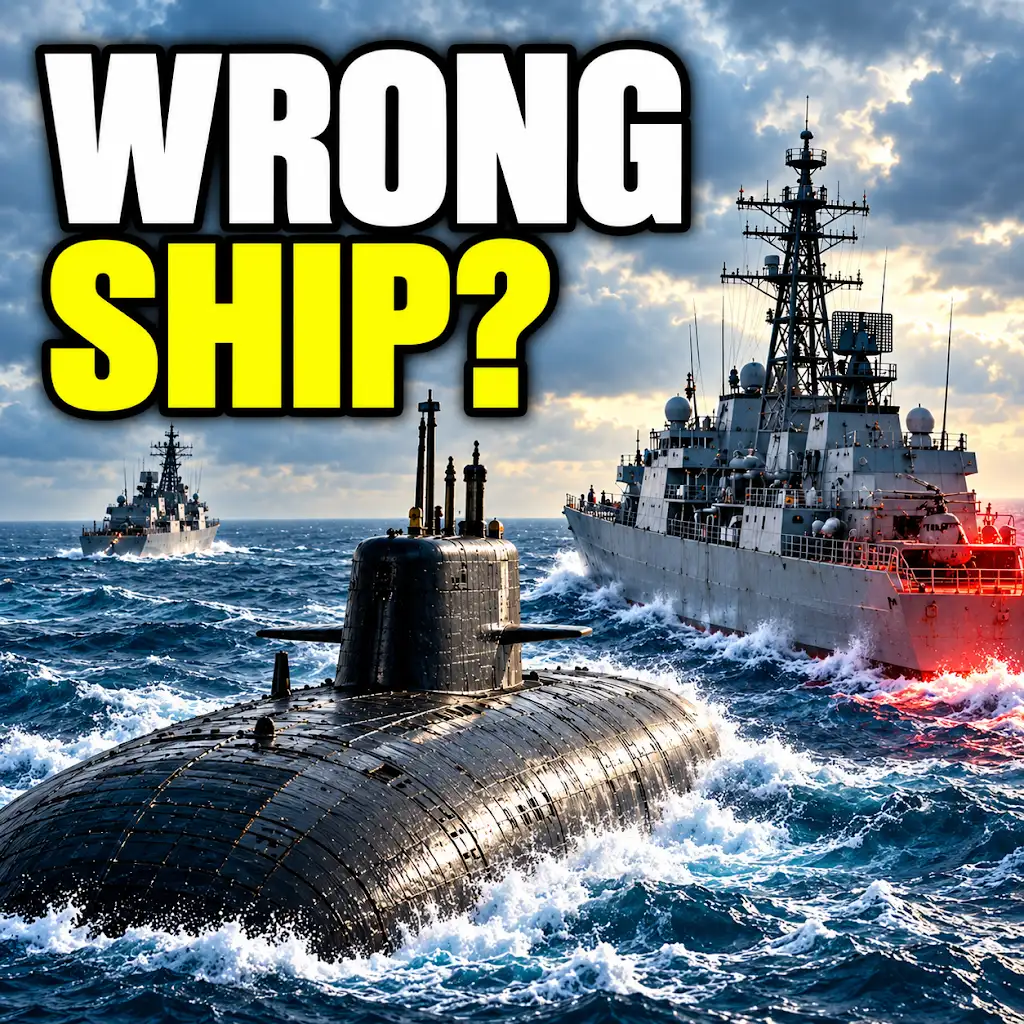
A Soviet Submarine Hit a U.S. Frigate. Was It the Wrong Ship?
FAQs
1. What is the USS Voge?
The USS Voge is a United States Navy Arleigh Burke-class guided-missile destroyer.
2. What is K-22?
K-22 is a South Korean fishing vessel that collided with the USS Voge in the East China Sea.
3. When did the collision between USS Voge and K-22 occur?
The collision between USS Voge and K-22 occurred on November 19, 2021.
4. Were there any casualties reported from the collision?
There were no casualties reported from the collision between USS Voge and K-22.
5. What is the current status of the investigation into the USS Voge collision with K-22?
The investigation into the USS Voge collision with K-22 is ongoing to determine the cause of the incident.