The Cold War, a period of intense geopolitical rivalry between the United States and the Soviet Union, cast a long shadow over global security for decades. Within this tense standoff, the silent, unseen battle beneath the waves played a crucial role. The U.S. Navy dedicated significant resources and ingenuity to developing sophisticated submarine hunting tactics, a perpetual game of cat and mouse with their Soviet counterparts. This endeavor was not merely about defense; it was about ensuring the survival of nuclear deterrents, protecting vital sea lanes, and projecting power in a world teetering on the brink of conflict. The vast, dark expanses of the ocean became a formidable battlefield, demanding innovation, perseverance, and a deep understanding of the adversary’s capabilities and intentions.
The Ever-Present Threat Below
The dawn of the nuclear age ushered in a new era of submarine warfare. Gone were the days when submarines were primarily surface threats that submerged to evade detection. Soviet submarines, particularly the diesel-electric Barents Sea fleets and later the nuclear-powered ballistic missile submarines (SSBNs) and attack submarines (SSNs), posed an existential threat to the United States. These vessels could deliver nuclear payloads with devastating accuracy, and their ability to operate submerged for extended periods made them incredibly difficult to track. The U.S. Navy’s primary objective was to counter this threat, ensuring that Soviet submarines could not achieve strategic surprise or disrupt the free flow of commerce and military assets across the oceans. This necessitated a proactive and multifaceted approach to submarine detection and engagement.
Soviet Submarine Capabilities and Doctrine
Understanding the enemy was paramount. Soviet submarine design and operational doctrine evolved significantly throughout the Cold War. Early diesel-electric submarines were primarily coastal defense weapons, but their range and endurance increased over time. The introduction of nuclear-powered submarines marked a seismic shift. Soviet SSBNs, often referred to as “boomers,” were designed to remain hidden in vast ocean expanses, acting as a survivable second-strike force. Soviet SSNs, on the other hand, were designed to hunt Western naval forces, particularly aircraft carrier strike groups, and to protect their own SSBNs. Their operational doctrine often emphasized stealth, speed, and the ability to operate in challenging environments like the Arctic. The Soviets also invested heavily in acoustic quieting technologies for their submarines, making them increasingly difficult to detect by passive sonar alone. This continuous technological advancement by the Soviets presented a perpetual challenge for U.S. Navy anti-submarine warfare (ASW) forces.
The Imperative of Ballistic Missile Submarine (SSBN) Defense
A cornerstone of U.S. Cold War strategy was the nuclear triad, comprising land-based intercontinental ballistic missiles (ICBMs), strategic bombers, and submarine-launched ballistic missiles (SLBMs). The survivability of the SSBN fleet was critical to ensuring a credible nuclear deterrent. If U.S. SSBNs could not be found and destroyed by the Soviets, then the U.S. could guarantee a retaliatory strike, even after a devastating first strike. Consequently, U.S. ASW efforts were heavily focused on preventing Soviet submarines from locating and targeting American SSBNs, as well as ensuring the security of the U.S. SSBN operating areas. This often meant operating in areas where Soviet SSBNs were believed to be deployed or transiting, a dangerous and demanding undertaking.
During the Cold War, the US Navy’s submarine hunting capabilities were crucial in maintaining maritime security and countering the Soviet threat beneath the waves. An insightful article that delves deeper into this topic is available at In the War Room, where it explores the strategies, technologies, and challenges faced by the Navy in tracking and neutralizing enemy submarines during this tense period in history.
The Pillars of Detection: Sensors and Systems
Detecting a submerged submarine in the vastness of the ocean is an extraordinarily complex challenge. Sound travels well underwater, but it can also be distorted, masked, and attenuated by various environmental factors. The U.S. Navy developed a layered approach to detection, utilizing a diverse array of sophisticated sensors and integrated systems. These technologies, constantly refined and improved, formed the backbone of their anti-submarine warfare capabilities. The development and deployment of these systems were a direct response to the evolving threat posed by Soviet submarine technology.
The Power of Sonar: Active and Passive
Sonar, standing for Sound Navigation and Ranging, was the primary tool in the submarine hunter’s arsenal. Two fundamental types of sonar were employed: passive and active.
Passive Sonar: Listening to the Enemy
Passive sonar systems essentially act as highly sensitive underwater microphones, listening for the sounds emitted by submarines. These sounds can include the whirring of machinery, the cavitation of propellers, the thrum of engines, and even the subtle noises associated with hull friction. The U.S. Navy developed advanced passive sonar arrays, both towed and hull-mounted, on its submarines, surface ships, and patrol aircraft. The analysis of these sounds, known as acoustic signatures, was a highly specialized skill. Technicians and acoustic analysts would painstakingly identify, classify, and track submarines based on their unique acoustic profiles. This required immense training and experience, as distinguishing a submarine’s sound from the cacophony of ocean noise – whales, marine life, ship traffic, and even geological activity – was a formidable task. The continuous refinement of signal processing techniques was essential in extracting valuable intelligence from faint acoustic signals.
Active Sonar: Probing the Depths
Active sonar, in contrast, emits sound pulses, or “pings,” and then listens for the echoes that return after bouncing off objects in the water. While highly effective for pinpointing the location and range of a target, active sonar has a significant drawback: it reveals the sonar platform’s own position to any listening submarine. Therefore, its use was often a tactical decision, employed when passive means had identified a potential contact or when a high degree of certainty was required. U.S. ASW platforms, from destroyers and frigates to P-3 Orion maritime patrol aircraft and submarines, all possessed active sonar capabilities. The effectiveness of active sonar was also influenced by water conditions, such as temperature layers and salinity gradients, which could refract or absorb sound waves, complicating the detection process.
Other Crucial Sensory Inputs
Beyond sonar, a variety of other sensors contributed to the U.S. Navy’s submarine hunting toolkit.
Magnetic Anomaly Detectors (MAD)
Submarines, being large masses of metal, create a detectable disturbance in the Earth’s magnetic field. Magnetic Anomaly Detectors (MAD) were primarily employed by airborne platforms, particularly maritime patrol aircraft. These sensors, typically towed in a “bird” at the end of a long cable, could detect these minute magnetic variations. MAD was most effective when operating at low altitudes and speeds, allowing the aircraft to fly directly over a suspected submarine’s position. It was often used in conjunction with other detection methods, serving as a final confirmation tool or as a means to track a submarine that had managed to evade sonar.
Electronic Support Measures (ESM) and Radar
While submarines are primarily stealth platforms, they do emit various forms of electronic signals, such as radar emissions for navigation or communication signals. Electronic Support Measures (ESM) receivers aboard U.S. naval vessels and aircraft could detect these emissions, providing valuable intelligence about a submarine’s location and activities. Radar, while less effective against submerged submarines, could detect surfacing or snorkeling submarines. U.S. ships and aircraft employed advanced radar systems capable of detecting even small surface contacts, forcing submarines to remain submerged for longer periods.
The Hunt: Tactics and Strategies
Detecting a submarine was only the first step. The
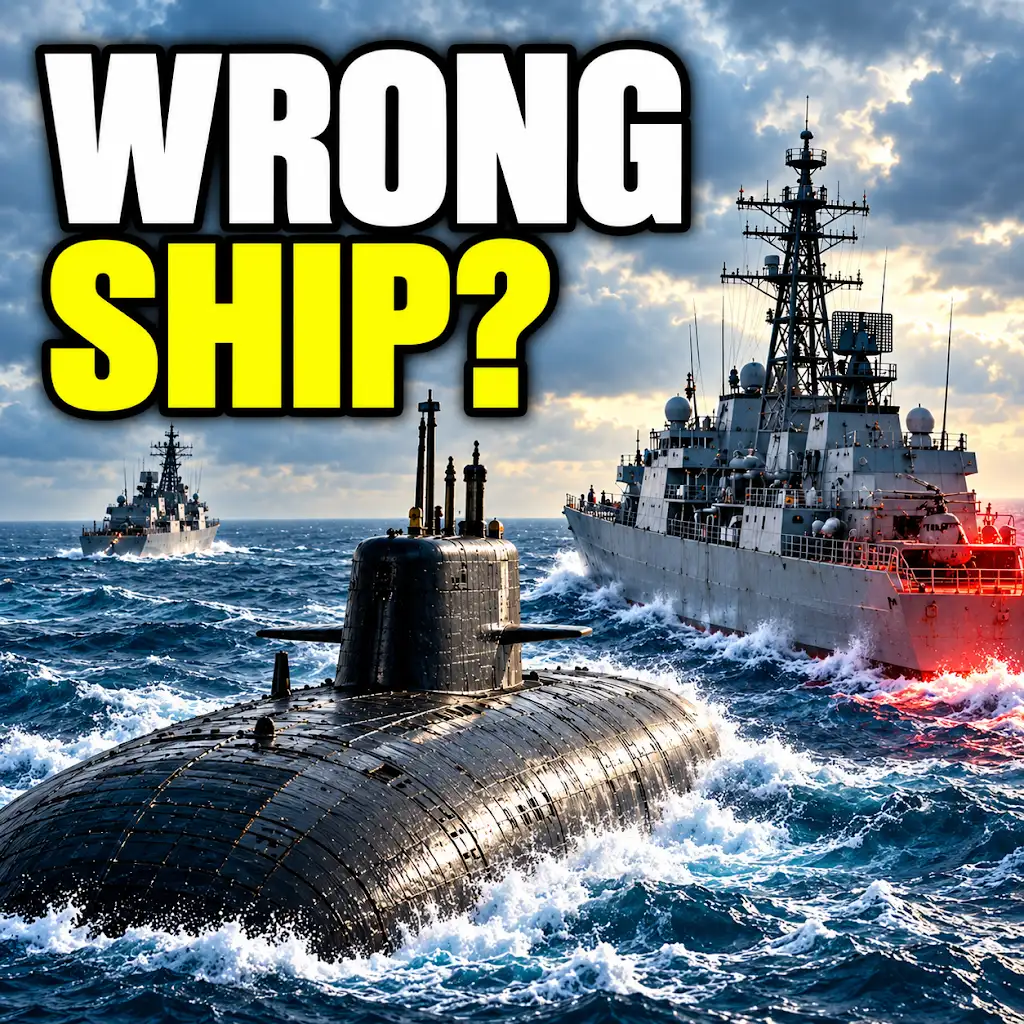
A Soviet Submarine Hit a U.S. Frigate. Was It the Wrong Ship?
FAQs
What was the US Navy’s role in submarine hunting during the Cold War?
During the Cold War, the US Navy played a crucial role in hunting and tracking Soviet submarines to monitor their movements and gather intelligence.
What technology did the US Navy use for submarine hunting during the Cold War?
The US Navy utilized advanced sonar systems, anti-submarine warfare aircraft, surface ships, and submarines equipped with sophisticated detection equipment to hunt for enemy submarines during the Cold War.
How did the US Navy’s submarine hunting tactics evolve over the course of the Cold War?
Over the course of the Cold War, the US Navy’s submarine hunting tactics evolved to include more advanced technology, improved coordination between different branches of the military, and enhanced training for personnel involved in anti-submarine warfare.
What were some of the challenges faced by the US Navy in submarine hunting during the Cold War?
Some of the challenges faced by the US Navy in submarine hunting during the Cold War included the vast expanse of the ocean, the stealthy nature of enemy submarines, and the need to constantly adapt to new tactics and technologies employed by the Soviet Union.
What impact did the US Navy’s submarine hunting efforts have on the outcome of the Cold War?
The US Navy’s submarine hunting efforts played a significant role in monitoring Soviet naval activities, deterring potential aggression, and gathering valuable intelligence, which ultimately contributed to the outcome of the Cold War in favor of the United States and its allies.