The Silent Hunt: US Navy’s Cold War Submarine Tracking Innovations
The Cold War era, a period defined by ideological struggle and the ever-present threat of nuclear annihilation, saw an unprecedented arms race between the United States and the Soviet Union. While the development of advanced bombers and missile technology often captured headlines, a far more subtle yet equally critical battle raged beneath the waves. The US Navy, acutely aware of the Soviet Union’s rapidly expanding submarine force, dedicated immense resources and ingenuity to developing sophisticated methods for tracking these elusive underwater predators. This pursuit of acoustic superiority and technological prowess was a defining element of naval strategy, shaping the operational landscape for decades and pushing the boundaries of sonar and intelligence gathering.
The intricate cat-and-mouse game between the US Navy and Soviet submarines during the Cold War has been a subject of extensive analysis and reporting. For a deeper understanding of the strategies employed by the US Navy in tracking Soviet submarines, you can read the article titled “Under the Surface: The Art of Submarine Tracking” available at In The War Room. This article delves into the technological advancements and intelligence operations that shaped naval warfare during this tense period in history.
Echoes in the Deep: The Evolving Soviet Submarine Threat
The Soviet Union’s submarine program was a cornerstone of its military doctrine during the Cold War. Initially lagging behind the West, Soviet naval architects rapidly closed the gap, producing a diverse range of submarines designed for various missions, from strategic nuclear deterrence to conventional warfare and intelligence gathering. The sheer numbers and the increasing sophistication of these vessels presented a formidable challenge to the US Navy, which was tasked with maintaining the vital sea lanes and deterring Soviet aggression.
The Rise of the Nuclear-Powered Submarine
The advent of nuclear propulsion revolutionized submarine warfare. Unlike their diesel-electric predecessors, nuclear submarines possessed virtually unlimited endurance and speed, allowing them to remain submerged for extended periods and operate at great distances from their home ports. This capability significantly increased their operational flexibility and made them far more difficult to detect. The Soviet Union, in particular, invested heavily in this technology, fielding a formidable fleet of nuclear-powered ballistic missile submarines (SSBNs) and attack submarines (SSNs). These submarines were designed to be stealthy, incorporating advanced hull designs and quieter propulsion systems to minimize their acoustic signature.
Conventional Submarines and Their Role
While nuclear submarines garnered much attention, the Soviet Union also continued to develop and deploy a large number of conventional diesel-electric submarines. These submarines, though limited in endurance and speed compared to their nuclear counterparts, remained a potent threat. They were often deployed in shallower waters, closer to NATO coastlines, and could be used for anti-ship operations, reconnaissance, and even minelaying. Their lower acoustic profile when running on batteries also presented a unique tracking challenge, requiring different detection strategies.
The Quest for Acoustic Superiority: Sonar’s Central Role
Sonar, the science of using sound propagation to navigate, communicate with or detect objects on or under the surface of the water, became the primary tool in the US Navy’s arsenal for tracking Soviet submarines. The development of sonar technology during the Cold War was a continuous, iterative process, driven by the need to overcome the increasing stealth of Soviet submarines and to exploit their acoustic weaknesses.
Passive Sonar: Listening to the Enemy
Passive sonar systems, which detect sound waves emitted by submarines without transmitting any sound themselves, were the bedrock of US tracking efforts. This approach allowed submarines and surface ships to remain undetected while listening for the telltale sounds of enemy vessels. The challenge lay in distinguishing the faint acoustic signatures of submarines from the myriad of other underwater noises, such as marine life, seismic activity, and even the sounds of friendly vessels.
Enhancing Sensitivity and Signal Processing
To combat increasingly quieter Soviet submarines, the US Navy invested heavily in improving the sensitivity of its passive sonar arrays. This involved developing more sophisticated hydrophones, the underwater microphones that capture sound, and improving the overall design of sonar domes and towed arrays. Equally important was the advancement in signal processing techniques. Sophisticated algorithms were developed to filter out noise, enhance weak signals, and identify specific acoustic characteristics of different submarine classes. This allowed operators to not only detect a submarine but also to classify it, estimating its type, speed, and even its likely mission.
The Tactical Advantage of Towed Arrays
A significant breakthrough in passive sonar was the development and widespread deployment of towed sonar arrays. These long cables, studded with hydrophones, were towed behind surface ships or submarines, extending their listening range considerably and allowing them to be positioned advantageously. Towed arrays could also be steered, enabling the tracking of submarines over longer distances and in complex acoustic environments. The ability to deploy these arrays at a safe distance from the noise of the towing vessel provided a crucial tactical advantage.
Active Sonar: Probing the Depths
While passive sonar offered a stealthy approach, active sonar systems, which emit sound pulses and listen for the echoes, were also employed. Active sonar provided a more direct and often more accurate means of detecting and locating submarines, particularly in situations where passive detection was difficult. However, the use of active sonar also revealed the position of the transmitting vessel, making it a less desirable option for submarines seeking to maintain their own stealth.
The Trade-offs of Acoustic Pinging
The effectiveness of active sonar was directly related to the strength and frequency of the emitted sound pulses, as well as the sensitivity of the receiving hydrophones. The US Navy experimented with various frequencies and power levels to optimize detection ranges while minimizing the risk of the signal being detected by the target submarine. The development of more sophisticated echo analysis techniques allowed operators to extract more information from the returning signals, providing crucial data on the target’s range, bearing, and even its general shape.
Countermeasures and Evasive Maneuvers
Soviet submarines were not passive targets. They employed a range of countermeasures and evasive maneuvers to defeat sonar detection. These included deploying decoys that mimicked the acoustic signature of a submarine, employing “quiet running” techniques to minimize noise, and executing complex maneuvers to break sonar contact. The US Navy’s sonar development efforts had to constantly adapt to these countermeasures, leading to a perpetual cat-and-mouse game beneath the waves.
Beyond Sound: Other Tracking and Intelligence Methods
While sonar was the primary means of tracking, the US Navy understood that a multi-faceted approach was necessary for effective submarine detection and intelligence gathering. This involved leveraging other technological advancements and innovative operational strategies to complement acoustic surveillance.
The intricate dance of cat-and-mouse between the US Navy and Soviet submarines during the Cold War has been a subject of extensive analysis, shedding light on the strategies employed by both sides. For a deeper understanding of the tactics used in submarine tracking, you can explore a related article that delves into the technological advancements and intelligence operations that shaped this critical aspect of naval warfare. This insightful piece can be found here, providing a comprehensive overview of the challenges faced by the US Navy in monitoring Soviet underwater activities.
The Role of Airborne Surveillance
Aircraft, particularly maritime patrol aircraft, played a crucial role in the Cold War submarine hunt. Equipped with a suite of sensors, these aircraft provided a broad area surveillance capability that complemented the more focused listening of sonar systems.
Radar and Magnetic Anomaly Detectors
Airborne radar systems could detect the periscopes or even the superstructures of surfaced or shallow-diving submarines. More importantly, Magnetic Anomaly Detectors (MAD) were highly effective. These sensitive instruments could detect the subtle disturbances in the Earth’s magnetic field caused by the presence of a large metal object like a submarine. While
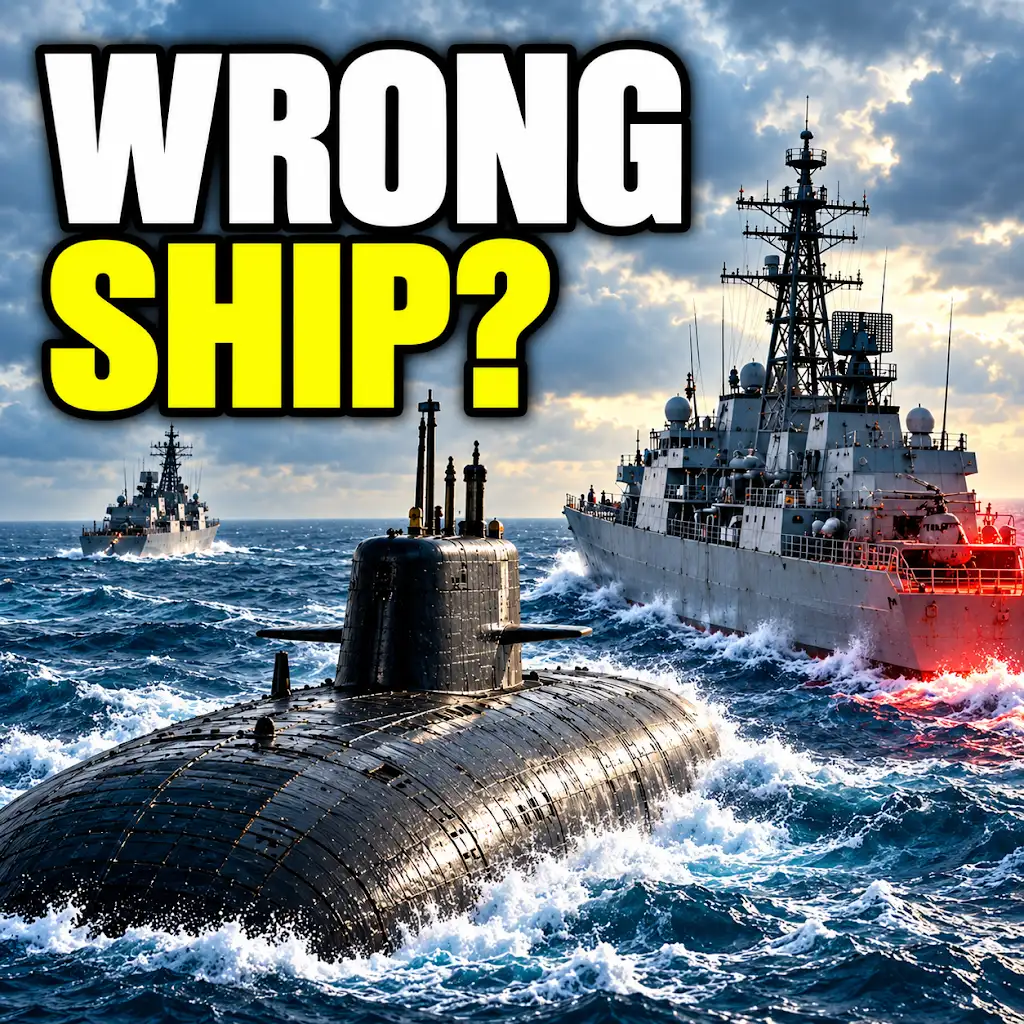
A Soviet Submarine Hit a U.S. Frigate. Was It the Wrong Ship?
FAQs
1. How did the US Navy track Soviet submarines during the Cold War?
During the Cold War, the US Navy used a variety of methods to track Soviet submarines, including sonar systems, satellite surveillance, and underwater listening devices.
2. What role did US Navy submarines play in tracking Soviet submarines?
US Navy submarines were crucial in tracking Soviet submarines as they could operate stealthily underwater and gather intelligence on the movements and activities of Soviet naval forces.
3. How did the US Navy use aircraft to track Soviet submarines?
The US Navy used maritime patrol aircraft equipped with advanced sensors and detection systems to track Soviet submarines from the air, providing valuable intelligence on their locations and movements.
4. What was the significance of tracking Soviet submarines for the US Navy?
Tracking Soviet submarines was of utmost importance for the US Navy as it allowed them to monitor Soviet naval activities, protect US interests, and maintain strategic superiority during the Cold War.
5. How did the US Navy’s efforts in tracking Soviet submarines contribute to the overall balance of power during the Cold War?
The US Navy’s successful tracking of Soviet submarines helped to tip the balance of power in favor of the United States by providing crucial intelligence, maintaining deterrence, and ensuring the security of US and allied interests.