The Silent Hunt: Shadows Beneath the Arctic Ice
The Cold War, a period of geopolitical tension between the United States and the Soviet Union, was fought not only on land and in the air but also in the silent, unforgiving depths of the world’s oceans. Submarines, the silent predators of this underwater realm, played a crucial role in projecting power, gathering intelligence, and posing an existential threat. While many encounters remained classified, whispers of near-catastrophic incidents have surfaced, painting a chilling picture of the constant brinkmanship that characterized this era. One such chilling encounter, shrouded in the secrecy of Soviet naval operations, involved a submarine’s close call with an unknown, yet formidable, presence beneath the Arctic ice.
The Soviet Union, possessing a vast coastline and a desire to counter the growing naval might of NATO, invested heavily in its submarine fleet. These vessels, ranging from nimble diesel-electric attack submarines to colossal nuclear-powered ballistic missile submarines, were the spearhead of its maritime strategy. The Arctic, with its strategic choke points and vast, unexplored territories, became a crucial theater of operations. Beneath the thick, shifting ice, these submarines could operate with a degree of stealth unmatched by surface fleets. However, this environment also presented unique dangers, where a miscalculation could lead to the catastrophic loss of a vessel and its crew.
One of the most intriguing incidents during the Cold War involving Soviet submarines is the 1968 sinking of the K-219, which highlights the intense underwater tensions between the superpowers. For a deeper understanding of this event and its implications on naval warfare, you can read the article available at this link. The K-219 incident not only underscores the risks associated with submarine operations but also reflects the broader geopolitical struggles of the era.
The Unseen Presence: A Submerged Anomaly

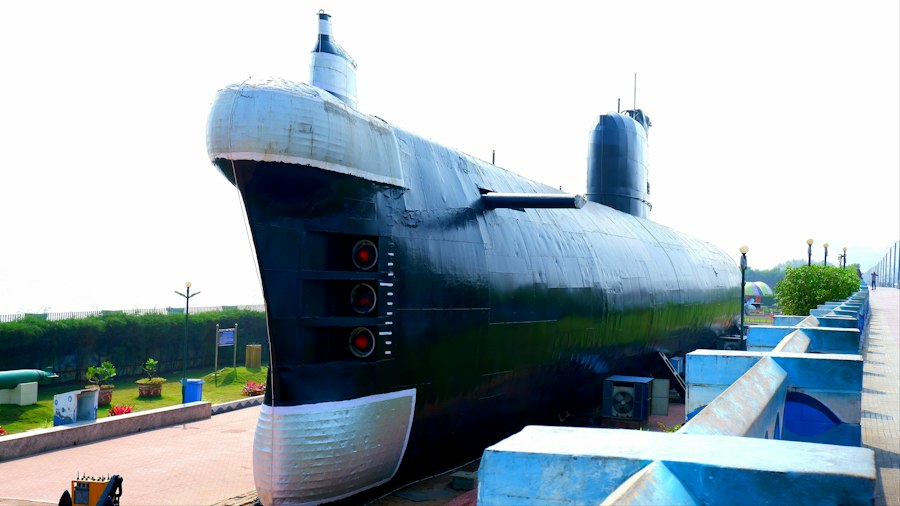
The incident in question unfolded in the frigid waters of the Barents Sea, a strategically vital area connecting the Arctic Ocean to the Atlantic. The submarine, a modern Echo-class guided missile submarine, was on a routine patrol, its hull a silent shadow beneath kilometers of frigid water. Its mission was typical: to monitor Western naval movements, particularly the presence of American and British carrier strike groups, and to be ready to respond to any perceived aggression. The crew, a mix of seasoned veterans and eager young sailors, operated with the practiced efficiency born of rigorous training. Yet, on this particular patrol, an unexpected variable entered their calculated world.
Echoes in the Sonar: The Initial Detection
The first indication that something was amiss came not as a visual sighting, but as an anomaly on the sonar. The skilled sonar operators, attuned to the subtlest shifts in sound, detected a sound signature that did not conform to any known Soviet or NATO vessel. It was a powerful, rhythmic pulse, distinct from the familiar hum of engines or the distinctive ping of active sonar. Initially, it was dismissed as a potential equipment malfunction or perhaps an unusually large ice floe moving in a peculiar manner. However, the signature persisted, growing in intensity and displaying characteristics that defied easy explanation. It was not the chatter of a submarine’s machinery, nor the predictable groan of ice. It possessed a power, a regularity, that suggested an artificial, yet alien, origin. The crew’s senses, usually focused on the known threats of the deep, were now sharpened by a sense of the unknown.
The Pulse Deepens: A Growing Concern
As the submarine continued its patrol, the sonar readings became more pronounced. The rhythmic pulse intensified, and its directionality became clearer. It seemed to be moving, not with the speed of a conventional submarine, but with a deliberate, almost stately progression. The sound was too deep, too powerful, to be anything natural. The initial skepticism began to erode, replaced by a growing unease. The captain, a stern man known for his unflinching demeanor, ordered increased vigilance. All non-essential personnel were confined to their stations, and the submarine adjusted its course, attempting to get a clearer fix on the source of the mysterious sound. The normally silent interior of the submarine, a space accustomed to the quiet hum of machinery and the hushed voices of the crew, was now filled with an almost palpable tension. Every ping of the sonar, every subtle vibration of the hull, was amplified by the crew’s heightened awareness.
Navigating the Unknown: A Calculated Risk
The presence of an unidentified, powerful sound signature in a strategically sensitive area immediately triggered alarm bells within the Soviet naval command. The possibility of a new, advanced Western weapon system, or even something entirely unforeseen, could not be discounted. The captain of the Echo-class submarine found himself in a precarious situation: his orders were to observe and report, but the nature of this unknown contact demanded a more proactive approach, albeit one fraught with risk.
The Decision to Investigate: A Captain’s Dilemma
The captain, faced with conflicting directives and the palpable tension emanating from his crew, made a difficult decision. While his primary objective was to avoid detection and maintain a safe distance, the potential intelligence value of identifying this anomaly was too great to ignore. He ordered a slow, cautious approach, intending to gather as much data as possible without provoking any hostile reaction. This was a dangerous gambit. The Arctic under-ice environment was unforgiving, and any aggressive maneuver could lead to a collision or a loss of control. The submarine began to creep forward, its engines reduced to a whisper, its hull a barely perceptible ripple in the water. The sonar operators worked feverishly, their screens illuminated by the ghostly echoes of their own transmissions and the persistent, enigmatic pulse from the depths.
Stealth and Surveillance: Gathering Intelligence
The submarine’s advanced sonar and electronic intelligence gathering systems were deployed to their fullest. Every nuance of the unidentified signature was meticulously recorded. Was it a single entity or a formation? What was its speed, its depth, its trajectory? The operators painstakingly filtered out the ambient noise of the ocean and the ice, seeking to isolate the true characteristics of the anomaly. The captain, observing the data streams, began to form a hypothesis. The regularity of the pulse, its immense power, and its slow, deliberate movement suggested something far beyond the capabilities of any known submarine. It was unlike anything he had encountered in his extensive naval career. The data painted a picture of a colossal, submerged object, moving with a purpose that was both intriguing and unnerving.
The Perilous Close Encounter: A Dance of Giants
As the Soviet submarine cautiously advanced, the unidentified presence revealed itself to be something truly colossal. The sonar data, once interpreted, suggested an object of immense size, far exceeding that of even the largest Soviet or American submarines. The rhythmic pulse, now understood as a form of propulsion or energy generation, was the source of its power and its unnerving presence.
During the Cold War, tensions between the superpowers often escalated into dangerous confrontations, one of which involved a Soviet submarine incident that highlighted the precarious nature of underwater warfare. For a deeper understanding of this event and its implications, you can read more in the article available at In the War Room, which explores the strategic decisions made during this critical period and how they shaped naval policies in the years that followed.
Visual Confirmation: A Glimpse of the Unfathomable
Through the submarine’s periscope, equipped with powerful magnification, the captain and his officers caught their first, albeit fleeting, glimpse of the anomaly. Under the eerie, filtered

A Soviet Submarine Hit a U.S. Frigate. Was It the Wrong Ship?
FAQs
What was the Soviet submarine Cold War incident?
The Soviet submarine Cold War incident refers to an event in 1961 when a Soviet submarine carrying nuclear torpedoes was discovered by the United States Navy near the coast of Greenland.
How did the United States Navy discover the Soviet submarine?
The United States Navy discovered the Soviet submarine using sonar technology, which detected the presence of the submarine in international waters near Greenland.
What actions were taken by the United States Navy after discovering the Soviet submarine?
After discovering the Soviet submarine, the United States Navy deployed aircraft and ships to monitor the submarine’s movements and prevent it from entering U.S. territorial waters.
What was the response of the Soviet Union to the discovery of their submarine?
The Soviet Union initially denied the presence of their submarine near Greenland but later acknowledged it after the United States provided evidence of the incident.
How did the Soviet submarine Cold War incident impact relations between the United States and the Soviet Union?
The Soviet submarine Cold War incident heightened tensions between the United States and the Soviet Union, leading to increased military surveillance and a renewed focus on nuclear deterrence strategies.