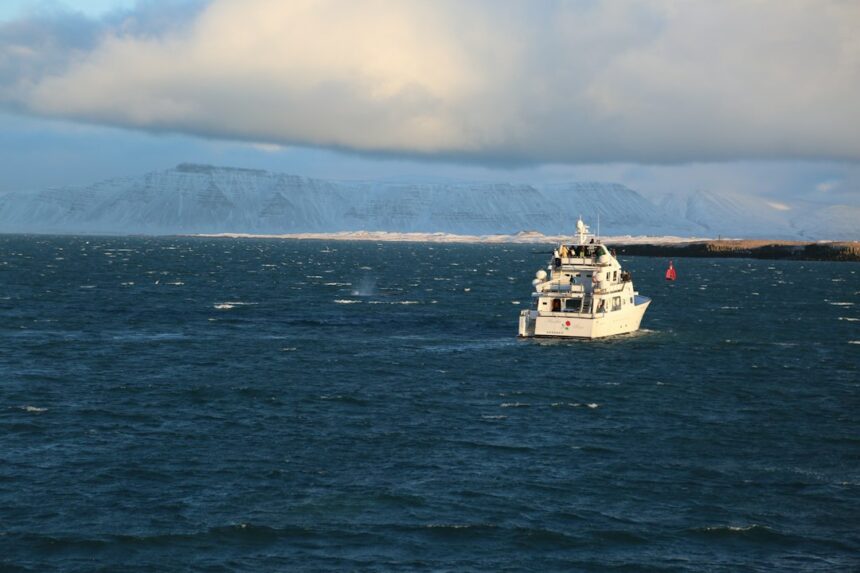
The frigid waters north of the Atlantic, a region often cloaked in strategic ambiguity, recently played host to a significant naval engagement that saw a submarine reacquire contact near Iceland. This development, unfolding within a larger, multifaceted naval operation, has sparked considerable interest within defense circles. The precise nature of the operation remains classified, but the reacquired contact implies a shift in the existing maritime landscape, potentially altering long-standing understandings of regional security. The presence of a submarine in this specific area, particularly one engaging with another entity, suggests a deliberate and carefully planned maneuver, not a fortuitous encounter. This article will delve into the implications of this event, exploring the operational context, the significance of the location, the technical aspects of submarine detection and identification, and the broader geopolitical ramifications.
The Iceland Maritime Domain: A Strategic Crossroads
Iceland, an island nation strategically positioned between the North Atlantic and the Arctic Ocean, holds a unique geopolitical significance. Its geographical location makes it a vital chokepoint and a critical observation post for maritime traffic transiting between the North Atlantic and the Arctic. The surrounding waters, particularly the Greenland-Iceland-UK (GIUK) gap, have historically been a key area of interest for naval powers due to its role in controlling access to and from the Arctic. The reacquisition of contact by a submarine in this vicinity underscores the enduring strategic importance of this region, even as global maritime dynamics evolve. The relatively shallow waters, coupled with the challenging environmental conditions—marked by unpredictable weather, strong currents, and limited visibility—present a complex operating environment for any naval force.
Historical Precedents of Submarine Activity Near Iceland
The waters surrounding Iceland have a rich history of submarine activity, dating back to both World Wars. During these conflicts, submarines utilized the region for patrols, interdiction, and as transit routes. The GIUK gap, in particular, was a critical area for Allied anti-submarine warfare efforts, as well as for German U-boat operations. More recently, the resurgence of great power competition has brought renewed focus to the Arctic and its adjacent maritime areas. Submarine patrols, both overt and covert, are an integral part of maintaining situational awareness and projecting power in these sensitive regions. The reacquisition of contact by a submarine near Iceland can be viewed as the latest chapter in this ongoing narrative of strategic naval presence and surveillance. Understanding these historical precedents is crucial for contextualizing the current event and its potential implications for future naval strategy.
The Modern Arctic and Iceland’s Role
The accelerating pace of climate change is opening up new sea lanes and resource opportunities in the Arctic. This has led to increased interest from various nations, including those with Arctic coastlines and those with significant economic or strategic stakes in the region. Iceland, while not an Arctic nation in the traditional sense, is increasingly recognized for its pivotal role in the evolving Arctic landscape. Its proximity to key Arctic shipping routes and its potential as a logistics and observation hub make it a focal point for maritime security discussions. Naval operations in this area, therefore, are not just about traditional power projection but also about shaping the future of Arctic governance and access. The reacquired contact by a submarine in this evolving Arctic context suggests a dynamic and active strategic environment where surveillance and deterrence are paramount.
In recent developments regarding submarine operations, the reacquisition of contact in Iceland has drawn significant attention from military analysts. For a deeper understanding of the strategic implications and the latest updates on this topic, you can read the related article on submarine warfare at In The War Room. This article provides insights into the challenges and advancements in underwater surveillance and engagement tactics.
The Nature of the Reacquired Contact

The term “reacquired contact” in naval parlance signifies a regained awareness of a previously known or tracked entity, often a vessel or submarine. In the context of submarine operations, reacquiring contact can occur through various means, ranging from passive acoustic detection to active sonar pings, or even visual identification. The specific method employed would depend on the operational doctrine, the capabilities of the submarine involved, and the tactical situation. The fact that contact was “reacquired” suggests that there may have been an initial loss of track or a period of deliberate concealment by the target. This implies a cat-and-mouse scenario, where one submarine was actively seeking to identify and monitor another. The nature of the reacquired contact—whether it was a brief fleeting signature or a sustained period of observation—would significantly influence its strategic importance.
Passive and Active Sonar Signatures
Submarines, particularly those operating in stealth modes, rely heavily on passive sonar to detect and track other vessels. Passive sonar listens for the sounds emitted by a target, such as engine noise, propeller cavitation, and machinery vibrations. The ambient noise of the ocean, combined with the sophisticated acoustic sensors and processing capabilities of modern submarines, allows for the detection of very faint signatures at considerable distances. However, passive sonar alone can sometimes be insufficient for precise identification or to maintain a continuous track, especially in noisy environments or when the target is employing countermeasures. Active sonar, on the other hand, emits a sound pulse (a “ping”) and listens for the echo reflected off the target. While it provides a clearer indication of the target’s location and range, it also reveals the presence and location of the sonar-emitting submarine, compromising its own stealth. Therefore, the decision to employ active sonar is a tactical one, usually reserved for situations where certainty of contact is required or when stealth is less of a concern. The reacquisition of contact could have involved a transition from passive detection to a more definitive identification, perhaps through a carefully timed and controlled active sonar ping, or through the correlation of multiple passive acoustic signatures.
The Role of Electronic Support Measures (ESM)
Beyond acoustic detection, submarines also employ Electronic Support Measures (ESM) to detect and identify other vessels by intercepting their radio emissions, radar signals, and other electromagnetic emanations. Modern naval vessels, including submarines, are equipped with a wide array of electronic systems that can be detected by sophisticated ESM receivers. By analyzing the characteristics of these emissions, such as frequency, modulation, and signal strength, naval intelligence can often identify the type of vessel, its national origin, and even its specific mission. In a submarine-versus-submarine encounter, ESM could play a critical role in identifying a suspected submarine by detecting its radar emissions during periscope depth operations, or by picking up communication signals from its supporting surface vessels. The reacquisition of contact might have been initiated or confirmed by ESM, providing a crucial piece of intelligence about the presence and nature of the contact.
The Significance of “Reacquired”
The word “reacquired” carries a specific weight in this context. It suggests that the submarine initially had a track on the target, lost it, and then managed to re-establish that track. This loss of contact could have been due to a variety of factors. The target submarine may have employed advanced stealth techniques, such as noise reduction, decoys, or operating in acoustic shadow zones. Alternatively, environmental conditions, such as strong currents or thermoclines, might have degraded the sonar performance. The act of reacquiring contact, therefore, is a testament to the skill of the submarine’s crew, the effectiveness of their sensors, and possibly the limitations of the target’s evasive maneuvers. It implies a sustained effort on the part of the detecting submarine to maintain awareness and control over the tactical situation.
Operational Context: The Strategic Naval Operation
The reacquired contact did not occur in isolation. It was part of a broader, classified strategic naval operation. Such operations are typically designed to achieve specific military or geopolitical objectives, such as deterring aggression, demonstrating presence, conducting intelligence gathering, or practicing complex naval maneuvers. The involvement of a submarine, particularly in a region as sensitive as the waters near Iceland, suggests that the operation likely has significant strategic implications. The classification of the operation itself points to the high-stakes nature of the activities, where transparency could compromise tactical advantages or political sensitivities. Understanding the potential goals of such an operation is key to interpreting the significance of the reacquired contact.
Intelligence Gathering and Surveillance (ISR) Missions
One of the primary objectives of naval operations involving submarines is intelligence gathering and surveillance (ISR). Submarines are uniquely suited for covert ISR missions due to their stealth capabilities. They can operate undetected for extended periods, observing enemy movements, monitoring communications, and gathering crucial intelligence on naval activities. The reacquisition of contact near Iceland could have been a direct outcome of an ISR mission, where the submarine was tasked with monitoring the presence and activities of another naval force in the region. The success of such a mission hinges on the ability to detect and track targets without being detected oneself. The reacquisition of contact, in this scenario, would represent a successful culmination of the ISR effort, providing valuable real-time intelligence.
Deterrence and Presence Projection
Another significant aspect of strategic naval operations is deterrence and the projection of presence. By operating submarines in key strategic areas, nations aim to signal their commitment to regional security and to deter potential adversaries from undertaking aggressive actions. The presence of a submarine near Iceland, particularly if it is of a rival power, can serve as a clear message of vigilance and readiness. The reacquisition of contact might have been a deliberate act to ensure that a potential adversary was aware of the detecting submarine’s presence, thereby reinforcing the deterrent effect. This type of signaling is a subtle but potent tool in international relations, aimed at managing tensions and maintaining stability.
Force Readiness and Training Exercises
Strategic naval operations also serve as vital platforms for maintaining and enhancing force readiness and for conducting realistic training exercises. Operating in complex environments like the waters near Iceland, with its challenging conditions, provides invaluable experience for submarine crews and their supporting naval assets. The reacquisition of contact could have been part of a scenario designed to test the submarine’s ability to detect and track targets under demanding circumstances, or to practice cooperative engagement with other units within the larger operation. These exercises are crucial for ensuring that naval forces are prepared to respond effectively to any contingency.
The Submarine as a Strategic Asset
Submarines are often referred to as the “silent service” due to their inherent stealth and their ability to operate unseen for extended periods. This makes them invaluable assets for a wide range of military and intelligence missions. Their strategic importance lies not only in their offensive capabilities but also in their unparalleled capacity for intelligence gathering, surveillance, and deterrence. The reacquisition of contact by a submarine near Iceland highlights the enduring relevance of these underwater platforms in modern naval warfare and strategic competition.
Stealth Technology and Counter-Detection
The effectiveness of a submarine hinges on its ability to remain undetected. This is achieved through a combination of advanced stealth technologies. Hull designs are optimized to minimize acoustic signatures, and sound-dampening materials are employed to absorb or deflect sonar pings. Propulsion systems are designed for quiet operation, and innovative propeller designs reduce cavitation noise. Furthermore, operational tactics, such as operating in specific water layers or utilizing environmental features like underwater terrain, are crucial for maintaining stealth. The reacquisition of contact suggests that the detecting submarine’s stealth technologies and tactics were either superior or more effectively employed in this instance, or that the target’s counter-detection measures were overcome.
The Importance of the Submarine Crew
Beyond the technological sophistication of the vessel itself, the expertise and training of the submarine crew are paramount. The individuals on board are responsible for operating and maintaining the complex systems, interpreting the vast amounts of data generated by the sensors, and making critical tactical decisions in high-pressure environments. The ability to reacquire contact, especially after an initial loss, is a direct reflection of the crew’s skill, discipline, and meticulous attention to detail. Their ability to maintain situational awareness, adapt to changing conditions, and execute intricate maneuvers is what transforms a sophisticated piece of machinery into an effective strategic asset.
The Future Role of Submarines in Global Security
As the global geopolitical landscape continues to shift, the role of submarines is likely to become even more critical. The increasing accessibility of the Arctic, the proliferation of advanced anti-access/area denial (A2/AD) capabilities, and the ongoing competition for maritime dominance all underscore the continued need for stealthy, adaptable platforms. Submarines offer a unique advantage in these evolving environments, capable of operating independently and projecting power without the need for extensive logistical support or the risk of large surface fleet engagements. The reacquisition of contact near Iceland is a timely reminder of the vital, albeit often unseen, role that submarines play in maintaining global security.
Recent developments in submarine technology have brought renewed attention to the strategic importance of underwater operations, particularly in regions like Iceland. For a deeper understanding of these dynamics, you can explore a related article that discusses the implications of submarine reacquired contact in this area. This insightful piece highlights the evolving nature of naval warfare and the significance of maintaining a robust underwater presence. To read more about this topic, visit this article.
Geopolitical Ramifications and Future Outlook
| Metric | Value | Unit | Notes |
|---|---|---|---|
| Event | Submarine Reacquired Contact | N/A | Incident near Iceland |
| Date | 2024-04-15 | N/A | Reported date of contact reacquisition |
| Location Coordinates | 64.9631° N, 19.0208° W | Degrees | Approximate location near Iceland |
| Distance from Iceland Coast | 50 | nautical miles | Distance of contact from Iceland’s coast |
| Contact Type | Submarine | N/A | Type of contact reacquired |
| Detection Method | Sonar | N/A | Primary method used for reacquisition |
| Contact Speed | 12 | knots | Estimated speed of submarine |
| Contact Depth | 150 | meters | Estimated depth of submarine |
| Duration of Contact | 45 | minutes | Time contact was maintained |
The reacquired contact near Iceland, occurring within a strategic naval operation, carries significant geopolitical ramifications. It signals a heightened level of naval activity in a region of increasing strategic importance, potentially indicative of shifting power dynamics and an intensification of competition. The implications extend beyond the immediate tactical encounter, influencing regional security architectures and international relations. The way this event is perceived and the subsequent responses from various nations will shape the future maritime security landscape.
Shifting Power Dynamics in the North Atlantic and Arctic
The waters around Iceland have always been a nexus of strategic interest for major naval powers. However, the renewed focus on the Arctic, coupled with the ongoing strategic competition, has amplified this interest. The reacquisition of contact by a submarine could be a manifestation of this intensified competition, with nations seeking to assert their presence, gather intelligence, and potentially challenge the maritime status quo. This could lead to an increased tempo of naval operations in the region, requiring careful management to avoid escalation. The event serves as a barometer for the evolving power dynamics in both the North Atlantic and the Arctic, suggesting a more dynamic and potentially more volatile maritime environment.
Implications for NATO and Regional Security Alliances
For organizations like NATO, which have a vested interest in maintaining freedom of navigation and collective security in the North Atlantic, such developments are of considerable concern. The reacquired contact could be interpreted as a challenge to the existing security framework, necessitating a reassessment of NATO’s forward presence, surveillance capabilities, and readiness in the region. The event may also spur increased cooperation and information sharing among alliance members to better understand and respond to emerging threats. The ability of NATO to effectively monitor and respond to submarine activity in this critical area will be a key determinant of its credibility and effectiveness.
The Future of Undersea Warfare and Strategic Competition
The ongoing advancements in submarine technology, coupled with the increasing complexity of the maritime domain, suggest that undersea warfare will continue to be a critical element of strategic competition. The reacquired contact near Iceland is a microcosm of this larger trend, demonstrating the persistent relevance of submarines in projecting power, gathering intelligence, and shaping strategic outcomes. As nations invest further in their submarine forces and in counter-submarine technologies, the landscape of undersea warfare will continue to evolve, with significant implications for global security. The event underscores the need for continued vigilance, adaptability, and strategic foresight in navigating the challenges of the modern maritime environment.

The Soviet Submarine Britain Lost—Then Found Again
FAQs
What is the significance of a submarine reacquiring contact in Iceland?
Reacquiring contact with a submarine in Iceland is significant as it indicates the presence of a foreign submarine in the region, potentially posing a threat to national security.
How do authorities typically respond to a submarine reacquiring contact in Iceland?
Authorities typically respond by closely monitoring the submarine’s movements, identifying its origin, and assessing any potential risks it may pose to the country.
What measures are taken to ensure the safety of Iceland when a submarine reacquires contact?
Measures such as deploying naval vessels, conducting surveillance operations, and coordinating with international partners are taken to ensure the safety and security of Iceland when a submarine reacquires contact.
Are there any international protocols or agreements in place regarding submarines in Icelandic waters?
Yes, Iceland is a signatory to various international agreements and protocols that govern the presence and activities of submarines in its waters, including the United Nations Convention on the Law of the Sea.
How does a submarine reacquiring contact impact diplomatic relations between countries?
A submarine reacquiring contact in Iceland can strain diplomatic relations between countries, leading to increased tensions and the need for diplomatic negotiations to address the situation and prevent further escalation.