The Silent Hunter’s Stumble: Unraveling the K-222 Submarine’s High-Speed Noise Anomaly
The K-222 submarine, a marvel of Soviet naval engineering, was designed for unparalleled stealth and speed, intended to be the silent predator of the underwater world. However, reports and analyses have consistently pointed to a persistent and vexing issue: a significant increase in acoustic signature when operating at high speeds. This anomaly, a stark contradiction to its core design philosophy, has puzzled naval strategists and acousticians alike. Understanding the genesis and implications of this high-speed noise problem is crucial to appreciating the K-222’s operational limitations and the ongoing efforts to mitigate its acoustic signature. The pursuit of a silent, high-speed submarine is a complex dance between hydrodynamics, material science, and propulsion technology, and the K-222’s experience provides a compelling case study in the challenges inherent in such ambitious engineering.
The K-222 submarine has been a topic of discussion due to its noise problem at high speeds, which can significantly affect its stealth capabilities. For a deeper understanding of the challenges faced by submarines in maintaining operational secrecy while maneuvering at high velocities, you can refer to a related article that explores various acoustic issues and technological advancements in submarine design. To read more about this, visit In The War Room.
Hydrodynamic Whispers and the Submarine’s Hull

The very shape and movement of a submarine through water are primary contributors to its acoustic profile. The K-222, with its sleek, hydrodynamic form, was intended to minimize turbulence and flow noise. However, the transition from cruising speeds to the high-velocity regime introduces unique challenges. At elevated speeds, the water flow over the hull becomes more turbulent, generating a broadband noise that can be detected by enemy sonar. This phenomenon is not unique to the K-222; it is a fundamental aspect of hydrodynamics. Yet, the intensity of this noise on the K-222 appears to be disproportionately high, suggesting underlying design or material factors.
The Pressure Wave’s Symphony
As the K-222 surges forward at speed, the water pressure on its hull fluctuates. These pressure variations create a complex pattern of water flow, leading to cavitation – the formation and collapse of tiny vapor bubbles. The implosion of these bubbles generates sharp, percussive sounds, often described as a “crackling” or “hissing.” While cavitation is an inherent aspect of high-speed watercraft, the K-222’s hull design or the quality of its construction may exacerbate this effect. Factors such as hull imperfections, the presence of external appendages, and even the quality of paint or coating could influence the onset and intensity of cavitation. The precise mechanism by which the K-222’s hull interacts with high-speed water flow to produce such pronounced cavitation noise remains a subject of intense study. Researchers have theorized about specific hull contours and the material properties of the K-222’s outer shell contributing to a less-than-ideal hydrodynamic performance at its designed maximum velocities. The ideal hull would smoothly guide the water, maintaining laminar flow for as long as possible, but the forces involved at high speeds make this an incredibly difficult engineering feat.
Flow Noise and Turbulent Eddies
Beyond cavitation, the sheer velocity of the water against the hull generates a continuous “flow noise.” This is the sound of the water itself moving past the submarine’s surfaces. At higher speeds, the water’s kinetic energy increases, leading to more pronounced flow noise. The K-222’s hull, while streamlined, still presents surfaces that interact with the water. Any deviations from a perfectly smooth surface, such as welds, access panels, or sensor housings, can create small eddies and vortices. These turbulent structures disrupt the smooth flow of water and generate acoustic energy. The more pronounced the turbulence, the louder the flow noise becomes. Understanding the precise points of highest turbulence on the K-222’s hull at speed is key to developing mitigation strategies. This involves detailed Computational Fluid Dynamics (CFD) modeling and potentially experimental tank testing to map the flow patterns and identify acoustic hotspots.
Propeller’s Roar: The Engine of Noise
The propulsion system, particularly the propeller, is a significant source of noise in any submarine. For a high-speed vessel like the K-222, the demands placed on its propeller are immense, and these demands directly translate into acoustic output. The efficiency and design of the propeller are critical in determining the level of noise generated, especially at higher rotational speeds.
Cavitation on the Blades
Similar to the hull, the propeller blades are also susceptible to cavitation. As the blades rotate at high speed, the pressure on their surfaces drops, leading to the formation and collapse of vapor bubbles. This propeller-induced cavitation is a well-known source of acoustic noise in submarines. The K-222’s advanced propulsion system, while powerful, might employ propellers that, at their peak operating speeds, induce more significant cavitation than intended. The blade geometry, the number of blades, and the material used all play a role in the propensity for cavitation. Naval engineers continuously strive for propeller designs that are both efficient and quiet, a trade-off that becomes particularly challenging at extreme speeds. The K-222’s designers may have prioritized speed and power, potentially at the expense of optimal cavitation suppression. Research into advanced propeller designs, such as those with variable pitch or specialized blade shapes, aims to minimize this issue, but retrofitting such technologies to an existing hull can be a complex and costly undertaking.
Blade Beat Frequency and Harmonic Noise
Each propeller blade, as it passes through the water, generates a distinct pressure pulse. When multiplied by the number of blades, this creates a characteristic “blade beat frequency” and its associated harmonics. This is a tonal noise that can be particularly problematic for submarine detection as it is often consistent and predictable. The K-222’s high-speed operation would necessitate a higher rotational speed for its propellers, thereby increasing the blade beat frequency and the intensity of its harmonics. The goal is to minimize this tonal noise through careful propeller design and potentially through the use of acoustic shrouds or damping materials. The precise frequencies generated by the K-222’s propeller at different speeds are a critical piece of data for acousticians trying to characterize and counteract its signature. The generation of harmonic noise is a direct consequence of the repetitive impact of the blades on the water and can reveal the propeller’s rotational speed and diameter to sophisticated sonar systems.
Internal Machinery and Vibration Transmission
Beyond the external hydrodynamic and propeller-generated noises, the K-222’s internal machinery is another significant contributor to its acoustic signature. The powerful engines and complex systems required for high-speed operation inevitably generate vibrations. The critical challenge lies in isolating these vibrations from the hull, preventing them from radiating into the surrounding water.
Engine Mounts and Vibration Isolation
The engines of the K-222, whether nuclear or conventional, are powerful and generate substantial vibrations. Effective isolation of these vibrations from the submarine’s hull is paramount to maintaining stealth. This is typically achieved through sophisticated vibration damping systems, including specialized engine mounts and resilient mounting platforms. If these mounts are insufficient, degraded over time, or not optimally designed for the K-222’s specific engine characteristics at high speeds, vibrations can be transmitted directly to the hull, which then acts as an acoustic radiator. The effectiveness of these isolation systems is a direct function of their design, material properties, and regular maintenance. The K-222’s operational history and maintenance records would likely offer clues about the state of its vibration isolation systems. The very act of achieving high speeds implies higher engine power output and, consequently, potentially greater vibration generation, placing a heavier burden on the isolation mechanisms.
Hull Resonance and Amplification
The submarine’s hull itself can act as a resonant structure. If the vibrations generated by internal machinery happen to match the natural resonant frequencies of the hull, they can be amplified, leading to a significantly louder acoustic signature. This phenomenon is akin to a musical instrument being played; certain frequencies cause the instrument to vibrate more strongly. Identifying and mitigating these resonant frequencies is a complex acoustic engineering problem. It often involves structural modifications to the hull or the addition of damping materials to absorb the vibrations. The K-222’s hull structure, designed for strength and speed, might possess certain resonant characteristics that are particularly problematic when excited by its powerful internal machinery operating at high RPMs. The complex interplay between the engine vibration frequencies and the hull’s structural modes is a crucial area of study.
The K-222 submarine has garnered attention due to its significant noise problem when operating at high speeds, which poses challenges for stealth operations. This issue is not unique to the K-222, as many submarines face similar difficulties in maintaining quietness while maneuvering quickly. For a deeper understanding of the implications of submarine noise and its impact on naval warfare, you can explore a related article that discusses various factors contributing to this phenomenon. To read more about it, visit this insightful article.
Operational Environment and Acoustic Signatures
| Parameter | Value | Unit | Notes |
|---|---|---|---|
| Maximum Speed | 44.7 | knots | Reported top speed of K-222 |
| Noise Level at Maximum Speed | High | Qualitative | Significant noise increase at high speeds |
| Hull Material | Titanium Alloy | N/A | Contributed to noise due to vibration |
| Propeller Type | Seven-blade | N/A | Designed for high speed but caused cavitation noise |
| Noise Frequency Range | Low to Mid | Hz | Dominant noise frequencies during high-speed operation |
| Operational Depth at High Speed | 100-200 | meters | Typical depth range during high-speed runs |
| Noise Reduction Measures | Limited | N/A | Few effective solutions implemented |
| Impact on Stealth | Severe | N/A | High noise compromised stealth capabilities |
The environment in which the K-222 operates also plays a significant role in how its acoustic signature is perceived. Factors such as water depth, temperature gradients, and the presence of ambient noise can all influence the effectiveness of sonar detection. However, the K-222’s high-speed noise issue is an intrinsic characteristic of the submarine itself, regardless of the external environment.
Sonar Detection at High Speeds
While the K-222 was designed to be stealthy, its elevated noise signature at high speeds makes it more vulnerable to detection by passive and active sonar systems. Passive sonar listens for ambient noise and identifies sources, while active sonar emits sound pulses and analyzes the echoes. The broadband noise generated by the K-222’s hull and propeller at speed, along with any tonal components, can be readily detected and analyzed by these systems. This significantly diminishes its ability to conduct covert operations when operating at its maximum velocities. The tactical implication is that the K-222 might need to operate at lower, quieter speeds for extended periods, compromising its speed advantage.
Noise Spectrum and Tactical Implications
The specific frequencies and characteristics of the noise generated by the K-222 at high speeds are of immense interest to opposing navies. By analyzing the noise spectrum, analysts can potentially identify the submarine’s class, its speed, and even the specific type of propulsion system it is using. This information can be used to develop countermeasures or to track the submarine more effectively. The K-222’s high-speed noise anomaly, if it possesses distinct and identifiable characteristics, could inadvertently provide a tactical signature that negates its intended stealth advantage. The challenge for the K-222’s operators is to manage its speed profile to balance operational requirements with acoustic discretion, a difficult compromise when facing an adversary equipped with advanced acoustic detection capabilities.
Mitigation Efforts and Future Directions
Addressing the K-222’s high-speed noise issue is an ongoing challenge for naval engineers and acousticians. Various strategies can be employed to mitigate the acoustic signature of a submarine, and these efforts would undoubtedly be focused on the K-222.
Advanced Hull Coatings and Materials
One promising avenue for noise reduction involves the use of advanced hull coatings and materials. Anechoic tiles, designed to absorb sonar pulses and reduce the reflection of sound, can also help to dampen vibrations and reduce flow noise. Furthermore, the development of new composite materials with inherent acoustic damping properties could lead to hulls that are both strong and quieter. The K-222’s original design may not have benefited from the full spectrum of modern acoustic materials, and retrofitting such technologies could offer significant improvements. The effectiveness of these materials is often dependent on their precise application and the overall structural integrity of the hull.
Propeller Optimization and Noise Reduction Devices
Significant research is dedicated to optimizing propeller designs to minimize cavitation and tonal noise. This includes exploring new blade geometries, advanced materials that resist cavitation erosion, and variable-pitch propellers that can adjust to optimal angles for different speeds. Additionally, devices such as propeller shrouds or stators can be employed to direct water flow and reduce turbulence around the propeller. These modifications aim to make the propeller a less significant contributor to the submarine’s acoustic signature, particularly at high speeds. The challenge lies in integrating these technologies without compromising the propeller’s propulsion efficiency and structural integrity, especially under the immense forces encountered at high velocities.
Active Noise Cancellation Technologies
Emerging technologies in active noise cancellation (ANC) could also offer a solution. Similar to how ANC headphones work, microphones on the hull could detect incoming noise, and a sophisticated system could generate opposing sound waves to cancel out the noise before it propagates into the water. While complex to implement on a large scale like a submarine, active noise cancellation represents a frontier in acoustic stealth technology. The power requirements and the ability to generate precise anti-noise signals in the underwater environment are significant engineering hurdles, but the potential benefits for submarines operating at high speeds are considerable. The K-222’s operational success in an increasingly acoustically aware world would likely depend on the successful integration of such advanced noise reduction techniques, transforming it from a potentially noisy predator into the truly silent hunter it was conceived to be.
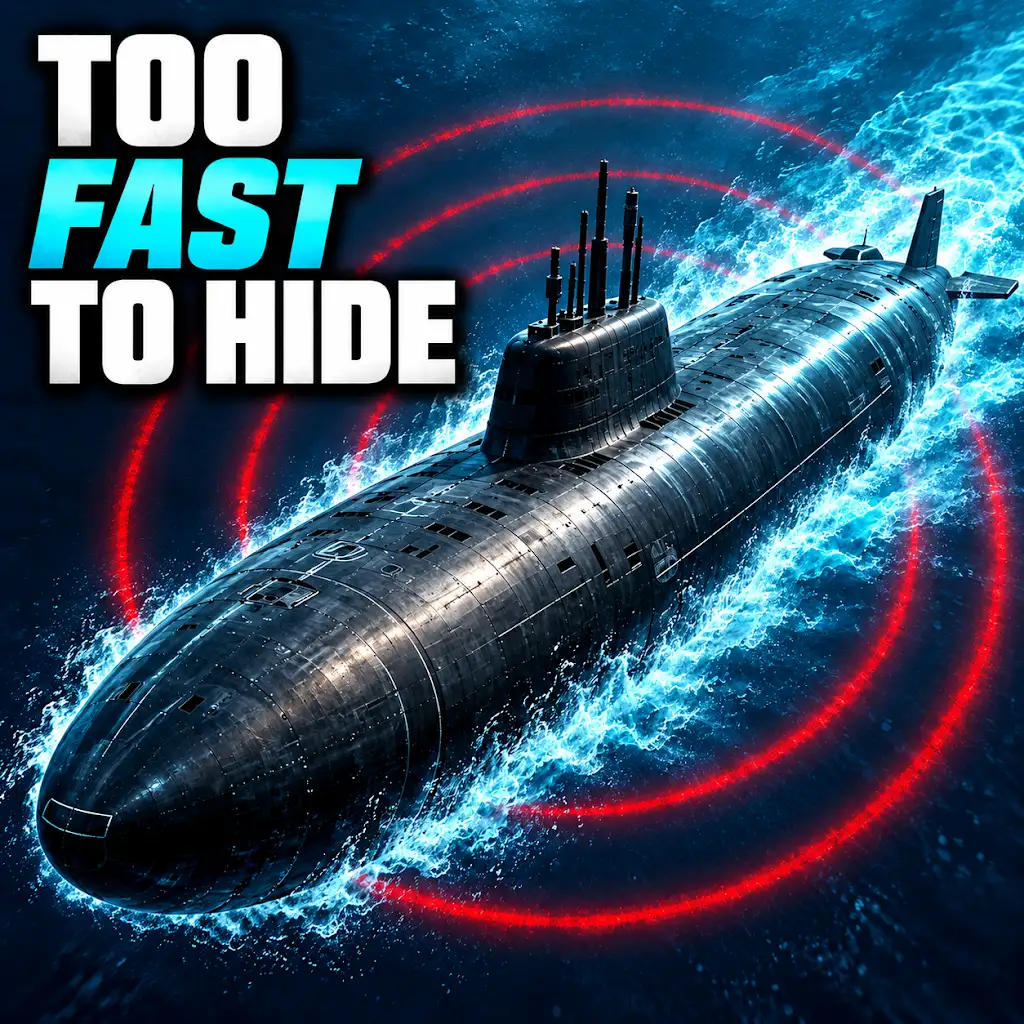
The Soviet Submarine That Broke a Speed Record—and Its Own Stealth
FAQs
What is the K-222 submarine?
The K-222 submarine was a Soviet nuclear-powered submarine that was the fastest submarine ever built, capable of reaching speeds of up to 44.7 knots.
What is the noise problem associated with the K-222 submarine at high speed?
At high speeds, the K-222 submarine was known to produce excessive noise levels, which could potentially compromise its stealth capabilities and make it easier for enemy vessels to detect its presence.
How did the noise problem affect the K-222 submarine’s operations?
The noise problem at high speed limited the K-222 submarine’s ability to operate covertly and carry out missions without being detected by enemy forces, which could have put the submarine and its crew at risk.
Was the noise problem of the K-222 submarine ever resolved?
Efforts were made to address the noise problem of the K-222 submarine, including modifications to its design and propulsion system. However, it is unclear if the issue was completely resolved.
What is the significance of the K-222 submarine noise problem at high speed?
The noise problem of the K-222 submarine highlights the challenges faced by submarines in maintaining stealth and operational effectiveness, especially at high speeds where noise levels can be more difficult to control.