The Silent Hunter’s Dilemma: Speed vs. Stealth in Soviet Submarine Design
The Soviet Navy, a colossus of the Cold War, faced a perennial and fundamental challenge in its submarine design philosophy: the inherent tradeoff between speed and stealth. For a submerged vessel, particularly a submarine designed for offensive operations, these two attributes are often diametrically opposed. Achieving high underwater speeds typically necessitates powerful propulsion systems, which in turn generate significant noise signatures. Conversely, the pursuit of ultimate silence often comes at the cost of outright velocity, potentially limiting a submarine’s ability to close with targets or escape detection. The Soviet Union, with its vast maritime frontiers and ambitious geopolitical goals, poured immense resources into developing submarines that could strike a delicate balance, or at least an acceptable compromise, between these critical performance metrics. This article delves into the intricate considerations, design choices, and operational implications of the Soviet Navy’s enduring struggle to optimize speed and stealth in its submarine fleet.
The tradeoff between speed and stealth in the Soviet Navy’s submarine design has been a topic of extensive analysis, particularly in the context of Cold War naval strategies. For a deeper understanding of this complex balance and its implications on submarine warfare, you can refer to a related article that explores various technological advancements and strategic decisions made by the Soviet Navy. To read more about this fascinating subject, visit this article.
Propulsion Systems: The Heartbeat of Stealth and Speed

The engine room of a submarine is where the fundamental conflict between speed and stealth is most acutely manifested. The Soviet Navy explored a diverse range of propulsion technologies, each with its own set of advantages and disadvantages concerning noise generation and power output. Understanding these systems is crucial to appreciating the design choices made.
Nuclear Power: The Speed Imperative
The advent of nuclear propulsion revolutionized submarine warfare, and the Soviet Union was a leading innovator in this field. Nuclear reactors provided virtually unlimited endurance and, critically, the ability to maintain high speeds for extended periods without the need for surfacing or snorkeling. This was a significant advantage for offensive operations, allowing submarines to transit vast distances quickly and engage targets with less risk of their position being compromised by air-breathing requirements. However, nuclear reactors, especially early designs, were inherently noisy. The complex machinery, pumps, turbines, and steam systems all contributed to a substantial acoustic signature.
- Reactor Types and Their Noise: Soviet designers experimented with various reactor types, including pressurized water reactors (PWRs) and, in later generations, some advanced concepts. While PWRs offered reliability and power, their associated cooling systems and steam generation processes were significant noise sources. The constant hum of pumps, the whine of turbines, and the flow of coolant all contributed to a detectable sound profile. Early Soviet nuclear submarines were often characterized by being considerably louder than their Western counterparts, particularly at higher speeds. The sound of the reactor coolant pumps circulating water was a particularly persistent and difficult-to-eliminate noise.
- The “Run Silent, Run Deep” Doctrine vs. High-Speed Transit: The primary advantage of nuclear power was the ability to “run silent, run deep.” This doctrine emphasized maintaining a low speed to minimize acoustic detection while remaining submerged for extended patrols. However, the need for rapid deployment to strategic areas or to respond to emergent threats often necessitated higher transit speeds. This meant that Soviet nuclear submarines, when tasked with such missions, would inevitably increase their acoustic footprint, making them more vulnerable to detection by ASW (Anti-Submarine Warfare) forces. The tradeoff was stark: speed for rapid response meant a greater risk of being found.
Diesel-Electric Power: The Stealth Advantage, The Speed Limitation
Diesel-electric submarines, while lacking the sustained high-speed capability of their nuclear counterparts, offered a significant advantage in terms of stealth, particularly when operating on battery power. This made them ideal for clandestine operations, ambush tactics, and patrols in areas where acoustic detection was paramount.
- Battery Power and Acoustic Quiescence: When running on batteries, diesel-electric submarines were remarkably quiet. The main engines were shut down, and propulsion was provided by electric motors powered by large battery banks. This produced a very low noise signature, making them incredibly difficult to detect by passive sonar systems. This was the “true” silent running that Soviet ASW planners aimed for. However, battery power was finite. Once depleted, the submarine would need to surface or snorkel to recharge its batteries by running the diesel engines, thus revealing its position and sacrificing stealth.
- Snorkeling and Vulnerability: The act of snorkeling, where the submarine extends a mast to draw in air for its diesel engines and expel exhaust, was a period of extreme vulnerability. Even with sophisticated baffles and mufflers, the running of diesel engines, even at a low RPM for charging, generated a distinct acoustic signature. Furthermore, the snorkel mast itself could be detected by radar and electronic surveillance. Soviet submarines were trained to minimize snorkeling time and to do so in areas where ASW coverage was deemed less intense, but the inherent risk remained.
- Compromise Designs: Air-Independent Propulsion (AIP): Recognizing the limitations of traditional diesel-electric power, the Soviet Union, like other navies, explored and eventually implemented various forms of Air-Independent Propulsion (AIP) in some of their later diesel-electric designs. AIP systems allowed submarines to operate submerged for longer periods without snorkeling, significantly enhancing their stealth and endurance. However, AIP systems, while quieter than diesel engines, often introduced their own unique noise profiles and were generally not capable of producing the same sustained high speeds as nuclear reactors.
Hull Design and Hydrodynamics: The Shape of Silence and Speed
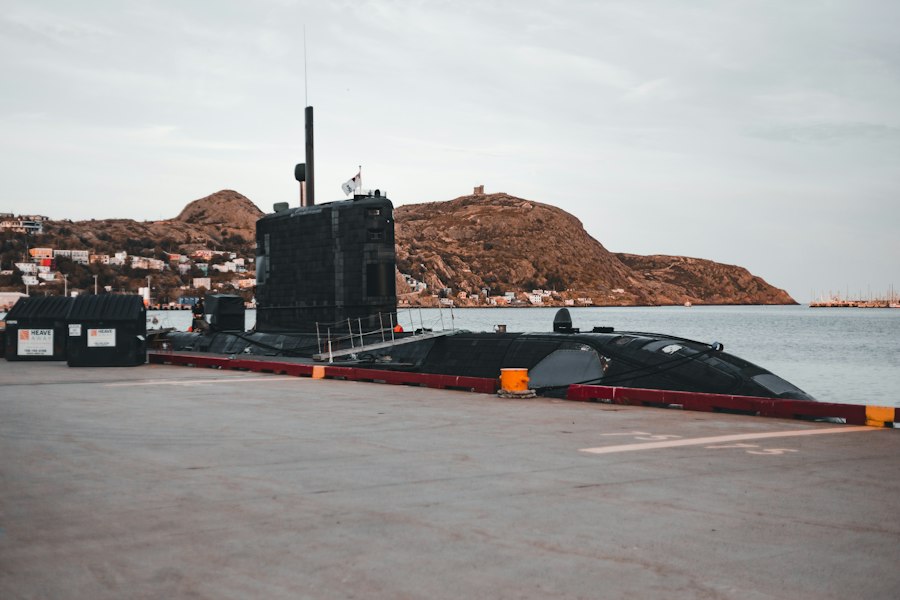
Beyond the propulsion system, the physical shape and construction of a submarine’s hull play a pivotal role in its acoustic signature and its ability to move efficiently through the water. Soviet designers grappled with these principles, seeking to optimize for both speed and stealth.
The Teardrop Hull: A Legacy of Compromise
Early Soviet submarines often featured a more conventional, cylindrical hull design. However, as technology advanced, and influenced by observations of Western designs, particularly those developed by the United States, the Soviet Navy began to adopt more hydrodynamically efficient hull forms.
- Streamlining for Reduced Drag: The adoption of more streamlined, teardrop-shaped hulls, often referred to as “whale” or “all-purpose” hulls, was a significant step. These designs reduced hydrodynamic drag, allowing submarines to achieve higher speeds with less power, and consequently, less noise. This efficiency was crucial for both high-speed transits and for maintaining a lower acoustic signature at cruising speeds. The smoother lines also helped to minimize flow noise, the sound generated by water moving over the hull.
- Consequences for Interior Space: The adoption of highly streamlined hulls, while beneficial for hydrodynamics, often came at the cost of interior volume. These “all-purpose” hulls, while excellent for speed and stealth, were often cramped for the crew and could present challenges in fitting complex machinery and quiet machinery mounting systems. This created a constant tension between the ideal hydrodynamic shape and the practical requirements of submarine operations and habitability.
Hull Coatings and Anechoic Tiles: The Stealth Enhancers
To further reduce their acoustic detectability, Soviet submarines employed various hull coatings and, in later designs, anechoic tiles. These technologies aimed to absorb or deflect sonar pings, making the submarine harder to locate by active sonar.
- Sound Absorption and Scattering: Anechoic tiles, composed of materials that absorb sound energy, were applied to the outer hull. These tiles worked by converting sonar energy into heat, thus reducing the amount of sound that was reflected back to the sonar source. The effectiveness of these tiles varied depending on the frequency of the sonar and the quality of the application. Soviet naval engineers worked to develop and refine these materials throughout the Cold War, striving for maximum sound absorption across the sonar frequencies used by their adversaries.
- Challenges in Application and Durability: The application and maintenance of anechoic tiles presented significant challenges. The tiles had to be meticulously applied to ensure complete coverage and were susceptible to damage from debris, collisions, and even the stresses of high-speed maneuvers. Damaged tiles could actually increase a submarine’s acoustic signature by creating areas of increased reflectivity. The ongoing battle to maintain the integrity of these stealth-enhancing features was a constant logistical and operational concern.
Operational Doctrines: Hunting and Being Hunted
The design choices made in Soviet submarines were intrinsically linked to their intended operational roles and the evolving doctrines of both the Soviet Navy and its adversaries. The constant cat-and-mouse game of ASW dictated the emphasis placed on speed or stealth.
The Offensive Mission: Strike and Deterrence
A primary role of the Soviet submarine fleet was strategic deterrence, the ability to launch nuclear missiles at enemy targets from the relative safety of the sea. This required submarines capable of reaching firing positions undetected and then, if necessary, escaping to survive.
- Rapid Deployment to Firing Zones: For ballistic missile submarines (SSBNs), the ability to rapidly transit to their patrol areas, often deep into ocean basins, was paramount. High speed was essential to reach these distant locations before enemy ASW forces could fully deploy. Once on station, however, the doctrine shifted towards extreme stealth, maintaining a low profile to avoid detection and ensure the survivability of the retaliatory strike capability. This meant that SSBNs often operated at a compromise speed, faster than a pure stealth submarine but slower than a dedicated attack submarine on a high-speed transit.
- Attack Submarines (SSNs and SSKs): Soviet attack submarines, both nuclear (SSNs) and diesel-electric (SSKs), had a dual role: to hunt enemy shipping and submarines, and to defend Soviet naval forces. For hunting enemy submarines, stealth was paramount. They needed to be able to detect and track their quarry without being detected themselves. However, for engaging enemy surface ships or for chasing down fleeing submarines, speed became a critical factor. This led to a constant design tension between creating a quiet hunter and a fast pursuer.
Defensive Operations: Protecting the Fleet
The Soviet Navy also operated submarines in a defensive capacity, tasked with protecting its surface fleets from enemy submarine threats. This role often demanded different priorities.
- Screening and Interception: Submarines assigned to fleet screening duties needed to be able to react quickly to threats and to interdict enemy submarines attempting to attack the fleet. This often favored submarines with a better speed-to-noise ratio, allowing them to close with a detected threat rapidly while minimizing their own acoustic signature during the engagement.
- The “Torpedo Ambush” Tactic: A classic Soviet tactic involved using their submarines to lie in wait in known transit routes or choke points, relying on stealth to remain undetected until an enemy vessel passed within torpedo range. For this tactic, extreme stealth was the primary requirement, often at the expense of high speed. Diesel-electric submarines, when operating on batteries, were perfectly suited for this role, their quietness making them virtually invisible to passive sonar.
The tradeoff between speed and stealth in the Soviet Navy’s submarine design has been a topic of considerable discussion among military analysts. While faster submarines can cover greater distances quickly, they often sacrifice the quiet operation that is crucial for evading detection. This balance is particularly significant in the context of Cold War naval strategies, where stealth was paramount for survivability. For a deeper understanding of this complex relationship, you can explore a related article that delves into the intricacies of submarine warfare and the technological advancements that shaped these decisions at In The War Room.
Technological Arms Race: The Never-Ending Pursuit
| Submarine Class | Top Speed (knots) | Stealth Features | Noise Level (dB) | Tradeoff Notes |
|---|---|---|---|---|
| November Class (Project 627) | 30+ | Basic hull design, limited sound dampening | ~120 dB | High speed prioritized, resulting in higher noise and lower stealth |
| Victor I Class (Project 671) | 33 | Improved hull shaping, early anechoic tiles | ~110 dB | Balanced speed and stealth, moderate noise reduction |
| Victor III Class (Project 671RTM) | 35 | Advanced anechoic tiles, quieter machinery | ~100 dB | Increased stealth with maintained high speed |
| Akula Class (Project 971) | 35+ | Hydrodynamic hull, extensive sound isolation, advanced anechoic coating | ~95 dB | High speed with significant stealth improvements |
| Typhoon Class (Project 941) | 27 | Large hull, sound isolation, but less hydrodynamic | ~105 dB | Speed sacrificed for size and stealth in strategic role |
| Oscar Class (Project 949) | 32 | Hydrodynamic design, moderate sound dampening | ~110 dB | Emphasis on speed and firepower over stealth |
The development of Soviet submarines and their speed/stealth capabilities was not an isolated endeavor. It was part of a broader, intense technological arms race with the United States and its NATO allies. Each side constantly sought to gain an advantage, forcing the other to innovate and adapt.
Western ASW Advancements and Soviet Responses
The continuous improvements in Western ASW capabilities – including more sensitive sonar systems, advanced towed arrays, and sophisticated aircraft and surface ship ASW platforms – directly influenced Soviet submarine design.
- Quieting Efforts: As Western sonar became more capable of detecting quieter submarines, Soviet designers were compelled to invest heavily in quieting technologies. This included better engine mounts, improved hull insulation, more effective water flow management, and the development of anechoic coatings. The introduction of newer Soviet submarine classes, such as the Akula and Typhoon classes, reflected a marked improvement in acoustic signature reduction compared to their predecessors.
- Counter-Detection Technologies: Soviet submarines also developed counter-detection measures, though these were often less sophisticated than their Western counterparts. This included sophisticated electronic warfare suites designed to detect incoming torpedoes and sonar pings, as well as tactical maneuvering to break sonar locks.
The Silent Running Arms Race
The ultimate goal for both sides was to achieve “silent running” – the ability to operate undetected at high speeds. While the US Navy, particularly with submarines like the Skipjack and later classes, arguably achieved a greater degree of quietness at high speeds earlier in the Cold War, the Soviet Union continuously closed the gap.
- The “Loud Soviet Submarine” Myth: While early Soviet submarines were indeed often louder than their Western counterparts, the generalization that all Soviet submarines were inherently noisy became less accurate as the Cold War progressed. Later Soviet designs, particularly those developed in the 1980s, incorporated significant advancements in quieting technology, making them formidable opponents. The design teams were not oblivious to the need for stealth; they simply had different priorities and faced different technological constraints at various stages of development.
- The “Blind” Versus the “Deaf” Analogy: Some analysts have likened the challenge to a “blind versus deaf” competition. Western ASW was trying to “hear” quieter submarines, while Soviet submarines were trying to “not be heard.” This dynamic fueled a relentless cycle of innovation and counter-innovation, where every advancement by one side necessitated a response from the other.
The Soviet Navy’s journey through the labyrinth of speed and stealth in submarine design was a testament to their strategic imperatives and their engineering prowess. They never achieved perfect balance, but their persistent efforts to navigate this fundamental tradeoff resulted in a submarine force that was a significant factor in global geopolitics for decades, a silent hunter whose true capabilities and operational profile remain a subject of study and fascination.
The Soviet Submarine That Broke a Speed Record—and Its Own Stealth
FAQs
What is the tradeoff between speed and stealth in Soviet Navy submarines?
The Soviet Navy submarines faced a tradeoff between speed and stealth, where increasing speed could compromise the stealth capabilities of the submarine.
Why was speed important for Soviet Navy submarines?
Speed was important for Soviet Navy submarines as it allowed them to quickly maneuver in combat situations, evade enemy detection, and escape from potential threats.
How did increasing speed affect the stealth capabilities of Soviet Navy submarines?
Increasing speed could generate more noise and vibrations, which could potentially make the submarine more detectable to enemy sonar systems, compromising its stealth capabilities.
What measures did Soviet Navy submarines take to maintain stealth while increasing speed?
Soviet Navy submarines implemented various technological advancements, such as improved soundproofing, quieter propulsion systems, and streamlined hull designs, to maintain stealth while increasing speed.
What were the implications of the speed vs stealth tradeoff for Soviet Navy submarines?
The speed vs stealth tradeoff for Soviet Navy submarines required a careful balance to ensure that the submarines could effectively carry out their missions while remaining undetected by enemy forces.