The hushed depths of the ocean have long been a frontier of human ingenuity, a realm where speed and stealth are paramount. While the roar of jet engines and the rumble of terrestrial vehicles dominate headlines, a silent, powerful evolution has been occurring beneath the waves. This evolution culminates in the astonishing capabilities of the world’s fastest submarines, vessels that redefine what is possible in underwater propulsion and maneuverability. These are not mere machines for transit; they are apex predators of the deep, built to outpace, outmaneuver, and outwit any adversary. The pursuit of ultimate underwater velocity is a testament to relentless innovation, pushing the boundaries of physics and engineering to their absolute limits.
The Elusive Quest for Underwater Supremacy
The concept of a fast submarine is not a modern one. Early submersibles, designed primarily for reconnaissance or as rudimentary offensive weapons, were often slow and unwieldy. However, as naval warfare evolved, so too did the demand for speed. The ability to reach a target quickly, evade detection, or launch a decisive strike before an enemy could react became increasingly crucial. This drive for speed has led to a fascinating historical progression, a subtle arms race conducted in the silent, crushing pressure of the deep.
Early Innovations and the Dawn of Speed
The early 20th century saw significant advancements. Innovations like improved battery technology and more efficient hull designs began to shave seconds off submersion and transit times. However, these were incremental gains. The true leap forward would require a fundamental shift in thinking about how a submarine could move through water. The principles of hydrodynamics, once understood and applied with greater precision, opened up new avenues for exploration. Designers began to consider how to minimize drag, optimize propeller efficiency, and generate immense thrust without sacrificing stability. The transition from early, utilitarian designs to sleek, purpose-built speed machines was a gradual but impactful process.
The Nuclear Revolution: A Paradigm Shift
The advent of nuclear propulsion in the mid-20th century was arguably the single most transformative event in submarine history. Nuclear reactors provided an almost limitless source of power, freeing submarines from the constraints of finite battery life and the need for frequent surfacing to snorkel. This liberated them to operate submerged for extended periods at much higher speeds. Suddenly, the theoretical limits of underwater velocity began to recede. Naval powers around the globe recognized the strategic implications of this newfound freedom and the immense advantage that nuclear-powered, high-speed submarines offered. This era marked the true beginning of the quest for the “fastest submarine” as we understand it today.
The quest for the fastest submarine in the world has captivated naval enthusiasts and military strategists alike, with advancements in technology pushing the boundaries of underwater speed. A related article that delves into the history and specifications of record-breaking submarines can be found at In the War Room. This resource provides insights into the engineering marvels that have achieved remarkable speeds, as well as the implications of such capabilities for modern naval warfare.
Engineering the Unseen Torpedo

Achieving extraordinary underwater speeds is not simply a matter of fitting a more powerful engine. It involves a holistic approach to design, where every component and every curve of the hull is meticulously engineered for optimal hydrodynamic performance. The forces at play are immense, and the slightest inefficiency can translate into significant drag and a reduction in speed.
Hull Design: The Sleek Silhouette of Speed
The shape of a submarine’s hull is paramount to its speed. For centuries, submarines have been evolving from cigar-like shapes to more streamlined, tear-drop or spindle-like forms. The modern fast submarine often features a hull designed to minimize turbulence and vortex shedding as it moves through the water. This involves careful consideration of the bow and stern shapes, the placement of fins and control surfaces, and the overall length-to-beam ratio. Advanced computational fluid dynamics (CFD) software plays a critical role in simulating water flow around proposed designs, allowing engineers to identify and eliminate areas of high drag before a single piece of metal is cut. The goal is to create a hull that parts the water with minimal resistance, allowing for maximum thrust to be converted into forward motion.
Propulsion Systems: The Heart of the Beast
The engine room of a fast submarine is a marvel of engineering. While nuclear reactors provide the raw power, the way this power is translated into thrust is equally critical.
Nuclear Reactors and Advanced Turbines
Modern nuclear submarines utilize highly advanced, compact nuclear reactors that generate immense thermal energy. This heat is used to produce steam, which then drives powerful turbines. These turbines are connected to gearboxes that transmit the rotational energy to the propeller shaft. The design of these turbines is a complex balancing act, requiring them to operate efficiently across a wide range of power outputs while remaining compact and robust enough to withstand the harsh underwater environment. The pursuit of ever-increasing speeds has driven innovations in turbine blade design, materials science for heat resistance, and the development of more efficient gearing systems.
Propeller and Pump-Jet Technologies
The propeller is the primary means of generating thrust, and its design is critical for achieving high speeds. Traditional propellers have evolved significantly, with multi-bladed designs featuring optimized blade angles and shapes to maximize water displacement and minimize cavitation – the formation of vapor bubbles that can reduce efficiency and create noise. Some of the fastest submarines employ advanced propeller designs that are quieter and more efficient than their predecessors.
In recent years, pump-jet propulsors have emerged as a compelling alternative and complement to traditional propellers. A pump-jet essentially encloses a propeller within a duct or stator. This design can significantly reduce flow separation and noise, while also offering improved maneuverability at lower speeds. For the absolute fastest submarines, a combination of advanced propeller technology and potentially pump-jet systems, carefully integrated with the hull, is often the key to unlocking peak performance. The challenge lies in achieving high thrust with minimal acoustic signature, a constant battle between speed and stealth.
Performance Metrics and Unveiling the Champions
Pinpointing the absolute fastest submarine in the world is a complex endeavor, as official specifications are often classified, and reported speeds can vary depending on the source and the conditions under which they were achieved. However, based on declassified information and expert analysis, certain classes of submarines are consistently cited for their exceptional speed.
The Soviet/Russian Legacy of Speed
The Soviet Union, and subsequently Russia, has a long-standing reputation for prioritizing speed in its submarine programs. The pursuit of “high-speed interceptors” and vessels capable of rapid deployment and engagement was a cornerstone of their naval doctrine during the Cold War. Several classes of Soviet submarines pushed the boundaries of underwater velocity.
The Alpha and Sierra Classes
The Soviet Project 705 “Lira” class, known to NATO as the Alpha class, was a revolutionary design for its time. These smaller, lighter submarines were powered by advanced liquid metal-cooled reactors, enabling them to achieve speeds widely reported to be in excess of 40 knots, with some accounts suggesting even higher bursts. Their titanium alloy hulls also contributed to their speed and depth capabilities. Following in this lineage, the Russian Project 1851 “Nalim” class, known as the Sierra class, continued this trend, with reported speeds also in the high 30s to low 40s knots. These vessels were designed for high-speed reconnaissance and engagement, embodying the Soviet focus on offensive underwater capabilities.
American Ambitions and the Seawolf Class
The United States Navy has also invested heavily in developing submarines with impressive speed capabilities, though often with a greater emphasis on stealth and endurance. However, the Seawolf class submarines represent a significant leap in American underwater performance.
The Seawolf’s Silent Sprint
Designed as a successor to the highly successful Los Angeles class, the Seawolf class submarines were conceived with a focus on advanced silencing technology and enhanced combat capabilities. While precise top speeds are classified, it is widely understood that the Seawolf class is capable of sustained high speeds, likely exceeding 35 knots and potentially reaching into the low 40s in bursts. Their design incorporates a high-power reactor and a highly efficient, quiet propulsion system, allowing them to operate at speeds that are difficult for adversaries to track. The Seawolf class embodies the American philosophy of combining overwhelming speed with unparalleled stealth.
The Strategic Implications of Underwater Velocity
The ability of a submarine to move at extreme speeds has profound implications for naval strategy and global security. It transforms a submarine from a lurking threat into a decisive instrument of power projection and deterrence.
Deterrence and First-Strike Capabilities
A submarine that can traverse vast distances rapidly and engage targets with little warning significantly enhances a nation’s deterrent posture. It presents an immediate and credible threat, capable of responding swiftly to any aggression. Furthermore, the ability to achieve high speeds can be leveraged for potential first-strike scenarios, allowing a submarine to reach a strategic objective before defensive measures can be fully mobilized. This capability necessitates careful consideration in arms control negotiations and strategic planning.
Anti-Submarine Warfare (ASW) and Interdiction
For nations seeking to counter a fast submarine threat, the challenge is immense. High-speed submarines can outrun and outmaneuver traditional ASW platforms, making them difficult to track and engage. This forces navies to invest in advanced sonar systems, faster interceptor aircraft and helicopters, and more sophisticated torpedoes and anti-submarine weapons. Conversely, a fast submarine can be an incredibly effective tool for interdiction, capable of rapidly closing the distance to an enemy vessel or convoy and engaging it before reinforcements can arrive.
Intelligence, Surveillance, and Reconnaissance (ISR)
Beyond direct combat, high-speed submarines are invaluable for ISR missions. Their ability to cover large areas of ocean quickly allows for rapid intelligence gathering, surveillance of enemy activities, and reconnaissance of strategic waterways. They can be deployed to remote locations with unprecedented speed, providing real-time data that is crucial for informed decision-making in complex geopolitical situations. The speed and stealth of these vessels make them ideal for clandestine operations where detection is unacceptable.
The quest for speed in underwater exploration has led to remarkable advancements in submarine technology, with the current record for the fastest submarine in the world being a topic of great interest among enthusiasts and researchers alike. For those looking to dive deeper into this fascinating subject, you can explore a related article that discusses the innovations and engineering feats that have contributed to this achievement. Check out the article here to learn more about the cutting-edge designs and capabilities of modern submarines.
The Future of Underwater Speed: Innovations on the Horizon
| Submarine Name | Country | Top Speed (knots) | Year Achieved | Type |
|---|---|---|---|---|
| K-222 (Papa-class) | Russia (Soviet Union) | 44.7 | 1969 | Nuclear-powered attack submarine |
| USS Albacore (AGSS-569) | United States | 33.4 | 1960s | Experimental research submarine |
| Seawolf-class | United States | 35+ | 1990s | Nuclear-powered fast attack submarine |
The relentless pursuit of speed in submarines is far from over. Engineers and scientists continue to explore new frontiers in materials science, propulsion technology, and hydrodynamics to create even faster, more capable vessels.
Advanced Materials and Hull Technologies
The development of new lightweight, high-strength materials will undoubtedly play a role in future high-speed submarine designs. Composites, advanced alloys, and potentially even novel structural concepts could allow for lighter hulls that can withstand greater pressures, enabling higher speeds and deeper operating depths. The quest for materials that are both robust and resistant to acoustic detection remains a significant area of research.
Next-Generation Propulsion Systems
While nuclear power is likely to remain the dominant energy source for high-speed military submarines, research into alternative and complementary propulsion systems continues. Magnetohydrodynamic (MHD) drives, which use electromagnetic fields to propel water, offer the potential for silent, propeller-less propulsion, although significant engineering challenges remain. Advanced fuel cell technologies and highly efficient energy storage systems could also play a role in future submersible designs, particularly for non-military applications or specialized roles.
The Drive for Bio-Inspired Design
Nature often provides the ultimate blueprint for efficiency, and submarines are no exception. Researchers are increasingly looking to marine life for inspiration. The streamlined bodies of fast-swimming fish like sharks and tuna, as well as the elegant propulsion methods of cetaceans, offer valuable insights into optimizing hull shapes and propulsion mechanisms for reduced drag and increased efficiency. Bio-inspired design could lead to submarines that are not only faster but also more agile and quieter than ever before. The future of underwater speed promises to be as fascinating as its past, a continuous evolution driven by the unyielding desire to conquer the ocean’s depths with unparalleled velocity.
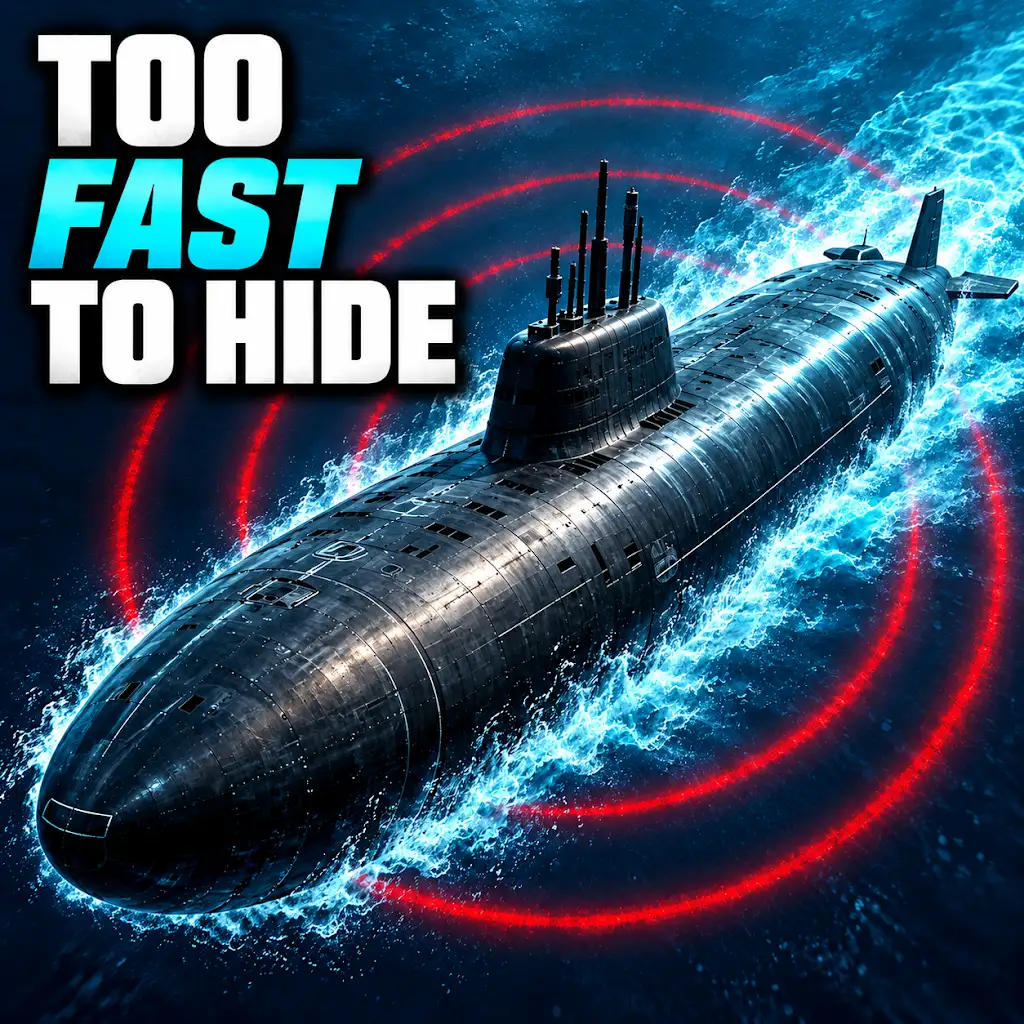
The Soviet Submarine That Broke a Speed Record—and Its Own Stealth
FAQs
What is the fastest submarine in the world record?
The fastest submarine in the world record is the Russian K-222, also known as the Papa-class submarine. It holds the record for the fastest speed achieved by a submarine, reaching a top speed of 44.7 knots (82.8 km/h or 51.4 mph) in 1989.
When did the Russian K-222 submarine set the speed record?
The Russian K-222 submarine set the speed record in 1989. It achieved a top speed of 44.7 knots during sea trials in the Barents Sea.
How does the speed of the Russian K-222 submarine compare to other submarines?
The speed of the Russian K-222 submarine is significantly faster than other submarines. It holds the record for the fastest speed achieved by a submarine, surpassing the speeds of other submarines by a considerable margin.
What are some key features of the Russian K-222 submarine?
The Russian K-222 submarine, also known as the Papa-class submarine, was a nuclear-powered submarine that was commissioned in 1969. It was known for its high speed, advanced technology, and innovative design, including a titanium hull.
Is the speed record of the Russian K-222 submarine still unbeaten?
As of now, the speed record of the Russian K-222 submarine remains unbeaten. Despite advancements in submarine technology, no other submarine has surpassed the top speed of 44.7 knots set by the K-222 in 1989.