
The frigid waters of the Cold War were not only a battleground for ideological supremacy but also a crucible for technological innovation. Beneath the waves, a silent, perilous arms race unfolded, driven by the insatiable demand for naval dominance. At the heart of this struggle lay the submarine, a weapon system that evolved at a breathtaking pace, pushing the boundaries of engineering, metallurgy, and strategic thinking. This technological contest, a shadowy dance of stealth and power, pitted the United States and the Soviet Union against each other in a relentless pursuit of submersible superiority. The very fabric of these vessels, particularly the materials from which they were forged, became a critical focal point. Among these, titanium emerged as a revolutionary material, promising unprecedented capabilities and fundamentally reshaping the submarine landscape.
The Dawn of the Nuclear Submarine Era
The introduction of nuclear propulsion marked a paradigm shift in submarine warfare. Prior to this, submarines were constrained by the need for frequent surfacing to recharge batteries and ventilate. Nuclear power liberated them, granting them near-limitless endurance and the ability to operate at greater depths and speeds for extended periods. This was a game-changer, transforming submarines from vulnerable coastal defense platforms into formidable blue-water predators capable of sustained strategic operations. Both superpowers recognized this potential immediately, initiating ambitious shipbuilding programs aimed at establishing dominance in this new domain.
The American Nuclear Submarine Ascendancy
The United States, with its established industrial base and early lead in nuclear reactor technology, quickly established a commanding presence in the nuclear submarine arena. The USS Nautilus, commissioned in 1954, was the world’s first nuclear-powered submarine, a testament to American ingenuity. This was followed by a series of increasingly capable designs, including the Skipjack and Thresher classes, which focused on improved hydrodynamics, quieter operation, and greater diving depths. The development of the Polaris missile system, designed to be launched from submerged submarines, further elevated the strategic importance of these vessels, creating a potent nuclear deterrent. The US Navy invested heavily in research and development, exploring new hull designs, sonar technologies, and propulsion systems to maintain its edge.
Soviet Response and the Pursuit of Depth
The Soviet Union, initially lagging in nuclear technology, responded with characteristic determination. While their early nuclear submarine designs, like the November class, were effective, they often suffered from higher noise levels and less sophisticated systems compared to their American counterparts. However, the Soviets possessed a distinct advantage in their willingness to push the boundaries of material science and engineering, particularly concerning extreme depth capabilities. Their strategic doctrine often emphasized the ability to operate at greater depths, believing this offered a significant advantage in evading detection and surviving attack. This focus on depth, in turn, would drive a crucial element of the technological race: the exploration of advanced materials.
During the Cold War, the race for submarine technology saw significant advancements, particularly with the use of titanium, which offered superior strength and resistance to corrosion compared to traditional steel. This shift allowed submarines to dive deeper and remain submerged longer, enhancing their stealth capabilities. For a deeper exploration of this fascinating aspect of military technology, you can read more in the related article found here: Cold War Submarine Technology and the Titanium Revolution.
The Titanium Advantage: Strength, Weight, and Stealth

The limitations of traditional steel hulls became increasingly apparent as submarines were designed for deeper dives and higher speeds. Steel, while strong, is also dense and susceptible to corrosion. The immense pressures at extreme depths posed a significant challenge to maintaining hull integrity. This is where titanium, a metal known for its exceptional strength-to-weight ratio, corrosion resistance, and non-magnetic properties, began to enter the submarine design equation. Its potential to enable deeper dives, reduce overall weight (allowing for greater payload or speed), and enhance stealth made it an incredibly attractive, albeit challenging, material for submarine construction.
Early Forays and the Soviet Breakthrough
The Soviet Union, driven by their strategic imperative for deep-diving submarines, became the pioneers in the extensive use of titanium for submarine hulls. Recognizing the limitations of steel for these extreme depths, they embarked on ambitious programs to develop the capabilities to fabricate and weld large titanium structures. This was a monumental undertaking, as titanium is notoriously difficult to work with. Its high melting point, reactivity with oxygen and nitrogen at elevated temperatures, and tendency to gall (seize) made conventional welding and machining processes problematic. Despite these challenges, the Soviets persevered, culminating in the construction of the K-278 Komsomolets, a unique experimental submarine that featured a titanium pressure hull capable of operating at unprecedented depths. This vessel, while ultimately lost in a fire, represented a significant technological achievement and a clear demonstration of the potential of titanium in submarine design.
US Skepticism and the Growing Threat
The United States, while aware of titanium’s properties, was initially more hesitant to adopt it for primary hull construction. The sheer cost and complexity of working with titanium, coupled with the continued success of their steel-hulled submarine programs, contributed to this caution. Furthermore, the American approach to deep diving often focused on hydrodynamic efficiency and advanced sonar to avoid detection rather than simply seeking to out-dive the adversary. However, as reports and intelligence about Soviet titanium submarine programs began to surface, a sense of unease and a recognition of the potential threat grew within the US Navy and intelligence agencies. The possibility of Soviet submarines operating at depths where American submarines could not effectively follow or engage was a strategic nightmare.
The Silent Duel: Stealth and Sonar in the Deep

The primary role of a submarine, beyond its offensive or defensive capabilities, is stealth. The ability to remain undetected is paramount for survival and for the successful execution of its mission. This pursuit of stealth involved a constant battle between enhancing a submarine’s ability to hide and improving the adversary’s ability to find it. This “cat and mouse” game was heavily reliant on advancements in sonar technology and the acoustic properties of the submarine itself.
Advancements in Sonar: The Eyes and Ears of the Ocean
Sonar, both active and passive, is the primary means by which submarines detect and track each other. The Cold War witnessed a rapid evolution in sonar systems. Active sonar, which emits sound pulses and analyzes the returning echoes, became more powerful and sophisticated, capable of detecting submarines at greater ranges. However, the use of active sonar also reveals the sonar-emitting vessel’s position, making it a riskier proposition in a stealth scenario. Passive sonar, which listens for sounds emitted by other vessels, became increasingly sensitive, allowing submarines to detect the faint sounds of distant machinery and hull noise. The development of towed sonar arrays, long cables of hydrophones that could be deployed behind a submarine, further enhanced passive sonar capabilities, allowing for the detection of submarines at much greater distances and from different angles.
Hull Design and Acoustic Signature Reduction
The materials used in submarine construction, as well as their shape, played a crucial role in minimizing their acoustic signature. Early submarines were often noisy, with a significant amount of mechanical vibration transmitted through their hulls. The drive for stealth led to the development of innovative sound-dampening technologies, including anechoic coatings applied to hull exteriors. These specialized materials absorbed sonar waves, reducing the echo returned to the active sonar source, and also helped to scatter sound, making it harder to pinpoint the submarine’s location. Titanium, with its inherent non-magnetic properties and potentially different acoustic reflection characteristics compared to steel, was also considered for its stealth advantages, though its cost and fabrication challenges remained significant hurdles for widespread adoption in the US. The Soviet Union’s extensive use of titanium was partly driven by the belief that it offered a superior acoustic signature, particularly at extreme depths where the surrounding water pressure might influence sound propagation.
The Strategic Implications of Titanium Submarines
The development and deployment of titanium-hulled submarines, particularly by the Soviet Union, had profound strategic implications. The ability to operate at significantly greater depths than their adversaries posed a direct challenge to existing naval doctrines and capabilities. This forced a reassessment of engagement envelopes, detection strategies, and the overall balance of power beneath the waves.
Challenging American Naval Dominance
The existence of Soviet submarines capable of diving to depths far beyond the operational limits of many American vessels created a strategic vulnerability. These “deep-diving” submarines could potentially operate with near impunity in certain ocean areas, making them incredibly difficult to track and engage. This raised concerns about the effectiveness of American anti-submarine warfare (ASW) capabilities and the security of vital sea lanes. The ability to launch nuclear missiles from these deep-diving platforms also added a new dimension to the strategic nuclear balance, as they could potentially survive a first strike and retaliate with greater certainty.
The Arms Race Continues: Adapt and Overcome
The perceived threat from Soviet titanium submarines spurred further innovation within the United States. While a full-scale adoption of titanium for primary hull construction was deemed too costly and complex at the time, the US Navy intensified its research into advanced materials and hull designs. This included exploring alternative alloys, composite materials, and further refinements in acoustic signature reduction technologies. The US also focused on improving its own deep-diving capabilities and developing new methods for detecting and tracking submarines at extreme depths. The strategic competition spurred by titanium submarines was not just about building stronger hulls but about a broader technological race to maintain naval superiority in the increasingly complex and dangerous underwater domain. The lessons learned from this era continue to inform submarine design and ASW strategies to this day.
During the Cold War, the race for submarine technology reached new heights, particularly with the innovative use of titanium in submarine construction. This lightweight yet incredibly strong material allowed for deeper dives and enhanced durability, giving nations a significant advantage in underwater warfare. For a deeper exploration of this fascinating topic, you can read more about the advancements in submarine technology in this related article on the subject. If you’re interested in understanding how these developments shaped naval strategies, check out the article here.
The Legacy of Titanium in Submarine Warfare
| Aspect | USSR (Soviet Union) | USA | Notes |
|---|---|---|---|
| First Titanium Hull Submarine | Project 661 Anchar (Papa-class), 1970 | None (used steel hulls) | USSR pioneered titanium hulls for deep diving and speed |
| Maximum Operating Depth | 600+ meters (Anchar-class) | Approx. 400 meters (Los Angeles-class) | Titanium hulls allowed deeper dives for Soviet subs |
| Speed (Submerged) | 44.7 knots (Anchar-class) | 33+ knots (Los Angeles-class) | USSR’s titanium subs were among the fastest |
| Hull Material | Titanium Alloy | High-strength Steel | Titanium offered corrosion resistance and strength but was costly |
| Production Challenges | High cost and complex welding techniques | Steel easier to manufacture and repair | Limited number of titanium subs built due to expense |
| Stealth Technology | Advanced anechoic tiles and quieting measures | Improved quieting and sonar evasion | Both sides invested heavily in acoustic stealth |
| Strategic Impact | Enhanced deep-sea reconnaissance and missile delivery | Focus on multi-role attack and ballistic missile subs | Titanium subs gave USSR tactical advantages in certain missions |
The era of the Cold War submarine technology race, with its intense focus on materials like titanium, left an indelible mark on naval warfare. While the overt political tensions of the Cold War have subsided, the technological advancements born out of that era continue to shape modern submarine capabilities. The pursuit of greater depth, enhanced stealth, and improved performance remains a central tenet of submarine design and development.
Lasting Technological Footprints
The experience gained in working with titanium, particularly by the Soviet Union, paved the way for its wider application in other demanding environments. The challenges overcome in welding, machining, and fabricating this metal contributed to a broader understanding of advanced materials science. The insights gained into acoustic signature reduction and deep-diving hydrodynamics continue to inform the design of contemporary submarines. Even as newer materials and technologies emerge, the fundamental principles explored during the Cold War, driven by the strategic imperative of submersible superiority, remain relevant.
The Enduring Significance of the Silent Service
The Cold War submarine race was a testament to human ingenuity and the relentless drive for technological advancement in the face of existential threat. The submarines of that era, whether constructed of steel or the revolutionary titanium, were instruments of deterrence and power, operating in a silent, unseen realm. The technological competition, though often hidden from public view, was as critical to the outcome of the Cold War as any surface engagement. The legacy of titanium’s role in this race serves as a potent reminder of how material science can fundamentally alter the capabilities of military hardware and shape the course of strategic competition, ensuring the enduring significance of the “silent service.”
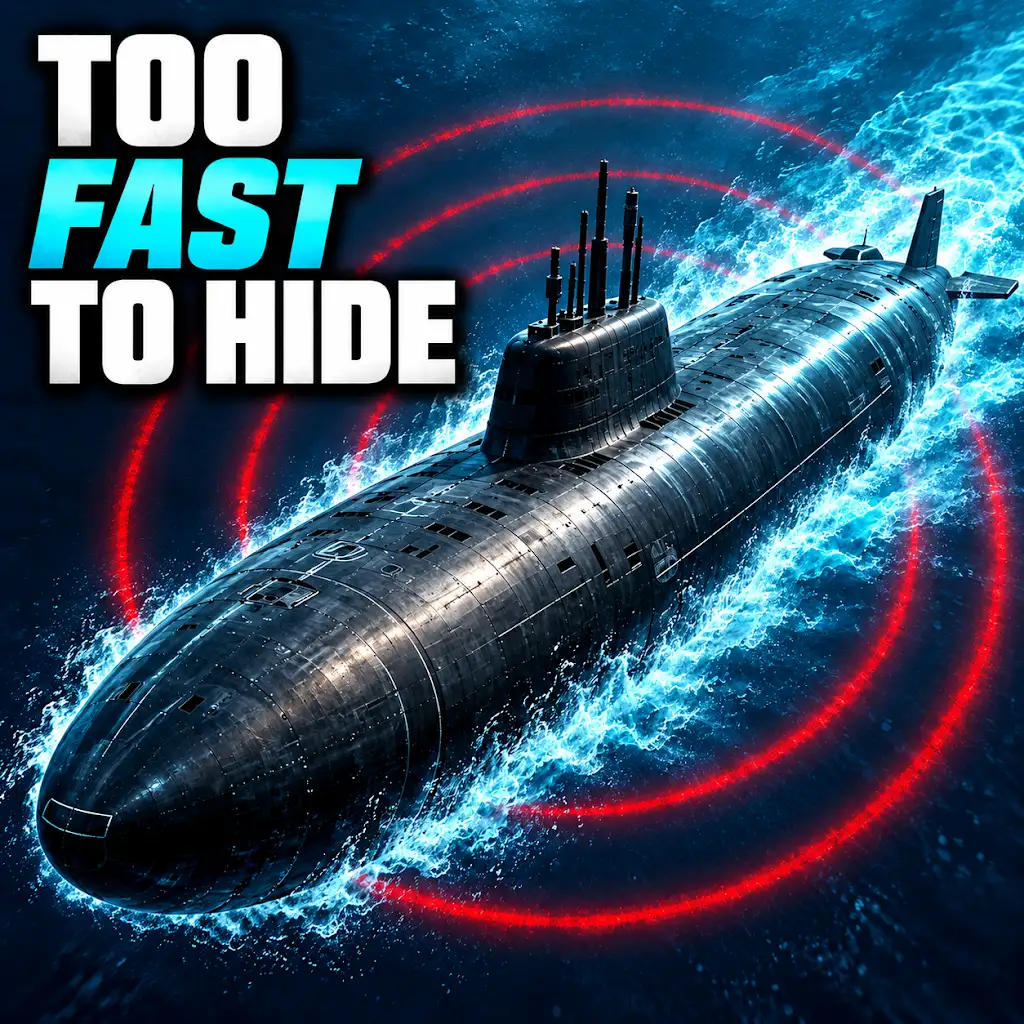
The Soviet Submarine That Broke a Speed Record—and Its Own Stealth
FAQs
What was the significance of titanium in the Cold War submarine technology race?
Titanium played a crucial role in the Cold War submarine technology race due to its strength, lightweight properties, and resistance to corrosion, making it an ideal material for building submarines that could withstand the harsh conditions of deep-sea operations.
How did the use of titanium in submarine construction impact the arms race between the US and the Soviet Union?
The use of titanium in submarine construction gave both the US and the Soviet Union a competitive edge in the arms race, as it allowed for the development of faster, quieter, and more advanced submarines that could operate at greater depths and remain undetected by enemy forces.
What advancements in submarine technology were made possible by the use of titanium?
The use of titanium in submarine construction enabled advancements such as the development of nuclear-powered submarines, improved sonar systems, and the ability to dive to greater depths, all of which significantly enhanced the capabilities of submarines during the Cold War.
How did the Cold War submarine technology race impact naval warfare and global security?
The Cold War submarine technology race led to the development of highly advanced submarines equipped with nuclear weapons, which played a significant role in shaping naval warfare strategies and global security policies during the Cold War era.
What is the legacy of titanium in submarine technology today?
Titanium continues to be a key material used in modern submarine construction, as it offers unparalleled strength, durability, and resistance to corrosion, ensuring that submarines remain a vital component of naval defense and security strategies around the world.