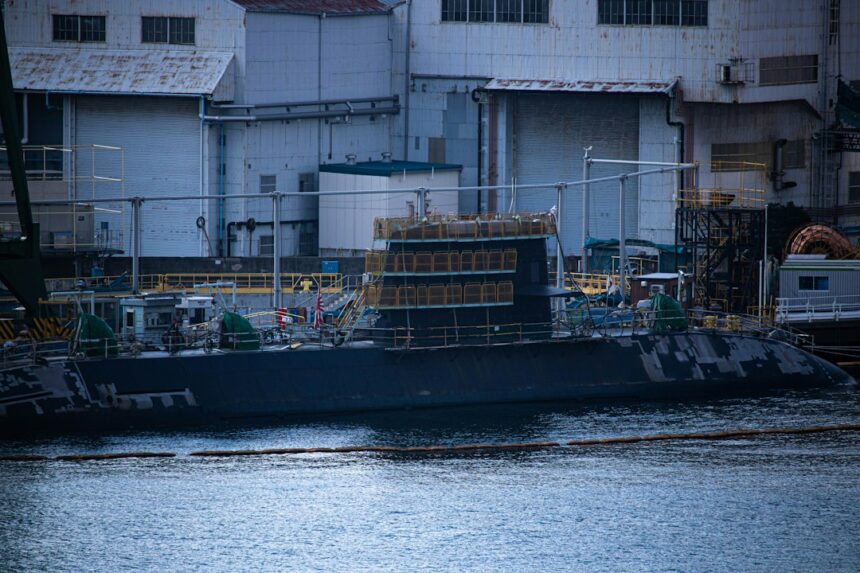
The I-371’s Final Voyage: A Post-Surrender Tragedy
The cessation of hostilities in the Pacific theater of World War II brought an end to years of brutal conflict, but for some, the finality of surrender did not immediately translate into peace. The story of the Japanese submarine I-371 is a poignant and tragic testament to this transitional period, a vessel that met its demise not at the hands of enemy fire during active combat, but through the complex and often perilous landscape of post-war disarmament. This account delves into the final days of the I-371, exploring the circumstances of its sinking, the broader context of Japanese naval disarmament, and the enduring questions surrounding this unfortunate incident.
The I-371, a Type B1 submarine, represented a significant class of Japanese naval vessels, designed for long-range patrols and the deployment of reconnaissance aircraft. These submarines were formidable weapons, capable of projecting power far across the vast expanse of the Pacific. However, by August 1945, Japan’s military fortunes had dramatically reversed. The relentless Allied advance, coupled with devastating strategic bombing and the atomic bombings of Hiroshima and Nagasaki, had rendered further resistance futile. Emperor Hirohito’s broadcast announcing the unconditional surrender on August 15, 1945, marked a pivotal moment, but the practicalities of demobilization and disarmament were a monumental undertaking, fraught with potential for misunderstandings and accidents.
The story of the Japanese submarine that sank after Japan’s surrender is a poignant reminder of the complexities of war and the challenges faced by military forces in the aftermath of conflict. For those interested in exploring this topic further, a related article can be found at this link, which delves into the historical context and implications of such events.
Pre-Surrender Operational Context
The I-371’s Patrols and Mission Profile
To understand the I-371’s fate, it is essential to briefly consider its operational history leading up to the surrender. As a Type B1 submarine, the I-371 was equipped with a reconnaissance seaplane launched via catapult. This capability allowed it to scout enemy positions, conduct reconnaissance missions, and even engage in limited attacks. Its patrols were part of Japan’s broader submarine strategy, aimed at disrupting Allied supply lines, gathering intelligence, and attacking enemy warships. While specific details of the I-371’s engagements in the immediate pre-surrender period are not as extensively documented as some earlier wartime actions, its operational readiness and the continued deployment of such vessels underscore the ongoing nature of the conflict until the very final days. Submarines like the I-371 were crucial components of the Imperial Japanese Navy’s strategic deterrent and offensive capabilities, and their continued presence on patrol reflected the grim realities of the war’s final stages. The nature of submarine warfare meant that these vessels often operated in isolation, making their eventual disposition after the surrender a matter of careful coordination.
The Shifting Tides of War
By the summer of 1945, the tide of the war had irrevocably turned against Japan. Allied forces had achieved decisive victories in the Pacific, culminating in the capture of strategic islands and the systematic destruction of Japan’s naval and air power. The devastating effectiveness of Allied anti-submarine warfare, coupled with dwindling resources and the strategic bombing campaign, had severely degraded Japan’s capacity to wage offensive war. The prospect of an Allied invasion of the Japanese home islands loomed large, a scenario that promised immense casualties on both sides. In this context, the Emperor’s decision to surrender was born out of a pragmatic assessment of an unwinnable situation, aimed at preserving the nation and its people from further devastation. The announcement of surrender, however, did not instantly halt all military operations. There remained a period of immense uncertainty as communications were established and directives were disseminated throughout the vast and often isolated Japanese military apparatus, both at home and in occupied territories.
The Directive for Disarmament

Imperial Order and Naval Compliance
Following the Emperor’s surrender announcement, the Imperial Japanese Navy, like all branches of the Japanese military, received directives regarding the cessation of hostilities and the subsequent disarmament. These orders, transmitted through official channels, mandated that all active warships cease offensive operations and await further instructions from Allied command. The intent was clear: to prevent any further bloodshed and to facilitate a peaceful transition to Allied control. However, the sheer scale of the Japanese navy, with its numerous submarine flotillas scattered across the Pacific, meant that communication and enforcement were complex challenges. Submarines at sea, often operating independently and with limited communication capabilities, posed a particular concern. Ensuring that every vessel received and understood the surrender order, and crucially, complied with it, was a formidable logistical and administrative hurdle.
Ambiguities and Misinterpretations
The transition period from war to peace is inherently prone to ambiguity. While the broad strokes of surrender were understood, the specific implementation details for individual units could be unclear. For submarines operating in remote locations, the exact nature of the surrender might have been subject to interpretation, especially if communications were interrupted or delayed. There was also the psychological factor: ingrained military discipline and years of combat operations could make it difficult for crews to immediately shift from an offensive mindset to one of compliance with enemy directives. While the Japanese leadership had officially surrendered, the ingrained culture of loyalty and duty within the military could, in some isolated instances, lead to actions that were not entirely aligned with the spirit, if not the letter, of the surrender orders. This is not to suggest any deliberate defiance, but rather the inherent difficulties in conveying and ensuring universal understanding and immediate compliance in a vast and complex military structure under immense stress.
The I-371’s Final Operation and Sinking
The Last Patrol and Encounter
The exact circumstances leading to the I-371’s sinking remain somewhat debated, but the most widely accepted account places its final moments in the waters off the coast of the Philippines in late August 1945, shortly after the formal surrender announcement. It is believed that the I-371 was on a reconnaissance mission or possibly attempting to return to port when it encountered Allied naval forces. While Japan had surrendered, Allied patrols continued in some areas to ensure compliance and to maintain order. It is plausible that the I-371, perhaps not fully aware of the immediate Allied naval presence or operating under outdated orders, was intercepted. The Allied forces, acting on standard operating procedures for encountering Japanese naval vessels in the immediate post-surrender period, would have viewed an active submarine as a potential threat.
The Sinking: Accident or Enforcement?
The sinking of the I-371 is generally attributed to a deliberate action by Allied forces. The prevailing interpretation is that the Allied patrol, upon encountering the I-371, perceived it as an undeclared threat or a vessel not complying with surrender protocols. In such a scenario, the Allied commander would have had the authority to neutralize the perceived threat. This could have involved a warning shot followed by decisive action, or a direct engagement. It is unlikely that the I-371 was actively engaged in combat in the traditional sense, as the war had officially ended. Instead, its sinking is more likely a consequence of enforcement actions taken by Allied naval forces to ensure the complete demilitarization and surrender of Japanese assets. The precise nature of the engagement, whether it was a swift action or involved some attempt at communication that failed, is a detail that is not fully documented in publicly available records. However, the outcome was undeniable: the I-371 was sunk, taking its crew with it.
The story of the Japanese submarine that was sunk after Japan’s surrender is a fascinating chapter in naval history, highlighting the complexities of wartime decisions and the aftermath of conflict. For those interested in exploring this topic further, you can read a related article that delves into the circumstances surrounding the submarine’s fate and its implications for post-war naval strategy. This insightful piece can be found here.
The Legacy of the Post-Surrender Casualties
| Submarine Name | Type | Displacement (tons) | Date of Sinking | Location | Cause of Sinking | Notes |
|---|---|---|---|---|---|---|
| IJN I-401 | Sentoku-class (Sen-Toku) | 3,603 (surfaced) | September 1945 | Near Hawaii | Sunk by US Navy after surrender | One of the largest submarines of WWII, scuttled post-war |
| IJN I-14 | Sentaka-class (Sen-Taka) | 2,584 (surfaced) | 1946 | Off the coast of Japan | Sunk by US Navy during post-war disposal | Carried a small seaplane, scuttled after surrender |
| IJN I-400 | Sentoku-class (Sen-Toku) | 3,603 (surfaced) | 1946 | Near Hawaii | Sunk by US Navy after surrender | Largest submarine of its time, scuttled post-war |
A Grim Reminder of War’s End
The sinking of the I-371 serves as a grim reminder that the end of a war is rarely a clean or instantaneous event. The transition from a state of active combat to one of peace is often messy, characterized by lingering tensions, miscommunications, and the unfortunate casualties that can arise from these ambiguities. The I-371’s fate highlights the human cost that can persist even after the official cessation of hostilities. For the families of the crew aboard the I-371, the loss of their loved ones in such circumstances must have been particularly devastating, grappling with the knowledge that their lives were lost not in direct battle, but in the chaotic aftermath of surrender. This incident, though perhaps less prominent in broader historical narratives, is a microcosm of the broader challenges faced by both victors and vanquished in the complex process of demobilization and demilitarization.
Broader Implications for Naval Disarmament
The incident involving the I-371 also speaks to the broader challenges of naval disarmament following a major conflict. The task of collecting, disarming, and eventually disposing of a vast fleet of warships, especially submarines which could be difficult to locate and track, was a monumental undertaking for the Allied powers. Establishing clear protocols, ensuring effective communication with former enemy forces, and maintaining vigilance were all crucial elements in preventing further incidents. The sinking of the I-371, while likely an isolated event in terms of major naval units, underscores the potential for miscalculation and unintended consequences during such periods. It emphasizes the importance of meticulous planning, clear communication, and robust oversight in the process of demilitarizing a defeated nation’s military assets. The legacy of such events contributes to the development of international norms and protocols for future demilitarization efforts, aiming to minimize the risk of similar tragedies.
Echoes in the Deep: Historical Interpretation and Memorialization
Reconstructing the Narrative
The historical reconstruction of the I-371’s final moments relies on piecing together fragmented records, naval logs, and accounts from both sides of the conflict. The passage of time, coupled with the inherent secrecy surrounding military operations, means that some details may forever remain lost to the deep. Historians and researchers continue to delve into archives, seeking to shed further light on the precise sequence of events that led to the submarine’s demise. The Japanese side may have its own internal records or anecdotal accounts that could offer additional perspectives, though accessibility to such information can vary. The process of understanding and interpreting events like the sinking of the I-371 is an ongoing endeavor, a testament to the enduring human desire to comprehend the past and learn from its lessons.
The Unwritten Stories and Memorialization Efforts
While the I-371 may not be as widely recognized as some of the more famous warships of World War II, its story holds significance for those interested in the human element of naval history and the complexities of wartime transitions. Memorialization efforts, though perhaps limited to niche historical communities or descendants of the crew, serve to keep the memory of the I-371 and its crew alive. These efforts can take various forms, from dedicated historical markers to online forums and documentaries. The act of remembering and recounting such stories is crucial, not only to honor the lives lost but also to provide a more nuanced and complete understanding of the Pacific War’s final, often overlooked, chapter. The I-371’s final voyage, though a tragedy, stands as a silent testament to the enduring challenges of peace and the human cost that can accompany the end of even the most decisive of wars. Its story, like many others, echoes in the deep, waiting to be fully understood and remembered.
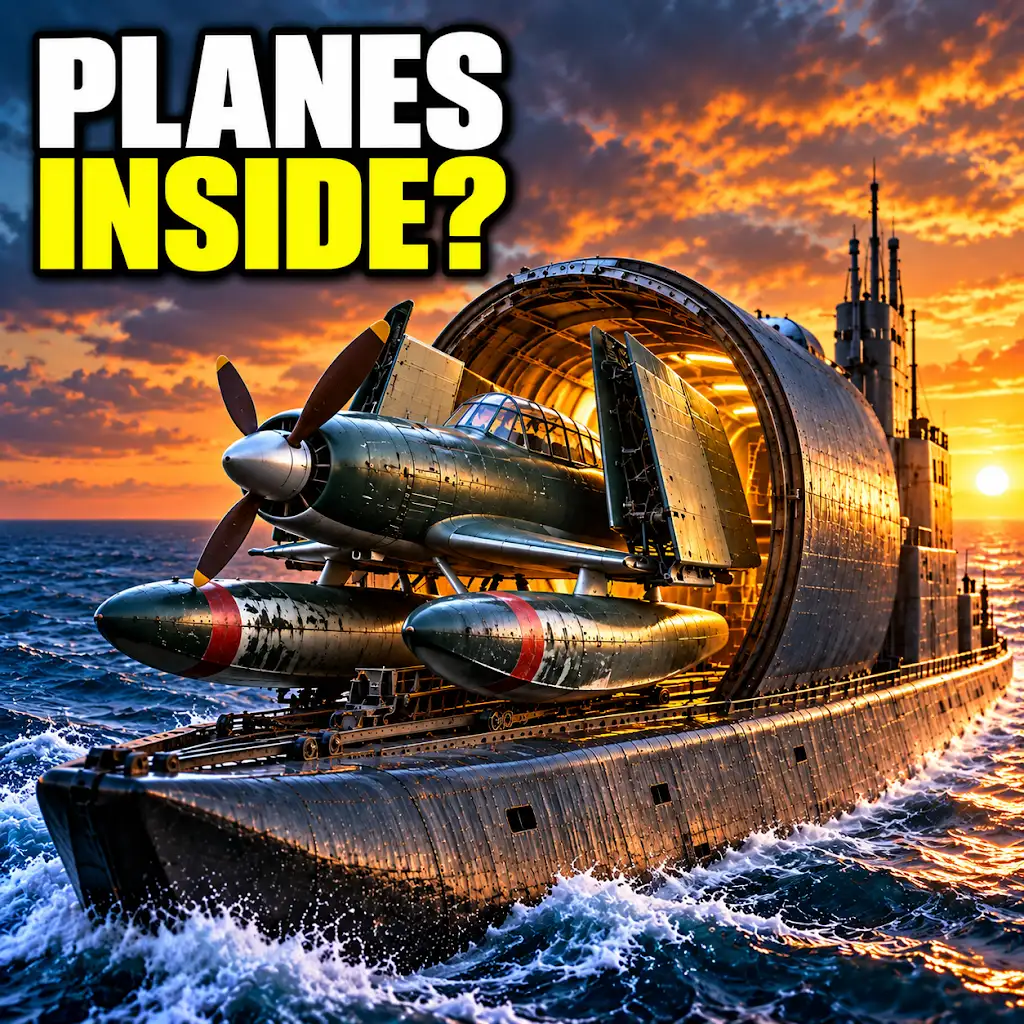
Japan Built a Submarine That Could Launch Three Planes
FAQs
1. What happened to the Japanese submarine after surrendering?
The Japanese submarine was sunk by the United States Navy after it had officially surrendered at the end of World War II.
2. Why was the Japanese submarine sunk after surrendering?
The sinking of the Japanese submarine was a common practice during wartime to prevent the enemy from potentially using the vessel for future military operations.
3. When did the sinking of the Japanese submarine take place?
The sinking of the Japanese submarine occurred after Japan’s official surrender on September 2, 1945, marking the end of World War II.
4. Which country’s navy was responsible for sinking the Japanese submarine?
The United States Navy was responsible for sinking the Japanese submarine after it had surrendered at the end of World War II.
5. Was there any specific reason for sinking the Japanese submarine after surrender?
The sinking of the Japanese submarine was part of the overall demilitarization process following Japan’s surrender and was done to ensure that the vessel could not be used for any future military purposes.