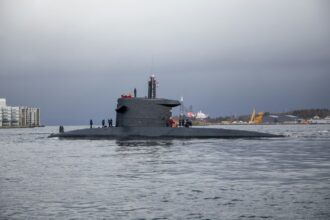
The whispers of the deep have always held a certain mystique, but for naval strategists, the silent hunter beneath the waves represents a pinnacle of military innovation. Among the myriad designs that have graced the ocean’s expanse, the Japanese submarine with an aircraft hangar stands out as a particularly intriguing and potent concept. This unique marriage of underwater stealth and aerial reconnaissance/attack capability offered a tantalizing glimpse into a future of naval warfare, blending the best of both worlds into a formidable weapon system. While not produced in large numbers, the theoretical and limited practical applications of such vessels paint a picture of a stealthy naval power capable of projecting influence and striking with unprecedented versatility.
Genesis of a Hybrid Hunter
The impetus for developing a submarine capable of carrying and launching aircraft stemmed from a desire to overcome inherent limitations of both platforms. Submarines, while stealthy, possess limited operational range for reconnaissance and are blind to targets beyond their immediate sensor horizon. Aircraft, on the other hand, offer unparalleled situational awareness and strike range but are vulnerable to enemy air defenses and require fixed bases. The concept of integrating these two disparate capabilities sought to create a synergistic effect, where the submarine provided a mobile, concealed launch platform for aircraft that could then extend the submarine’s reach and offensive punch.
Early Motivations and Precursors
The concept of combining submarine and aircraft technology wasn’t entirely novel. Early experiments and concepts emerged even before World War I, with various navies exploring ways to extend their naval reach. However, the true impetus for dedicated submarine aircraft carriers gained traction in the interwar period, as naval powers grappled with the evolving landscape of warfare. Japan, a nation keenly aware of its island geography and the importance of projecting power across vast oceanic distances, was particularly receptive to such innovative ideas. The need for reconnaissance in the Pacific, a theater characterized by immense distances and scattered island chains, made the idea of a submersible scout particularly attractive.
The Imperial Japanese Navy’s Vision
The Imperial Japanese Navy (IJN) harbored a distinct strategic doctrine that emphasized offensive power projection and surprise attacks. This doctrine naturally led them to explore unconventional weapon systems. The idea of a submarine carrying aircraft was not merely an academic exercise for them; it was a tangible objective driven by a desire to gain a strategic advantage. The IJN envisioned these hybrid vessels not just for reconnaissance but also for offensive missions, including bombing crucial enemy installations or even conducting torpedo attacks on capital ships with the aid of aerial spotting. The psychological impact of such a vessel, capable of launching a surprise aerial assault from seemingly nowhere, was also a significant consideration.
The advancements in naval technology have led to the development of submarines equipped with aircraft hangars, significantly enhancing their operational capabilities. A related article that delves into this fascinating topic is available at this link. It explores the strategic implications of such submarines, particularly focusing on Japanese innovations in underwater warfare and their potential impact on maritime security in the Asia-Pacific region.
Design and Engineering Challenges
The creation of a submarine with an integrated aircraft hangar was a monumental engineering feat, fraught with significant challenges. Balancing the demands of underwater stealth with the operational requirements of carrying and launching aircraft required innovative solutions and often involved compromises. The sheer complexity of integrating a hangar, launch mechanism, and potentially repair facilities within the confined space of a submarine hull pushed the boundaries of naval architecture.
Hull Design and Space Constraints
The most immediate challenge was the integration of a hangar. Submarines are designed to be streamlined and hydrodynamic for efficient underwater movement and stealth. Adding a large, external hangar structure, even if partially recessed, would inevitably impact this. Furthermore, the internal space of a submarine is at a premium, every cubic meter accounted for. Allocating significant volume for an aircraft hangar, along with its associated maintenance equipment, fuel storage, and launching apparatus, meant sacrificing space for crew amenities, weaponry, or other essential systems. This often resulted in larger submarines than would otherwise be necessary, impacting their maneuverability and diving depth.
Launch and Recovery Mechanisms
The method of launching and recovering aircraft from a submerged platform was another critical hurdle. Early designs often involved a catapult system mounted on the deck. For launch, the submarine would surface, the aircraft would be brought to the catapult, and then launched. Recovery presented an even greater challenge, as it typically required the submarine to surface again, deploy a crane or net, and then painstakingly bring the aircraft aboard. This process was time-consuming, exposed the submarine to potential enemy detection, and limited the operational tempo. Some later concepts explored the possibility of launching aircraft while the submarine was partially submerged, but this introduced further complications related to wave action and stability.
Crew and Operational Considerations
Operating such a complex vessel also demanded highly skilled and adaptable crews. They needed expertise in both submarine operations and aviation. The logistics of maintaining aircraft, including refueling, rearming, and minor repairs, within the confines of a submarine were incredibly demanding. The psychological toll on the crew, constantly operating in a dual-role environment, also cannot be overlooked. Furthermore, the operational doctrine for these submarines needed to be carefully developed, as their employment required a delicate balance between stealth and the need to surface for aircraft operations.
The Sen Toku-Type and Other Variants
While the concept of a submarine aircraft carrier existed in theory for many navies, Japan was one of the few to actively pursue its construction and operational deployment. The most prominent example of this unique design was the Sen Toku-type, a class of colossal submarines that pushed the boundaries of what was thought possible for underwater vessels. These ships were a testament to Japan’s ambitious naval thinking.
The I-400 Class: Giants of the Deep
The I-400 class submarines, often referred to as the “Sen Toku-type” (Special Type) or “Grande” submarines, were truly colossal vessels. They were among the largest submarines ever built before the advent of nuclear power, exceeding even the largest German U-boats. Their immense size was primarily dictated by the need to house a large hangar capable of carrying three Aichi M6A1 “Seiran” (Mountain Storm) floatplane bombers. These aircraft were specifically designed for this role, foldable and equipped with floats for water landings, although recovery was a complex affair.
The “Seiran” Aircraft: Optimized for Submarine Deployment
The Aichi M6A1 Seiran was a crucial component of the I-400 class’s offensive capability. This dive bomber was designed from the ground up to be launched from the I-400’s catapult. Its folding wings and the attachment of floats allowed it to be stowed compactly within the hangar. The Seiran was powered by a single engine and was capable of carrying a significant bomb load. Its intended mission profile involved launching from the submarine, attacking targets, and then ditching in the water where the submarine could theoretically recover the crew and aircraft, or the pilots would bail out if recovery was not feasible. This latter option, however, presented significant risks to the aircrew.
Other Experimental Designs and Concepts
Beyond the I-400 class, Japan also experimented with other, albeit less ambitious, submarine designs that incorporated aircraft. Some earlier submarine classes were modified to carry a single reconnaissance floatplane, often launched and recovered using a specialized crane. These designs were generally smaller and focused more on reconnaissance than offensive bombing. However, they still represented a step towards integrating air power with submarine operations, laying the groundwork for more complex future developments.
Strategic Applications and Missed Opportunities
The theoretical strategic applications of Japanese submarines with aircraft hangars were vast and could have significantly altered the course of naval warfare in the Pacific. However, their limited deployment and the ultimate outcome of the war meant that these potent weapons systems never reached their full potential. Their unique capabilities offered several distinct strategic advantages, but their deployment was hampered by strategic shifts and overwhelming enemy power.
Surprise Attacks and Reconnaissance
The primary strategic advantage of these hybrid submarines lay in their ability to conduct surprise attacks and gather intelligence with unprecedented stealth. Imagine a squadron of “Seiran” bombers launching from a submerged submarine hundreds of miles from enemy shores, striking targets with little to no warning. This capability could have been used to disrupt enemy supply lines, damage naval bases, or even attack larger fleet formations. Furthermore, the aircraft provided a long-range reconnaissance platform, allowing the submarine to scout enemy positions and movements without exposing itself. This was particularly valuable in the vast expanses of the Pacific, where traditional scouting methods were often slow and vulnerable.
Psychological Warfare and Prestige
The very existence of such a formidable and unconventional weapon system would have had a significant psychological impact on the enemy. The idea of an unseen enemy capable of launching aerial attacks from beneath the waves was a chilling prospect. It would have forced the Allied navies to dedicate resources to detecting and countering this unique threat, diverting them from other critical tasks. For Japan, these submarines represented a symbol of their technological prowess and their determination to fight a technologically advanced war, even against overwhelming odds.
Limited Impact and Operational Realities
Despite their formidable potential, the Sen Toku-type submarines saw very limited operational use. By the time they were ready for deployment, the strategic tide of the war had turned decisively against Japan. The vast distances of the Pacific meant that their operational range, while impressive, was still constrained. Furthermore, the Allies had developed effective anti-submarine warfare (ASW) capabilities, making any surfacing operation increasingly risky. The intended missions, such as attacking the Panama Canal or striking targets on the US West Coast, were ultimately deemed too ambitious or too risky. The few operational missions they did undertake were primarily reconnaissance or limited attack sorties, often resulting in the loss of the submarines or their aircraft.
The development of Japanese submarines equipped with aircraft hangars represents a significant advancement in naval warfare capabilities, allowing for enhanced operational flexibility and strategic reach. For a deeper understanding of this innovative technology and its implications for modern naval strategies, you can read a related article on this topic at In the War Room. This resource provides valuable insights into how such submarines could reshape maritime engagements in the future.
Legacy and Enduring Influence
| Submarine Name | Type | Aircraft Hangar | Aircraft Type | Displacement (tons) | Length (meters) | Year Introduced |
|---|---|---|---|---|---|---|
| I-400 Class | Sentoku-class submarine aircraft carrier | Yes | Seiran floatplane | 5,900 (surfaced) | 122 | 1944 |
| I-14 | Sentoku-class submarine aircraft carrier | Yes | Seiran floatplane | 5,223 (surfaced) | 113 | 1945 |
Though the era of submarine aircraft carriers passed with the advent of new technologies and strategic doctrines, the Japanese concept of the submarine with an aircraft hangar left an indelible mark on naval thought. It demonstrated a bold vision for naval power projection and highlighted the potential for synergistic integration of different military platforms. The lessons learned, both in terms of design and operational employment, continued to influence naval architecture and strategy for decades to come.
Technological Advancements and Future Concepts
The engineering innovations and design principles developed for these hybrid submarines, such as the integration of complex launch systems and the careful consideration of internal space allocation, undoubtedly influenced later submarine designs. While dedicated submarine aircraft carriers are not a common feature of modern navies, the underlying principle of extending a platform’s capabilities through integrated systems remains a driving force in military innovation. Concepts like unmanned aerial vehicles (UAVs) launched from submarines, or the integration of advanced sensor suites that effectively act as aerial eyes, can be seen as distant descendants of the original vision.
A Symbol of Naval Ambition
The Sen Toku-type submarines, with their immense size and ambitious mission profiles, stand as a testament to Japan’s audacious naval ambition during World War II. They represent a period of intense innovation and a willingness to explore unconventional solutions to complex strategic challenges. Even though their operational impact was minimal, their existence served as a stark reminder of the innovative spirit that can emerge from even the most dire of circumstances. They are a fascinating chapter in naval history, a story of a stealthy naval power that dared to dream of combining the silent depths with the boundless sky.
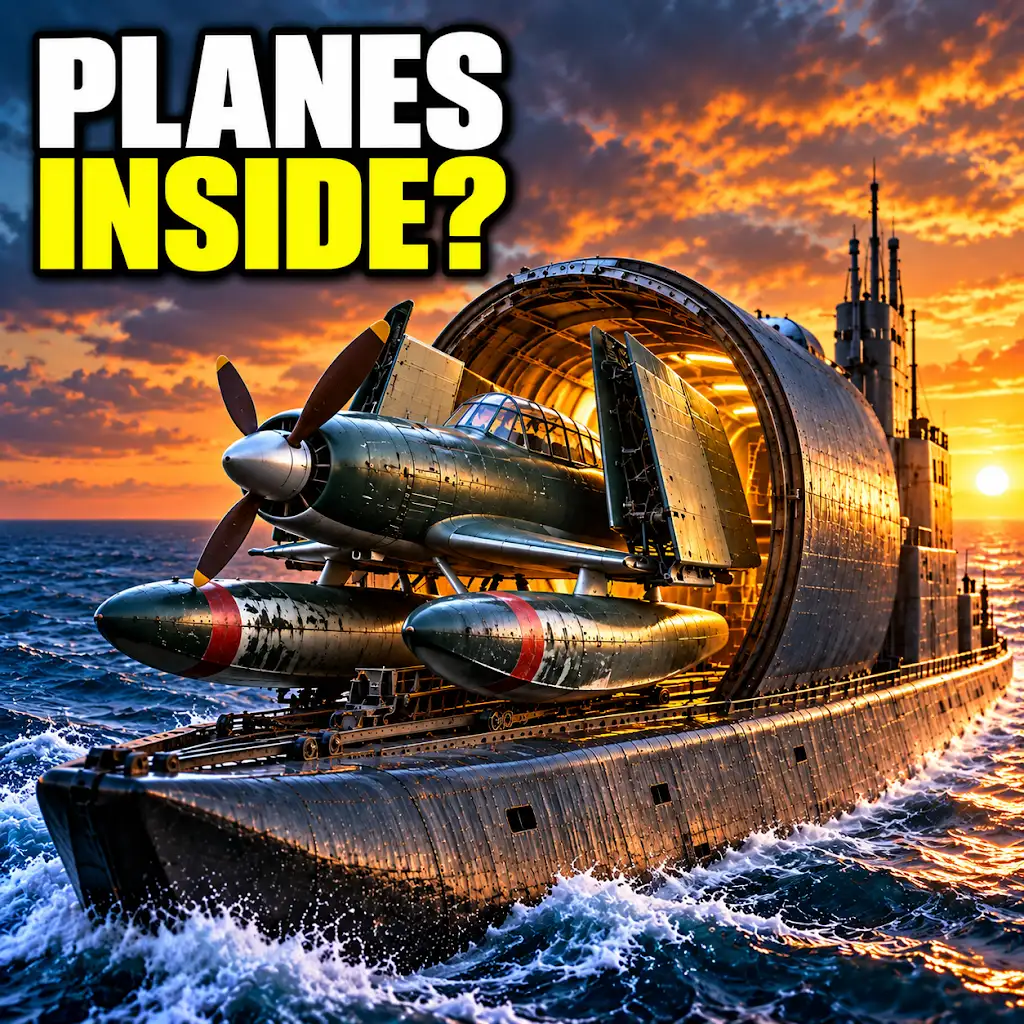
Japan Built a Submarine That Could Launch Three Planes
FAQs
What is a Japanese submarine with an aircraft hangar?
A Japanese submarine with an aircraft hangar is a type of submarine that is equipped with a hangar to store and launch aircraft. This allows the submarine to operate as both a traditional submarine and an aircraft carrier.
How does a Japanese submarine with an aircraft hangar operate?
The aircraft hangar on the submarine allows it to carry and launch small aircraft, such as drones or helicopters. These aircraft can be used for reconnaissance, surveillance, or other military operations while the submarine remains submerged.
What are the advantages of a Japanese submarine with an aircraft hangar?
One of the main advantages of a submarine with an aircraft hangar is the ability to extend the submarine’s operational range and capabilities. The aircraft can be used to gather intelligence, conduct search and rescue missions, or provide support to special operations forces.
Are Japanese submarines with aircraft hangars currently in use?
As of now, there are no known Japanese submarines with aircraft hangars in active service. However, there have been reports of Japan considering the development of such submarines to enhance its maritime capabilities.
What are the potential challenges of operating a Japanese submarine with an aircraft hangar?
Some of the challenges of operating a submarine with an aircraft hangar include the limited space available for aircraft storage and maintenance, as well as the complexities of launching and recovering aircraft from a submerged position. Additionally, the noise generated by aircraft operations could potentially compromise the stealth capabilities of the submarine.