The churning grey waters of the Pacific Ocean held their secrets close, especially during the tumultuous final years of World War II. Yet, amidst the vastness and the ever-present threat of unseen enemies, a remarkable event unfolded, a testament to the bravery, skill, and sheer audacity of the American submarine force. On July 31, 1945, far from the established battle lines, the USS Segundo, a diesel-electric submarine of the Gato class, achieved a feat that would echo through naval history: the capture of the Japanese submarine I-401, a vessel of immense technological significance and a symbol of Japan’s desperate gamble for naval parity. This was not merely the sinking of an enemy warship, but the taking of a prize, a tangible piece of the enemy’s advanced capabilities, secured by the relentless pursuit and tactical brilliance of her American counterparts.
The Hunt Begins: A Shadow in the Pacific
The Pacific war was a theater of cat and mouse, with submarines playing a crucial role in disrupting supply lines, conducting reconnaissance, and engaging enemy fleets. The USS Segundo, under the command of Lieutenant Commander Robert G. Barry, was a veteran of this dangerous game. Commissioned in 1943, she had already participated in numerous war patrols, honing her crew’s skills and accumulating a formidable record of success. Her mission on this particular patrol, however, was to become legendary. Intelligence reports had indicated the presence of a unique Japanese submarine, the I-401, a colossal vessel designed to carry and launch aircraft, a veritable flying torpedo boat. The I-401 represented a significant technological leap for the Imperial Japanese Navy, and its potential threat was not to be underestimated.
Whispers of a Giant Submarine
The existence of the I-401 and its sister ships, the I-400 and I-402, was known to Allied intelligence, but detailed information was scarce. These were not ordinary submarines; they were massive submersible aircraft carriers, capable of submerging and launching their embarked aircraft hundreds of miles inland. Their primary role was envisioned as a devastating surprise attack against targets on the American mainland, particularly the Panama Canal. The mere idea of such a weapon striking the continental United States sent shivers through the naval command. The I-401, in particular, was equipped with a hangar large enough to house three seaplanes, and its operational capabilities were designed to be a shock to the Allied forces. The mission to find and neutralize this formidable vessel was paramount.
Segundo’s Strategic Deployment
Lieutenant Commander Barry and the crew of the Segundo were tasked with a high-priority reconnaissance and interdiction mission in the waters off the coast of Japan. They were to patrol a vast expanse of ocean, searching for any sign of the elusive I-401. The patrol area was strategically chosen, as intelligence suggested it was a likely transit route for the Japanese submarine. The vastness of the Pacific, however, meant that finding a single submarine, even one as large as the I-401, was akin to searching for a needle in a haystack. The days turned into weeks, filled with the monotonous routine of sonar sweeps, periscope observations, and the constant vigilance that defined submarine warfare.
The recent capture of the I-401 submarine by the USS Segundo has sparked significant interest in naval warfare history. For a deeper understanding of the strategic implications and technological advancements during World War II, you can read a related article that explores the intricacies of submarine warfare and its impact on naval tactics. Check it out here: In The War Room.
The Encounter: A Tense Standoff
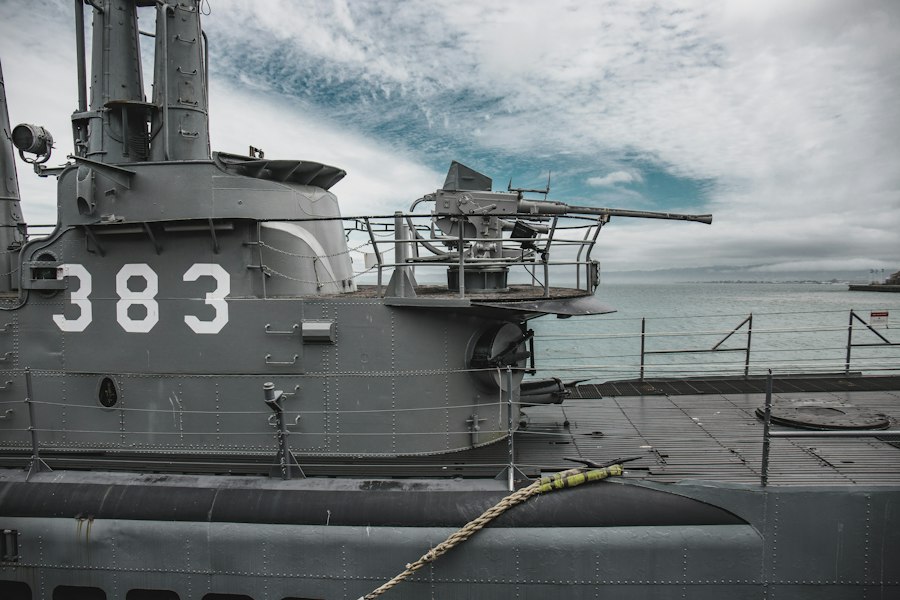
The turning point came on July 31, 1945. The war in the Pacific was drawing to a close, with Japan on the defensive. However, the I-401, along with other similar submarines, was still operational and posed a threat. The Segundo, through a combination of luck, keen observation, and skillful maneuvering, made contact. What followed was not an immediate battle of torpedoes and depth charges, but a tense cat-and-mouse game, a testament to the unique circumstances of this encounter.
A Distant Silhouette
The first sighting was made by the Segundo’s lookouts, a faint silhouette against the horizon that, with increasing clarity through the periscope, resolved into something far larger and more unusual than a standard submarine. The distinct shape of the I-401, with its distinctive hangar and unique deck arrangement, was unmistakable. Lieutenant Commander Barry immediately recognized the magnitude of their discovery. This was the target they had been hunting. The sheer size of the Japanese submarine was striking, dwarfing the more conventional American designs.
A Calculated Approach
Rather than launching an immediate torpedo attack, which could have resulted in the destruction of the prize, Barry opted for a more cautious approach. The I-401 was spotted on the surface, seemingly not on high alert. This presented an opportunity. The Segundo, employing its stealth capabilities, began to close the distance, using the swells and the vastness of the ocean as cover. The goal was not just to sink the submarine, but if possible, to capture it. The intelligence value of such a vessel, its technology and operational details, would be invaluable to the Allied war effort. The tension aboard the Segundo would have been palpable, the crew knowing that a single misstep could either lose them the target or lead to a deadly engagement.
The Unexpected Surrender: A Strategic Masterstroke
The situation on the I-401 was far from ideal. Its mission had been fraught with delays and setbacks. By the time it encountered the Segundo, the tide of the war had turned decisively against Japan. The prospect of a successful mission, let alone a return to Japan, seemed increasingly bleak. The surrender of the I-401 was not a result of overwhelming force, but a complex interplay of strategic circumstances and a calculated decision by the Japanese commander.
A Dwindling Purpose
The I-401 and its sister submarines had been dispatched on a mission that, by July 1945, had lost much of its strategic relevance. The war was nearing its end, and the likelihood of successfully executing their planned attacks had diminished significantly. The Japanese high command, in a desperate attempt to salvage something from the war, had ordered the I-401 to prepare for a kamikaze-style attack against Allied invasion fleets. However, the crew of the I-401 was reportedly hesitant to carry out such a suicidal mission, especially given the changing realities of the war. Their mission, once a symbol of offensive power, had devolved into a desperate, last-ditch effort.
The Second Chance
When the USS Segundo made contact, the I-401 was not in a position to mount a vigorous defense. The Japanese crew, likely aware of their deteriorating strategic situation and the overwhelming might of the Allied forces, made a decision that stunned the American sailors. Instead of engaging in a futile battle, the I-401 signaled its intention to surrender. This was an unprecedented event in submarine warfare – the capture of an operational enemy submarine, not through sinking, but through a peaceful cessation of hostilities. The signal was clear, and the implications were immense.
Securing the Prize: The Technical Challenge
The capture of an entire submarine was a complex undertaking, fraught with technical and logistical challenges. The USS Segundo, a warship designed for combat and stealth, was now tasked with escorting and securing a massive enemy vessel. This required a level of coordination and expertise that pushed the boundaries of standard naval operations.
Boarding and Disarming
Following the surrender, a boarding party from the USS Segundo, led by Lieutenant (j.g.) R.L. Smith, was dispatched to the I-401. This was a moment of immense historical significance. The American sailors stepped onto the deck of a cutting-edge Japanese warship, a vessel that represented a formidable technological threat, now a prize. Their immediate tasks were to secure the submarine, disarm any remaining weapons, and assess its operational status. The boarding party had to be thorough and cautious, as the I-401 was still a warship, and the potential for hidden booby traps or overlooked defenses remained. They meticulously searched the vessel, ensuring all operational systems were rendered inert and that the Japanese crew was safely under control.
The Journey Home
With the I-401 secured and its crew confined, the USS Segundo began the arduous task of escorting its prize back to Allied territory. This was a slow and deliberate process. The I-401 was a much larger and less maneuverable vessel than the Segundo. The two submarines, now linked by a common, albeit unequal, destiny, navigated the vast Pacific. The journey was not without its risks. The potential for enemy air or submarine attacks remained, and the sheer logistics of managing two vessels in potentially hostile waters were immense. The Segundo’s crew had to maintain constant vigilance, ensuring their prize remained secure and that they were prepared to defend it should the need arise. The sight of the two submarines, one American and one Japanese, sailing in tandem across the Pacific was a powerful symbol of the war’s shifting tides.
The recent capture of the I 401 submarine by the USS Segundo has sparked significant interest in naval warfare history. This incident highlights the strategic importance of submarines during World War II and their impact on naval operations. For those looking to delve deeper into the intricacies of submarine warfare, a related article can be found here, which explores various submarine missions and their outcomes throughout the war. Understanding these events provides valuable insights into the evolution of military tactics and technology.
Legacy and Significance: A Unique Chapter in Naval History
| Metric | Details |
|---|---|
| Submarine Name | I-401 |
| Type | Sentoku-class (I-400 class) submarine |
| Captured By | USS Segundo (SS-398) |
| Date of Capture | August 1945 |
| Displacement | 5,223 tons (surfaced), 6,560 tons (submerged) |
| Length | 122 meters (400 feet) |
| Armament | 4 x 533 mm torpedo tubes, 1 x 140 mm deck gun, 3 Aichi M6A Seiran aircraft |
| Speed | 18.7 knots (surfaced), 6.5 knots (submerged) |
| Range | 37,500 nautical miles at 14 knots (surfaced) |
| Significance | Largest submarine of WWII, capable of carrying aircraft for surprise attacks |
The capture of the I-401 by the USS Segundo stands as a unique and remarkable event in the annals of naval warfare. It was a testament to the adaptability, courage, and strategic acumen of the American submarine force, and it offered invaluable insights into the technological capabilities and strategic intentions of the Imperial Japanese Navy.
A Technological Trophy
The I-401 was more than just a captured enemy vessel; it was a significant technological trophy. Its advanced design, particularly its submersible aircraft carrier capabilities, provided Allied engineers and strategists with a wealth of information. The secrets of its construction, its propulsion systems, and its unique launching mechanisms were meticulously studied. This intelligence was crucial in understanding the extent of Japan’s technological ambitions and in refining Allied anti-submarine warfare strategies. The capture allowed for direct examination of designs that, had they been deployed successfully, could have had devastating consequences.
A Symbol of Victory
The capture of the I-401 also served as a powerful symbol of Allied victory. In the closing stages of the war, when the prospect of ultimate triumph was clear, the seizure of such a formidable enemy asset underscored the decisive nature of the Allied campaigns. It was a tangible demonstration of American naval superiority and a testament to the effectiveness of the Allied submarine patrols. The event was celebrated within the US Navy, highlighting the bravery and resourcefulness of the USS Segundo’s crew. It served as a morale booster and a clear indication that the war was indeed nearing its end with a decisive Allied victory. The USS Segundo had not only achieved a military objective but had also secured a piece of history, a silent testament to the ever-evolving nature of naval warfare and the enduring courage of those who served beneath the waves.
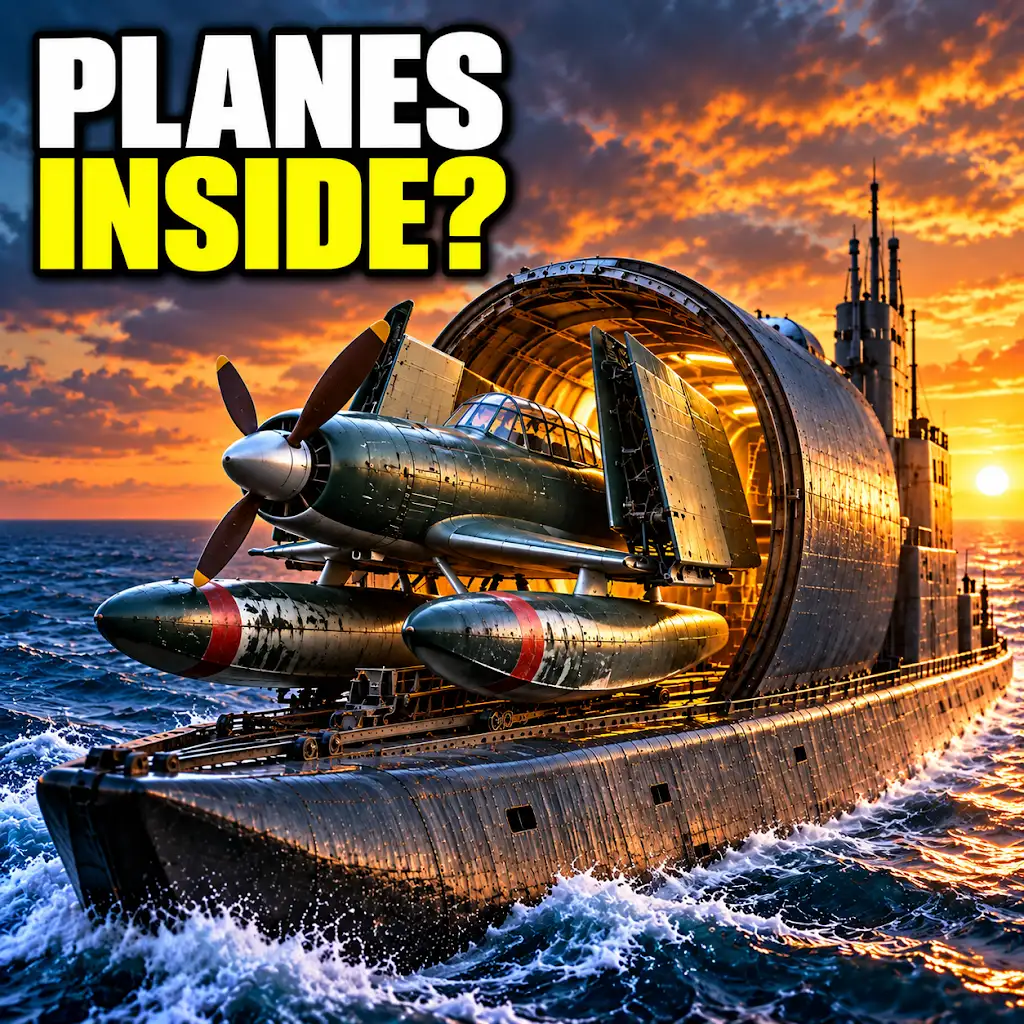
Japan Built a Submarine That Could Launch Three Planes
FAQs
What is the i-401 submarine?
The i-401 submarine was a Japanese I-400-class submarine used during World War II by the Imperial Japanese Navy.
How was the i-401 submarine captured by USS Segundo?
The i-401 submarine was captured by the USS Segundo on May 14, 1946, off the coast of Hawaii. The USS Segundo was a submarine of the United States Navy.
What was the significance of capturing the i-401 submarine?
Capturing the i-401 submarine was significant as it allowed the United States to study and analyze the advanced technology and capabilities of the Japanese submarines during World War II.
What happened to the i-401 submarine after it was captured?
After being captured by the USS Segundo, the i-401 submarine was taken to Pearl Harbor for further examination. It was eventually scuttled off the coast of Hawaii in 1946 as part of a demonstration of the United States’ commitment to disarmament.
Are there any remnants or artifacts of the i-401 submarine that can be seen today?
While the i-401 submarine itself was scuttled and lies at the bottom of the ocean, there are some artifacts and remnants of the submarine that can be seen in museums and exhibitions, providing a glimpse into its history and technology.