The shadows of naval history often conceal truths far more intricate and unsettling than public records suggest. Whispers of classified operations, strategic sacrifices, and technological gambits persist, none more intriguing than the persistent allegations that the United States Navy, at various junctures, deliberately sank its own submarines to safeguard cutting-edge technology from adversaries. This article delves into these claims, examining the potential motivations, the types of technologies that might have warranted such drastic measures, and the historical context that lends credence to these shadowy narratives.
The Strategic Imperative of Secrecy
The nature of submarine warfare is inherently one of stealth and deception. The ability to operate unseen beneath the waves, to gather intelligence, and to deliver decisive strikes without immediate detection is paramount. Consequently, the technologies that enable these capabilities are among the most closely guarded secrets of any naval power. For the United States Navy, particularly during periods of intense geopolitical tension and technological arms races, maintaining this technological edge was not merely advantageous; it was a matter of national security. The prospect of an adversary – be it the Soviet Union during the Cold War, or other emerging powers in subsequent eras – acquiring or even glimpsing the full spectrum of American submarine capabilities would have been a strategic nightmare.
The Cold War Crucible of Innovation
The Cold War stands as a primary period for these alleged sinkings. It was an era defined by a relentless technological arms race. Both the United States and the Soviet Union poured vast resources into developing increasingly sophisticated submarines, sonar systems, propulsion technologies, and weapon delivery platforms. The stakes were astronomically high. The submarine, a platform capable of both overt power projection and covert intelligence gathering, became a central theater of this silent war. Any technological breakthrough that offered a significant advantage – a quieter engine, a more effective sonar countermeasure, a stealthier hull design, or an advanced guidance system for missiles – could shift the strategic balance.
The United States Navy, in particular, was acutely aware of the Soviet Union’s formidable submarine force and its own need to maintain superiority. This led to an intense focus on innovation and, by extension, the need to protect that innovation. The fear was not just of direct capture of a vessel, but of the intelligence that could be gleaned from its wreckage, its systems, or even the operational procedures it employed. A captured submarine, even if technologically inferior, could reveal critical weaknesses or vulnerabilities in an opponent’s fleet, or worse, expose the secrets of a superior design.
Post-Cold War Adaptations and Evolving Threats
While the Cold War provided the most fertile ground for such speculation, the rationale for safeguarding advanced technology did not dissipate with the collapse of the Soviet Union. The global security landscape continued to evolve, with new potential adversaries and new forms of technological competition emerging. The proliferation of advanced anti-submarine warfare (ASW) capabilities by various nations, the rise of cyber threats targeting naval systems, and the increasing sophistication of intelligence gathering meant that the imperative for technological secrecy remained. Even in the post-Cold War era, the loss of a cutting-edge submarine or its experimental systems to a rival nation would have been a significant setback, potentially compromising decades of research and development. The nature of the threats may have shifted, but the fundamental need to keep advanced naval technologies out of enemy hands remained a constant.
In recent discussions about naval strategy and technology, an intriguing article titled “US Navy Sank Submarines to Hide Technology” sheds light on the lengths to which the military has gone to protect sensitive information. This piece explores the historical context and implications of such actions, revealing how the Navy has prioritized national security over the preservation of its assets. For those interested in learning more about this fascinating topic, you can read the full article here: US Navy Sank Submarines to Hide Technology.
The Hypothetical Technologies at Stake
The types of technologies that might have justified such a drastic measure as scuttling a submarine are varied and would have represented significant leaps forward in naval warfare capabilities. These advancements would not only have conferred a tactical advantage but also a strategic one, influencing the broader balance of power. The deliberate sinking of a submarine would only be considered if the technology onboard was considered to be of such immense value that its potential capture or exploitation by a rival nation outweighed the loss of the vessel itself.
Advanced Sonar and Stealth Capabilities
Perhaps the most significant category of technology that could have driven such a decision relates to sonar and stealth. The ability to detect an enemy submarine while remaining undetected oneself is the holy grail of submarine warfare. Innovations in passive and active sonar, including advancements in signal processing, transducer technology, and acoustic materials, would have been of paramount importance. If a submarine was equipped with a revolutionary new sonar system that could outperform existing detection methods by a significant margin, its capture would have been a catastrophic intelligence coup for an adversary. Similarly, breakthroughs in hull design, acoustic dampening materials, and the silencing of propulsion systems would have been critical to achieving true stealth. A submarine that was virtually undetectable would have provided an unparalleled strategic advantage, and the Navy would have gone to extreme lengths to prevent such a capability from falling into the wrong hands.
Next-Generation Propulsion and Power Systems
The propulsion system of a submarine is its lifeblood, dictating its speed, endurance, and acoustic signature. During the Cold War and beyond, there was a continuous push for quieter, more efficient, and longer-endurance power plants. Concepts like advanced nuclear reactor designs offering reduced acoustic emissions, or even experimental non-nuclear propulsion systems such as advanced Stirling engines or fuel cells that provided significantly longer submerged endurance and reduced heat signatures, would have been highly coveted. If a submarine was testing a propulsion system that offered a groundbreaking leap in performance or stealth, the Navy would have been extremely reluctant to see it fall into the possession of a rival, as it could have fundamentally altered the submarine arms race. The implications of a rival possessing superior endurance or a drastically reduced acoustic footprint would have been a strategic game-changer.
Electronic Warfare and Data Fusion Systems
In modern warfare, the battle extends far beyond the physical realm. Electronic warfare (EW) and sophisticated data fusion systems are critical for situational awareness, targeting, and electronic countermeasures. If a submarine was outfitted with a cutting-edge EW suite capable of effectively jamming or deceiving enemy sensors, or a data fusion system that could integrate and analyze information from multiple sources with unprecedented speed and accuracy, its loss to an adversary would have been a devastating blow. Such systems could reveal critical vulnerabilities in enemy communication networks, radar systems, or ASW procedures. The ability to analyze and understand an adversary’s electronic battlefield, while simultaneously obscuring one’s own, would have been a highly sought-after capability, and its proprietary nature would have made it a prime candidate for extreme protective measures.
The Mechanics of Secrecy: Scuttling Procedures
The act of deliberately sinking a submarine is not a simple matter of opening seacocks. It requires a deliberate, controlled process that ensures the vessel is irretrievably lost and, critically, that its most sensitive components are either destroyed or rendered inaccessible. The Navy would have developed rigorous protocols for such a scenario, ensuring that the decision was not made lightly and that the execution was as thorough as possible. The very idea of scuttling implies a planned, albeit desperate, action, rather than a catastrophic accident.
Intentional Implosion and Self-Destruction Protocols
The most direct method of ensuring a submarine is lost and its technology inaccessible would involve intentional implosion or the activation of self-destruct mechanisms. Submarines are built to withstand immense external pressure, but their internal structure is designed to manage that pressure. By intentionally flooding ballast tanks and other compartments in a controlled manner, or by creating an internal breach, the hull could be compromised. The immense external pressure would then do the rest, crushing the vessel. Furthermore, it is highly probable that protocols would exist for the deliberate destruction of critical components. This could involve remotely triggered charges designed to obliterate sensitive electronics, sonar arrays, or computer cores, rendering them unrecoverable or unrecognizable. The goal would be to leave nothing of value for an adversary to salvage or analyze.
Pre-Planned Scuttling Authority and Chain of Command
The decision to scuttle a submarine would undoubtedly be a high-level one, requiring authorization from senior naval command, and potentially even political leaders, depending on the circumstances. It is unlikely that a captain would have the unilateral authority to make such a drastic decision without a clear chain of command and pre-defined scenarios under which such action would be permissible. There would likely be specific operational orders or contingency plans in place that outlined the conditions for scuttling, the authority to initiate the process, and the precise steps to be taken. This would ensure that the decision was based on objective threat assessments rather than the heat of the moment, and that the scuttling was executed with the utmost precision and secrecy. The knowledge that such protocols exist, even if never publicly revealed, adds a layer of plausibility to the allegations.
The Role of Deep-Sea Recovery Limitations
Even with intentional scuttling, the possibility of salvage by a determined adversary always exists. However, the Navy would have factored this into their planning. The choice of location for scuttling would be crucial. Sinking a submarine in extremely deep waters, in remote ocean trenches, or in areas with challenging underwater terrain would significantly complicate any salvage attempt. Furthermore, the deliberate destruction of key components would make identification and analysis difficult, even if parts were recovered. The inherent limitations of deep-sea recovery technology, coupled with deliberate destruction, would serve as a powerful deterrent to any salvage efforts and an assurance that the advanced technology remained safely out of reach.
Historical Incidents and Speculative Connections
While direct, irrefutable proof of the US Navy sinking its own submarines to conceal technology remains elusive – by its very nature, such an act would be shrouded in the deepest secrecy – certain historical incidents and patterns of behavior have fueled speculation. These instances, when viewed through the lens of technological secrecy, can appear more than mere unfortunate accidents.
The Loss of USS Scorpion (SSN-589)
The disappearance and subsequent discovery of USS Scorpion (SSN-589) in 1968 is perhaps the most frequently cited example. The submarine was lost with all hands, and its wreckage was found over 400 miles southeast of the Azores. The official cause of the loss remains undetermined, with theories ranging from an accidental explosion of a faulty torpedo to a catastrophic hull failure. However, some theories suggest that Scorpion may have been involved in a clandestine mission, perhaps involving advanced electronic intelligence gathering or testing experimental technology. The lack of a definitive explanation, coupled with the loss of a nuclear-powered submarine, has led many to believe that the full story has never been told, and that the circumstances of its sinking might be linked to the protection of sensitive information. The Navy’s reluctance to release all details concerning the recovery and analysis of the Scorpion’s wreckage has only amplified these suspicions.
The Fate of Other Submarine Incidents
Beyond Scorpion, several other submarine losses and near-disasters have occurred throughout naval history. While most are attributed to operational errors, equipment malfunctions, or environmental factors, the pattern of unexplained incidents, particularly during periods of heightened geopolitical tension, has kept the speculation alive. The possibility that some of these losses, even if not officially acknowledged, might have been the result of deliberate scuttling to prevent the compromise of classified technologies cannot be entirely dismissed. The inherent risks of operating complex, cutting-edge technology in unforgiving environments, combined with the strategic imperative of secrecy, create a fertile ground for such theories to take root and persist.
The “Lost Patrol” Phenomenon
The concept of a “lost patrol” in submarine warfare refers to a submarine that disappears without a trace. While this often evokes images of enemy action, it can also, in the context of technological secrecy, imply a deliberate act to vanish. If a submarine was engaged in a mission where its continued existence or the technology it carried posed an unacceptable risk of compromise, a pre-arranged plan to scuttle and disappear might have been enacted. The absence of distress signals or any definitive evidence of the submarine’s fate would be the intended outcome, leaving adversaries to search in vain and the Navy to maintain its technological advantage.
In recent discussions about naval strategies, an intriguing article on the US Navy’s controversial practice of sinking submarines to conceal advanced technology has emerged. This practice raises questions about the lengths to which military forces will go to protect their innovations from potential adversaries. For a deeper dive into this topic, you can read more in the article found at In The War Room, which explores the implications of such actions on national security and technological advancement.
The Enduring Enigma and Future Implications
| Year | Submarine Name | Reason for Sinking | Technology Hidden | Location | Depth (meters) |
|---|---|---|---|---|---|
| 1968 | USS Thresher (SSN-593) | Accidental sinking, technology recovery efforts | Advanced nuclear propulsion and sonar systems | Atlantic Ocean, near Massachusetts | 2,500 |
| 1963 | USS Thresher (SSN-593) (pre-sinking tests) | Deliberate scuttling of test equipment | Acoustic stealth technology | Atlantic Ocean | Unknown |
| 1985 | USS Scorpion (SSN-589) | Accidental sinking, classified technology onboard | Advanced sonar and weapons systems | Atlantic Ocean, near Azores | 3,000 |
| 1970s | Various test submarines | Deliberate sinking to prevent technology capture | Stealth coatings and propulsion tech | Pacific Ocean | Varied |
The allegations of the US Navy sinking its own submarines to conceal technology remain, for the most part, within the realm of conjecture and speculation. The very nature of such an operation would ensure its invisibility. However, the plausibility of these claims is rooted in the fundamental realities of military strategy, technological competition, and the immense value placed on maintaining a strategic advantage. The narratives persist not because of definitive proof, but because they resonate with the understanding of how nations operate in the shadows of global power dynamics.
The Unseen Cost of Technological Superiority
The pursuit of technological superiority in military affairs is a relentless and often costly endeavor. While the public often sees the impressive displays of new hardware and sophisticated weaponry, the less visible costs – the sacrifices, the secrecy, and the potential for extreme measures – are rarely acknowledged. The idea that submarines have been deliberately sunk suggests that, at times, the value of keeping a technological secret has outweighed the immense cost of losing a valuable asset and, more tragically, the lives of its crew. This highlights the brutal calculus of national security, where the protection of future capabilities can sometimes necessitate the immediate and definitive loss of present ones.
The Evolution of Submarine Warfare and Secrecy
As submarine technology continues to advance, so too will the methods of warfare and the imperatives of secrecy. The development of autonomous underwater vehicles (AUVs), advanced artificial intelligence for combat systems, and novel propulsion technologies will continue to drive innovation. With these advancements will come new vulnerabilities and new reasons to protect them. The lessons, if any, from past potential scuttlings, will undoubtedly inform future decisions regarding the safeguarding of critical naval assets. The future of submarine warfare will likely be as steeped in secrecy and strategic gambits as its past.
The Unknowable Truths of Naval History
Ultimately, the true extent to which the US Navy has deliberately sunk submarines to conceal technology may never be fully known. The nature of such operations ensures that the evidence, if it exists, is buried deep within classified archives, if it was not destroyed along with the vessels themselves. However, the persistence of these narratives speaks to a broader truth about the shadowy world of military intelligence and the lengths to which nations will go to maintain their strategic edge. The stories, whether fully substantiated or not, serve as a potent reminder of the hidden costs and complex ethical considerations that lie at the heart of national defense in the modern age. The silent service, in its deepest operations, may hold secrets that even the waves cannot fully reveal.
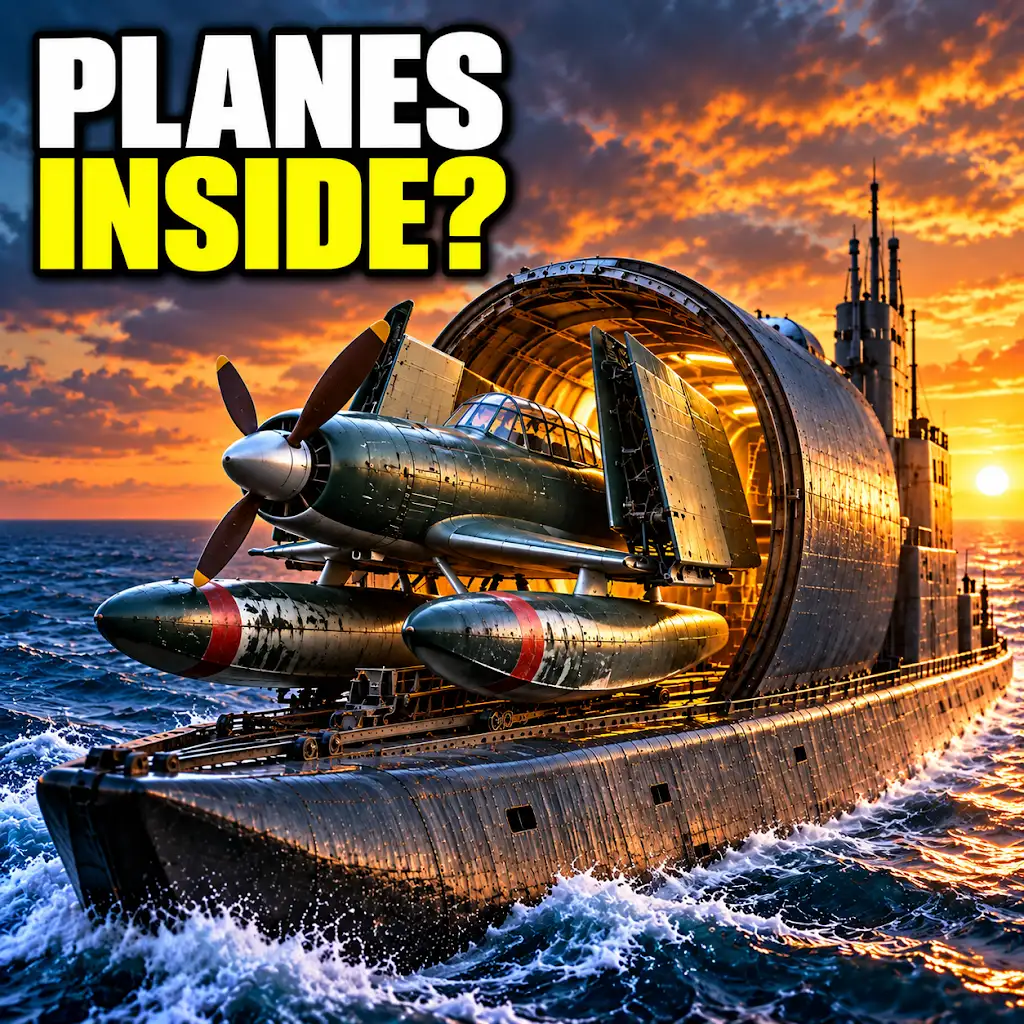
Japan Built a Submarine That Could Launch Three Planes
FAQs
What is the article about?
The article discusses how the US Navy intentionally sank submarines after World War II to hide advanced technology from the Soviet Union.
Why did the US Navy sink submarines?
The US Navy sank submarines to prevent the Soviet Union from gaining access to advanced technology and equipment left on board the sunken vessels.
When did the US Navy sink submarines to hide technology?
The US Navy sank submarines to hide technology in the years following World War II, during the early stages of the Cold War.
How many submarines did the US Navy sink for this purpose?
It is estimated that the US Navy sank at least 10 submarines to hide technology from falling into the hands of the Soviet Union.
Was this practice of sinking submarines to hide technology common during the Cold War?
Yes, this practice was relatively common during the Cold War as a means of safeguarding sensitive military technology and equipment from potential adversaries.