The silent depths of the Pacific Ocean have yielded a remarkable secret, one that lay hidden for over seventy years. The discovery of the Japanese I-401 submarine, a titan of its era and a vessel of profound historical significance, has captivated maritime historians, archaeologists, and the public alike. This colossal submarine, a technological marvel of the Imperial Japanese Navy during World War II, was recently located, bringing an end to decades of speculation and diligent searching. Its rediscovery offers an unprecedented opportunity to understand a pivotal chapter of naval warfare and the audacious engineering feats of the period.
Echoes from the Deep: Unearthing the I-401
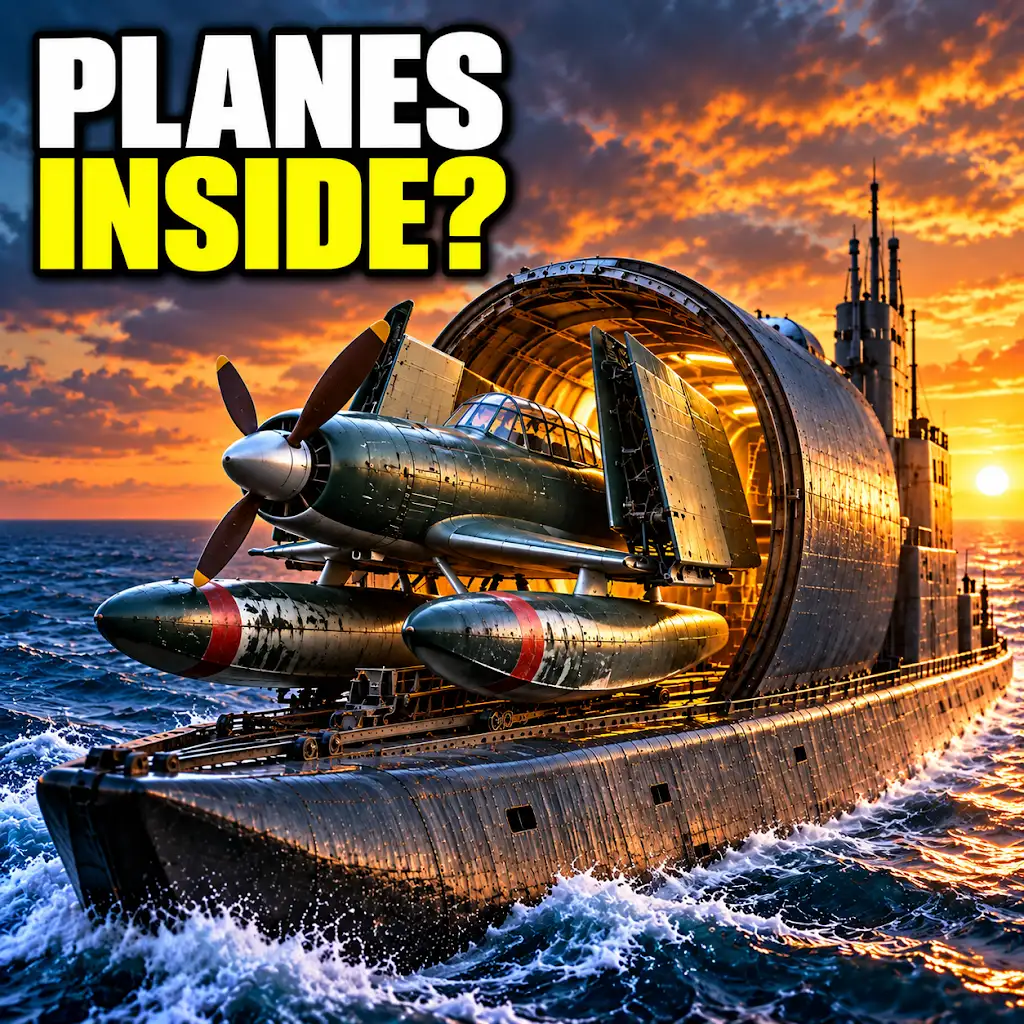
The I-401 was not just any submarine; it was a symbol of Japan’s desperate attempts to strike back at the United States with unconventional weaponry. Part of the ambitious I-400 class, these submarines were designed to be floating airbases, capable of launching massive seaplanes over vast distances. The concept was audacious: to carry three Aichi M6A “Seiran” dive bombers within a submersible aircraft carrier, capable of reaching the Panama Canal and launching a devastating surprise attack. The sheer scale of these vessels, larger than many Allied cruisers, underscored the innovative, albeit ultimately futile, spirit of Japanese wartime design.
A Technological Marvel of Its Time
The I-401’s design was revolutionary. Measuring an astounding 122 meters (approximately 400 feet) in length, it dwarfed most contemporary submarines. Its immense size was primarily due to the hangar space designed to house the three Seiran aircraft. These specialized planes, equipped with folding wings for compact storage, were intended to be launched via a catapult system and then recovered from the sea after their missions. The I-401 also boasted a formidable armament, including high-caliber deck guns and torpedo tubes, making it a potent threat even without its aircraft. The engineering challenges involved in building such a massive submersible, capable of both stealthy underwater operations and efficient aircraft deployment, were immense. Japanese engineers poured considerable resources and ingenuity into overcoming these obstacles, resulting in a vessel that was truly a product of its time, pushing the boundaries of naval technology.
The Strategic Vision and Its Demise
The strategic rationale behind the I-400 class was to circumvent American naval superiority by launching attacks that were logistically improbable for conventional carrier-based aviation. The idea of raining down bombs on the Panama Canal, a vital artery for American supply lines, was a chilling prospect. However, the war took a turn for the worse for Japan before the I-401 and its sister ships could fully execute their intended missions. By the time the submarines were operational, the tide had irrevocably shifted, and their strategic value diminished. The I-401 was captured by American forces in Sagami Bay, Japan, shortly after the end of the war in August 1945.
A Post-War Fate and the Long Wait
The captured I-401, along with its sister ship I-400, was subjected to extensive technical evaluation by the US Navy. The Americans were deeply impressed by the Japanese submarine’s capabilities, recognizing the advanced technology that had been developed. However, fearing that the advanced Japanese technology might fall into the hands of the Soviet Union, the US Navy made a controversial decision. In a bid to keep the secrets of the I-401 and its kin from falling into enemy hands, both submarines were scuttled. The I-401 was sunk off the coast of Hawaii in June 1946, a watery grave intended to preserve its technological mysteries. For over seven decades, its resting place remained unknown, a phantom of a bygone era.
The mysterious fate of the I-401 submarine, a Japanese vessel from World War II, has intrigued historians and naval enthusiasts alike. For those interested in exploring more about the submarine’s history and its significance in naval warfare, a related article can be found at this link: In the War Room. This article delves into the technological advancements of the I-401 and its role in the Pacific theater, shedding light on the strategic implications of its design and capabilities.
The Quest for the Sunken Giant
The discovery of the I-401 was not an accidental find. It was the culmination of years of dedicated research, meticulous planning, and the application of cutting-edge underwater exploration technology. Numerous expeditions and historical investigations had sought to pinpoint the exact location of the sunken submarine, fueled by a desire to document this unique piece of naval history. The challenges were significant, given the vastness of the ocean and the potential inaccuracies in historical records regarding the scuttling.
Decades of Searching and Scientific Pursuit
The initial scuttling of the I-401 was carried out with some haste, leading to imprecise coordinates in subsequent records. This ambiguity presented a formidable challenge for researchers. However, the historical significance of the vessel ensured that interest in its whereabouts never truly waned. Over the decades, various maritime historians and naval archaeologists, often collaborating with research institutions and oceanographic organizations, have undertaken expeditions to search for the I-401. These efforts involved sifting through declassified naval documents, analyzing old sonar data, and employing increasingly sophisticated underwater survey techniques. The pursuit was a testament to the enduring fascination with World War II naval history and the desire to uncover lost artifacts that tell compelling stories.
Technological Innovations in Underwater Exploration
The breakthrough in locating the I-401 was largely attributable to advancements in sonar technology and remotely operated vehicles (ROVs). Modern side-scan sonar systems can create detailed acoustic images of the seabed, allowing researchers to identify anomalies that might indicate submerged structures. High-definition underwater cameras mounted on ROVs provide visual confirmation and detailed imaging of discovered objects. Furthermore, autonomous underwater vehicles (AUVs) have become increasingly vital, capable of covering vast areas of the seabed autonomously and gathering data with remarkable precision. These technological leaps have revolutionized underwater archaeology, enabling the exploration of previously inaccessible depths and the recovery of artifacts that would have been impossible to find just a few decades prior.
The Eureka Moment: Identifying the I-401
The specific expedition that led to the successful identification of the I-401 involved a collaboration between the maritime archaeology organization Lost 52 Project and the Hawaii Undersea Research Laboratory (HURL). Using advanced sonar and ROVs, the team systematically surveyed a targeted area off the coast of Oahu, Hawaii. After days of painstaking work, sonar readings revealed an anomaly that strongly resembled a large submarine. Subsequent deployment of ROVs equipped with high-definition cameras provided the irrefutable visual evidence. The distinctive hull shape, the configuration of the deck, and the presence of what appeared to be aircraft hangar doors unmistakably identified the wreck as the Japanese I-401. The moment of discovery was met with immense excitement and a profound sense of accomplishment, marking the end of a long and arduous search.
A Glimpse into the Vessel’s Final Resting Place
The discovery of the I-401 has provided researchers with an unparalleled opportunity to study the submarine in its natural environment. The deep-sea conditions have, in a sense, preserved the vessel, offering a unique snapshot of its condition at the time of its sinking. The images and data collected are already contributing significantly to our understanding of the submarine’s construction, its operational capabilities, and the circumstances surrounding its demise.
The Submarine’s Condition and Environmental Impact
The I-401 now rests on the seabed, several hundred meters below the surface. While time and the ocean have taken their toll, the submarine appears to be remarkably well-preserved, a testament to its robust construction. The deep, cold, and oxygen-poor environment has slowed the rate of corrosion and decay, allowing many of its features to remain intact. The vessel is largely upright, though some sections show signs of structural stress. The presence of marine life colonizing the hull is a natural aspect of its deep-sea existence, further integrating the man-made structure into the oceanic ecosystem. The discovery team has emphasized a commitment to minimizing further disturbance to the site, recognizing its ecological and historical importance.
Revealing Details Through Underwater Imaging
The high-resolution imagery captured by ROVs has revealed an astonishing level of detail about the I-401. Researchers have been able to examine the submarine’s hull, the gun turrets, the deck fittings, and even the opening mechanisms for the aircraft hangar. The images provide invaluable insights into the engineering and manufacturing processes employed by the Japanese. They allow for comparisons with surviving sister ships (though none exist in the same state of preservation) and contemporary Allied submarines, highlighting the unique aspects of the I-401’s design. The potential for further analysis of these visual records is immense, promising new discoveries about the submarine’s operational life and its final moments.
The Aircraft Hangar and Its Secrets
Perhaps one of the most exciting aspects of the discovery is the potential to learn more about the aircraft hangar. The I-401 was designed to carry three Seiran aircraft, and the state of the hangar and any potential remains of the aircraft within it are of particular interest. While the initial images suggest the hangar doors may have been open or partially open at the time of sinking, the full extent of what lies within remains to be explored. The possibility of finding remnants of the Seiran aircraft, or even related equipment, could provide invaluable data on the operational deployment of these unique aircraft. This area is a prime target for future, more detailed investigations.
The Historical Significance and Future Implications
The rediscovery of the I-401 is far more than just the location of a sunken ship. It is a tangible link to a critical period in global history, offering new perspectives on naval strategy, technological innovation, and the human cost of war. The vessel’s story is a powerful reminder of the ingenuity and desperation that characterized the latter stages of World War II.
Understanding the I-400 Class Program
The I-401 is the most intact surviving example of the I-400 class submarines. Its discovery allows for a much more comprehensive understanding of this ambitious and unique naval program. Researchers can now study the submarine in situ, gaining insights into its construction, its operational features, and the challenges faced by its crew that were previously only understood through technical manuals and limited photographic evidence. This direct observation provides a level of detail that cannot be replicated through other means, offering a richer historical narrative.
A Symbol of Technological Warfare and Innovation
The I-401 represents a significant moment in the evolution of naval warfare. It embodies the strategic thinking that sought to leverage technological superiority to overcome numerical disadvantages. The concept of the submersible aircraft carrier was a bold experiment, pushing the boundaries of what was considered possible in naval engineering. The discovery serves as a powerful reminder of the relentless pace of technological development during the war and the often-unforeseen consequences of such innovation. It highlights how both Allied and Axis powers were constantly seeking new ways to gain an advantage.
Future Research and Preservation Efforts
The discovery of the I-401 opens up new avenues for future research and potential preservation efforts. While the submarine is currently too deep and its condition too fragile for full recovery, ongoing monitoring and detailed study are essential. Scientists and historians will continue to analyze the data and imagery collected, aiming to uncover as many secrets as possible from the sunken vessel. There is also a growing discussion about the long-term preservation of the site, perhaps through the establishment of a protected historical zone, to ensure that this remarkable piece of history remains accessible for future generations of researchers and enthusiasts. The hope is that the I-401 will continue to yield its stories from the depths for years to come.
The tragic fate of the I-401 submarine has drawn attention to the broader implications of underwater warfare and submarine technology during World War II. This incident not only highlights the strategic importance of submarines in naval combat but also raises questions about the advancements in submarine design and their impact on military operations. For a deeper understanding of the historical context surrounding such events, you can read more in this insightful article on the subject. It provides a comprehensive overview of submarine warfare and its evolution over the years, which can be found here.
The Enduring Legacy of a Sunken Titan
| Metric | Details |
|---|---|
| Submarine Name | I-401 |
| Type | Sentoku-class (I-400 class) submarine |
| Country | Japan |
| Commissioned | 1945 |
| Purpose | Aircraft-carrying submarine designed for long-range missions |
| Notable Features | Could carry three Seiran aircraft, had a large hangar, and was capable of launching air attacks |
| Fate | Surrendered to the United States in 1945; later scuttled in 1946 |
| Current Status | Wreck site located off the coast of Japan; remains underwater |
The I-401 submarine, once a formidable weapon of war, now lies at rest, a silent sentinel on the ocean floor. Its rediscovery after more than seventy years is a momentous event, bringing to light a fascinating chapter of naval history. The submarine’s journey from a cutting-edge war machine to a lost relic and finally to a celebrated discovery is a testament to its enduring significance.
A Monument to a Bygone Era
The I-401 stands as a poignant monument to the ingenuity, ambition, and ultimately, the futility of some of the late-war efforts of the Imperial Japanese Navy. It represents a time of unprecedented technological advancement driven by the pressures of global conflict. Its very existence, and the elaborate plans for its use, speak volumes about the strategic landscape of World War II and the desperate measures taken by nations on both sides of the conflict. The submarine’s rediscovery allows this narrative to be told with greater clarity and detail, connecting the past to the present in a profound way.
Inspiring Future Generations of Explorers
The story of the I-401’s discovery is an inspiring one for aspiring archaeologists, historians, and oceanographers. It demonstrates that even in the modern age, the vast oceans still hold many secrets waiting to be uncovered. The successful application of advanced technology, combined with persistent human curiosity and dedication, can lead to remarkable breakthroughs. The I-401 serves as a powerful example of what can be achieved when science, history, and a spirit of exploration converge, encouraging future generations to continue pushing the boundaries of knowledge.
The Ocean’s Repository of History
Ultimately, the I-401 is a reminder that the ocean is a vast repository of human history. Shipwrecks, lost cities, and submerged artifacts offer invaluable insights into our past. The I-401’s reemergence from the depths allows us to learn from its story, to understand the technological leaps of its era, and to reflect on the profound impact of war. As technology continues to advance, and as our understanding of the ocean deepens, one can only imagine what other historical treasures lie hidden, waiting for their moment to be brought back into the light. The I-401’s journey from the operational front lines to a watery grave, and now to a celebrated discovery, is a compelling narrative that will continue to resonate for years to come.
Japan Built a Submarine That Could Launch Three Planes
FAQs
1. What is the I-401 submarine?
The I-401 submarine was a Japanese submarine that was used during World War II by the Imperial Japanese Navy.
2. What happened to the I-401 submarine after World War II?
After World War II, the I-401 submarine was captured by the United States Navy and taken to Hawaii for evaluation.
3. What was the fate of the I-401 submarine after being captured?
The I-401 submarine was eventually scuttled by the United States Navy in 1946 as part of Operation Road’s End, which aimed to prevent the Soviet Union from gaining access to advanced Japanese military technology.
4. Where is the wreckage of the I-401 submarine located today?
The wreckage of the I-401 submarine was discovered off the coast of Oahu, Hawaii in 2005 by a team of deep-sea explorers.
5. Are there any plans to salvage or preserve the wreckage of the I-401 submarine?
As of now, there are no plans to salvage or preserve the wreckage of the I-401 submarine. The site is considered a war grave and is protected by international agreements.