
The question of where American submarines employed “400 technology” is not a straightforward one, as the term itself is not a standard, publicly disclosed designation for a specific naval technology. Instead, it likely refers to a confluence of advanced sonar systems, acoustic processing capabilities, and potentially other classified sensor suites that were either designated with internal project numbers or informally referred to by a numerical shorthand within the naval community. To understand the context of such advanced technology in American submarines, one must delve into the evolution of submarine warfare, the strategic imperative for technological superiority, and the operational theaters where these capabilities were most critically needed. The United States Navy has consistently invested heavily in maintaining a technological edge for its submarine fleet, a crucial element in its global power projection and strategic deterrence. This investment has been driven by the need to detect and track increasingly sophisticated adversary submarines, particularly those of its principal geopolitical rivals, while simultaneously remaining undetectable. The development and deployment of advanced sonar and acoustic processing represent the cornerstone of this technological advantage.
The Genesis of Acoustic Superiority
The pursuit of superior underwater detection capabilities has been a defining characteristic of American submarine development since the dawn of the submarine age. Early submarines were primarily designed for offensive roles, relying on surprise and rudimentary detection methods. However, as submarine technology advanced on all sides, the need for sophisticated passive and active sonar systems became paramount. The Cold War, in particular, served as a significant catalyst, fostering an intense arms race that extended to the underwater domain. The Soviet Union’s substantial submarine force, including its advanced nuclear-powered attack submarines (SSNs) and ballistic missile submarines (SSBNs), presented a persistent and formidable challenge. American submarine doctrine and technological development were heavily influenced by the imperative to counter this threat effectively. This involved not only the development of quieter submarines but also the creation of sensor systems capable of detecting the faintest acoustic signatures at increasingly greater ranges.
Early Sonar Evolution and the Passive/Active Dichotomy
The evolution of sonar technology for submarines can be broadly categorized into passive and active systems. Passive sonar, which listens for ambient sounds in the water, became increasingly vital as submarines strove for stealth. The goal was to gather intelligence, identify potential threats, and track targets without revealing the submarine’s own position. Early passive sonar arrays were relatively crude, but technological advancements led to more sensitive hydrophones, sophisticated signal processing, and the development of acoustic databases that allowed for the identification of specific submarine classes and even individual vessels based on their unique acoustic signatures. Active sonar, on the other hand, emits a sound pulse and listens for the echo. While effective for determining range and bearing, it carries the significant risk of revealing the submarine’s location. Therefore, the judicious use of active sonar became a strategic decision, often reserved for situations where stealth was less critical or when a positive identification was absolutely necessary.
The Cold War Arms Race and its Impact on Submarine Sonar
The Cold War era saw an unprecedented surge in research and development related to submarine warfare. Both the United States and the Soviet Union poured vast resources into creating submarines that were quieter, faster, and more heavily armed, as well as developing the means to detect them. This led to the development of increasingly complex sonar systems, including towed arrays, flank arrays, and bow arrays, each designed to maximize acoustic reception. The development of digital signal processing techniques revolutionized the ability to filter out noise, isolate faint signals, and interpret complex acoustic data. This was crucial for distinguishing the subtle acoustic signatures of an enemy submarine from the cacophony of natural ocean sounds and man-made noise. The pursuit of acoustic superiority became a continuous game of cat and mouse, with each side constantly striving to outmaneuver the other technologically.
The integration of advanced technologies, such as the DID I 400, into American submarines has significantly enhanced their operational capabilities. For a deeper understanding of how these innovations have transformed naval warfare, you can read a related article that explores the evolution of submarine technology and its implications for modern military strategy. Check it out here: related article.
The Era of Advanced Acoustic Processing and “400 Technology”
The term “400 technology,” while not officially documented, is likely to refer to advancements in acoustic processing that emerged during the latter stages of the Cold War and continued into the post-Cold War era. This period witnessed a significant leap in the ability to analyze and interpret underwater soundscapes. The proliferation of powerful digital computers and sophisticated algorithms allowed for real-time processing of vast amounts of acoustic data, enabling submarines to “see” their underwater environment with unprecedented clarity. This technology was not confined to a single piece of equipment but rather represented a holistic approach to underwater acoustics, integrating various sensor inputs and processing them in novel ways. The goal was to achieve a greater understanding of the acoustic environment, detect submarines at longer ranges, and more accurately classify their types and intentions.
The Role of Digital Signal Processing (DSP)
Digital Signal Processing (DSP) played a pivotal role in the advancement of underwater acoustics. As computing power increased, it became possible to implement complex algorithms that could analyze acoustic signals with remarkable precision. DSP techniques allowed for the reduction of noise, the enhancement of weak signals, and the identification of subtle acoustic characteristics that were previously undetectable. This enabled submarines to maintain a passive “listening watch” with greater effectiveness, identifying threats without betraying their own presence. The ability to process multiple acoustic inputs simultaneously from various sensor arrays further enhanced the submarine’s situational awareness.
The Significance of Towed Arrays and Hull-Mounted Sonar
The development and integration of advanced towed arrays and hull-mounted sonar systems were crucial components of this technological leap. Towed arrays, long strings of hydrophones towed behind the submarine, offered superior sensitivity and the ability to be positioned at varying depths, optimizing their acoustic reception. Hull-mounted sonar, particularly flank arrays that ran along the sides of the submarine, provided a wider field of view and complemented the information gathered by towed arrays. The synergistic integration of data from these different sensor types, processed by sophisticated acoustic systems, allowed for a more comprehensive and accurate understanding of the underwater battlespace. The “400 technology” likely represents the sophisticated fusion of these hardware capabilities with advanced software and processing techniques.
Countering Stealthier Submarines: The Need for Enhanced Detection
As submarines themselves became quieter, the challenge of detecting them intensified. This spurred further innovation in sonar technology and acoustic processing. The “400 technology” would have been instrumental in developing the ability to detect and track submarines that were designed for extreme stealth. This involved not only improving the sensitivity of sonar systems but also developing more advanced algorithms to distinguish the faintest of acoustic emanations from background noise. The development of tactical acoustic displays, which presented complex acoustic data in an easily interpretable format for the submarine’s sonar operators, was also a critical aspect of this technological evolution.
Operational Theaters and Strategic Deployment

The deployment of advanced sonar technologies, whatever the specific designation, would have been concentrated in areas of strategic importance for the United States Navy. These theaters of operation are characterized by their complex acoustic environments, the presence of potential adversaries, and the need for persistent surveillance and power projection. The primary focus would have been on areas where the U.S. sought to counter the operational capabilities of rival naval powers, particularly during the Cold War and in its aftermath. The effectiveness of these technologies is directly linked to the operational environments in which they are employed.
The North Atlantic and Arctic Ocean Basins
The North Atlantic and the Arctic Ocean have historically been critical areas for submarine operations. During the Cold War, these waters were the primary transit routes for Soviet ballistic missile submarines (SSBNs) heading towards the Atlantic, posing a significant threat to the United States. American submarines were tasked with tracking these SSBNs, a mission that required exceptionally advanced sonar capabilities to operate in the challenging acoustic conditions of these regions. The Arctic, with its unique sound propagation characteristics due to ice cover, presents a particularly difficult environment for sonar operations, demanding the most sophisticated technology for effective detection and tracking. The submerged ice canopy can both refract and reflect sonar signals, creating complex acoustic phenomena.
The Pacific Theater and Western Pacific Operations
The vast expanse of the Pacific Ocean, particularly the Western Pacific, has also been a critical operational theater. The presence of significant naval forces from potential adversaries in this region necessitates continuous monitoring and the ability to track submarine movements. American submarines operating in the Pacific would have employed their most advanced sonar suites to patrol vital sea lanes, monitor submarine bases, and conduct intelligence gathering. The complex bathymetry and varying acoustic conditions of the Pacific present their own set of challenges, requiring highly adaptable and capable sonar systems. The presence of numerous islands and underwater features can create acoustic shadows and multi-path propagation, complicating sonar detection.
Littoral Operations and the Challenges of Shallow Water
Beyond the deep ocean, American submarines have also been increasingly involved in littoral operations – the areas close to shore. These environments present a unique set of challenges for sonar due to the higher levels of ambient noise from shipping, fishing, and geological activity, as well as the complex sound propagation characteristics of shallow water. The “400 technology,” in this context, would have been crucial for developing systems that could effectively filter out this noise and detect submarines in the cluttered acoustic environment of the littorals. The ability to operate effectively in these areas is vital for intelligence gathering, special operations support, and interdiction missions. The presence of the seabed can cause significant sound reflection and absorption, making it harder for sonar to penetrate and receive echoes.
The Submarines and the Technologies They Carried
While the exact designation “400 technology” is elusive, it is reasonable to infer that its application was primarily integrated into the most advanced submarine classes operated by the U.S. Navy. These platforms were specifically designed to carry and leverage cutting-edge sensor and processing capabilities, enabling them to perform complex and demanding missions. The integration of such technology was not a standalone event but a continuous process of evolution and refinement across multiple submarine classes. The focus has always been on creating platforms that are not only stealthy but also possess superior sensory awareness.
The Los Angeles-Class Submarines and Their Upgrades
The Los Angeles-class attack submarines, commissioned from the late 1970s onwards, represent a significant platform that would have benefited from advancements in acoustic technology. These submarines were designed with a focus on stealth and speed, and as technology progressed, they underwent numerous upgrades to their sonar systems and combat systems. The incorporation of more powerful digital signal processors and enhanced towed array capabilities would have been a natural evolution for this highly capable class, allowing them to maintain a technological edge throughout their service lives. These upgrades were essential to keep pace with evolving threats.
The Seawolf and Virginia-Class: Embodiments of Advanced Capabilities
The subsequent Seawolf-class and Virginia-class attack submarines were designed from the outset with state-of-the-art acoustic technology as a central design tenet. The Seawolf class, though produced in limited numbers, was conceived to counter the most advanced Soviet submarines and was equipped with exceptionally quiet propulsion systems and highly advanced sonar suites. The Virginia class, currently the backbone of the U.S. attack submarine fleet, continues this legacy, incorporating the latest advancements in sonar, acoustic processing, and data fusion. These platforms are the likely beneficiaries and deployers of the most sophisticated underwater acoustic technologies developed by the U.S. Navy. The design philosophy for these classes prioritized stealth, speed, and superior situational awareness through advanced sensors.
The Role of Electronic Warfare and Acoustic Countermeasures
Beyond passive and active sonar, the “400 technology” might also encompass advancements in electronic warfare (EW) and acoustic countermeasures. Submarines do not operate in a vacuum, and the ability to detect and respond to enemy sonar and other sensor systems is crucial for survival and mission success. This could include the development of systems to jam or deceive enemy sonar, as well as sophisticated methods for deploying decoys and masking the submarine’s own acoustic signature. The continuous development of these capabilities is an integral part of maintaining a technological advantage in the underwater domain. Understanding and countering the enemy’s sensing capabilities is as important as possessing superior sensing oneself.
The integration of advanced technologies into American submarines has been a topic of great interest, particularly with the introduction of the DID I 400 technology. This innovative system enhances the operational capabilities of submarines, allowing for improved stealth and communication. For a deeper understanding of how such technologies are shaping modern naval warfare, you can explore a related article that discusses various advancements in military technology at In The War Room.
The Future of Underwater Acoustic Technology
| Metric | Description | Relevance to American Submarines |
|---|---|---|
| Did I 400 Technology | Advanced Japanese submarine technology from the I-400 class, capable of carrying aircraft | Influenced post-WWII submarine design concepts, particularly in underwater aircraft deployment and large submarine size |
| Submarine Size | Length and displacement of I-400 class: approx. 122 meters, 5,900 tons submerged | Set a precedent for large submarine designs; American submarines later increased in size for strategic purposes |
| Aircraft Hangar | Onboard hangar for three Seiran aircraft | Inspired ideas for multi-role submarines with onboard aircraft or drones in US Navy research |
| Range and Endurance | Approx. 37,500 nautical miles at 14 knots surfaced | Demonstrated long-range capabilities that influenced US submarine endurance goals |
| Stealth and Speed | Surface speed: 18.7 knots; submerged speed: 6.5 knots | Highlighted the need for improved submerged speed and stealth in US submarine development |
| Technology Transfer | Post-war US Navy study of captured I-400 submarines | Provided insights but limited direct technology transfer; influenced conceptual designs rather than direct adoption |
The pursuit of underwater acoustic superiority is an ongoing endeavor. As adversaries continue to develop new submarine technologies and refine their own acoustic capabilities, the United States Navy must constantly innovate to maintain its edge. The “400 technology” is not a static endpoint but a marker in a continuum of technological advancement. The future of submarine acoustics will likely involve even more sophisticated artificial intelligence and machine learning for acoustic analysis, enhanced integration of diverse sensor types, and the development of new methods for operating in increasingly complex and challenging underwater environments. The drive for ultimate stealth and unparalleled situational awareness will continue to fuel research and development in this critical area of naval warfare.
The Impact of Artificial Intelligence and Machine Learning
Artificial intelligence (AI) and machine learning (ML) are poised to revolutionize underwater acoustics. These technologies can analyze vast datasets of acoustic information far more rapidly and accurately than human operators, identifying subtle patterns and anomalies that might otherwise be missed. AI-powered systems can also adapt to changing acoustic environments in real-time, optimizing sensor performance and improving target classification. The integration of AI/ML into future sonar systems promises to significantly enhance the detection, tracking, and identification capabilities of American submarines. This could lead to faster decision-making and a more proactive approach to underwater warfare.
Network-Centric Warfare and Distributed Sensing
The future of submarine operations will likely be characterized by greater integration into a network-centric warfare environment. This involves the ability to share acoustic data and intelligence with other platforms – surface ships, aircraft, and even other submarines – in near real-time. Distributed sensing, where multiple sensors collaborate and fuse their data, will become increasingly important. This approach allows for a more comprehensive and resilient understanding of the underwater battlespace, making it more difficult for adversaries to operate undetected. The concept of a “swarm” of underwater sensors, both manned and unmanned, could further enhance situational awareness.
The Enduring Quest for Stealth and Situational Awareness
Ultimately, the core objectives of submarine warfare remain unchanged: achieving maximum stealth and maintaining unparalleled situational awareness. The “400 technology” and its successors are all directed towards these twin goals. As underwater environments become more complex and adversary capabilities evolve, the United States Navy will continue to invest in the most advanced technologies to ensure its submarines can operate with impunity, gather vital intelligence, and deter potential aggression. The silent, unseen presence of submarines, empowered by cutting-edge acoustic technology, will continue to be a cornerstone of global maritime security. The evolution of this technology is intrinsically linked to the strategic imperatives of national defense.
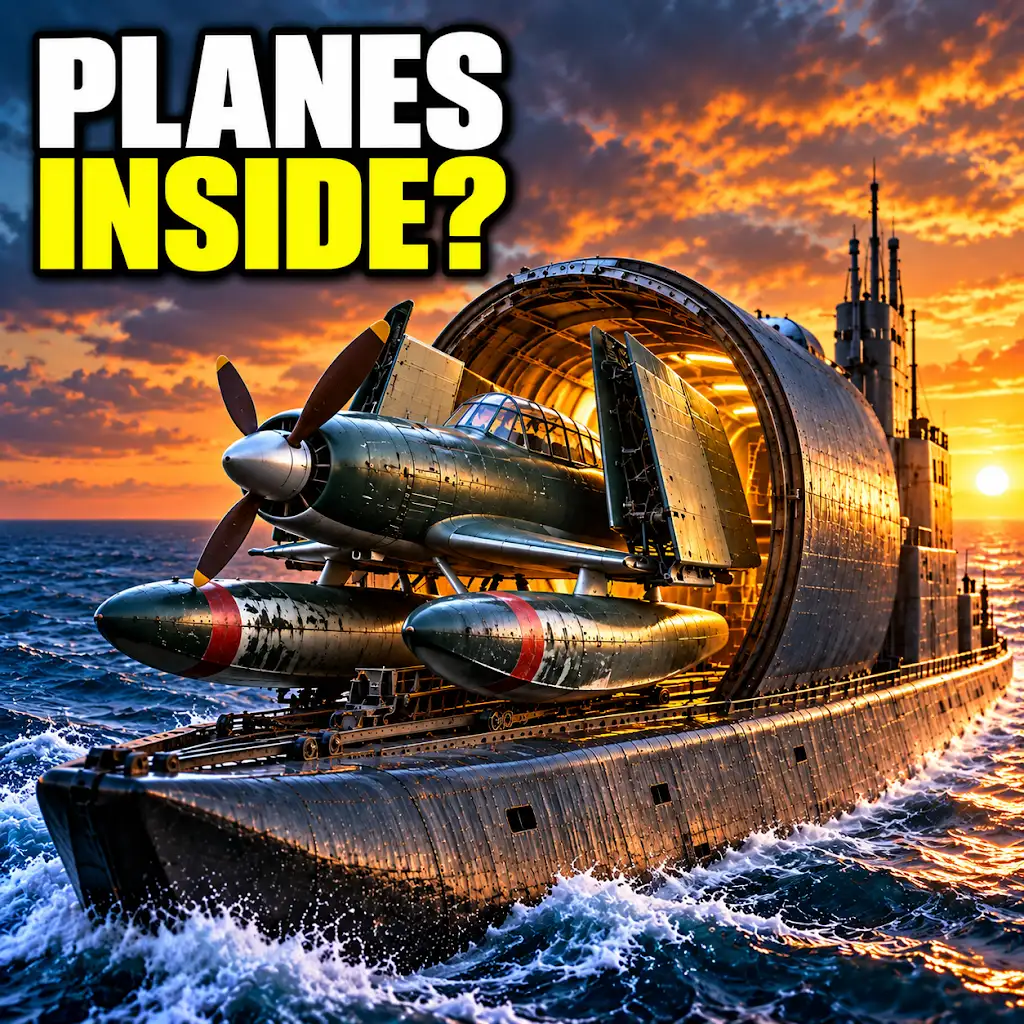
Japan Built a Submarine That Could Launch Three Planes
FAQs
1. What is the significance of the DID I 400 technology in American submarines?
The DID I 400 technology, developed by the Japanese during World War II, was a revolutionary sonar system that greatly enhanced the detection capabilities of submarines. Its incorporation into American submarines significantly improved their underwater surveillance and tracking abilities.
2. How did the DID I 400 technology benefit American submarines?
By integrating the DID I 400 technology into American submarines, the US Navy was able to enhance their anti-submarine warfare capabilities. The advanced sonar system provided improved detection of enemy submarines, allowing for better tactical decision-making and increased operational effectiveness.
3. When was the DID I 400 technology first introduced into American submarines?
The DID I 400 technology was first introduced into American submarines during the Cold War era, as part of efforts to modernize and upgrade the US Navy’s submarine fleet. The technology was adapted and integrated into various submarine classes to enhance their underwater surveillance capabilities.
4. How did the DID I 400 technology compare to existing sonar systems used in American submarines?
The DID I 400 technology represented a significant advancement in sonar technology compared to existing systems used in American submarines. Its improved detection range, accuracy, and signal processing capabilities provided a substantial advantage in detecting and tracking enemy submarines underwater.
5. Is the DID I 400 technology still used in American submarines today?
While the specific DID I 400 technology may not be in use in American submarines today, its legacy lives on in the continued development of advanced sonar systems and underwater surveillance technologies. Modern American submarines are equipped with state-of-the-art sonar systems that have evolved from the innovations of the past, including the DID I 400 technology.