The Dawn of a New Era: I-400 Class and the Concept of Submarine Aircraft Carriers
The annals of naval history are replete with ingenious designs born from necessity and ambition. Among these, the concept of the submarine aircraft carrier stands as a particularly audacious and, in its time, revolutionary idea. While a fully realized fleet of such vessels never materialized to its intended scale, the Japanese I-400 class submarine aircraft carriers represent a pivotal, albeit ultimately tragic, chapter in this technological exploration. These colossal submarines, far exceeding the size of their contemporaries, were not merely vessels capable of carrying aircraft; they were designed to project air power from the very depths of the ocean, fundamentally altering the perceived strategic capabilities of submersible warfare.
The genesis of the I-400 class lay in a complex interplay of strategic imperatives and technological aspirations that gripped Imperial Japan during the Second World War. Facing the overwhelming industrial might of the United States and its rapidly expanding naval fleet, Japan’s strategists sought innovative ways to strike at the enemy’s homeland and disrupt its logistical chains. Traditional naval warfare, with its reliance on carrier battles, was increasingly proving disadvantageous for Japan. The idea of a submersible platform that could launch aircraft against distant targets, unhindered by the vast distances of the Pacific and the constant threat of aerial reconnaissance, presented a compelling alternative. This concept was not entirely novel; experiments with seaplane-carrying submarines had occurred prior to the war, but the I-400 class represented a quantum leap in scale and ambition. The vision was to create a weapon that could deliver a devastating blow to American cities, particularly those on the West Coast, sowing panic and potentially forcing the United States to divert resources from the Pacific theater. This was a high-stakes gambit, aiming to achieve strategic parity through a single, decisive strike.
Strategic Underpinnings and Motivations
The strategic thinking behind the I-400 class was deeply rooted in Japan’s precarious wartime situation. The Pacific Ocean, a vast expanse of water, presented a significant logistical challenge for any power seeking to project force across it. For Japan, whose industrial capacity was steadily being eroded by Allied blockades and bombing campaigns, the idea of a mobile, hidden airbase was incredibly attractive. Conventional aircraft carriers, while powerful, were vulnerable to detection and attack. A submarine, conversely, could operate largely undetected, covering vast distances before surfacing to launch its aircraft. This element of surprise was paramount. The primary strategic objective was not to engage in fleet-to-fleet combat, but rather to conduct asymmetric warfare, targeting enemy infrastructure and morale.
The potential targets for the I-400s were varied and ambitious. The most publicized and arguably the most audacious plan involved launching attacks on American cities, specifically targeting the Panama Canal. The rationale was multifaceted: disrupting the canal would sever vital supply lines between the Atlantic and Pacific, significantly hampering the American war effort. It would also represent a profound psychological blow to the American public, demonstrating that the war could be brought directly to their shores. Other potential targets included naval bases, industrial centers, and even aircraft carrier construction yards. The idea was to inflict maximum damage and disruption with minimal risk to the Japanese fleet, which was steadily being depleted. The I-400s offered a way to bypass traditional defenses and strike at the heart of American power, a concept that was as terrifying as it was innovative.
In recent discussions about Japanese naval strategy, the emergence of aircraft-carrying submarines has garnered significant attention. These innovative vessels are designed to enhance Japan’s maritime capabilities, allowing for greater flexibility and operational reach in the Pacific region. For a deeper understanding of this topic, you can read the related article that explores the implications of such advancements on regional security and naval warfare tactics. To learn more, visit this article.
The Technological Marvel: Design and Capabilities
The I-400 class submarines were truly gargantuan vessels for their time, dwarfing all previous submarine designs. Their sheer size was a direct consequence of their unique mission requirements. To carry and launch three seaplanes, they needed a hangar of unprecedented dimensions and the capacity for extensive operational procedures at sea. The “Sen-Toku” class, as they were designated, measured an astounding 400 feet in length, with a beam of 37 feet. This made them larger than many destroyers and comparable in displacement to some cruisers. This immense hull housed not only the aircraft and their launch mechanisms but also a substantial fuel supply, enabling them to undertake long-range missions.
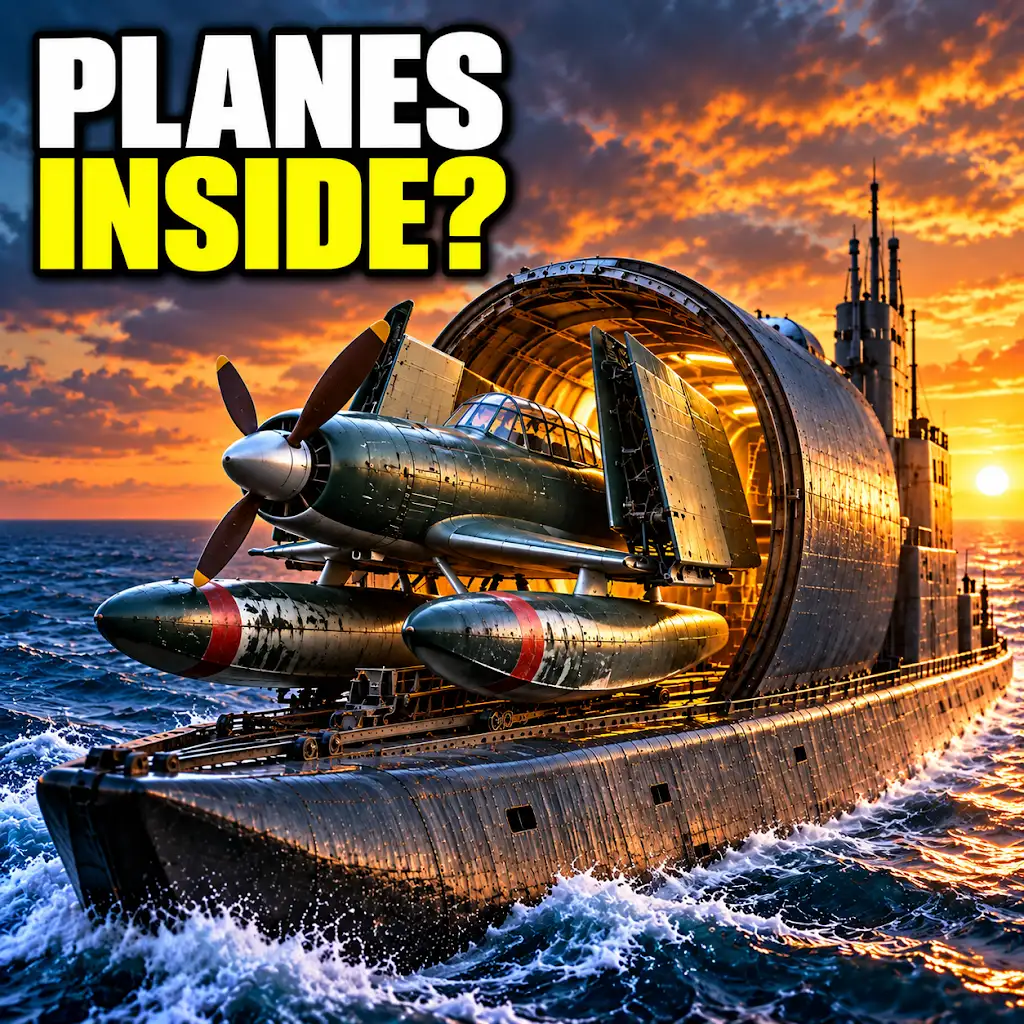
The most distinctive feature of the I-400 class was its integrated hangar, a cylindrical structure built into the forward section of the submarine, capable of housing three Aichi M6A1 “Seiran” (Mountain Storm) floatplane bombers. These aircraft were specifically designed for carrier submarine deployment. They were folding-wing biplanes that could be quickly launched from the submarine’s catapult. The Seiran itself was a remarkable aircraft for its era, equipped with a powerful engine and capable of carrying a significant bomb load. The process of launching involved the submarine surfacing, raising the aircraft from the hangar using a crane, and then catapulting it into the air. Recovery was a more complex affair; the aircraft would ditch in the sea, and a special retrieval submarine would be deployed to recover the pilot and any valuable equipment. This intricate, multi-step process was a testament to the engineering prowess involved in the I-400 project.
The Aichi M6A1 “Seiran”: The Submarine’s Aerial Arm
The success of the I-400 class was intrinsically linked to the performance and deployment capabilities of its aerial component, the Aichi M6A1 “Seiran” floatplane bomber. This aircraft was not an afterthought; it was designed from the ground up to be an integral part of the submarine carrier system. The Seiran was a highly specialized machine, optimized for rapid deployment and effective aerial bombardment. Its folding wings were a crucial design element, allowing it to fit snugly within the hangar of the I-400. Upon surfacing, the wings would be unfurled, and the aircraft prepared for launch.
The Seiran was a powerful aircraft, powered by a Mitsubishi Kinsei 43 radial engine producing 1,000 horsepower. This allowed it to achieve a respectable top speed and carry a useful payload, typically a 250 kg bomb. Its range was sufficient to reach targets within striking distance of the submarines’ operational areas. The launch sequence was a carefully choreographed ballet of engineering and seamanship. Once the I-400 surfaced and the hangar doors were opened, the aircraft would be brought out and positioned on the catapult. The submarine’s crew would then work to prepare the aircraft for flight, a process that needed to be completed as quickly as possible to minimize the submarine’s vulnerability on the surface. The Seiran’s pilot would then engage the catapult, which would propel the aircraft forward at high speed, allowing it to gain sufficient lift for takeoff. The ability to launch three aircraft in quick succession made the I-400 a formidable, albeit temporary, strike platform.
Operational Realities and Missed Opportunities
Despite the impressive engineering and the ambitious strategic vision, the I-400 class never fully realized its potential. The war’s tide had turned decisively against Japan by the time the first of these massive submarines were completed. Production was slow, and the submarines were delivered too late to have a significant impact on the course of the conflict. The Allied naval and air superiority meant that surfacing and operating these large submarines, even for the short periods required for aircraft launch and recovery, was an increasingly perilous undertaking. The risk of detection and subsequent attack was immense.
The operational history of the I-400s is thus one of unfulfilled promise. While they were completed and even conducted some limited reconnaissance missions, their intended role as long-range bombers attacking distant shores was never carried out. The most famous, or perhaps infamous, mission they were tasked with was the attack on the Panama Canal. However, by the time the submarines were ready, the strategic situation had changed. The Panama Canal was no longer the single most critical target, and the risk to the submarines was deemed too high. Instead, the submarines were rerouted to attack the U.S. fleet at Ulithi Atoll, a mission that was ultimately aborted due to the overwhelming Allied presence. When Japan surrendered, the remaining I-400 class submarines were scuttled by their own crews to prevent them from falling into Allied hands, a final act of defiance that ensured their technological secrets would not be exploited by the enemy. The few that were captured and studied by the Americans provided invaluable insights into advanced submarine design, but the dream of the Japanese submarine aircraft carrier died with the war.
Japan’s naval strategy has increasingly focused on the integration of advanced technologies, particularly with the development of aircraft-carrying submarines. This innovative approach not only enhances the country’s maritime capabilities but also reflects a shift in defense priorities in response to regional security challenges. For a deeper understanding of how these submarines are reshaping naval warfare, you can read a related article on this topic at In the War Room. The insights provided there highlight the strategic implications of these advancements and their potential impact on the balance of power in the Pacific.
Legacy and Influence on Naval Doctrine
The I-400 class submarines, despite their limited operational success, left an indelible mark on naval history and strategic thinking. They represented a bold and innovative approach to warfare, pushing the boundaries of what was considered possible for submarine operations. While they did not achieve their intended strategic goals, their existence and design demonstrated a profound understanding of asymmetric warfare and the potential for a mobile, concealed platform to project power. The concept of launching aircraft from submarines continued to be explored by other navies in the post-war era, albeit with different technological approaches.
The legacy of the I-400 class is not measured in battles won, but in the sheer audacity of the concept and the technological advancements it spurred. They were a testament to Japan’s ingenuity and desperation in the face of overwhelming odds. Their ultimate fate – scuttled to prevent capture – speaks to the high stakes and the determination of their crews. The study of these colossal vessels by Allied naval powers after the war provided valuable data on large submarine construction, hangar integration, and aircraft-submarine operations. While the direct lineage of the I-400s might not be immediately apparent in modern naval doctrines, the underlying principles of surprise, mobility, and the projection of force from unconventional platforms continue to influence naval strategy and technological development to this day. The dream of the submarine aircraft carrier, embodied by the I-400 class, remains a fascinating footnote in the ever-evolving narrative of naval warfare, a testament to human ingenuity and the relentless pursuit of strategic advantage.
Japan Built a Submarine That Could Launch Three Planes
FAQs

What is the concept of Japanese naval strategy involving aircraft carrying submarines?
Japanese naval strategy involving aircraft carrying submarines focuses on the development and deployment of submarines equipped with aircraft that can launch and retrieve reconnaissance planes or drones. This strategy aims to enhance the submarine’s capabilities for intelligence gathering, surveillance, and reconnaissance missions.
How do aircraft carrying submarines contribute to Japan’s maritime defense?
Aircraft carrying submarines provide Japan with a stealthy platform for conducting aerial surveillance and reconnaissance operations in areas where traditional aircraft carriers or land-based aircraft may face challenges. This capability allows Japan to monitor and respond to potential threats in its maritime domain more effectively.
What are the advantages of using aircraft carrying submarines in naval operations?
Aircraft carrying submarines offer several advantages, including increased operational flexibility, reduced vulnerability to enemy detection, and the ability to conduct surprise attacks or intelligence-gathering missions. These submarines can also operate in areas where traditional aircraft carriers may be constrained by geographical or political factors.
How does Japan’s development of aircraft carrying submarines compare to other naval powers?
While Japan is not the only country exploring the concept of aircraft carrying submarines, its efforts in this area have attracted attention due to its unique maritime security challenges and technological capabilities. Other naval powers, such as the United States and China, have also shown interest in developing similar capabilities to enhance their naval strategies.
What are the potential future implications of Japanese aircraft carrying submarines on regional security?
The deployment of aircraft carrying submarines by Japan could have significant implications for regional security dynamics, as it may influence the balance of power in the Asia-Pacific region. These submarines could enable Japan to project power more effectively and respond to emerging security threats, potentially shaping the strategic environment in the region.