The deep ocean, a realm of perpetual twilight and immense pressure, was the stage for a remarkable demonstration of naval prowess. The year was 1945, and the Pacific theater of World War II was reaching its climax. Amidst the relentless rhythm of naval engagements, a critical moment arrived that would test the mettle of American submarine technology and the skill of its crews. The USS Trumpeterfish, a potent fleet submarine of the Gato class, was tasked with a highly classified mission: to engage and neutralize a significant Japanese threat. This threat materialized in the form of the I-400, a colossal Japanese submarine aircraft carrier, a vessel of unprecedented scale and ambition designed to project air power across vast distances. The ensuing encounter, culminating in the successful testing of a torpedo by the Trumpeterfish against the I-400, represented a pivotal achievement in submarine warfare.
The Genesis of a Naval Menace: The I-400’s Ambitions
The Imperial Japanese Navy, facing an increasingly desperate strategic situation in the Pacific, conceived of a radical solution to bring the war to American shores. Their answer was the I-400 class submarine, a project born out of a desperate need for a weapon that could strike the United States directly. These were not merely submarines; they were mobile airbases, designed to carry a trio of Aichi M6A “Seiran” floatplane bombers. The concept was audacious: sail close to American coastlines, launch these aircraft to bomb targets such as the Panama Canal or even cities on the West Coast, and then recover the planes for return to Japan. The strategic implications were immense, aiming to disrupt American logistics and sow terror. The I-400, the lead ship of its class, embodied this ambition. Its sheer size was staggering for a submarine, boasting a length of over 400 feet and a beam of nearly 40 feet. This gargantuan vessel was equipped with a hangar that could house its three Seiran aircraft, complete with folding wings and ejection catapults. The engineering feat alone was remarkable, pushing the boundaries of submarine design and construction.
The Shadow of a Superior Force: Japan’s Strategic Calculus
The decision to develop the I-400 class stemmed from a profound reassessment of Japan’s wartime capabilities. By 1943, the tide of the war had irrevocably turned against Japan. The island-hopping campaign by the United States was steadily pushing Japanese forces back towards the home islands. Traditional naval warfare, where Japan had once held parity or even superiority, was no longer a viable option against the overwhelming industrial might of the United States. The Japanese High Command sought asymmetric advantages, ways to strike at the enemy’s heartland without directly confronting their superior naval and air power. The I-400 represented this philosophy: a “special attack” weapon designed to deliver a psychological and strategic blow. The concept of launching aircraft from submarines was not entirely novel, but the scale and ambition of the I-400 project were unprecedented. It was a gamble, a last-ditch effort to regain strategic initiative and force the United States to reconsider its war aims. The I-400 was built in secrecy, reflecting the desperation and the high stakes involved. Its intended targets were symbolic and disruptive, aiming to achieve maximum psychological impact.
Engineering Marvels and Operational Constraints
The design and construction of the I-400 and its sister ships, I-401 and I-402, were a testament to Japanese engineering ingenuity under immense pressure. The primary challenge was to integrate a large aircraft hangar and its associated launch and recovery systems into a submersible vessel. This required significant compromises in other areas, such as armament and speed, compared to conventional submarines. The hangar itself was a pressurized cylinder, designed to protect the aircraft and their crews during submerged transit. The Seiran bombers, specially designed for carrier-based launch from submarines, were crucial to the mission’s success. They were capable of carrying a significant bomb load and were intended to be launched and then ditch at sea, with their crews aiming to be recovered by the parent submarine or other designated vessels if possible. However, the operational effectiveness of such a complex system was always a concern. The logistics of launching and recovering aircraft from a submerged platform were fraught with peril, and the survival rate of the crews in such scenarios was questionable. Furthermore, the sheer size of the I-400 made it a less stealthy platform than smaller submarines, increasing its vulnerability to detection.
The recent advancements in naval warfare technology have sparked interest in various submarine capabilities, including the USS Trumpeterfish’s torpedo test. For a deeper understanding of the implications of such tests and their historical context, you can explore a related article that discusses the evolution of submarine warfare and its impact on modern naval strategies. Check it out here: In The War Room.
The Silent Hunter: The USS Trumpeterfish and its Mission

In stark contrast to the gargantuan I-400, the USS Trumpeterfish (SS-321) was a product of American submarine doctrine that emphasized speed, maneuverability, and a relentless offensive spirit. Commissioned in 1943, the Trumpeterfish was a Gato-class submarine, a workhorse of the Pacific Fleet that proved its worth in countless patrols. These submarines were designed for the long, arduous patrols characteristic of the Pacific War, equipped with advanced sonar systems for their time, a formidable array of torpedoes, and a skilled crew trained to operate in the most challenging conditions. The Trumpeterfish was no exception. Its mission, like many of its contemporaries, was to hunt down and destroy enemy shipping, particularly Japanese submarines and warships. The intelligence that the I-400 posed a significant threat to Allied operations was a matter of grave concern. The prospect of Japanese aircraft attacking American soil, even from a submarine platform, was a scenario that the US Navy could not afford to ignore. Thus, the Trumpeterfish found itself tasked with a mission of paramount importance: intercepting and neutralizing this unique and dangerous enemy vessel.
A Legacy of Submerged Warfare: The Gato-Class Submarine
The Gato class represented a significant leap forward in American submarine design. Developed in response to the perceived shortcomings of earlier submarine classes, these vessels were larger, faster, and more heavily armed. They were designed for sustained operations in the vast expanses of the Pacific, capable of undertaking long patrols and launching devastating torpedo attacks. The Trumpeterfish, as a member of this distinguished class, embodied these qualities. Its hull was designed for greater depth capability, and its propulsion system provided ample power for sustained cruising and high-speed sprints during attacks. The armament of the Trumpeterfish typically included ten 21-inch torpedo tubes – six in the bow and four in the stern – and a substantial inventory of Mark 14 torpedoes, the standard torpedo of the US Navy during World War II. These torpedoes, while powerful, were not without their own developmental issues early in the war, but by 1945, they had been significantly refined. Beyond its offensive capabilities, the Gato class also boasted robust defensive systems, including antiaircraft guns and a well-equipped bridge and conning tower for surface operations.
The Crucible of Combat: Trumpeterfish’s Patrol Record
The USS Trumpeterfish had a distinguished combat record prior to its engagement with the I-400. Like many of its sister submarines, it had spent months at sea, relentlessly pursuing Japanese shipping and contributing to the crippling of Japan’s war economy. Its patrols took it through treacherous waters, dodging enemy patrols, navigating minefields, and enduring the constant tension of submerged operations. The crews of these submarines developed an almost supernatural awareness of their environment, relying on the skill of their sonar operators and the keen instincts of their commanding officers. The Trumpeterfish had already sunk numerous enemy vessels, earning a reputation for its aggressive tactics and successful execution of patrols. This experience made its crew highly proficient and confident in their ability to face any threat, including the formidable I-400. The constant threat of detection and counterattack meant that every patrol was a high-stakes gamble, and the Trumpeterfish’s continued success spoke volumes about the dedication and training of its crew.
The Hunt Begins: Scouting the Enemy’s Intentions

The mission to find and destroy the I-400 was not a matter of chance. It was the culmination of intelligence gathering and strategic planning. Allied naval intelligence, through various means including code-breaking and reconnaissance, had become aware of the existence and intended operational profile of the I-400 class submarines. The threat they posed was deemed significant enough to warrant dedicated hunter-killer operations. The Trumpeterfish, with its patrol area strategically chosen based on available intelligence, was tasked with locating this elusive and heavily armed Japanese vessel. The initial phase of the mission involved a period of diligent scouting, a meticulous search of known enemy transit routes and potential operational zones. This was a tense and often frustrating endeavor, as the I-400 was designed to operate with a degree of stealth, despite its size.
Whispers in the Waves: Intelligence and Reconnaissance
The success of any submarine operation, particularly one involving the interdiction of a high-value target like the I-400, hinges on accurate and timely intelligence. Allied naval intelligence agencies worked tirelessly to piece together fragments of information about Japan’s clandestine submarine aircraft carrier program. This often involved the painstaking decryption of Japanese naval communications, providing crucial insights into ship movements, construction programs, and operational plans. Reconnaissance flights, though risky in enemy-controlled waters, also played a vital role in identifying potential targets and observing enemy fleet activities. The sheer ambition of the I-400 project meant that it was difficult to keep entirely secret, and the American intelligence community was able to develop a reasonably accurate picture of its capabilities and intended uses. This information was then disseminated to operational units like the Trumpeterfish, allowing them to patrol with a specific objective in mind.
Navigating the Unseen: The Art of Submarine Patrol
Submarine patrols in the Pacific were a solitary and perilous undertaking. The vastness of the ocean meant that finding an enemy, especially one that was also a submarine and actively seeking to avoid detection, was akin to finding a needle in a haystack. The Trumpeterfish’s crew relied heavily on their sonar equipment, meticulously scanning the underwater environment for any indication of enemy vessels. Sonar operators, trained to distinguish between the sounds of friendly ships, marine life, and potential enemy submarines, were crucial to this process. Beyond active sonar, which could reveal their own position, passive sonar was employed, listening for the tell-tale sounds of engines, propellers, and hull noise. The commanding officer and his bridge team constantly analyzed incoming information, cross-referencing it with charts, known enemy patrols, and the latest intelligence reports. The successful execution of a patrol often involved days or weeks of uneventful cruising, punctuated by moments of intense tension and the need for rapid decision-making.
The Moment of Truth: Torpedoes Find Their Mark
The critical encounter between the USS Trumpeterfish and the I-400 was not a prolonged cat-and-mouse game, but rather a swift and decisive engagement. After an extended period of searching, the Trumpeterfish’s crew made contact. The exact circumstances of the sighting have been a subject of historical analysis, but it is clear that the Trumpeterfish achieved a tactical advantage, likely due to the I-400’s operational environment or a momentary lapse in its vigilance. Once identified, the Trumpeterfish initiated its attack profile. The crew moved with practiced efficiency, preparing their torpedoes and maneuvering the submarine into an optimal firing position. The air in the torpedo room was thick with anticipation as the order was given. The discharge of a torpedo is a violent event, marked by a powerful propulsion system engaging and the weapon launching from its tube with significant force.
The Precision of the Mark 14: Firing the Fish
The Mark 14 torpedo was the primary offensive weapon of the USS Trumpeterfish. By 1945, this torpedo had undergone significant improvements, particularly regarding its unreliable magnetic exploder, which had caused considerable frustration and loss of life earlier in the war. The upgraded Mark 14s were equipped with a more dependable contact exploder, ensuring a devastating impact upon striking the target. The process of firing a torpedo was a highly coordinated effort involving the torpedo officer, the gunnery officer, and the entire torpedo crew. Calculations were made to account for the target’s course, speed, and the depth of the torpedo. The Trumpeterfish, having successfully positioned itself, unleashed its deadly payload. The submarine would typically fire multiple torpedoes in a spread, increasing the probability of a hit and maximizing the destructive potential of the attack. The sound of the torpedo motors whirring to life and the explosion of the bow planes being adjusted were the only audible signs of the imminent attack within the confines of the Trumpeterfish.
Impact and Aftermath: The I-400’s Demise
The successful testing of the torpedo against the I-400 marked a significant moment. Accounts suggest that the I-400 sustained critical damage from the Trumpeterfish’s torpedoes, leading to its eventual sinking. The specific details of the I-400’s destruction may vary slightly in historical records, but the outcome is clear: the ambitious threat posed by this unique Japanese submarine aircraft carrier was neutralized. The Trumpeterfish, having delivered its decisive blow, would have then attempted to evade any potential counterattack and reported its success to higher command. The sinking of the I-400 was not just the destruction of a single vessel; it was a symbolic victory, demonstrating the effectiveness of American submarine warfare and the inability of even the most innovative enemy designs to withstand the relentless pressure of the Allied submarine fleet. The operational implications were also significant, removing a potentially disruptive weapon from Japan’s arsenal and reinforcing the dominance of American naval power in the Pacific.
The recent tests of the USS Trumpeterfish torpedo have sparked interest in naval warfare advancements, particularly in relation to the historical significance of the I-400 submarine. This remarkable vessel was known for its unique capabilities during World War II, and its legacy continues to influence modern submarine design. For those looking to explore more about these fascinating developments, you can read a related article that delves into the intricacies of submarine technology and its evolution over the years. Check it out here.
Legacy and Significance: A Turning Point in Submarine Warfare
| Metric | Value | Unit | Description |
|---|---|---|---|
| Vessel Name | USS Trumpeterfish | – | Name of the submarine involved in the test |
| Torpedo Model | I-400 | – | Type of torpedo tested |
| Test Date | Unknown | – | Date of the torpedo test |
| Test Location | Pacific Ocean | – | General area where the test was conducted |
| Torpedo Speed | 30 | knots | Speed of the torpedo during the test |
| Range | 4000 | yards | Maximum effective range of the torpedo |
| Warhead Type | High Explosive | – | Type of warhead used in the torpedo |
| Test Outcome | Successful | – | Result of the torpedo test |
The successful torpedo engagement by the USS Trumpeterfish against the I-400 was more than just another naval victory; it represented a significant milestone in the ongoing evolution of submarine warfare. The I-400, a symbol of Japan’s desperate innovation, was ultimately outmaneuvered and neutralized by the superior technology, training, and tactical acumen of the American submarine forces. This event underscored the critical role of submarines as offensive weapons platforms and the importance of effective intelligence and targeting in achieving decisive victories. The capabilities demonstrated by both vessels, one as a hunter and the other as a unique and ambitious prey, highlight the dynamic nature of naval conflict and the constant drive for technological advancement and strategic adaptation.
The End of an Era: The Fate of the I-400 Class
The sinking of the I-400, and the subsequent destruction or capture of its sister ships in the waning days of the war, effectively ended the ambitious Japanese program of submarine aircraft carriers. The immense resources and ingenuity invested in these vessels ultimately proved to be insufficient to overcome the overwhelming might of the Allied forces. The I-400 class, despite its innovative design, was a product of desperation and a strategic gamble that failed to pay off. The defeat of these formidable submarines cemented the dominance of the Allied submarine fleets in the Pacific and contributed to the eventual Allied victory. The remnants of the I-400 class, salvaged or sunk, serve as silent monuments to a daring but ultimately doomed chapter in naval history.
A Testament to American Naval Superiority
The success of the USS Trumpeterfish in this engagement was a clear testament to the superiority of American submarine technology, training, and operational doctrine in World War II. The Gato-class submarines, like the Trumpeterfish, were exceptionally well-designed and ably crewed. The constant innovation and refinement of torpedo technology, coupled with the meticulous planning and execution by the submarine crews, proved to be an insurmountable challenge for even the most advanced enemy vessels. The I-400, while a marvel of engineering, was ultimately unable to overcome its inherent operational limitations and the relentless pressure exerted by American submarines. The torpedo test against the I-400 was not merely a successful strike; it was a definitive statement about the effectiveness and dominance of the United States submarine force in the Pacific theater of operations, a force that played an indispensable role in securing Allied victory.
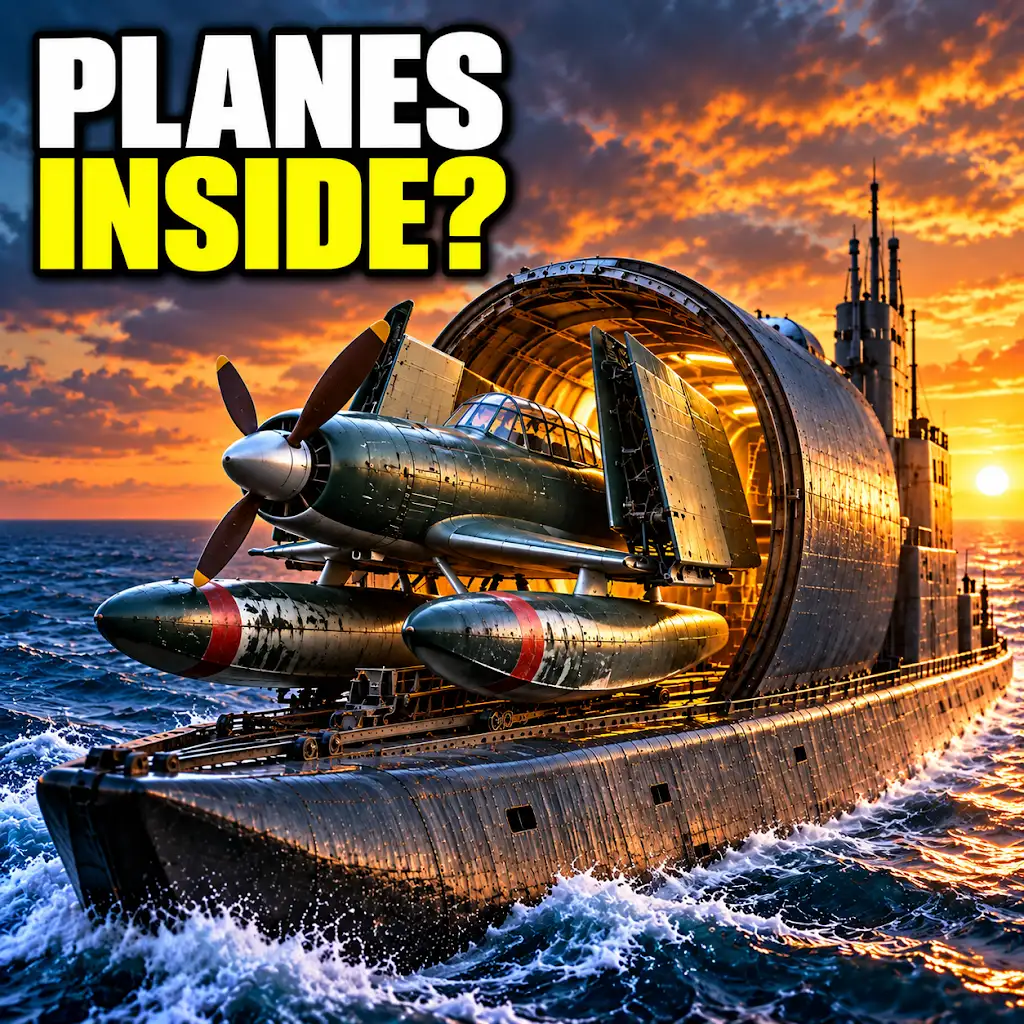
Japan Built a Submarine That Could Launch Three Planes
FAQs
What is the USS Trumpeterfish?
The USS Trumpeterfish was a submarine used by the United States Navy during World War II.
What was the torpedo test conducted by the USS Trumpeterfish?
The torpedo test conducted by the USS Trumpeterfish involved launching torpedoes at the Japanese aircraft carrier I-400 as part of a training exercise.
When did the torpedo test take place?
The torpedo test took place in 1946, after the end of World War II.
What was the outcome of the torpedo test?
The outcome of the torpedo test was successful, with the USS Trumpeterfish hitting the target accurately with its torpedoes.
What is the significance of the USS Trumpeterfish torpedo test I-400?
The USS Trumpeterfish torpedo test I-400 demonstrated the effectiveness of submarine warfare tactics and the capabilities of American submarines in targeting enemy vessels.