The vast, unforgiving expanse of the Pacific Ocean during World War II was a chessboard where naval powers played a deadly game of cat and mouse. Among the most feared predators on this chessboard were the submarines of the Imperial Japanese Navy. These silent hunters, a testament to cutting-edge engineering and ruthless efficiency, stalked Allied shipping lanes, leaving a trail of destruction and despair. The story of these submarines is not merely one of technological prowess, but a gripping narrative of strategic ambition, harrowing patrols, and ultimately, a desperate struggle against overwhelming odds.
The Dawn of the Silent Fleet
The Imperial Japanese Navy’s submarine program, often overshadowed by its more flamboyant surface fleet, was a critical component of its naval strategy. From the early 20th century, Japan recognized the strategic importance of submarines, not just as defensive weapons but as offensive tools capable of disrupting enemy supply lines and projecting power across vast distances. The development of these vessels was driven by a desire to achieve naval parity with the Western powers and to secure the resources necessary for its expansionist ambitions in Asia.
Early Innovations and Ideals
Japan’s early submarine designs were influenced by Western technologies, but the nation quickly began to innovate and adapt. The focus was on developing submarines that were not only technologically advanced but also suitable for the unique challenges of operating in the vast Pacific. This meant emphasizing range, reliability, and the ability to operate effectively in a variety of conditions, from the shallow waters of island chains to the deep ocean. The doctrine of the Japanese submarine force evolved to embrace the concept of the “Kaidai” or “great strategy,” which aimed to achieve decisive victory through surprise attacks and the attrition of enemy naval power. Early successes in naval exercises and limited engagements in the pre-war period bolstered confidence in the submarine arm, fostering an almost messianic belief in its ability to deliver victory.
The I-Boat: A formidable Weapon System
The backbone of the Japanese submarine fleet was the “I-boat,” a designation for the larger, ocean-going submarines. These were not mere coastal defenders; they were designed for extended patrols deep into enemy territory. The I-boats came in various classes, each with its own strengths and weaknesses, but all shared a common purpose: to deliver torpedoes with devastating accuracy. The I-1 class, for instance, was one of the earliest large fleet submarines, designed for long-range reconnaissance and attack. Later classes, such as the I-15, I-19, and I-400 series, represented significant advancements in design and armament. The I-15 series, in particular, was a workhorse of the fleet, embodying the characteristics of speed, range, and a formidable torpedo armament. These submarines were equipped with multiple torpedo tubes, often fore and aft, and carried a substantial number of torpedoes, allowing for multiple attack runs. Beyond torpedoes, many I-boats were also armed with deck guns, providing a secondary offensive capability and a deterrent against smaller vessels. The inclusion of aircraft, such as the Yokosuka E14Y “Glen” floatplane, further enhanced their reconnaissance capabilities, allowing them to scout enemy fleets and identify targets from afar. The presence of these aircraft also added a psychological dimension to their threat, as the prospect of being located and attacked by both submarine and aerial assets was a constant worry for Allied crews.
For those interested in the fascinating and often overlooked aspects of World War II history, particularly the role of Japanese submarines, a related article can provide deeper insights into their strategic significance and technological advancements during the war. You can explore this topic further in the article available at this link, which delves into the operational history and impact of Japanese submarines in the Pacific theater.
The Shadow War in the Pacific
The outbreak of World War II saw the Japanese submarine fleet immediately deployed to devastating effect. Their primary mission was to interdict Allied shipping, strangling the flow of vital supplies and reinforcements to the front lines. This strategy, known as “unrestricted submarine warfare,” aimed to cripple the enemy’s logistical capabilities and inflict significant economic damage.
Early Successes and Strategic Impact
In the initial stages of the war, Japanese submarines achieved remarkable success. They operated with relative impunity, sinking Allied warships and cargo vessels with alarming regularity. The attack on Pearl Harbor itself saw submarines participating, though their contribution was limited. However, it was in the vast stretches of the Pacific that their true impact was felt. The sinking of the Australian cruiser HMAS Canberra and the American destroyer USS Houston during the Battle of Savo Island, while primarily attributed to surface forces, was preceded by submarine reconnaissance that helped identify Allied positions. More directly, Japanese submarines were responsible for sinking a significant number of Allied transports and supply ships throughout the war, particularly in the early years. This directly impacted the ability of Allied forces to sustain their campaigns, forcing them to divert resources to convoy protection and increasing the psychological pressure on sailors. The element of surprise was a crucial factor in these early victories. Allied forces were often caught unaware, their convoys inadequately protected, and their ships ill-prepared for the silent menace lurking beneath the waves. The sheer scale of the Pacific theater also worked in Japan’s favor, providing ample hunting grounds for their submarines.
The Perils of the Deep: Patrols and Attacks
A typical patrol for a Japanese submarine was a grueling and dangerous undertaking. Submarines would spend weeks, sometimes months, at sea, operating at extreme depths and under constant threat of detection and attack. The cramped confines of the submarine, the ever-present smell of diesel fuel, and the monotonous routine were mentally taxing. Yet, beneath this surface of tedium lay a constant undercurrent of tension. The crew lived with the knowledge that at any moment, their vessel could be transformed from a hunter into the hunted. When a contact was made, the atmosphere would shift from weary vigilance to electric anticipation. The order to attack would be given, and the submarine would maneuver into firing position, the tension palpable as torpedoes were launched. The moments after a torpedo launch were often agonizing. The crew would listen intently for the telltale sounds of a hit or the roar of depth charges, their fate hanging in the balance. The psychological toll of these patrols cannot be overstated. The isolation, the constant danger, and the grim reality of sinking ships and drowning sailors left indelible marks on those who served beneath the waves.
The Turning Tide: Allied Countermeasures
As the war progressed, the Allies began to develop and implement more effective countermeasures against the Japanese submarine threat. This was a crucial turning point, as the initial advantages enjoyed by the Japanese began to erode. The Allies poured vast resources into intelligence gathering, anti-submarine warfare (ASW) technology, and training.
In exploring the intricate details of World War II history, one fascinating aspect is the role of Japanese submarines in naval warfare. These vessels were not only pivotal in the Pacific theater but also showcased advanced technology for their time. For those interested in a deeper understanding of this topic, a related article can be found at In the War Room, which delves into the strategies and missions undertaken by these submarines during the conflict.
Breaking the Code and Gaining an Edge
A significant breakthrough for the Allies was the successful decryption of Japanese naval codes. This provided invaluable intelligence, allowing Allied forces to anticipate Japanese submarine movements, identify their operational areas, and even learn about their strengths and weaknesses. The ability to know where submarines were likely to be, and what targets they were assigned, fundamentally shifted the balance of power. This intelligence allowed for the “cutting out” of submarines from their hunting grounds, ambushing them before they could engage their intended targets. The work of codebreakers at stations like Station Hypo in Hawaii and other Allied intelligence units was instrumental in this success. It turned the silent hunter’s advantage of stealth into a vulnerability, as their planned movements and orders could be intercepted and acted upon.
The Evolution of Anti-Submarine Warfare
In response to the submarine threat, Allied ASW capabilities underwent a dramatic evolution. New technologies and tactics were developed, making it increasingly difficult for Japanese submarines to operate effectively. Radar systems improved, allowing for the detection of surfaced submarines at greater distances. Sonar technology advanced, enabling Allied vessels to track submerged submarines with greater accuracy. The development of new types of depth charges, such as the “hedgehogs” and “foulters,” provided more effective means of attacking submerged targets. Allied destroyers and escort ships were equipped with these new weapons and trained in coordinated ASW tactics. Carrier-based aircraft also played an increasingly important role, with dedicated ASW squadrons capable of searching vast areas and attacking submarines with bombs and depth charges. The concept of hunter-killer groups, consisting of an escort carrier and its accompanying destroyers, became a highly effective tool in combating the submarine menace, turning the tables and making the hunters the hunted.
The Fading Shadow: Decline and Demise
By the later stages of the war, the once-feared Japanese submarine force found itself increasingly outmatched. The combined pressure of Allied technological superiority, superior intelligence, and relentless ASW efforts took their toll. The Japanese submarine fleet, once a symbol of naval power, was being systematically whittled down.
Mounting Losses and Resource Depletion
The relentless pressure from Allied forces led to a steady and unsustainable rate of loss for Japanese submarines. The submarines themselves were becoming increasingly outdated compared to their Allied counterparts, and the training of Japanese crews, while initially excellent, suffered as experienced personnel were lost and replacements had less time for comprehensive training. Furthermore, Japan’s industrial capacity, unlike that of the United States, could not keep pace with the losses. The Allies were able to produce submarines, escort ships, and aircraft at a far greater rate than Japan could replace its sunk vessels. This imbalance in production and attrition meant that the Japanese submarine force was constantly diminishing in strength, while the Allied ASW forces grew in number and capability. The once-proud I-boats, designed for long-range offensive patrols, were increasingly forced into defensive roles or desperate, often suicidal, missions.
The Final Patrols and the Legacy of the I-Boat
In the final years of the war, Japanese submarines were often deployed on increasingly desperate missions. These included attempts to resupply isolated garrisons, transport vital personnel, and even conduct daring, but largely ineffective, raids against Allied shipping. The iconic I-400 class submarines, capable of carrying three floatplanes, were repurposed for more conventional attack roles, their original strategic vision unfulfilled. Many of these final patrols ended in disaster, with submarines succumbing to overwhelming Allied ASW forces or succumbing to the harsh realities of combat. The legacy of the Japanese submarine force is a complex one. They were undoubtedly a formidable weapon system in the early years of the war, inflicting significant damage on Allied shipping and naval forces. However, their ultimate failure to alter the strategic course of the Pacific War highlights the limitations of even advanced naval technology without adequate industrial support, superior intelligence, and effective countermeasures. The silent hunters of the Pacific, once a source of dread, ultimately faded into the depths, their story a stark reminder of the brutal realities of naval warfare and the ever-evolving nature of technological and strategic advantage. Their patrols, though often unseen, remain a potent chapter in the history of World War II, a testament to the courage and sacrifice of those who served, and a chilling reminder of the destructive potential that lay hidden beneath the waves.
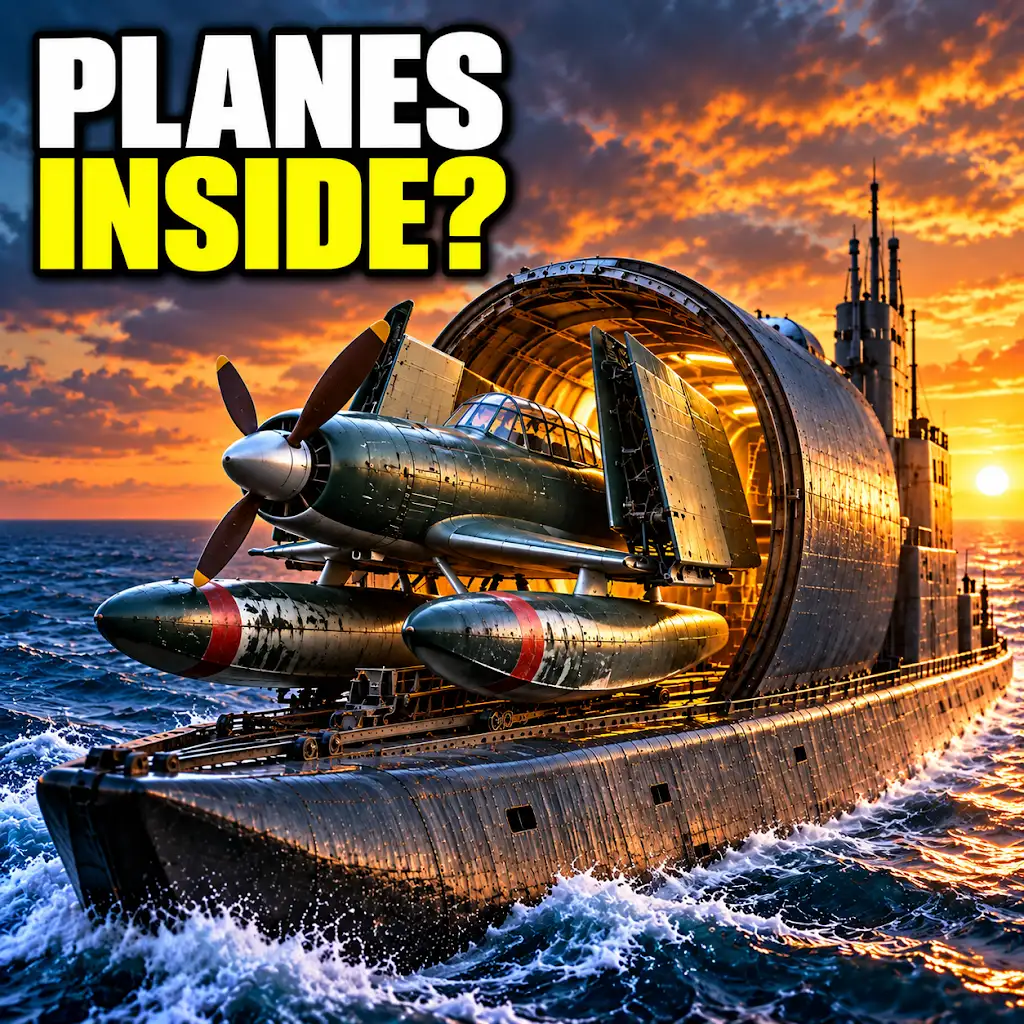
Japan Built a Submarine That Could Launch Three Planes
FAQs
What is the focus of the WWII history documentary on Japanese submarines?
The documentary focuses on the role of Japanese submarines during World War II, exploring their tactics, technology, and impact on the war.
How were Japanese submarines used during WWII?
Japanese submarines were used for various purposes during WWII, including attacking enemy ships, conducting reconnaissance missions, and transporting supplies to isolated garrisons.
What were some notable Japanese submarine missions during WWII?
Some notable Japanese submarine missions during WWII include the attack on Pearl Harbor, the sinking of the USS Indianapolis, and the transportation of high-ranking officials.
What technology did Japanese submarines use during WWII?
Japanese submarines during WWII were equipped with advanced torpedoes, periscopes, sonar systems, and communication devices to enhance their effectiveness in combat.
How did Japanese submarines contribute to the overall outcome of WWII?
Japanese submarines played a significant role in disrupting enemy supply lines, conducting surprise attacks, and gathering intelligence, ultimately impacting the outcome of key battles and naval engagements during WWII.