The crisp air of late spring in 1944 buzzed with an unspoken tension. Allied forces were poised on the precipice of an invasion that would alter the course of history, but the monumental undertaking of D-Day, the Allied landings in Normandy, was shrouded in the utmost secrecy. Yet, beneath the veil of this critical operational security, a different kind of battle was being waged – a battle of wits, of deception, and of information control. This was the domain of Operation Bodyguard, a masterfully orchestrated deception campaign designed to mislead the German high command about the true timing, location, and scale of the impending Allied invasion of Western Europe. It was a testament to human ingenuity, psychological warfare, and the power of strategic misinformation, a shadowy twin to the thunderous reality that would soon engulf the beaches of Normandy.
The Shadowy Architect of Deception
The very concept of Operation Bodyguard was as ambitious as the invasion it sought to protect. It wasn’t a single plan, but a vast, interconnected web of ruses, diversions, and feints, woven with meticulous detail and executed with chilling precision. The overarching objective was simple: to convince the German military that the main Allied assault would not be on the Pas-de-Calais, the shortest and most direct route from Britain to France, but elsewhere. This crucial misdirection was essential to thin out German defenses along the actual landing zones in Normandy, ensuring a greater chance of success for the thousands of men who would storm the beaches. The architects of this grand illusion were a diverse group of strategists, intelligence officers, and psychological warfare experts, operating under the highest levels of Allied command. Their task was not merely to lie, but to construct believable narratives, supported by fabricated evidence, that would be consumed and acted upon by the enemy. The stakes were immeasurable; a successful deception could save tens of thousands of lives, while failure could lead to a catastrophic defeat.
The Genesis of a Grand Deception
The need for a comprehensive deception plan had been recognized early in the planning stages for the invasion of Europe, codenamed Operation Overlord. Senior Allied commanders understood that a direct assault on the heavily fortified Atlantic Wall, particularly at its most logical point of attack, would be prohibitively costly. Therefore, creating confusion and diverting German resources was not an optional extra, but a critical component of the overall strategy. Operation Bodyguard emerged as the culmination of numerous smaller deception schemes, coalescing into a unified and formidable campaign. It drew upon lessons learned from previous wartime deceptions, such as Operation Mincemeat, but scaled them up to an unprecedented level. The sheer logistical and imaginative effort required to create a convincing illusion of a much larger, and differently located, invasion force was immense.
Key Players and Their Roles
While the ultimate authority rested with Supreme Allied Commander Dwight D. Eisenhower, the day-to-day execution of Operation Bodyguard was the responsibility of various specialized units and individuals. The British Section of the Political Warfare Executive (PWE) played a pivotal role, particularly in generating the content of the deceptions, from fake radio broadcasts to forged documents. Their ability to understand and exploit German psychology was paramount. The XX Committee (also known as “The Double Cross System”), headed by Lieutenant Colonel Thomas Kendrick, was instrumental in managing the network of double agents who would feed disinformation to the Germans. These agents, often unwilling participants but skillfully handled, became unwitting conduits for the Allied narrative. Intelligence agencies, such as the Secret Intelligence Service (MI6) and the US Office of Strategic Services (OSS), provided crucial insights into German military structure, communication methods, and decision-making processes, allowing the deception planners to tailor their strategies effectively.
Operation Bodyguard was a crucial deception strategy employed during World War II to mislead the German forces about the location and timing of the D-Day invasion. For a deeper understanding of the intricacies and impact of this operation, you can explore a related article that delves into the various tactics used and their effectiveness. To read more, visit this article for an insightful analysis of the deception strategies that played a pivotal role in the success of the Allied forces.
Weaving the Web of Illusion
Operation Bodyguard was not a single, monolithic deception but rather a series of interlocking deceptions, each designed to reinforce the overarching narrative. The goal was to create a consistent and credible picture for the Germans, convincing them that the Allies had massive forces poised to invade not only in Normandy but also, crucially, in the Pas-de-Calais. This meant constructing not just one, but multiple phantom armies, complete with their own leaders, logistical support, and strategic objectives. The brilliance lay in the detail, the consistency, and the psychological manipulation that underlay every aspect of the operation.
Fortifying the Pas-de-Calais: Operation Fortitude
The cornerstone of Operation Bodyguard was Operation Fortitude, itself divided into two main components: Fortitude North and Fortitude South. Fortitude North was designed to convince the Germans that a large-scale invasion would be launched from Scotland and the north of England, targeting Norway or Denmark. This involved creating the impression of a vast army being assembled in Scotland, complete with fake troop movements, radio traffic, and even the construction of dummy landing craft and infrastructure. The aim was to draw German reserves away from the south of England, specifically from the Pas-de-Calais.
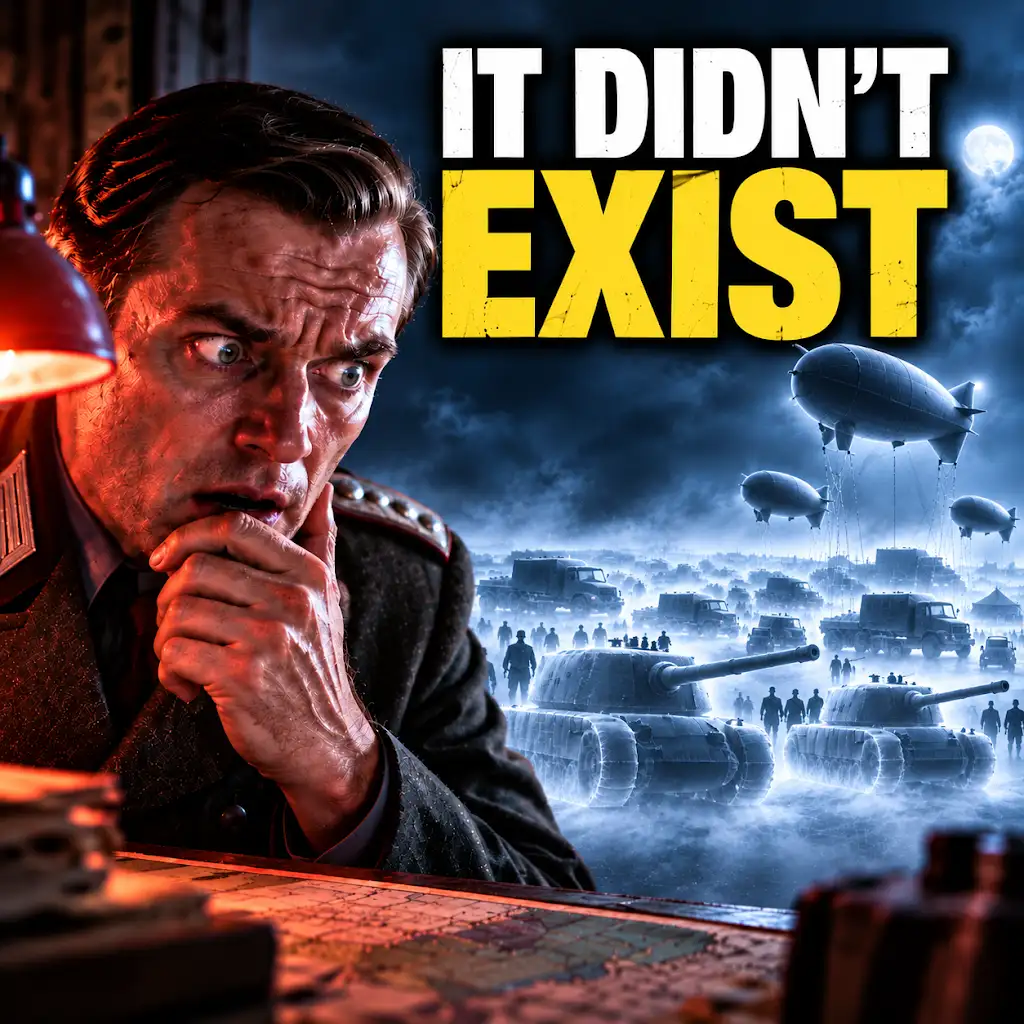
Fortitude South was arguably the most critical and elaborate element. It aimed to convince the Germans that the main Allied invasion force, codenamed “Army Group B,” under the command of the fictional General George S. Patton, was poised to attack the Pas-de-Calais. This involved the creation of a vast phantom army, complete with meticulously crafted orders of battle, troop dispositions, and exaggerated troop strengths. Radio communications, often using Allied agents transmitting fake messages, were key to reinforcing this illusion. Elaborate dummy camps, complete with inflatable tanks, vehicles, and tents, were erected in the southeastern counties of England, visible to German reconnaissance planes and strategically placed to convey the impression of immense military buildup. The sheer scale of these dummy installations was intended to overwhelm German intelligence, making it difficult for them to discern the real from the fabricated.
The Phantom Army of General Patton
The choice of General Patton as the figurehead for Army Group B was a stroke of psychological genius. Patton was known for his aggressive tactics and his propensity for offensive operations, making him a plausible commander for a large-scale invasion. By placing him in command of a phantom army, the Allies amplified the perceived threat to the Pas-de-Calais, knowing that German commanders would take any threat associated with Patton very seriously. The elaborate logistics supporting this phantom army, though entirely fictitious, were designed to mirror the real preparations for Overlord, including the creation of fake supply depots, airfields, and training areas.
The Role of Double Agents and Radio Traffic
The intricate network of double agents managed by the XX Committee was the lifeblood of Operation Bodyguard. These agents, meticulously cultivated and controlled, provided the Germans with a steady stream of carefully curated disinformation. They “reported” on the activities of the phantom armies, confirmed the supposed invasion plans targeting the Pas-de-Calais, and corroborated the intelligence received through other channels. This created a self-reinforcing loop of deception, where fabricated reports validated fabricated evidence, making the illusion all the more convincing. Radio traffic played an equally vital role. Allied intelligence meticulously crafted and broadcast radio signals designed to mimic the communications of a large invading force. These signals were often transmitted on frequencies known to be monitored by German intelligence, carrying coded messages and operational chatter that further solidified the illusion of a massed invasion in the north.
The Art of Misdirection: From Tanks to Tactics

The deception was not limited to the creation of phantom armies; it extended to every facet of military activity. The Allies employed a wide array of tactics to mislead the Germans about their true intentions, from the seemingly mundane to the highly sophisticated. The goal was to create a tangible and believable presence of an invading force in the Pas-de-Calais, drawing the attention and resources of the German military away from the actual landing zones in Normandy.
Inflatable Tanks and Dummy Landing Craft
One of the most visually striking elements of Operation Bodyguard was the extensive use of inflatable dummy equipment. Thousands of inflatable tanks, artillery pieces, trucks, and even entire camps were deployed in southeastern England. These were strategically placed to be visible to German reconnaissance aircraft, creating the illusion of a vast armored force massing for an imminent assault. Similarly, hundreds of dummy landing craft were positioned in ports and harbors, further reinforcing the impression of a massive amphibious invasion being prepared for the Pas-de-Calais. These seemingly simple props were incredibly effective in contributing to the overall deception, making the phantom army appear tangible and real to enemy observation.
Strategic Bombing and Diversionary Raids
The Allied air forces also played a crucial role in Operation Bodyguard. While strategic bombing was a primary objective in weakening German defenses, certain bombing raids were specifically timed and targeted to support the deception. Bombing raids on infrastructure in the Pas-de-Calais, for instance, were carried out to create the impression that these were preparatory attacks for a full-scale invasion. Similarly, diversionary raids and limited airborne operations in other areas were orchestrated to draw German attention and resources away from Normandy. These actions, while seemingly minor in the grand scheme of the bombing campaign, were meticulously integrated into the broader deception plan to enhance its credibility.
The Crucial Role of Secrecy and Timing
The success of Operation Bodyguard hinged on two critical factors: absolute secrecy surrounding the true invasion plans and impeccable timing in the execution of the deceptions. Any leak or premature revelation of the Normandy landing sites would have rendered the entire campaign futile, potentially leading to a disastrous outcome. Conversely, the carefully choreographed release of disinformation ensured that the German high command received the right information at the right time, allowing their own decision-making processes to be influenced in the Allies’ favor.
Maintaining the Veil of Secrecy
The absolute need for secrecy permeated every aspect of the Allied war effort. Strict compartmentalization was enforced, with only a select few individuals privy to the true invasion plans. The vast majority of troops involved in Operation Overlord were unaware of the specific landing sites or the precise date of the invasion. This “need-to-know” principle extended to the deception planners themselves, who were often kept in the dark about the actual operational details of the invasion. This prevented any accidental slips or inconsistencies from compromising the deception. Security measures were stringent, with severe penalties for any breach of secrecy. The Allied command understood that the survival of the deception, and thus the success of the invasion, depended on the absolute silence of those involved.
The Strategic Timing of Information Release
The release of disinformation was not a haphazard affair but a carefully orchestrated campaign that unfolded in phases, mirroring the real buildup to an invasion. As D-Day approached, the intensity and credibility of the deceptions were gradually increased. Fake intelligence reports, radio transmissions, and troop movements were timed to coincide with the increasing German anxieties about an imminent Allied offensive. The ultimate goal was to create a convincing narrative that the invasion would occur in the Pas-de-Calais around the date of May 15th, thus encouraging the Germans to commit their reserves to that region and delay their response to the actual landings in Normandy. The critical factor was to keep the Germans guessing and looking in the wrong direction right up until the moment the Allied forces were already ashore.
Operation Bodyguard was a crucial deception strategy employed during World War II to mislead the German forces about the location and timing of the D-Day invasion. This operation involved a series of elaborate tactics, including fake radio transmissions and the creation of phantom armies. For a deeper understanding of the complexities and impact of this deception, you can explore a related article that delves into the intricacies of these strategies and their significance in the overall success of the Allied forces. To read more about this fascinating topic, visit this article.
The Aftermath and Legacy of Bodyguard
| Metric | Details |
|---|---|
| Operation Name | Operation Bodyguard |
| Purpose | Deception strategy to mislead German forces about the location and timing of the D-Day invasion |
| Duration | January 1944 – June 1944 |
| Main Deception Sub-Operations | Operation Fortitude North, Operation Fortitude South, Operation Quicksilver, Operation Graffham |
| Fake Army Groups Created | First United States Army Group (FUSAG) |
| Key Deception Techniques | Fake radio traffic, dummy tanks and aircraft, double agents, false intelligence leaks |
| Impact on German Forces | Delayed German reinforcements to Normandy, diverted attention to Pas de Calais and Norway |
| Number of Double Agents Involved | Approximately 30 |
| Estimated German Troop Deployment Misled | Over 15 divisions held in Pas de Calais due to deception |
| Outcome | Successful Allied landing on Normandy beaches with reduced German resistance |
The impact of Operation Bodyguard on the success of D-Day was profound and undeniable. By effectively diverting German attention and resources, the deception campaign significantly reduced the enemy’s ability to counter the Allied landings. The relatively lighter resistance encountered on some of the Normandy beaches was a direct testament to the success of the deception. Operation Bodyguard stands as a monumental achievement in the history of military deception, a testament to the power of strategic misinformation, and a critical factor in the Allied victory in Europe. Its legacy continues to inspire and inform military strategists to this day, a reminder that the battles fought in the shadows can be as decisive as those fought on the open field.
The Impact on German Defenses
The primary success of Operation Bodyguard was its impact on the German defensive posture. German intelligence, particularly the Oberkommando der Wehrmacht (OKW) and the Abwehr (German military intelligence), was convinced by the elaborate deceptions that the main Allied invasion would occur in the Pas-de-Calais. This led to the strategic misallocation of German reserves and formidable armored divisions, which were kept in the north of France, far from the actual landing zones in Normandy. Field Marshal Erwin Rommel, tasked with strengthening the Atlantic Wall, was largely deceived about the true invasion point, focusing his efforts on the wrong sector. This significantly thinned out the defenses in Normandy, allowing the Allied forces to gain a crucial foothold and begin their advance inland. The German response to the Normandy landings was therefore delayed and less effective than it might have been.
A Masterclass in Psychological Warfare
Operation Bodyguard is widely regarded as one of the most successful and sophisticated deception campaigns in military history. It demonstrated the immense power of psychological warfare in manipulating an adversary’s perceptions and decision-making. The campaign was a testament to the Allied ability to understand the enemy’s mindset, anticipate their reactions, and construct a compelling narrative that would be believed and acted upon. The meticulous planning, the use of double agents, the creation of phantom armies, and the precise timing of disinformation all contributed to its extraordinary success. Operation Bodyguard proved that overwhelming force could be significantly amplified by the strategic application of cunning and deception, a lesson that continues to resonate in modern military doctrine.
How the Allies Built an Army for Germany to Discover
FAQs
What was Operation Bodyguard?
Operation Bodyguard was a World War II military deception strategy employed by the Allied forces to mislead the German military about the location and timing of the D-Day invasion.
When did Operation Bodyguard take place?
Operation Bodyguard was carried out in the months leading up to the D-Day invasion on June 6, 1944.
What were the main objectives of Operation Bodyguard?
The main objectives of Operation Bodyguard were to deceive the German forces about the actual location of the D-Day invasion, to confuse them about the timing of the invasion, and to divert their attention away from the Normandy coast.
How was Operation Bodyguard executed?
Operation Bodyguard involved a series of elaborate deception tactics, including the creation of fake military units, the use of double agents, the spreading of false information, and the simulation of military activities to mislead the German forces.
What was the impact of Operation Bodyguard on the success of the D-Day invasion?
Operation Bodyguard played a crucial role in the success of the D-Day invasion by keeping the German forces off guard and preventing them from effectively countering the Allied landing at Normandy. The deception strategy helped to create confusion and delay German reinforcements, allowing the Allies to establish a foothold in France and eventually achieve victory in Europe.