German Intelligence’s Role in Normandy Invasion
The Allied invasion of Normandy on June 6, 1944, remains one of history’s most pivotal military operations. Its success, however, was not solely a testament to Allied planning and execution, but also to a complex interplay of deception, miscalculation, and ultimately, the shortcomings of German intelligence. While the German military machine was formidable, its intelligence apparatus, fragmented and plagued by internal rivalries, failed to accurately assess the scale, timing, and location of the D-Day landings. This article will delve into the multifaceted role of German intelligence in the Normandy campaign, examining its strengths, weaknesses, and the critical intelligence failures that contributed to the eventual Allied victory.
In the lead-up to the Normandy invasion, German intelligence faced significant challenges in accurately assessing the Allied forces’ intentions and capabilities. An insightful article that delves into this topic is available at In The War Room, which explores how misjudgments and misinformation contributed to the surprise of D-Day. The article highlights the critical role of intelligence in wartime decision-making and the consequences of underestimating the enemy’s resolve.
The Pre-Invasion Landscape of German Intelligence

Prior to D-Day, German intelligence was a sprawling, often contradictory entity. The Abwehr, the traditional military intelligence agency, was responsible for espionage, counter-espionage, and sabotage. However, its effectiveness was increasingly undermined by the rise of the Sicherheitsdienst (SD), the intelligence arm of the SS. The SD, driven by ideological imperatives, often prioritized political loyalty over operational efficacy, leading to friction and a duplication of efforts. Furthermore, the Reichssicherheitshauptamt (RSHA), the overarching security agency of the Nazi regime, also possessed its own intelligence gathering capabilities, further fragmenting the information landscape. This fractured structure meant that crucial intelligence often failed to reach the right people at the right time, or was subjected to biased interpretation by competing agencies.
The Abwehr’s Efforts and Limitations
The Abwehr, under Admiral Wilhelm Canaris, had a long history of success, but by 1944, it was in decline. Canaris himself was suspected of disloyalty by some within the Nazi regime, and the Abwehr’s resources were being siphoned off by the SS. Despite these challenges, the Abwehr did manage to cultivate a network of agents within Allied countries. However, the effectiveness of these agents was severely hampered by Allied counter-intelligence operations, most notably the double-cross system, which turned many German agents into unwitting conduits of misinformation. While the Abwehr provided reports on Allied troop movements and potential invasion sites, these were often incomplete or inaccurate, a consequence of both Allied deception and the Abwehr’s own diminishing capabilities.
The SS and the SD’s Growing Influence
The SS, under Heinrich Himmler, gradually asserted its dominance over German intelligence. The SD, with its vast network of informants and its control over internal security, became increasingly influential. The SD’s focus was often on political intelligence and rooting out internal dissent, diverting resources and attention from critical military intelligence. While the SD did have some agents in Allied territories, their reports were often colored by their ideological biases and a desire to please their superiors. This led to a skewed understanding of Allied intentions, with a tendency to overemphasize potential threats in areas other than Normandy. The SS’s ruthless efficiency in other spheres did not translate into effective intelligence gathering regarding the Western Front.
The OKW and the Conflicting Information Flow
The Oberkommando der Wehrmacht (OKW), the High Command of the German Armed Forces, was the central body responsible for coordinating military operations. However, the flow of intelligence to the OKW was a convoluted and often unreliable process. Different branches of the military and security services fed information, often contradictory, to the OKW. This made it difficult for the OKW leadership, particularly Hitler, to form a coherent picture of the situation. The inherent rivalry between the Abwehr, the SD, and other intelligence branches meant that a unified and accurate intelligence assessment was a near impossibility. This internal dysfunction was a significant weakness exploited by the Allies.
Allied Deception: Operation Fortitude and its Impact

The cornerstone of the Allied invasion plan was a sophisticated deception campaign, codenamed Operation Fortitude. This elaborate ruse aimed to convince the Germans that the main Allied invasion would occur at the Pas-de-Calais, the closest point between Britain and the continent, rather than Normandy. Operation Fortitude employed a multi-pronged approach, utilizing double agents, radio traffic, dummy armies, and strategically placed inflatable tanks and aircraft. The success of Operation Fortitude was directly dependent on the German intelligence apparatus’s ability to be misled, and in this regard, it proved remarkably effective.
The Double Cross System and Misinformation
A critical element of Operation Fortitude was the British double-cross system, which managed German agents in the UK. By controlling the information these agents relayed back to Germany, the British were able to feed them carefully crafted lies. Agents like Garbo (Juan Pujol García) were instrumental in feeding the Germans a steady stream of disinformation about the size and location of Allied forces. Garbo, in particular, convinced the Germans of the existence of a massive invasion force poised to attack the Pas-de-Calais, complete with detailed (and fabricated) troop dispositions and logistical plans. This sustained campaign of misinformation effectively blinded German intelligence to the true intentions in Normandy.
The Phantom Army of First U.S. Army Group (FUSAG)
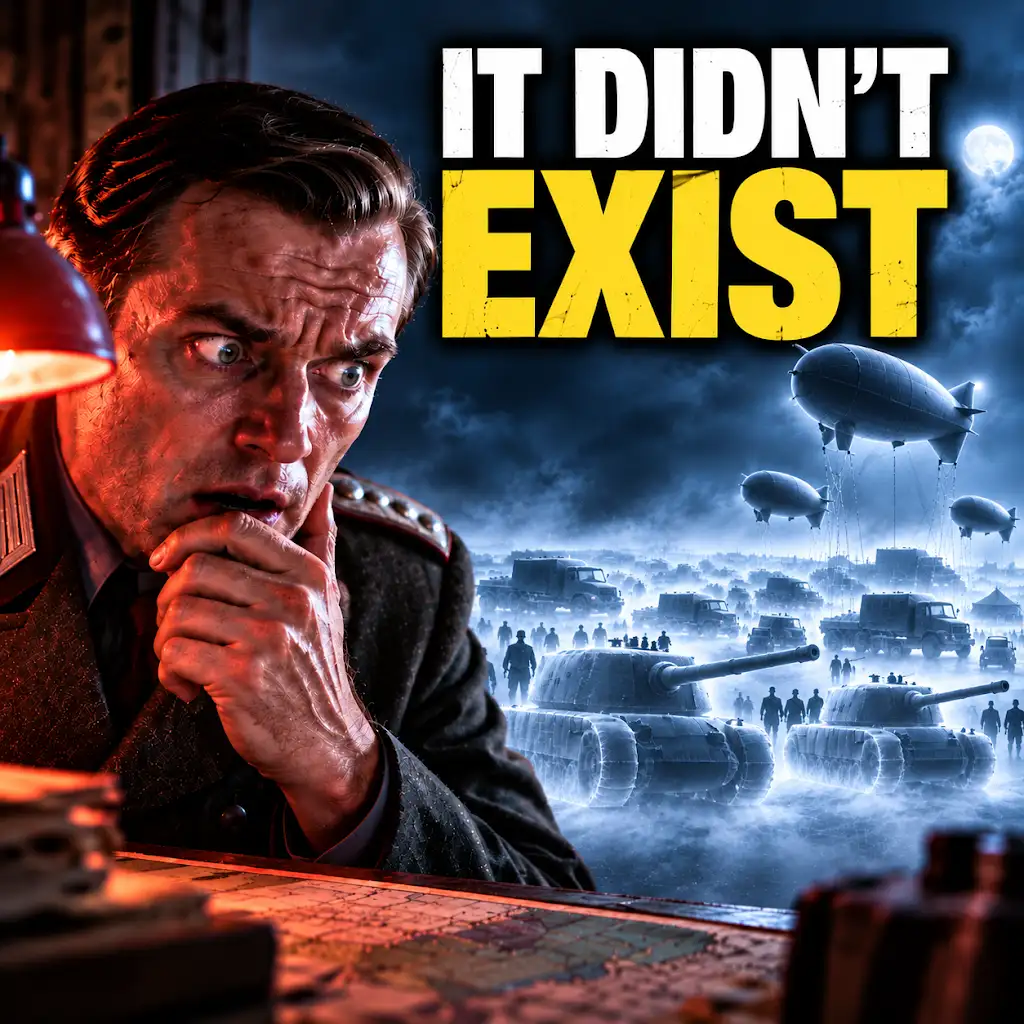
Perhaps the most visually impressive component of Operation Fortitude was the creation of the First U.S. Army Group (FUSAG), a fictional army group under the command of General George S. Patton. FUSAG was represented by thousands of dummy tanks, artillery pieces, and aircraft, as well as heavily fortified camps and visible troop movements. German reconnaissance planes and agents observed these elaborate ruses, reinforcing the belief that a major invasion was imminent at Pas-de-Calais. The sheer scale of the deception, coupled with the detailed intelligence provided by double agents, made it extremely difficult for German intelligence to discern the truth.
Radio Traffic and Diversionary Tactics
Allied intelligence also meticulously manipulated radio traffic to support the deception. Dummy radio networks were established to simulate the communication of FUSAG, broadcasting messages and call signs consistent with a large invasion force preparing for an assault. Real radio traffic from actual Allied units in southern England was carefully managed to create the impression of significant activity directed towards Pas-de-Calais. These diversionary tactics, combined with the visible presence of FUSAG, created a convincing illusion that kept German forces pinned down in the wrong location.
German Intelligence’s Misinterpretations and Miscalculations
Despite the efforts of the Abwehr and the SD to gather intelligence, their interpretation of the information available was consistently flawed. Several factors contributed to these critical misjudgments, ranging from wishful thinking to an underestimation of Allied capabilities. The fragmented nature of German intelligence meant that even when accurate pieces of information were gathered, they were often not pieced together effectively or were dismissed by those in positions of authority.
The Obsession with Pas-de-Calais
The overwhelming weight of evidence, largely manufactured by Operation Fortitude, led German intelligence to fixate on Pas-de-Calais as the primary invasion target. This fixation became an almost unshakeable conviction within the German high command. Even when some intelligence suggested otherwise, the prevailing belief in a Pas-de-Calais invasion was so strong that dissenting voices or contradictory evidence were often dismissed or downplayed. This psychological barrier proved to be a significant hurdle for any accurate assessment of the Normandy threat.
Underestimation of Allied Amphibious Capabilities
Throughout the war, German military doctrine had not heavily emphasized large-scale amphibious assaults in the face of determined opposition. This underestimation extended to their perception of Allied capabilities in this area. While the Germans knew the Allies possessed landing craft and naval power, they did not fully grasp the scale of planning, training, and technological innovation that had gone into preparing for D-Day. They believed that such an operation would be prohibitively risky and likely to result in catastrophic Allied losses. This underestimation played directly into Allied hands, as they were able to leverage the element of surprise regarding the sheer audacity and scale of their amphibious assault.
Ignoring or Downplaying Normandy as a Threat
While the Abwehr did have some agents and sources that provided indications of activity in Normandy, this intelligence was often compartmentalized or deemed less significant than the perceived threat in Pas-de-Calais. Reports of troop build-ups, increased shipping, and reconnaissance flights in the Normandy region were often filtered out, misinterpreted, or simply not given the credence they deserved by the decision-makers. The prevailing narrative, reinforced by Allied deception, created a blind spot for the true danger lurking in Normandy. Even Rommel, who commanded Army Group B and was responsible for coastal defenses in Normandy, expressed concerns and requested reinforcements, but his warnings were not fully heeded by the highest levels of command, partly due to the focus on the Pas-de-Calais.
In the lead-up to the Normandy invasion, German intelligence faced significant challenges in accurately assessing the Allied forces’ intentions and capabilities. An insightful article discusses how the misinterpretation of intelligence reports contributed to the confusion surrounding the D-Day operation. This piece highlights the critical role of intelligence in warfare and the consequences of underestimating the enemy. To learn more about this fascinating topic, you can read the full article here.
The Role of Erwin Rommel and the Atlantic Wall
| Metric | Details |
|---|---|
| Primary Intelligence Agency | Abwehr (Military Intelligence), Sicherheitsdienst (SD) |
| Key Intelligence Focus | Allied invasion plans, troop movements, deception operations |
| Effectiveness of Intelligence | Limited; largely misled by Allied deception (Operation Fortitude) |
| Major Intelligence Failures | Underestimation of Normandy as invasion site; belief in Pas de Calais as primary target |
| Number of Agents in UK | Approximately 30-40 agents sent, most captured or turned by British counterintelligence |
| Use of Double Agents | British Double Cross System successfully fed false information to Germans |
| Signal Intelligence Capability | Intercepted Allied communications but often misinterpreted or incomplete |
| Impact on German Defensive Deployment | Delayed reinforcement of Normandy; kept significant forces at Pas de Calais |
Field Marshal Erwin Rommel, appointed by Hitler to strengthen the defenses of the Atlantic Wall, was a highly capable commander who recognized the imminent threat of an Allied invasion. However, his efforts to bolster defenses in Normandy were hampered by a lack of resources, conflicting priorities from the High Command, and importantly, a flawed understanding of the timing and location of the impending assault, a direct consequence of the failures in German intelligence.
Rommel’s Assessment of Defenses
Rommel arrived in Normandy with a clear understanding of the importance of the sector he commanded. He immediately set about strengthening the Atlantic Wall, ordering the construction of more obstacles, minefields, and bunkers. He also emphasized the need for mobile reserves that could be rapidly deployed to counter any landing. However, Rommel’s primary concern was a potential invasion at Pas-de-Calais, the most direct route across the Channel. While he understood the threat to Normandy, the overwhelming emphasis on deception in the Pas-de-Calais meant that his requests for additional fortifications and troops in Normandy were not always fully met.
The Disputed Location of Reserves
A major point of contention between Rommel and other German commanders, including Gerd von Rundstedt, was the deployment of mobile armored reserves. Rommel believed these reserves should be positioned close to the coast, ready to immediately engage and destroy any invading forces. However, others, including Hitler himself, insisted that these reserves be kept further inland, to be deployed only after the true invasion site was confirmed, fearing they would be depleted by localized Allied attacks if positioned too close to the shore. This disagreement, fueled by the intelligence failures that obscured the true landing zone, meant that vital reserves were not in the optimal positions to effectively counter the Normandy landings on D-Day itself.
The Impact of Weather on Intelligence Gathering
The notoriously unpredictable weather in the English Channel played a significant role in both Allied planning and German intelligence. Rommel, recognizing the importance of weather for amphibious operations, had lobbied for the deployment of the armored reserves further inland, as a storm would make immediate landings impossible. When the invasion occurred on June 6th, the weather was poor, which, coupled with the Allied deception, contributed to the German high command’s initial disbelief that a full-scale invasion was underway. German weather reconnaissance efforts were also impacted by the conditions, further hindering their ability to provide accurate assessments of potential landing windows.
Post-Invasion Intelligence and its Limited Effectiveness
Even after the D-Day landings commenced, German intelligence continued to struggle. The initial shock and confusion, coupled with the unexpected success of the Allied beachhead, meant that the German military was playing catch-up. While intelligence gathering continued, its ability to influence the course of the battle was severely diminished by the catastrophic failures in the pre-invasion period.
Initial Disbelief and Disorientation
When the landings began, the initial reaction within the German command was one of disbelief and confusion. The scale of the operation, occurring in Normandy rather than Pas-de-Calais, was so far removed from their intelligence assessments that many struggled to comprehend the reality unfolding. Reports from the front lines were often fragmented and contradictory, exacerbating the disorientation. The meticulously crafted deception of Operation Fortitude had effectively created a psychological shockwave that took significant time to overcome, time the Germans could ill afford.
Attempts to Identify the Full Scale of Allied Forces
In the immediate aftermath of the landings, German intelligence frantically attempted to ascertain the full strength and disposition of the Allied forces. Reconnaissance missions were flown, and agents were tasked with gathering information. However, the Allies, now firmly established on the continent, were adept at protecting their positions and continuing their deception efforts. The Allied air superiority also severely hampered German reconnaissance capabilities. The task of piecing together an accurate picture of the Allied invasion force, which had been obscured for months, was now exponentially more difficult.
The Legacy of Intelligence Failures
The intelligence failures surrounding the Normandy invasion had profound and lasting consequences. They significantly contributed to the initial success of the Allied landings, allowing them to establish and expand their beachhead. While the German military fought valiantly throughout the Normandy campaign, their initial strategic disadvantage, stemming from flawed intelligence, proved to be a decisive factor. The failure of German intelligence to accurately predict and respond to D-Day stands as a stark reminder of the critical importance of accurate, timely, and well-integrated intelligence in modern warfare. The Allied deception campaign, by expertly exploiting the weaknesses and biases within the German intelligence apparatus, demonstrated the power of misdirection in achieving strategic objectives.
How the Allies Built an Army for Germany to Discover
FAQs
What was the role of German intelligence before the Normandy invasion?
German intelligence, known as the Abwehr, played a crucial role in gathering information about Allied plans and movements leading up to the Normandy invasion.
How did German intelligence gather information before the Normandy invasion?
German intelligence used a variety of methods to gather information, including espionage, code-breaking, and intercepting communications.
Did German intelligence accurately predict the Normandy invasion?
German intelligence failed to accurately predict the exact location and timing of the Normandy invasion, despite having some knowledge of Allied preparations.
What impact did German intelligence have on the outcome of the Normandy invasion?
While German intelligence was able to provide some warning of the impending invasion, their failure to accurately predict the exact details significantly impacted their ability to effectively respond.
How has the role of German intelligence before the Normandy invasion been viewed historically?
Historically, the role of German intelligence before the Normandy invasion has been seen as a missed opportunity for the Axis powers, as better intelligence could have potentially altered the outcome of the invasion.