
The Phantom Army and the Woman Who Wove It
The annals of World War II are replete with tales of bravery, sacrifice, and strategic brilliance. Yet, some of the most impactful contributions came not from the roar of cannons, but from the whispers of deception. Among these shadowy figures, one stands out for her extraordinary audacity and her pivotal role in one of history’s most audacious military stratagems: Agent GARBO. Her story is inextricably linked to Operation Fortitude, the elaborate deception campaign designed to mislead the German high command about the true location of the Allied invasion of Normandy. It is a testament to the power of human ingenuity, the art of psychological warfare, and the remarkable courage of a woman who became a phantom in the eyes of her enemies.
Agent GARBO played a crucial role in Operation Fortitude, the Allied deception strategy during World War II that aimed to mislead the Germans about the location of the D-Day invasion. For a deeper understanding of the intricate web of espionage and deception that characterized this operation, you can read a related article that explores the broader implications of such strategies in warfare. Check it out here: In the War Room.
Forging a Legend: The Genesis of Juan Pujol García
The man behind the legend of Agent GARBO was Juan Pujol García, a Spaniard with an insatiable desire to strike a blow against Nazi Germany. Frustrated by the non-interventionist stance of Spain, Pujol felt a deep moral imperative to contribute to the Allied cause. His initial attempts to offer his services to the British Secret Intelligence Service (MI6) were met with polite indifference. Undeterred, Pujol adopted a bolder approach. He conceived of himself as a double agent, operating from Lisbon, Portugal, where he meticulously crafted a persona of a disgruntled, anti-British Spanish government official who, disillusioned with Franco’s regime, was willing to sell information to the Germans. He manufactured a complex network of fictional sub-agents, creating an intricate web of intelligence that he fed to his German handlers.
The Illusion of a Vast Network
Pujol’s genius lay in his ability to present himself as the linchpin of an extensive espionage operation. He invented dozens of fictitious informants, providing his German handlers with carefully constructed reports that detailed everything from troop movements to the perceived morale of British soldiers. These reports were a masterful blend of truth, half-truth, and outright fabrication, designed to appear credible while subtly steering German perceptions. He would even describe meetings with these non-existent contacts, complete with fabricated anecdotes and details, further solidifying the illusion of his reach. This meticulous creation of a phantom network was crucial; it gave the Germans the impression of a deep and pervasive intelligence apparatus at Pujol’s disposal.
The Art of the Credible Lie
Pujol understood that effective deception was not simply about telling lies, but about telling lies that were believable and served a specific strategic purpose. He carefully researched his fabricated intelligence, ensuring it aligned with the broader geopolitical landscape and the known capabilities of the Allied forces. He would sometimes feed the Germans genuinely obtained, but ultimately harmless, information to build trust. This practice of seeding his reports with verifiable details served to enhance the credibility of his more crucial, and entirely fabricated, intelligence. His ability to weave a compelling narrative, supported by seemingly solid evidence, was a testament to his keen understanding of human psychology and the motivations of his handlers.
Operation Fortitude: The Masterstroke of Deception
As D-Day loomed, the paramount concern for the Allies was to conceal the true landing site. The Germans, well aware of an impending invasion, desperately sought to pinpoint its location. This is where Operation Fortitude, with Agent GARBO at its heart, became indispensable. The operation’s objective was to convince the German military that the main Allied invasion force would land in the Pas-de-Calais, the closest point in France to Britain, and that the landings in Normandy were merely a diversionary tactic. Pujol, or GARBO, was instrumental in disseminating this false narrative to the German intelligence services.
The First Army and Its Phantoms
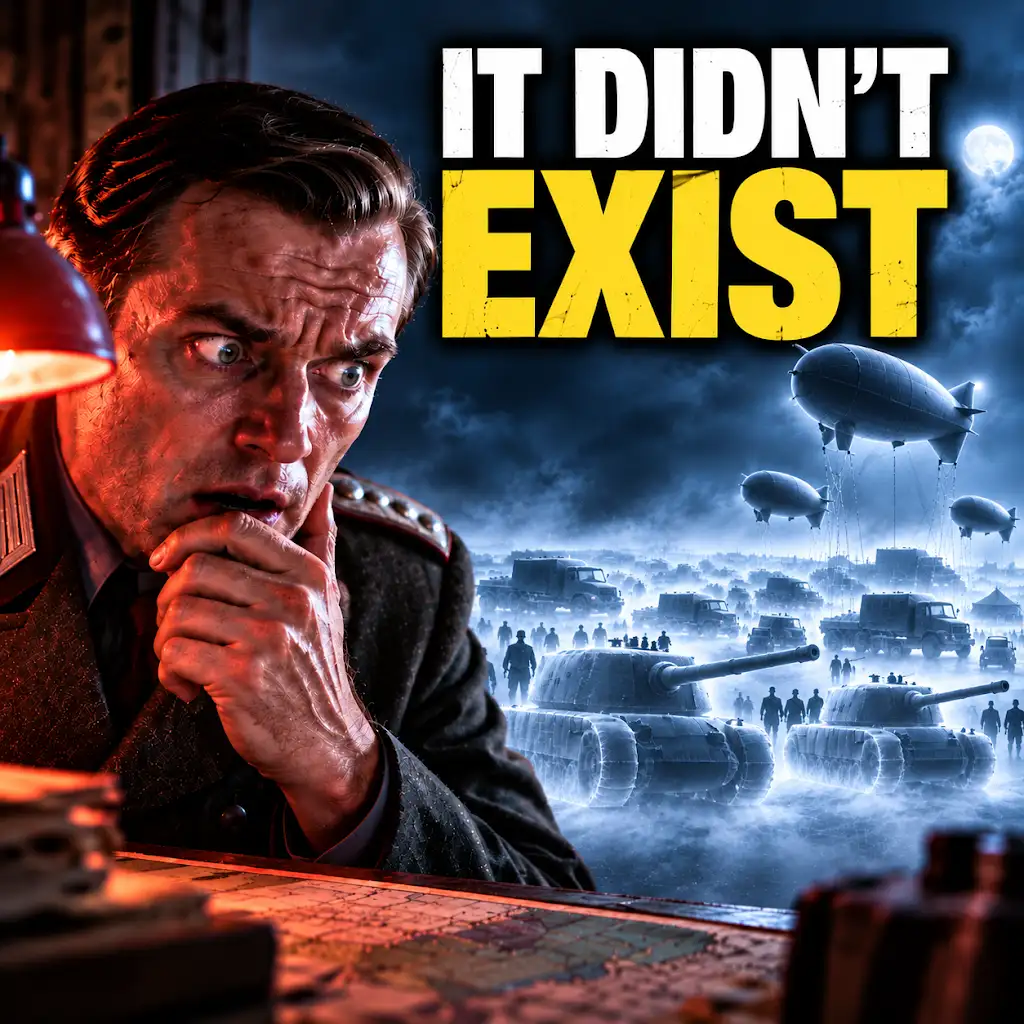
GARBO’s primary contribution to Operation Fortitude was the creation and promotion of the fictional First United States Army Group (FUSAG), commanded by the seemingly formidable General George S. Patton. Pujol fed his German handlers an elaborate story of a massive Allied army poised across the English Channel, complete with details about its size, composition, and impending assault on Calais. He described Patton as an aggressive and unpredictable commander, a believable personality to lead such a formidable force. This fictitious army, numbering hundreds of thousands of men, was a crucial element in convincing the Germans that the Pas-de-Calais was the primary invasion target.
The Power of Misinformation
GARBO’s reports to the Germans meticulously detailed troop movements, air reconnaissance missions, and even the construction of dummy landing craft and invasion infrastructure in southeastern England, all geared towards Calais. He described exaggerated troop numbers and provided detailed, yet fabricated, logistical plans for the supposed invasion. The Germans, receiving this information from what they believed to be a highly placed and well-informed agent, and corroborating it with their own (often misleadingly interpreted) intelligence, became increasingly convinced that Calais was the real threat. This led them to reinforce their defenses in the Pas-de-Calais, diverting crucial troops and resources away from Normandy.
The Double Cross System
A vital component of Operation Fortitude, and GARBO’s success, was the Double Cross System. This system involved turning German agents operating in Britain into double agents working for the British. GARBO was the star of this system. His German handlers believed they were receiving intelligence from their own network of spies, when in reality, they were receiving carefully crafted disinformation fed to them by the British. GARBO, in turn, was in constant communication with his British handlers, ensuring that the information he fed to the Germans was precisely what they wanted him to feed them, designed to maximize their misdirection.
The Double Life of a Master Spy
Living a double life as a celebrated agent in the eyes of his handlers and a crucial asset to the Allied cause required immense mental fortitude and an extraordinary ability to compartmentalize. Juan Pujol García, as GARBO, walked a constant tightrope, never knowing when a single misstep could lead to exposure and likely execution. He was not a soldier in the traditional sense, but his courage was no less profound. His constant performance, his meticulous attention to detail, and his unwavering commitment to his mission were essential for the success of Operation Fortitude and, ultimately, for the success of the D-Day landings.
The Constant Threat of Exposure
The psychological toll of Pujol’s double life must have been immense. He was in constant communication with both sides, meticulously crafting his messages to satisfy the expectations of each. A single slip in his fabricated narrative, a detail that didn’t quite add up, or an unexpected encounter could have unraveled his entire operation. The Germans, while seemingly trusting him, were also notoriously ruthless with perceived traitors. The constant threat of discovery, of being unmasked as a traitor by his German handlers, would have been a perpetual shadow hanging over him. This unwavering pressure required a remarkable level of self-control and an exceptional ability to maintain composure under duress.
The Personal Sacrifices
Beyond the constant threat, Pujol’s work demanded significant personal sacrifices. His family life was undoubtedly affected by the secrecy and the inherent dangers of his profession. He had to maintain a consistent persona, often far from his loved ones, and the emotional burden of his deception would have been a heavy weight to bear. The very act of lying, even for a noble cause, can take its toll on an individual. Pujol had to live with the knowledge that he was deceiving people, even if they were his adversaries, and that the success of his mission depended on their continued belief in his fabricated reality.
Agent GARBO played a crucial role in Operation Fortitude, the Allied deception strategy that misled the Germans about the location of the D-Day invasion. For those interested in exploring the intricacies of this operation further, a related article can provide deeper insights into the tactics employed and the impact of espionage during World War II. You can read more about it in this informative piece here. Understanding the complexities of these operations reveals the significant lengths to which the Allies went to ensure the success of their military campaigns.
The Climax of Deception: D-Day and Its Aftermath
| Metric | Details |
|---|---|
| Operation Name | Operation Fortitude |
| Agent Codename | GARBO |
| Role | Double Agent / Deception Specialist |
| Nationality | Spanish |
| Primary Objective | Mislead German High Command about the location of the D-Day invasion |
| Key Contribution | Provided false intelligence that helped convince Germans the invasion would occur at Pas de Calais |
| Operational Period | 1943 – 1944 |
| Impact | Significantly delayed German troop movements, aiding the success of the Normandy landings |
The success of Operation Fortitude, and therefore the crucial role of Agent GARBO, became undeniably clear in the days and weeks following the D-Day landings on June 6, 1944. While the Allied forces stormed the beaches of Normandy, the German military high command, heavily influenced by GARBO’s disinformation, continued to believe that the main invasion was yet to come, or that the Normandy landings were a feint to draw forces away from the real target of Calais. This miscalculation had a profound impact on the German response.
The German Dilemma
The German high command, particularly Hitler, was convinced that the Pas-de-Calais was the primary landing zone. This belief, carefully nurtured by GARBO and Operation Fortitude, led them to hold back vital reserves, including Panzer divisions, from the Normandy front. They interpreted the Normandy landings as a diversionary attack, waiting for the “real” invasion. This hesitation proved catastrophic for the German defense. The Allied forces in Normandy were able to establish a foothold and expand their operations with significantly less resistance than would have been the case if the German reserves had been deployed to counter the actual invasion.
GARBO’s Continued Influence
Even after the Normandy landings, GARBO’s role continued. He fed the Germans further misinformation, suggesting that the Normandy landings were indeed a secondary attack and that the main invasion was still imminent in Calais. This sustained deception helped to keep German troops in the Pas-de-Calais, further weakening their ability to reinforce the Normandy front. His ability to maintain his credibility and continue to feed false intelligence even after the invasion began was a testament to the thoroughness of his planning and the effectiveness of the Double Cross System.
A Legacy of Misdirection
Following the war, Juan Pujol García was recognized by both the British and American governments for his extraordinary contributions. He received the Member of the Order of the British Empire (MBE) from King George VI, and was awarded the American Medal of Freedom. His story, for decades shrouded in secrecy, has since become a celebrated example of the crucial role that intelligence and deception play in modern warfare. Agent GARBO, the man who wove a phantom army and deceived a continent, remains a powerful reminder that the most potent weapons are not always those that inflict physical damage, but those that manipulate the enemy’s mind. His art of deception was not merely a tactic; it was a crucial element of victory.
How the Allies Built an Army for Germany to Discover
FAQs
What was Agent GARBO’s role in Operation Fortitude?
Agent GARBO, whose real name was Juan Pujol Garcia, was a double agent working for the British during World War II. He played a crucial role in Operation Fortitude by feeding false information to the Germans to deceive them about the Allied invasion plans.
What was Operation Fortitude?
Operation Fortitude was a major deception campaign conducted by the Allies during World War II to mislead the Germans about the location and timing of the D-Day invasion. It involved creating fake military units, false radio traffic, and double agents like Agent GARBO to convince the Germans that the invasion would take place at a different location.
How successful was Agent GARBO in Operation Fortitude?
Agent GARBO was highly successful in Operation Fortitude, as his false information played a key role in convincing the Germans that the main Allied invasion would occur at Pas-de-Calais rather than Normandy. This deception helped to divert German forces away from the actual invasion site on D-Day.
What impact did Operation Fortitude have on the outcome of World War II?
Operation Fortitude was instrumental in the success of the D-Day invasion on June 6, 1944. By deceiving the Germans about the Allied invasion plans, it helped to ensure that the Normandy landings were not met with as much resistance as they could have been. This ultimately contributed to the Allied victory in Europe.
Was Agent GARBO’s identity ever revealed?
Agent GARBO’s true identity as Juan Pujol Garcia was not revealed during World War II. He remained a secret double agent, known only to a select few in the British intelligence services. It was only after the war that his role in Operation Fortitude and his contributions to the Allied victory were publicly recognized.